I spent eight years equipping dental clinics in the French-speaking part of Switzerland, and I vividly remember a Geneva dentist who had hung a beautiful reproduction of a Monet in his operating room. Three months later, during a sanitary inspection visit, the inspector pointed to this painting: accumulation of particles, a porous surface impossible to disinfect properly. An 800 franc mistake that could have cost him much more in terms of compliance.
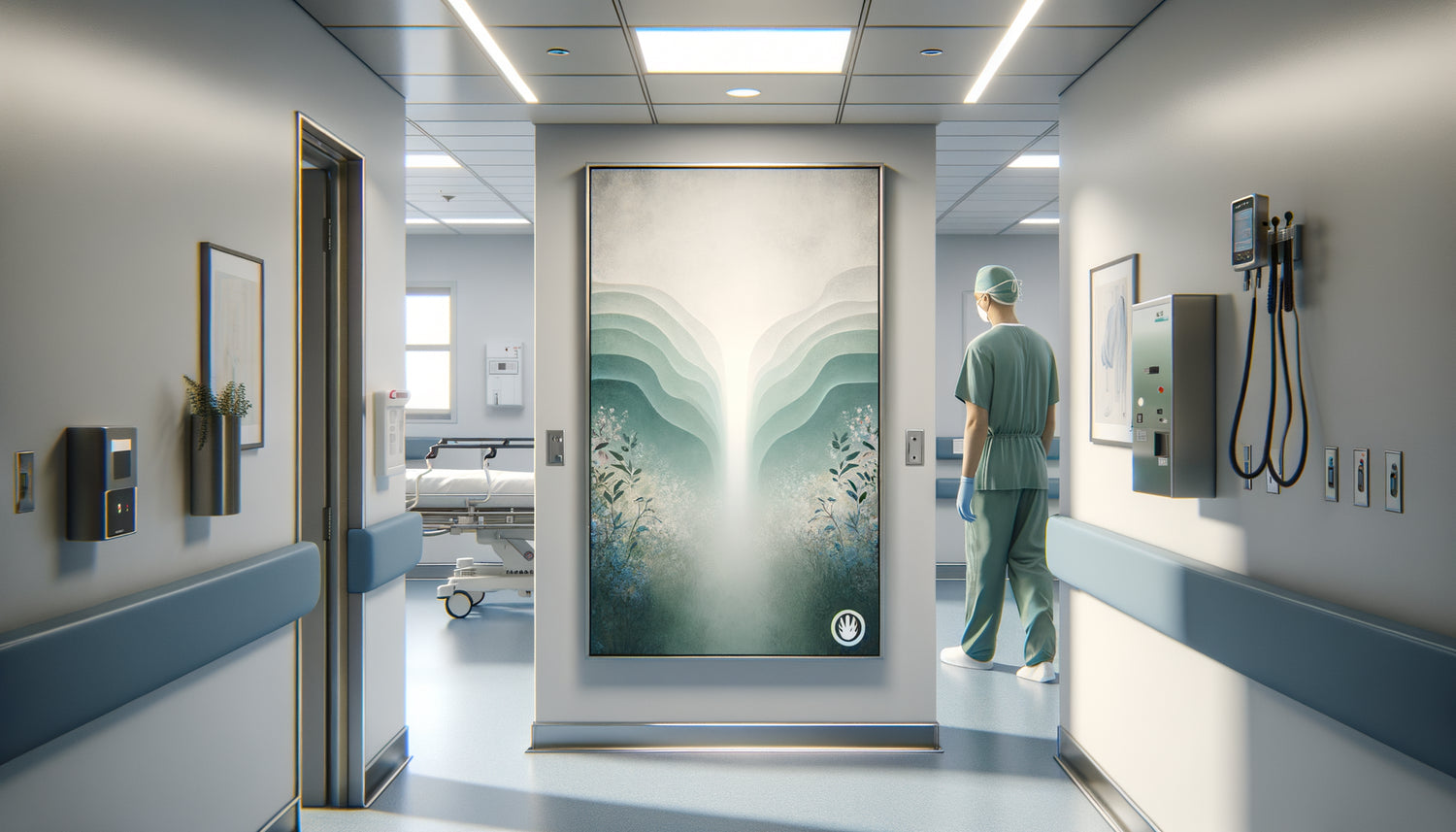
Here's what a wall painting adapted to hygiene standards concretely brings: a professional decoration that resists daily disinfection protocols, full compliance with sanitary inspections, and above all, peace of mind allowing you to focus on the essential – your patients.
The frustration is real: you want to create a soothing and aesthetic environment for your patients, but every decorative element becomes a regulatory headache. Traditional paintings accumulate dust and microorganisms. Wooden frames swell with the humidity of disinfectants. Textile canvases become veritable breeding grounds for bacteria.
Rest assured: there are now decorative solutions perfectly suited to medical environments, combining refined aesthetics and absolute sanitary compliance. I will show you exactly how to identify these professional pieces that will transform your spaces while respecting the strictest standards.
The materials that make all the difference
In a medical environment, the first criterion of a professional-quality wall painting is its constituent materials. Forget traditional supports: cotton canvas, classic photographic paper or raw wood are incompatible with hygiene requirements.
The ideal support must be non-porous and impermeable. Prioritize wall paintings printed on rigid PVC, aluminum composite (Dibond) or medical grade plexiglass. These materials offer a totally smooth surface, without irregularities where particles and microorganisms could settle.
I equipped a Lausanne pediatric clinic with paintings on aluminum supports: after three years of daily disinfection with ammonium quaternaries, the colors remain vibrant and the surface perfectly intact. This type of longevity fully justifies the initial investment.
Essential protective coatings
A professional wall painting is not limited to its support. The final layer of protection determines its resistance to chemicals. Look for an anti-UV laminated finish or a certified medical varnish that creates an impermeable barrier.
This protection must resist common hospital disinfectants: alcoholic solutions, diluted sodium hypochlorite, quaternary ammoniums. A professional painting explicitly mentions its compatibility with these products in its technical sheet.
The mounting system: a crucial detail often overlooked
Here's a mistake I’ve seen dozens of times: investing in wall art that meets hygiene standards, then fixing it with a traditional frame that compromises all the sanitary effort.
The ideal mounting system must allow for complete cleaning without any shadows. Direct wall mountings with metal spacers are perfect: they create a 1 to 2 cm gap between the wall and the artwork, allowing air circulation and access for cleaning.
In an orthodontics practice in Fribourg, we installed wall art with invisible fixings. Staff can clean around and behind it in seconds during the daily protocol. This accessibility turns a constraint into a simple routine.
Absolutely avoid these problematic fixings
Frames with foam seals, open-gorge systems or wooden fixings are incompatible with a medical environment. These elements accumulate moisture and particles, creating areas that cannot be disinfected properly.
A professional wall art piece is recognized by its one-piece design: a single part without assemblies, without hollow spaces, without porous materials. Structural simplicity guarantees sanitary effectiveness.

The certifications that guarantee compliance
When facing a wall art piece, how to verify that it actually meets hygiene standards? Official certifications are your best allies.
Look for explicit mentions of compliance with European standard EN 13795 (medical environments) or ISO 14644 standards for cleanrooms. These certifications attest that the materials and manufacturing processes meet strict sanitary requirements.
A serious manufacturer systematically provides detailed technical datasheets: exact composition of materials, UV resistance (measured in hours of exposure), chemical compatibility with common disinfectants, and results of bacterial colonization tests.
When equipping a dermatology center in Neuchâtel, I demanded these documents for each wall art piece. The initial administrative investment avoided three rejections during the opening sanitary inspection.
Printing: visual quality and durability of hygiene
A professional wall art piece cannot afford to lose its brilliance after a few months of daily disinfection. The printing technique determines this longevity.
Prioritize thermal sublimation or UV prints rather than classic inkjet prints. These processes literally fuse the pigments with the support, creating an indelible image resistant to chemical attacks.
Visual quality indicators
Carefully observe the surface of the wall art: it must be perfectly uniform, without variations in glossiness, without slightly grainy areas. Pass your hand over it: professional quality offers a surface as smooth as glass.
Colors should present subtle and natural gradations, without visible pixelation even at 30 centimeters. A wall art suitable for hygiene standards is often printed in high definition (minimum 300 DPI), guaranteeing this professional sharpness.

When medical aesthetics meets health requirements
Beyond the technical aspects, a professional quality wall art for medical environments responds to specific aesthetic codes.
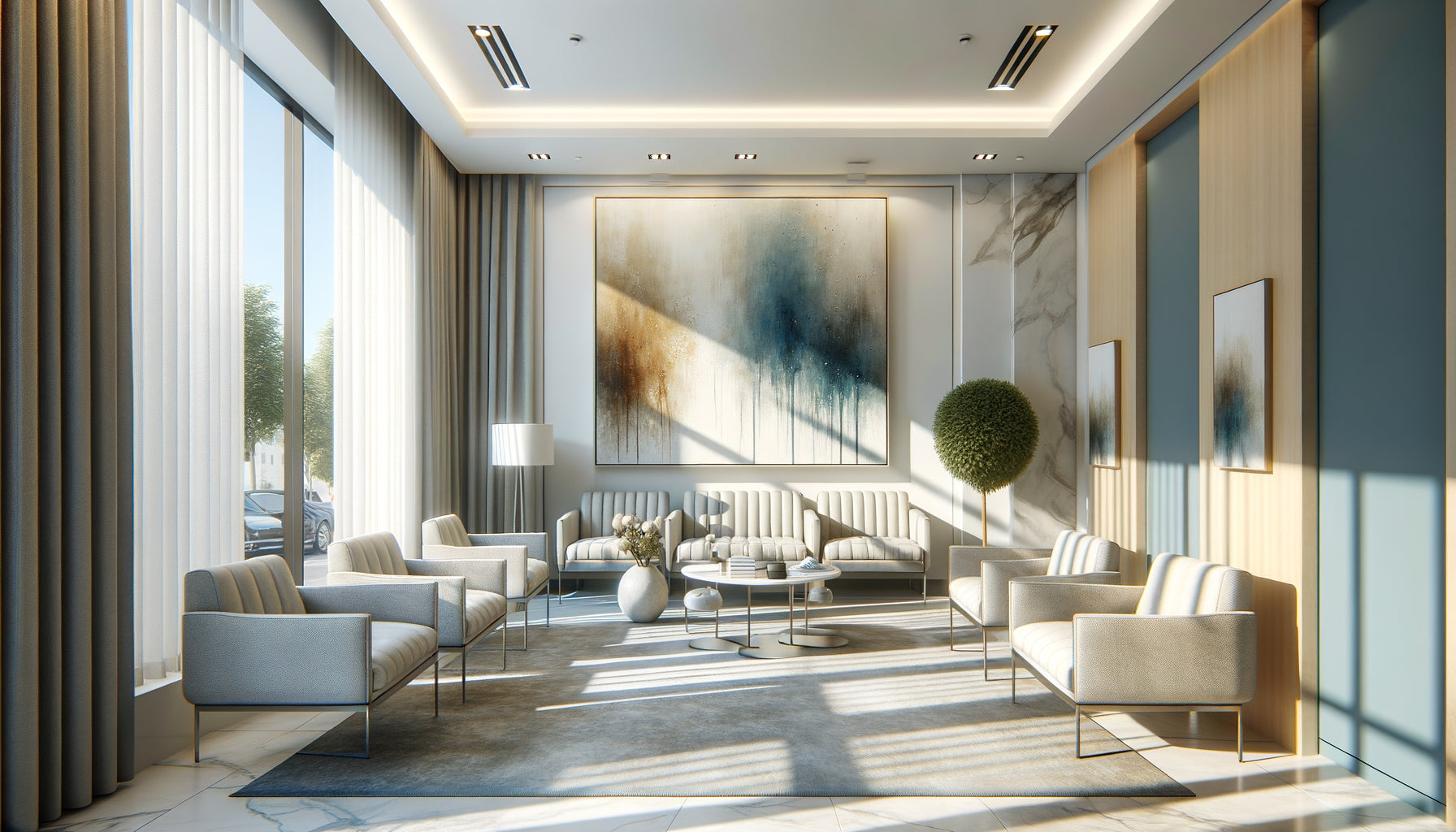
Soothing visuals dominate: abstract natural landscapes, minimalist compositions, macro photographs of nature. These choices are not arbitrary – studies in environmental psychology demonstrate their impact on reducing pre-operative anxiety.
In a cosmetic surgery practice in Vaud, we installed wall art representing abstract compositions in blue-green tones. Six months later, staff noticed a significant decrease in anxiety manifestations among patients in the waiting room.
Colors should remain in soft shades: soothing blues, natural greens, warm beiges. Avoid aggressive reds or violent contrasts that can increase stress in an already anxious medical context.
The essential questions to ask before purchasing
When facing a supplier, here are the questions that immediately reveal their seriousness and the professional quality of their wall art:
“What disinfectants can I use daily without damaging the artwork?” A professional must list precisely the compatible products with chemical references as support.
“What is the estimated lifespan in a medical environment with daily disinfection?” A professional quality wall art should guarantee minimum 5 years without visible alteration.
“Do you have certifications of conformity to medical hygiene standards?” The answer must be an immediate “yes” with provision of documents.
“Does the artwork come with a specific cleaning protocol?” This professional documentation facilitates staff training and demonstrates the manufacturer's seriousness.
Transform your medical spaces into soothing and compliant environments
Discover our exclusive collection of wall art for medical offices that combines professional aesthetics and total sanitary compliance, specifically designed to withstand the most demanding disinfection protocols.
Visualize the transformation of your spaces
Imagine your consultation rooms transformed: walls telling a soothing story rather than conveying an intimidating clinical chill. Your patients enter, their gaze falls on this abstract seascape with ocean tones, and imperceptibly, their shoulders relax.
Meanwhile, your staff cleans these wall artworks in a few daily gestures, without fear of damaging the surface, without anxiety about upcoming health inspections. Compliance becomes obvious, natural, integrated.
Your first concrete action: evaluate your current artworks with this new reading grid. Run your hand over their surface. Read the labels. Check the fixings. This analysis will immediately reveal the pieces to be replaced in priority.
Then, for each new wall artwork you consider, systematically apply the five professional criteria: non-porous material, certified protection, accessible fixing, documented certification, high-definition print. These safeguards guarantee a durable investment that simultaneously protects your aesthetics, your compliance and your peace of mind.
Frequently Asked Questions
Can I use any artwork in a medical waiting room?
Waiting rooms generally benefit from slightly less strict standards than treatment rooms, but I strongly recommend applying the same professional quality criteria. Why? Because these spaces welcome dozens of people daily, some potentially contagious. A wall artwork that is easy to disinfect protects your entire patient population. Furthermore, health inspectors evaluate the entire establishment: maintaining consistency in your decorative choices greatly simplifies overall compliance. Finally, dust accumulation on a traditional artwork in your waiting room sends a contradictory message about your general level of hygiene.
How do I properly clean a professional wall artwork on a daily basis?
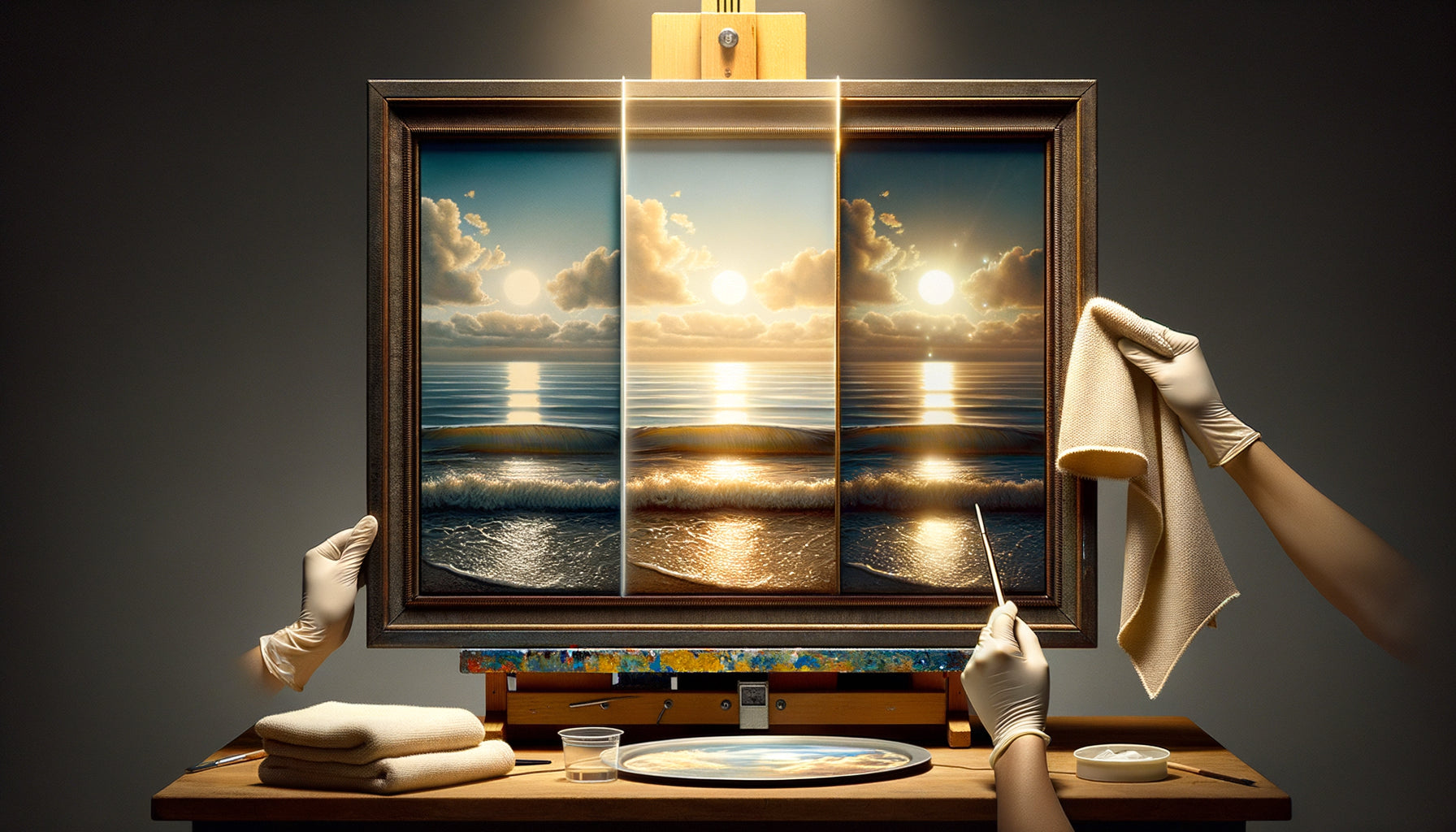
The process is remarkably simple, which is precisely the advantage of a wall art piece adapted to hygiene standards. Use a clean microfiber cloth slightly dampened with your usual disinfectant (alcoholic solution or quaternary ammonium according to your protocol). Wipe the surface in regular movements from top to bottom, then dry immediately with a second dry microfiber cloth. This routine literally takes 30 seconds per artwork. Important: never use abrasive products, scouring sponges, or high-pressure steam cleaners that could damage the protective coating. Once a month, also clean the fixings and the space between the wall and the artwork with a slightly damp cloth to remove any dust accumulation.
Does a professional wall art piece really cost more than a classic decorative artwork?
The initial investment is indeed higher – expect generally 30 to 50% more than a standard decorative artwork. But the financial analysis over 5 years completely reverses the perspective. A non-adapted classic artwork must be replaced every 18 to 24 months in a medical environment (discoloration, delamination, irreversible accumulation). A professional quality wall art piece lasts at least 5 years without alteration. Add the time saved with easy cleaning, the elimination of the risk of non-compliance during inspections (which can cost infinitely more), and operational peace of mind. The calculation becomes obvious: investing correctly from the start represents a substantial long-term savings, while guaranteeing a constant aesthetic level that enhances your professional image.