Imagine Florence in the 1480s, a city of white marble and gold where the Medici reigned as enlightened patrons. In the workshop of a young painter aged 35, a canvas takes shape under his delicate brush: a nude goddess emerges from the sea foam, carried by divine winds towards a flowering shore. This revolutionary audacity that defies the Church and scandalizes the Florentine bourgeoisie is the work of Sandro Botticelli.
For the first time since antiquity, an artist dares to represent female nudity without religious justification. This Birth of Venus overturns artistic codes and heralds a new era: one where art breaks free from Christian constraints to celebrate pure beauty. Behind this pictorial revolution lies a fascinating man, torn between artistic passion and spiritual torments.
But who was this painter really, capable of transforming ancient mythology into an eternal masterpiece? How did he manage to capture in his paintings this timeless grace that continues to move us more than five centuries after his death? And why did he end up burning some of his most daring works himself?
Discover the fascinating story of the Renaissance beauty alchemist, from his Florentine triumphs to his mystical conversion - a journey into the artistic soul of Florence
Sandro Botticelli: the Florentine master of eternal grace
Understanding Sandro Botticelli, is to immerse yourself in the very soul of Florentine Renaissance. More than just a painter, he was a privileged witness and brilliant interpreter of an era when art broke free from medieval conventions to rediscover ancient beauty. His personal history blends with that of Florence, this city-state that shone throughout Europe.
| Biographical highlights | Artistic legacy |
|---|---|
|
Full name: Alessandro di Mariano di Vanni Filipepi Birth: Around 1445 in Florence Death: May 17, 1510 in Florence Nationality: Italian (Florentine Republic) |
Movement: First Florentine Renaissance
The man who was to revolutionize Western art was born into a modest family in the popular district of Borgo Ognissanti. His father, Mariano di Vanni Filipepi, worked as a tanner - an artisanal profession that placed him far from the aristocratic circles that dominated Florentine cultural life.
Alessandro Filipepi: from modest origins to artistic genius
In Florence in the 1450s, young Alessandro grew up in the shadow of the monastery Santa Maria Novella. His childhood was spent in a world of artisans and small shopkeepers, far from the splendor of the Medici palaces. Yet, this popular origin forged his particular sensitivity to simple and authentic beauty.
The awakening of an artistic vocation: According to Giorgio Vasari, young Alessandro revealed a restless and creative temperament. Turbulent in class, he preferred to draw in the margins of his notebooks rather than listen to his teachers. His father, seeing this inclination, first sent him as an apprentice to an artisan goldsmith - friend of the family - perhaps called "Botticello" from which comes his nickname.
This first training in goldsmithing leaves indelible traces in his future style: the precision of the line, attention to decorative details and this unique ability to capture the most delicate nuances of light on precious metals. The Florentine artisanal environment of the time favored exchanges between different trades, creating a fertile ground for artistic vocations.
The discovery of his pictorial vocation: Around 1460, Alessandro entered the workshop of Fra Filippo Lippi, one of the most respected masters in Florence. This decisive encounter revealed his genius for painting and taught him the techniques of tempera which would characterize his future works.
Under Lippi's guidance, the young man discovered the secrets of harmonious composition and developed a particular sensitivity to female faces that became his artistic signature.
Botticelli and Medici Florence: an age of artistic gold
Botticelli's formative years coincided with the apogee of the Florentine Renaissance under the reign of Cosimo the Elder and then Lorenzo the Magnificent. Florence became a laboratory for an unprecedented cultural revolution, where Neoplatonic philosophy, rediscovery of antiquity and artistic innovation mingled.
The Platonic Academy founded by Marsile Ficin disseminates a new vision of the world that reconciles Christianity and ancient wisdom. This bold synthesis allows artists to draw on Greek-Roman mythology while maintaining their religious beliefs. For the first time in centuries, art can celebrate earthly beauty as a reflection of divine beauty.
Botticelli evolves alongside giants such as Leonardo da Vinci, Michelangelo or Andrea del Verrocchio. This emulation between genius artists creates an exceptional creative dynamic. According to some sources, Botticelli and Leonardo even opened a restaurant together near the Ponte Vecchio - an anecdote that illustrates the complicity between these masters.
The favorable political climate allows this effervescence: the Medici protect the arts and attract in their wake a clientele of wealthy patrons. The money flowing from trade and banking finances artistic commissions, allowing painters to experiment without financial constraints.
The spirit of the time: Florence in the years 1470-1480 experienced a cultural revolution where Neoplatonic humanism transformed the vision of art. Botticelli perfectly embodies this synthesis between ancient beauty and Christian spirituality, creating a timeless style that transcends trends.
Botticelli's early years: the laborious conquest of Florence
Despite his evident talent, Botticelli’s first years of artistic independence around 1470 were not without difficulties. Florence is full of talented workshops and competition is fierce to obtain the prestigious commissions from great families. The young master must initially settle for second-rate work: portraits of bourgeois, domestic Madonnas and decorations of everyday objects.
His first significant work, "The Force" (around 1470), was part of a series of Virtues commissioned for the court of the Mercanzia. But he only partially gets this commission: only one figure is attributed to him, the others going to more established masters. This frustrating experience teaches him patience and the importance of networks in the Florentine artistic community.
The meeting with the Vespucci family changes things. These wealthy merchants, neighbors of his native neighborhood, become his first true patrons. Thanks to them, Botticelli gradually accesses the influential circles of Florentine society and discovers the refined world of merchant aristocracy.
These years of social learning develop in him an intimate knowledge of the codes of Florentine elegance. This experience will be reflected in his future works through this unique ability to capture the aristocratic grace and the sophistication of dress of his time.
Around 1475, Medici patronage finally extends to him, opening the way for his period of creative glory.
Botticelli scandalizes Florence: the audacity of The Birth of Venus
In 1482-1485, Botticelli crossed a revolutionary threshold with "The Birth of Venus". This work scandalizes conservative Florence for its boldness: representing a naked goddess without religious justification constitutes a major transgression of the artistic codes of the time. Only Eve was previously allowed to appear nude in Christian art.
The criticism rains from ecclesiastical circles who denounce this "Pagan provocation". Some priests accuse Botticelli of corrupting morals and encouraging lust through his representations. The scandal becomes so great that the work must be concealed in the Medici's private villa at Castello, away from the eyes of the general public.
But the artist fully embraces his revolutionary vision. For him, the beauty of Venus is not erotic but spiritual: she embodies the "Celestial Beauty" dear to the neoplatonists, this ideal beauty that elevates the soul towards the divine. His model, Simonetta Vespucci, who died prematurely at 23 years old, becomes a symbol of this tragic and pure beauty.
Botticelli's philosophy of art: "Earthly beauty is only the reflection of celestial beauty," he explains to his detractors. For him, painting Venus is about celebrating divine creation in its most perfect form.
This controversy definitively establishes his reputation as an innovative and courageous artist. It attracts the attention of European collectors and consolidates his position as an indispensable master of the Florentine Renaissance.
The success of this revolutionary work opens a period of prestigious commissions and international recognition.
Botticelli's art: master of neoplatonic grace
The years 1480-1490 mark the artistic peak of Botticelli. It is during this decade that he fully develops his unique style, this "linear grace" which distinguishes him from all his contemporaries. Unlike Leonardo who favors sfumato or Michelangelo who sculpts in color, Botticelli creates a poetic universe where dominate the pure line and the decorative harmony.
His absolute masterpiece, "The Birth of Venus", crystallizes this aesthetic revolution. This canvas of 172 x 278 cm translates on canvas the ideals of the Florentine Platonic Academy into a poetic vision of unparalleled power.
The Birth of Venus: decoding a universal masterpiece
At the heart of the composition, Venus emerges from the sea foam on a pearlescent shell, symbolizing fertility and rebirth. Her posture in contrapposto is directly inspired by ancient statuary, notably the Venus of Cnidus by Praxiteles, which the Medici possessed a Roman copy of. But Botticelli transforms this classic model by giving her a modern melancholy, that dreamy expression that transcends eroticism to reach pure spirituality.
The pictorial technique reveals a consummate mastery: the delicate modeling of the skin tones, the floating draperies that seem animated with their own life, the golden hair that ripples in the divine breeze. Every detail contributes to creating this impression of suspended eternity that characterizes Botticelli's art.
Botticelli’s technical innovations: tempera and virtuosity
Botticelli perfects the egg tempera technique inherited from his masters. His personal method consists of layering thin, translucent glazes that give the skin tones this characteristic pearlescent luminosity. He outlines his figures with a subtle black line that detaches them from the background without breaking the overall harmony - a technique he will pass on to his pupil Filippino Lippi.
Botticelli facing his contemporaries: a unique artistic path
Unlike Leonardo da Vinci who favors scientific observation of nature, Botticelli systematically idealizes his models. While Michelangelo sculpts athletic bodies inspired by ancient statuary, Botticelli lengthens proportions and slims silhouettes to create a type of ethereal beauty unique in Western art.
This aesthetic opposition sometimes creates tensions: Leonardo publicly criticizes Botticelli's landscapes, judging them too fanciful, reproaching his colleague for neglecting the direct study of nature. Botticelli responds with irony that "ideal beauty always surpasses imperfect reality".
OUR RECOMMENDED PRODUCTS
This glorious period definitively establishes Botticelli as one of the geniuses of the Florentine Renaissance.
The man Botticelli: passionate bachelor and eternal lover
Behind the genius painter hides a man with complex passions. Botticelli never marries, dedicating his entire existence to his art and creative obsessions. According to his contemporaries, he manifests a profound aversion to marriage, declaring that the very idea of sharing his life gives him nightmares.
This bachelor's life allows him total freedom in his creations but also hides a deep melancholy. His great love remains Simonetta Vespucci, this Florentine beauty who died at 23 and inspires his most beautiful works. A platonic and sublimated love, this passion nourishes his artistic imagination for decades. A revealing fact: Botticelli will ask to be buried at the foot of Simonetta's tomb in the church Ognissanti.
His character is revealed through contemporary accounts: a man of quick wit and brilliant conversation, he possesses a sharp sense of humor and does not fear controversy. His restless and hyperactive personality transpires in his works through this particular energy that animates his most successful compositions.
This emotional intensity prepares the spiritual crisis that will mark his final years.
Botticelli's triumph: from Florentine glory to papal recognition
The official recognition arrives in 1481 with the most prestigious commission of the time: decorating the Sistine Chapel at the Vatican. The Pope Sixtus IV chooses Botticelli alongside Perugino, Ghirlandaio and Cosimo Rosselli to adorn the walls of his private chapel. This consecration definitively places the Florentine artist at the top of the European artistic hierarchy.
His Roman frescoes, notably "The Trials of Moses", reveal a new facet of his talent: mastery of large narrative composition. Returning to Florence, commissions flow from the most important families: Tornabuoni, Pucci, Vespucci, all want to possess a work by the fashionable master.
The evolution of prices and Botticelli's market value
During his period of glory, Botticelli practices high rates that reflect his exceptional notoriety. His portraits are negotiated between 50 and 100 florins, considerable sums for the time. His Madonnas private reach 200 florins, while his large mythological compositions sell up to 500 florins - equivalent to the annual salary of a skilled craftsman.
| Period | Average value | Record sale |
|---|---|---|
| Artist's life (1470-1510) | 100-500 gold florinsThe Birth of Venus (private commission) | |
| Late Renaissance (1510-1600) | Progressive depreciation | Near total oblivion after 1550 |
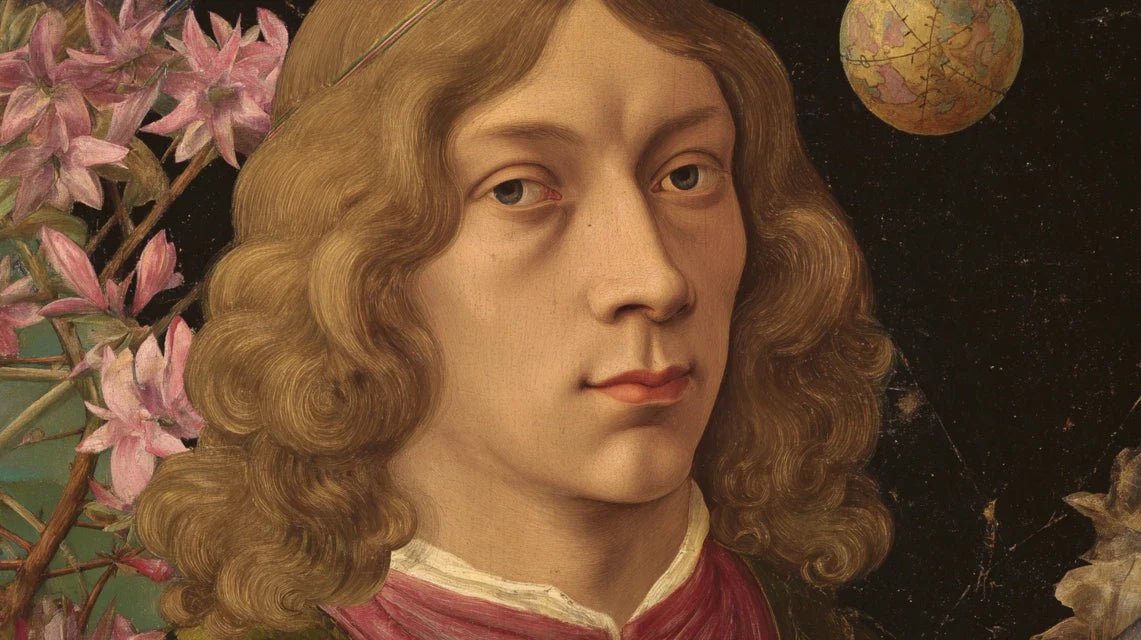
| Contemporary market (2020-2025) | 15-80 million euros | Young Man with a Roundel (2021) |
This material prosperity allows Botticelli to maintain a flourishing workshop with many assistants and apprentices.
The twilight of Botticelli: mystical conversion and artistic auto-da-fé
In 1494, the exile of the Medici disrupts the balance in Florence and radically transforms Botticelli's existence. The arrival in power of the monk Girolamo Savonarola marks a dramatic turning point in his life and art. This Dominican preacher establishes a severe theocracy that condemns all "artistic excesses" of the Renaissance.
Contrary to expectations, Botticelli falls under the influence of this radical reformer. The man who had revolutionized art by painting nude goddesses becomes a fervent disciple of the monk who preaches the destruction of "pagan vanities". This spectacular conversion reveals the depth of the aging artist's spiritual torments.
The Bonfire of Vanities: Botticelli destroys his own works
On February 7, 1497, a tragic day for Florentine art, Savonarola organizes his famous "Bonfire of Vanities" on the Piazza della Signoria. In a gesture that astounds his contemporaries, Botticelli himself carries several of his mythological paintings to the pyre. These irreplaceable works, the fruit of decades of creative genius, disappear into the flames before the eyes of their repentant creator.
This artistic autodafé deprives humanity of masterpieces likely comparable to The Birth of Venus. The artist definitively renounces mythological subjects to devote himself exclusively to religious art, marking the end of his revolutionary period.
The spiritual transformation: After 1497, Botticelli's art transforms radically. His later works such as the "Mystical Nativity" (1500) testify to an intense spirituality but lose that unique grace which characterized his glorious period.
Today, Botticelli's works are distributed among the most prestigious museums worldwide. The Uffizi Gallery in Florence preserves his absolute masterpieces: "The Birth of Venus" and "Spring". The National Gallery in London possesses several exceptional madonnas, while American museums (Metropolitan, National Gallery of Art) hold important collections of his later works.
For art lovers, a pilgrimage to Florence remains essential to fully understand Botticelli's universe within its original historical context.
🎁 Special readers offer
Because you took the time to inform yourself, enjoy 10% discount on your first order:
Frequently Asked Questions about Sandro Botticelli
Alessandro di Mariano di Vanni Filipepi, known as Sandro Botticelli, was born around 1445 in a modest family in Florence. His nickname "Botticelli" (small barrel) may come from his goldsmith master or his brother Giovanni, nicknamed “Botticello” because of his build. Son of a tanner, he revealed exceptional artistic talents very early on, which led him to the workshop of Fra Filippo Lippi.
Botticelli began with an apprenticeship as a goldsmith which taught him the precision of line, then around 1460 joined the workshop of Fra Filippo Lippi, a master renowned for his graceful madonnas. This training passed on to him the techniques of tempera and developed his sensitivity to feminine faces. He also worked in the studio of Verrocchio where he met Leonardo da Vinci.
Botticelli’s genius lies in his "linear grace": pure outlines underlined with a subtle line, delicate modeling in tempera, and that unique ability to lengthen proportions to create an idealized beauty. Unlike his contemporaries who favored realism, he systematically stylized his figures to achieve timeless aesthetic perfection.
Botticelli revolutionized art by daring to represent mythological nudes without religious justification for the first time. Protected by the Medici, he became the privileged interpreter of Florentine neoplatonism. His consecration came in 1481 with the commission of frescoes for the Sistine Chapel. His works perfectly embody the Renaissance spirit that reconciles ancient beauty and Christian spirituality.