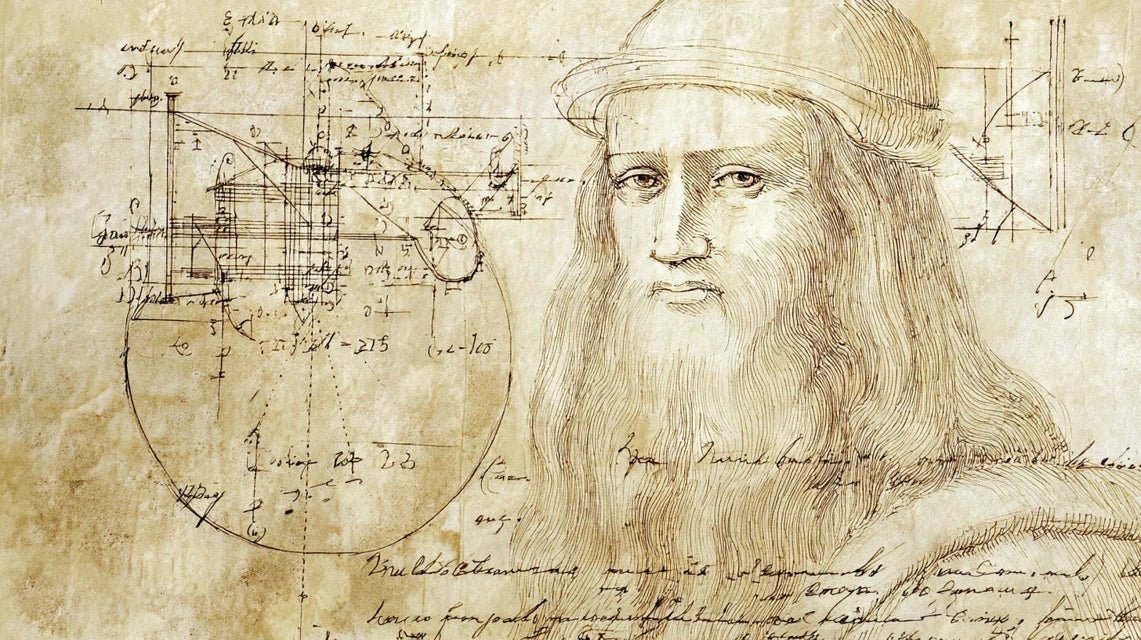
Leonardo da Vinci: The Ultimate Genius Behind the Mona Lisa and Visionary Inventions
Imagine a man capable of painting the Mona Lisa, designing flying machines five centuries before they were realized, and dissecting corpses to unlock the mysteries of human anatomy. Imagine a mind so universal that it revolutionizes art, science, engineering, and philosophy all in one lifetime.
This man is Leonardo da Vinci (1452-1519), born in a small Tuscan village and becoming the very symbol of Renaissance genius. In the sun-drenched Florentine workshops, then in the princely courts of Milan and Amboise, he shaped an artistic and scientific legacy that continues to fascinate us today.
Why is this biography essential? Because behind the worldwide fame of the Mona Lisa and the legends surrounding this mythical figure lies an authentic, complex man with doubts and obsessions. A visionary who anticipated our era with a disturbing accuracy.
Discover the man behind the myth, his revolutionary innovations, his fascinating failures, and the immortal legacy he left us - a lesson in curiosity and creative boldness that can transform your perspective on art and science.
Leonardo di ser Piero da Vinci: The Embodiment of Renaissance Universal Genius
Understanding Leonardo da Vinci means grasping what it means to be an "uomo universale" - a universal man capable of excelling in all fields of human knowledge. Far from romantic clichés, his true story reveals a perfectionist obsessive, a meticulous observer of nature, and an innovator whose intuitions far exceeded the technical possibilities of his time.
| Biographical Highlights | Artistic Legacy |
|---|---|
|
Full name: Leonardo di ser Piero da Vinci Birth: April 15, 1452 in Vinci (Tuscany) Death: May 2, 1519 at Clos Lucé (Amboise) Nationality: Italian (Florentine Republic) |
Movement: High Renaissance Italy Style: Revolutionary sfumato and chiaroscuro Flagship work: The Mona Lisa Innovation: Art-science fusion and aerial perspective |
But behind these factual highlights lies a tumultuous existence, marked by an insatiable thirst to understand the secret mechanisms of the world. From his illegitimate childhood in the Tuscan hills to his death in the arms of the King of France, Leonardo embodies the Renaissance ideal of boundless knowledge.
Leonardo da Vinci as a Child: The Birth of a Genius in 15th-Century Tuscany
On April 15, 1452, in the small town of Vinci, thirty kilometers from Florence, Leonardo di ser Piero da Vinci was born. Illegitimate son of notary ser Piero and peasant Caterina, the child grew up in an environment of hills covered with vines and olive trees, a Tuscan landscape that would nourish his passion for observing nature throughout his life.
Childhood shaping a genius: Unlike popular beliefs about the difficult condition of illegitimate children, Leonardo was cherished by his paternal family. Ser Piero offers him a careful education - grammar, calculation, but above all this freedom of questioning that will characterize all his work. In the Tuscan countryside, young Leonardo develops this insatiable curiosity that leads him to draw everything he sees: flowers, animals, faces, mechanisms.
The founding principle revealed during apprenticeship: In Verrocchio's workshop, Leonardo discovers that art and science are one. For him, painting is knowing. This conviction explains why he will spend his life dissecting corpses, studying hydraulics, observing the flight of birds: all knowledge nourishes artistic creation.
Leonardo da Vinci and the Florentine Renaissance: The Medici era and the artistic revolution
To understand the emergence of Leonardo's genius, it is necessary to place him in the revolutionary context of the Florentine Renaissance. We are at the time of Lorenzo de’ Medici, when Florence rivals the greatest courts in Europe, attracting artists, humanists and scholars from all over the world.
The artistic climate of the era is electrifying: rediscovery of antiquity, development of scientific perspective by Brunelleschi and Alberti, revolution of printing which spreads knowledge. Florentine workshops are bubbling with technical innovations - oil on wood, nascent sfumato, precise anatomy.
Léonard moves among the giants of his time: Michelangelo, younger but already recognized, Raphael who masters classical harmony, Ghirlandaio specialist in portraits. Yet, what fundamentally distinguishes Léonard is his refusal to limit himself to painting. While his contemporaries perfect their art, he explores anatomy, optics, mechanics, botany.
The Italian Wars that broke out in 1494 profoundly transformed the era. French invasions, struggles between city-states, political instability led artists to seek protection from powerful patrons. This turbulent period explains why Léonard so often changes residence: Florence, Milan, Rome, Amboise.
The innovation that transcends his time: While the Renaissance rediscovers ancient art, Léonard invents modern art. He does not copy Greek models, he observes nature directly. His motto "Experience is mother of all knowledge" revolutionizes the artistic approach of his time.
Leonardo’s Difficult Beginnings in Florence: 1472-1482
Contrary to the image of a genius immediately recognized, Leonardo's early professional years in Florence were marked by difficulties and disappointments. The Medici, all-powerful patrons, do not seem to notice his exceptional talent. While other artists receive prestigious commissions, Léonard struggles to establish himself in the Florentine artistic scene.
In 1476, a traumatic episode marks his youth: Léonard and three other men, including a member of the Tornabuoni family linked to the Medici, are anonymously accused of sodomy with Jacopo Saltarelli, a seventeen-year-old model. Although the case is dropped for lack of evidence, this scandal leaves deep traces in the personality of the young artist.
The most revealing episode of his determination occurs in 1481: Léonard receives the commission for The Adoration of the Magi for the monastery of San Donato a Scopeto. Ambitious, he conceives a revolutionary composition combining complex perspective and psychological study of the characters. But an obsessive perfectionist, he never finishes the work, leaving an unfinished masterpiece that still fascinates art historians.
That same year, the disappointment is crushing: Léonard is not selected among the Florentine painters tasked with decorating the Sistine Chapel in Rome. This rejection, felt as a slap in the face, precipitates his decision to leave Florence for Milan.
These difficult years forge Leonardo's artistic character: perfectionism that often prevents him from finishing his works, fierce independence from conventions, and this deep conviction that art must go beyond mere beauty to reveal the secrets of the universe.
Leonardo da Vinci and controversies: the scandal of his anatomical dissections
In 1482, Leonardo makes a decision that will transform his destiny: he leaves Florence for Milan, presenting himself to Ludovic Sforza not as a painter, but as a military engineer! This break reveals a little-known aspect of his personality: his pragmatism in the face of economic necessities and his ability to reinvent his image.
But it is in Milan that Leonardo develops his most controversial practices. Fascinated by human anatomy, he obtains permission to dissect cadavers at the Santa Maria delle Grazie hospital. At a time when the Church views these practices with suspicion, Leonardo defies religious prohibitions to unlock the mysteries of the human body.
The night that shocks Milan: Chronicles of the time report that in 1489, Leonardo spent entire nights in the morgues, dissecting up to thirty cadavers to understand blood circulation and muscle function. These clandestine sessions, carried out by candlelight in precarious hygienic conditions, fuel rumors about this "sorcerer" who talks to the dead.
His technical innovations also provoke controversy. His technique of sfumato - these quasi-transparent glazes that create vaporous transitions - is so revolutionary that some contemporaries see it as witchcraft. How else can one explain these artistic blurring effects that seem to defy the laws of painting?
These controversies, far from hindering him, stimulate his creativity. They explain why Leonardo develops this mirror writing which makes his notes illegible to the common mortal, thus protecting his discoveries from prying eyes and accusations of heresy.
Leonardo's revolutionary art: the birth of sfumato and modern chiaroscuro
The Milanese years (1482-1499) mark the creative peak of Leonardo. Protected by Ludovic Sforza, he can finally give free rein to his multifaceted genius. It is in this privileged context that he revolutionizes Western art with technical innovations that still influence contemporary painting.
In 1483, Leonardo begins The Virgin of the Rocks, a work that inaugurates his revolutionary period. For the first time, he systematically applies his sfumato technique, layering extremely fine glazes (1 to 2 micrometers) to create these vaporous transitions that seem to defy the laws of physics.
The Mona Lisa: the culmination of Leonardo's genius (1503-1519)
Began around 1503 and reworked until his death, The Mona Lisa (Mona Lisa) synthesizes all of Leonardo's innovations. The portrait of Lisa Gherardini, wife of the Florentine merchant Francesco del Giocondo, transcends the original commission to become a revolutionary artistic manifesto. The famous smile is born from the superposition of micro-glazes that create this fascinating ambiguity between joy and melancholy.
The background reveals Leonardo's genius as a landscape artist: aerial perspective blurring the distances, fantastic geology mixing rigorous observation and creative imagination. This landscape exists nowhere, but seems more real than nature.
Leonardo's sfumato: technical revolution with secrets still debated
Leonardo's sfumato technique remains partially mysterious. Recent analyses reveal up to forty layers of glazing of incredible finesse. Leonardo mixes pigments, oils and resins in proportions he keeps secret, creating these "smoke" effects that give the technique its name (sfumato = smoked in Italian).
Leonardo da Vinci versus Michelangelo and Raphael: the rivalry of giants
In Florence, between 1503 and 1506, Leonardo directly confronts Michelangelo during the "cartoon challenge". The two masters must decorate the opposing walls of the Palazzo Vecchio: Leonardo with The Battle of Anghiari, Michelangelo with The Battle of Cascina. This confrontation reveals their diametrically opposed approaches: Leonardo's dynamism versus Michelangelo's power.
Unfortunately, Leonardo experiments with an oil fresco technique that proves disastrous. The work quickly deteriorates, leaving only partial copies. This failure illustrates the reverse side of his genius: constant innovation that sometimes leads to technical impasse.
OUR RECOMMENDED PRODUCTS
These creative years definitively establish Leonardo's reputation as an inventor of a new art, an unprecedented fusion between rigorous science and artistic intuition. An art that continues to question us about the very nature of beauty and truth.
The fascinating personality of Leonardo: between mystery and humanity
Behind the public genius lies a complex man, with singular habits and intense human relationships. Leonardo da Vinci never married and had no documented female liaisons, preferring to surround himself with young male disciples who become his spiritual sons: Gian Giacomo Caprotti called "Salai" (the little devil), then Francesco Melzi, his artistic and emotional heir.
An illuminating episode of his personality occurs in 1506: Leonardo buys caged birds at markets, only to release them and observe their flight. This gesture, reported by several witnesses, reveals his deep sensitivity and this passion for freedom that runs through all his work. He detests war, which he calls "pazzia bestialissima" (bestial madness), while paradoxically designing military machines for his patrons.
Leonardo is also renowned for his elegance and exceptional physical beauty. Vasari describes him as "a man of extraordinary beauty and perfect grace in all his actions." This natural bearing opens the doors to the most refined courts of Europe.
His personality shines through in his approach to work: a morbid perfectionism that prefers to leave a work unfinished rather than complete it imperfectly. This obsessive quest for absoluteness explains why only fifteen paintings are attributed to him with certainty, while he lived seventy-seven years of constant creation.
The late recognition of Leonardo: from Florentine indifference to French glory
Paradoxically, the recognition of Leonardo's genius was gradual and sometimes painful. In Florence, the artistic capital of the time, his talent does not immediately find the public it deserves. It is Francis I, King of France passionate about Italian art, who offers Leonardo his definitive consecration.
In 1516, aged sixty-four and unwell, Leonardo accepts the French royal invitation. Francis I awards him the prestigious title of "First painter, engineer and architect of the King" with an exceptional pension of 700 gold escudos, a considerable sum that testifies to royal esteem.
The evolution of the Leonardo market value: from artisan to global icon
An analysis of the art market reveals the fascinating evolution of Leonardo's recognition through the centuries. His works, now priceless, have not always reached current heights.
| Period | Average value | Record sale |
|---|---|---|
| Living artist (1452-1519) | 100-500 ducats per order | 700 escudos for French royal pension |
| XVIe-XVIIIe centuries | Progressive recognition by collectors | Royal and princely acquisitions |
| XIXe-XXIe centuries | Inestimable value (national museums) | Salvator Mundi: $450 million (2017) |
The absolute record was set in 2017 with the sale of Salvator Mundi for $450.3 million at Christie's, making this work the most expensive painting ever sold at auction. This staggering sum illustrates contemporary fascination with Leonardo’s genius, six centuries after his birth.
Leonardo’s final years at Clos Lucé: testament of a genius (1516-1519)
Installed at the Château du Clos Lucé near Amboise, Leonardo spends his final years in an idyllic setting that continues to stimulate his creativity. Despite partial paralysis of his right hand, he continues to draw, annotate his notebooks, receive visitors and disciples. François I regularly visits him, fascinated by the stories of this extraordinary old man who has witnessed a century of European history.
On May 2, 1519, Leonardo dies at Clos Lucé, surrounded by his faithful disciples Francesco Melzi and Battista de Vilanis. Legend has it that he died in the arms of the King of France, symbolizing this late but brilliant recognition that crowns his career.
Leonardo's revolutionary influence on contemporary art
Leonardo's legacy extends far beyond Renaissance painting. His technical innovations continue to inspire contemporary artists: street artist Banksy ironically revisits the Mona Lisa, filmmakers draw inspiration from his fantastic machines, designers draw on his notebooks to design futuristic objects and architectures.
In modern digital art, Leonardo's sfumato technique finds an echo in image processing software. Gaussian blur effects and gradual transitions unknowingly reprise the revolutionary principles developed by Leonardo five centuries ago.
Recognizing Leonardo's legacy today: Observe contemporary photographic portraits that play on soft lighting and vaporous transitions, films that use dramatic chiaroscuro, or modern architectures that integrate nature and geometry: everywhere you can find the visual imprint of Leonardo da Vinci.
Where to discover Leonardo da Vinci: museums and global collections
To discover Leonardo's universe, several essential places stand out: the Louvre (Mona Lisa, Virgin of the Rocks), the Offices of Florence (Annunciation), the Clos Lucé d'Amboise (models of his inventions), the National Gallery in London (London version of the Virgin of the Rocks), and the Leonardo da Vinci Museum in Milan, which reconstructs his most spectacular machines.
Each visit reveals a different facet of this multifaceted genius: the artist at the Louvre, the inventor at Clos Lucé, the anatomist in his scientific drawings. This geographical diversity reflects the inexhaustible richness of a work that continues to surprise us.
🎁 Special readers offer
Because you took the time to inform yourself, enjoy 10% discount on your first order:
⏰ Valid 72h after reading • Applicable to all our products
Frequently Asked Questions about Leonardo da Vinci's Biography
Leonardo di ser Piero da Vinci was born on April 15, 1452 in Vinci (Tuscany) from the illegitimate union between notary ser Piero and peasant Caterina. Contrary to popular belief, he enjoyed a privileged childhood within his father's family, receiving a careful education that developed his natural curiosity for observing the world. The Tuscan landscapes of his childhood, with their hills, vineyards and streams, nurtured his love of nature which will permeate all his work.
Around 1467, ser Piero entrusted his fifteen-year-old son to the workshop of Andrea del Verrocchio in Florence, an absolute reference of the time. This "polytechnic" workshop teaches painting, sculpture, goldsmithing, architecture and engineering. Leonardo there meets Botticelli and Perugino, learning this global approach that characterizes his genius. In 1472 he became a master painter but remained faithful to Verrocchio until 1479, perfecting this art-science fusion which revolutionizes artistic creation.
Sfumato (meaning "smoky" in Italian) is Leonardo's revolutionary technique of layering ultra-fine glazes (1-2 micrometers) to create vaporous transitions without sharp outlines. This innovation, visible in the Mona Lisa, gives this impression of “smoke” that softens shapes and creates a fascinating ambiguity. Sfumato transforms the rigid painting of the time into living art, where light and shadow blend naturally as in observed reality.
In 1516, at the age of 64, Leonardo accepted the invitation of Francis I who offered him protection, recognition and creative freedom. Disappointed by the mixed reception of Italian courts and tired of the political instability of the peninsula, he found in France the consecration that had partially eluded him in Italy. The king granted him the title of “First painter, engineer and architect to the King” with an exceptional pension of 700 gold florins, a testament to royal esteem.