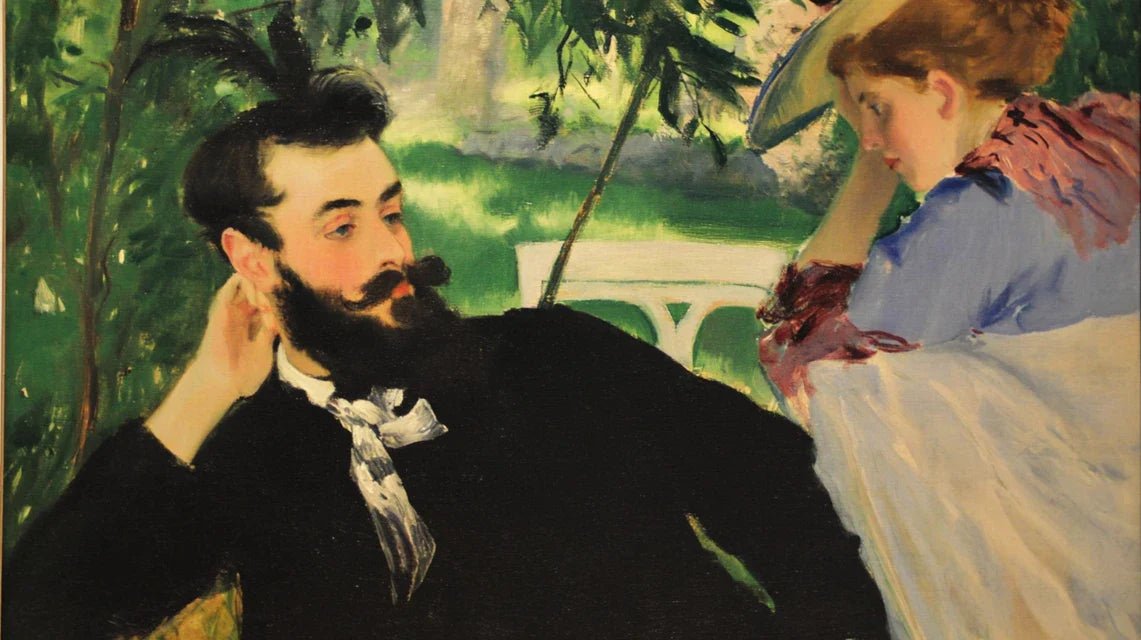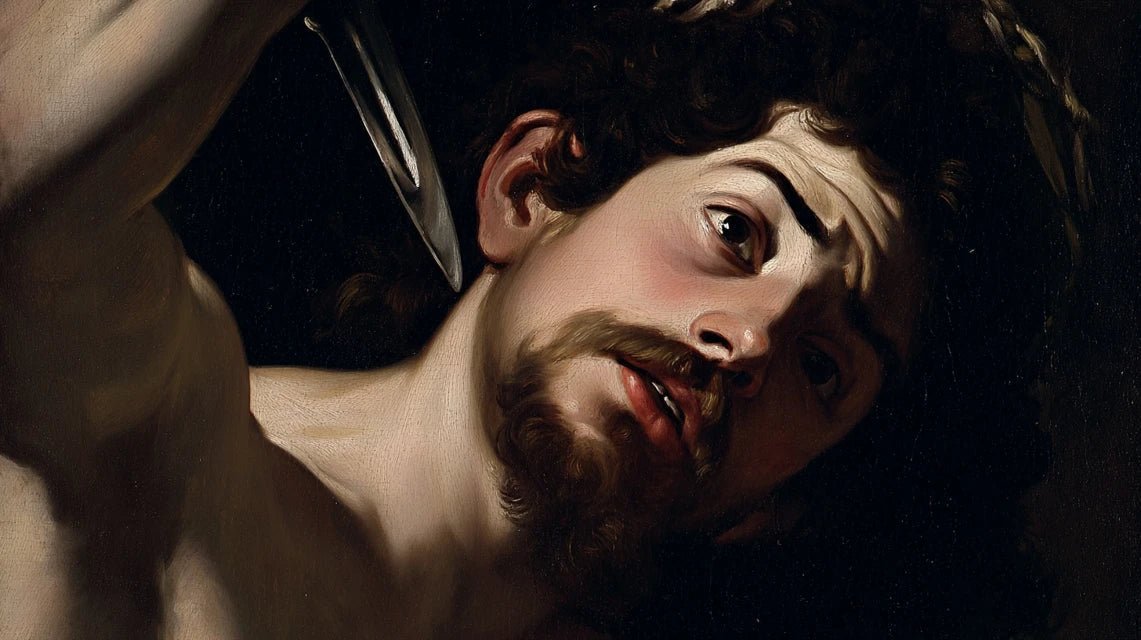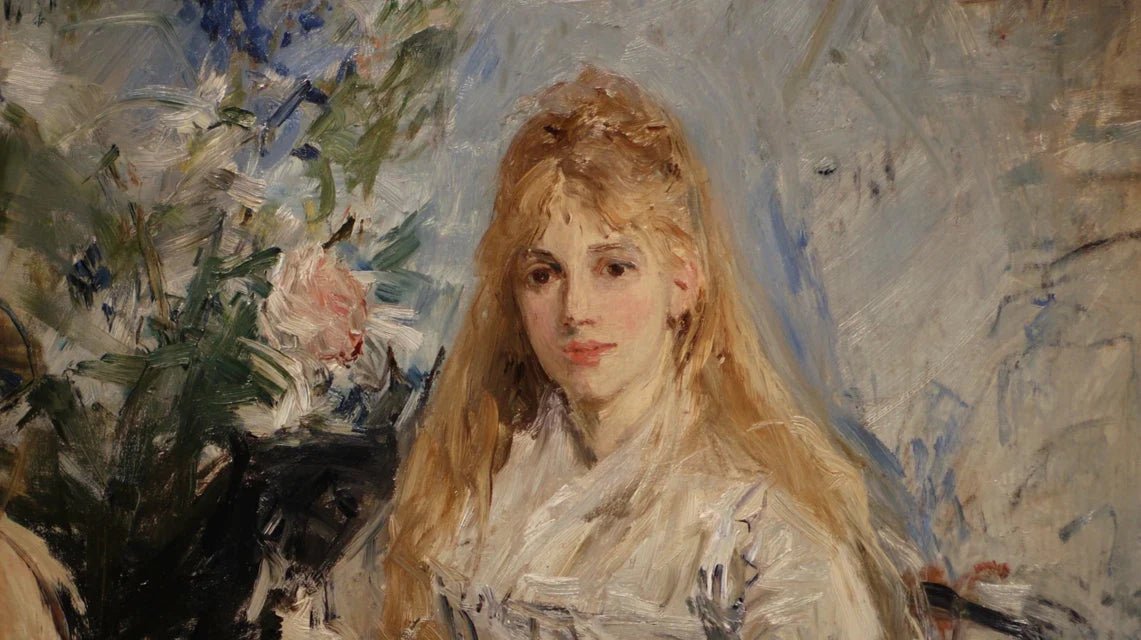
Imagine a young woman from Parisian high society who dares to defy the conventions of her time, palette in hand, to revolutionize 19th-century art.
In the light-filled studio of a well-appointed apartment in the 16th arrondissement, Berthe Morisot sets her determined gaze on the blank canvas that awaits her. Around her, brushes laden with pure colors testify to her desire to capture the fleeting moment.
This exceptional woman does not merely observe the world from her window: she transforms it by revealing the poetic intimacy of everyday female life. Her bold brush captures what her male contemporaries cannot see: the tenderness of a mother tending to a cradle, the grace of a morning toilette, the silent complicity between sisters.
Discover how Berthe Morisot became the first female Impressionist, transforming the constraints of her time into a creative force - a rebel with a tender gaze who reinvented the art of painting emotion.
Berthe Morisot, Pioneer of Female Impressionism
Understanding Berthe Morisot requires moving beyond clichés about "women's art" to reveal a revolutionary artist who challenged the codes of French painting. Far from being a mere disciple, she was a visionary creator who imposed her unique style at the heart of the Impressionist movement.
| Biographical Highlights | Artistic Legacy |
|---|---|
| Full name: Berthe Marie Pauline Morisot Born: January 14, 1841 in Bourges Died: March 2, 1895 in Paris Nationality: French |
Movement: Impressionism Style: Quick and luminous touches Key work: The Cradle (1872) Innovation: Female vision of intimacy |
This woman with an exceptional background invites us to delve into the fascinating world of an era when art was shifting towards modernity.
Berthe Morisot: From Bourgeois Origins to Artistic Vocation
Born into a cultivated high-bourgeois family, Berthe grew up in a privileged environment where art was part of education. Her father, Edmé Tiburce Morisot, prefect of Cher and later senior civil servant, encouraged his daughters' artistic talents. Her mother, Marie-Joséphine-Cornélie Thomas, great-niece of the famous Rococo painter Jean-Honoré Fragonard, naturally passed on a taste for the arts.
The spark of creativity: A birthday gift that changes everything - In 1857, Berthe and her sister Edma began to paint to offer a drawing to their father for his birthday. This innocent gesture reveals an exceptional talent that will transform their artistic destiny.
Under the guidance of Joseph Guichard, a student of Ingres, and then Jean-Baptiste-Camille Corot, Berthe develops a rigorous technique. Corot teaches her the art of plein air and sensitivity to atmospheric nuances that will profoundly mark her style. This exceptional training, rare for a woman at the time, forges her technical mastery.
The founding principle of her art: From the beginning, Berthe favors spontaneity over academic rigidity, preferring to capture fleeting emotion rather than meticulously depicting details.
This revolutionary approach already foreshadows the modern Impressionist movement that will shake up Western art.
Berthe Morisot in the artistic effervescence of the Second Empire
The 1860s saw the birth of a major artistic revolution in Paris. The official Salon still dominates the cultural scene, but young artists challenge academic rigor and seek new forms of expression. It is within this effervescence that Berthe takes her first professional steps.
The era of the Second Empire transforms Paris into the European capital of arts. The Haussmannian boulevards create new spaces for bourgeois sociability, while cafes become laboratories of artistic avant-garde. This urban modernization inspires a new generation of painters.
Berthe mingles with the future Impressionists: Claude Monet, Pierre-Auguste Renoir, Edgar Degas, Camille Pissarro. Unlike her male counterparts who can frequent cafes and public places, she develops a unique vision of art from the bourgeois female universe. This "constraint" becomes her creative strength.
The Franco-Prussian War of 1870 and the Paris Commune deeply mark this generation of artists. These events reinforce their desire to bear witness to their time with authenticity, far from academic idealizations.
Her unique place in the art of her time: Berthe Morisot succeeds in perfectly reflecting the modern spirit of her era while creating a timeless artistic language rooted in universal emotion.
This remarkable synthesis between modernity and eternal poetry explains the lasting fascination exerted by her works.
Berthe Morisot facing obstacles: the beginnings of a bold career
Despite her privileged origins, Berthe faces considerable challenges. In 1864, at only 23 years old, she exhibits for the first time at the Paris Salon with two landscapes. This early success masks the real difficulties of a female artist in a male world.
Bourgeois society tolerates a young woman cultivating her artistic talents, but expects her to abandon this "leisurely activity" after marriage. Berthe refuses this conventional path, choosing to pursue her career despite family and social pressures. This determination sometimes costs her the incomprehension of those around her.
In 1868, her meeting with Édouard Manet transforms her artistic trajectory. The painter, already a controversial figure in the Parisian avant-garde, becomes her mentor and friend. He paints Berthe twelve times, revealing the exceptional artistic complicity that unites them. This privileged relationship sparks worldly gossip.
These formative years forge her character as an independent artist. Each obstacle becomes a source of creativity, each social constraint an invitation to invent new artistic approaches.
The story of this remarkable woman perfectly illustrates the birth of French modern art.
Berthe Morisot and the 1874 Impressionist Scandal
In 1874, Berthe makes a revolutionary decision: she refuses to exhibit at the official Salon to join the group of Impressionist "rejects". This break with established art provokes real outrage in Parisian artistic circles.
The first Impressionist exhibition, organized in the former studio of photographer Nadar, causes a scandal. The official critics violently attack these "daubers" who dare to exhibit "unfinished" works. Berthe, the only woman in the group, suffers particularly condescending criticism of her "feminine art".
Her works like The Cradle are disturbing due to their revolutionary intimacy. These domestic scenes, painted with a free and spontaneous technique, question traditional pictorial codes. The bourgeois public does not understand this new aesthetic.
Her asserted artistic philosophy: "One must paint what one feels, and not exactly what one sees," she stated, claiming a subjective approach to art against academic objectivity.
These controversies reinforce her determination to continue her artistic research. Berthe participates in all subsequent Impressionist exhibitions, becoming one of the most faithful figures of the movement.
Her perseverance in the face of criticism gradually transforms the perception of Impressionist art.
Berthe Morisot: Mistress of Impressionistic Technique
The 1870s mark the creative flourishing of Berthe Morisot. Her style reaches a remarkable maturity, characterized by rapid and luminous touches that capture the instant with striking poetry. This period sees the birth of her most famous masterpieces.
In 1872, she paints The Cradle, depicting her sister Edma watching over her daughter Blanche. This revolutionary work transforms a mundane domestic scene into a moment of universal grace. The Impressionist technique transcends mere stylistic exercise to express pure emotion.
The Cradle by Berthe Morisot: A masterpiece of maternal intimacy
This iconic canvas reveals Berthe's particular genius: transforming the ordinary into the extraordinary. The composition in interlocking triangles, the delicacy of pearly whites, the tenderness of the mother's gesture create a perfect harmony. The translucent veil protecting the child symbolizes the boundary between the outside world and family intimacy.
Her technique is distinguished by the use of pure colors applied with direct touches. She perfectly masters effects of light and transparencies, creating atmospheres of incomparable softness. This revolutionary technical approach influences her contemporaries.
Technical innovation: Berthe Morisot's mastery of spontaneity
Berthe develops a unique working method: she often paints on unprepared canvas, allowing the grain of the fabric to show through. This technique, which she shares with Edouard Manet and Eva Gonzalès, gives her works a particular texture and striking modernity.
Berthe Morisot compared to Renoir, Degas and Manet
Unlike Renoir who favors colorful sensuality, or Degas who excels in psychological observation, Berthe cultivates the poetry of the moment. Her lighter palette and freer touch than that of Manet reveal a unique feminine sensibility in the art of her time.
A revealing anecdote: during a posing session at Manet's, he spontaneously modifies Berthe's painting, provoking her tears of frustration. This difference in approach perfectly illustrates their distinct artistic temperaments.
OUR RECOMMENDED PRODUCTS
This exceptional technical mastery explains why Berthe Morisot remains an essential reference of modern art.
Berthe Morisot: The woman behind the revolutionary artist
In 1874, Berthe marries Eugene Manet, younger brother of Edouard. This marriage of love unites two artistic sensibilities: Eugene, an art critic and amateur painter, becomes his wife's steadfast supporter. Contrary to the conventions of the time, he encourages her to pursue her profession.
The birth of their daughter, Julie, in 1878 enriched Berthe’s pictorial universe. The child becomes her favorite model, inspiring works of overwhelming tenderness. This fulfilled motherhood nourishes her creativity without hindering it, a remarkable achievement for a woman of her time.
Her personality blends determination and sensitivity. Described as an elegant woman with fine features and a piercing gaze, she asserts her presence in Parisian art salons. Her 1885 self-portrait reveals a tired but determined artist, palette in hand, claiming her place in art.
This complex woman perfectly embodies the evolution of women's condition at the turn of the 20th century.
Berthe Morisot: from critical recognition to commercial success
Contrary to the image of an misunderstood artist, Berthe enjoys early recognition. From the 1870s, progressive critics such as Paul Mantz and Théodore Duret praise her talent. Her faithful participation in Impressionist exhibitions ensures increasing visibility.
The turning point occurs during the 1875 auction at Hôtel Drouot. Her works achieve the highest prices of the sale: 480 francs for “Interior (Young woman with a mirror)” and 320 francs for “On the lawn”, considerable sums for the time.
Market value: the spectacular evolution of prices
In the 21st century, Berthe Morisot breaks all records. In February 2013, her painting “After Lunch” (1881) sold for $10.9 million at Christie's, making her the most expensive female artist at auction at that time.
| Period | Average value | Sale record |
|---|---|---|
| 1870-1895 (living) | 200-500 francs | 480 francs (1875) |
| 1900-2000 | $50,000 - $500,000 | $2 million (1990s) |
| 2000-2025 | $500,000 - $2 million | $10.9 million (2013) |
This exceptional progression testifies to the re-evaluation of her importance in the history of modern art.
Berthe Morisot: the end of a life dedicated to art (1895)
Berthe’s last years are marked by intense creativity. Widowed since 1892 after the sudden death of Eugène, she draws on her grief for new inspiration. Her late works reveal exceptional artistic maturity, freed from technical constraints.
On March 2, 1895, Berthe dies in Paris from influenza contracted while caring for her daughter Julie. Her premature death, at only 54 years old, deprives French art of a major figure. Renoir, Monet and Degas immediately organize a tribute exhibition featuring more than 400 works.
Influence of Berthe Morisot on Contemporary Art
Her legacy inspires future generations of female artists. Mary Cassatt, Marie Bracquemond and later Suzanne Valadon draw inspiration from her creative freedom. Her technique of the free stroke directly influences the emerging fauvism and expressionism.
Today, contemporary artists such as Cecily Brown or Jenny Saville claim her emotional approach to painting. Her vision of female intimacy resonates particularly in contemporary feminist art.
Recognizing Morisot's legacy today: Observe in current art the persistence of her gestural technique, her luminous palette and above all her ability to transform the ordinary into visual poetry.
Worldwide Collections: Where to Discover Berthe Morisot Today
Her major works can be found at the Musée d'Orsay (The Cradle), the Musée Marmottan Monet (the largest collection), the National Gallery of Washington and the Metropolitan Museum in New York. For a complete immersion, the Musée Marmottan remains the preferred destination for enthusiasts.
This exceptional woman continues to inspire and move visitors from all over the world.
🎁 Special offer for readers
Because you took the time to inform yourself, enjoy 10% discount on your first order:
⏰ Valid 72h after reading • Applicable to all our products
Frequently Asked Questions about Berthe Morisot
Berthe Morisot (1841-1895) was a French painter and one of the founders of the Impressionist movement. Coming from a cultured bourgeois family, she became the first woman to exhibit with the Impressionists in 1874. Sister-in-law of Édouard Manet, she revolutionized art of her time by painting female intimacy with a free and luminous technique.
Berthe received an exceptional artistic training for a woman of her time. She first studied with Joseph Guichard, Ingres' pupil, then perfected her technique under the guidance of Jean-Baptiste-Camille Corot who taught her plein air painting. This double training, classical and modern, forged her unique style blending technical rigor and impressionistic spontaneity.
Berthe Morisot perfectly masters the Impressionist technique: rapid touches of pure colors, light effects, painting on unprepared canvas. Her particularity lies in her ability to capture the emotional instant, particularly in her scenes of female intimacy. Her clear palette and free gesture influence modern art for a long time.
Unlike several of her contemporaries, Berthe benefited from early recognition thanks to her regular participation in the Parisian Salons starting in 1864, then at Impressionist exhibitions. Her mastered technique, original subjects and the support of influential critics like Paul Mantz ensure her a notable commercial success, culminating with record sales during auctions.
Berthe Morisot’s works reach exceptional prices on the art market. In 2013, her painting "After Lunch" sold for $10.9 million, a world record for a female artist at the time. Today, her paintings are negotiated between $500,000 and several millions of dollars, testifying to her growing international recognition.
Berthe Morisot profoundly influences modern art by opening the way for female artists and renewing the representation of femininity. Her gestural technique inspires post-Impressionist movements, while her vision of intimacy resonates in contemporary art. She remains a major reference for understanding the evolution of French painting and female emancipation through art.
Berthe Morisot: The eternal modernity of a feminine vision of art
More than a century after her disappearance, Berthe Morisot continues to fascinate by her unique ability to transform the ordinary into visual poetry. Her work transcends eras because it reveals universal truths about the human condition, maternal love and the beauty of everyday life. This timeless modernity explains why her paintings still touch us today.
Her artistic message resonates particularly in our time: art can be born from constraint, creativity can flourish despite social obstacles, and feminine sensitivity enriches artistic expression. Berthe Morisot proves that emotional authenticity surpasses aesthetic conventions.
Discovering Berthe Morisot today means understanding how an exceptional woman managed to transform the limitations of her time into creative strength. Her journey inspires all those who seek to reconcile personal life and artistic ambition, tradition and innovation, social constraints and creative freedom.
Art as personal revelation: Let yourself be touched by the revolutionary tenderness of Berthe Morisot, this "rebellious muse" who teaches us that true artistic beauty is born from sincere emotion and an authentic look at the world.