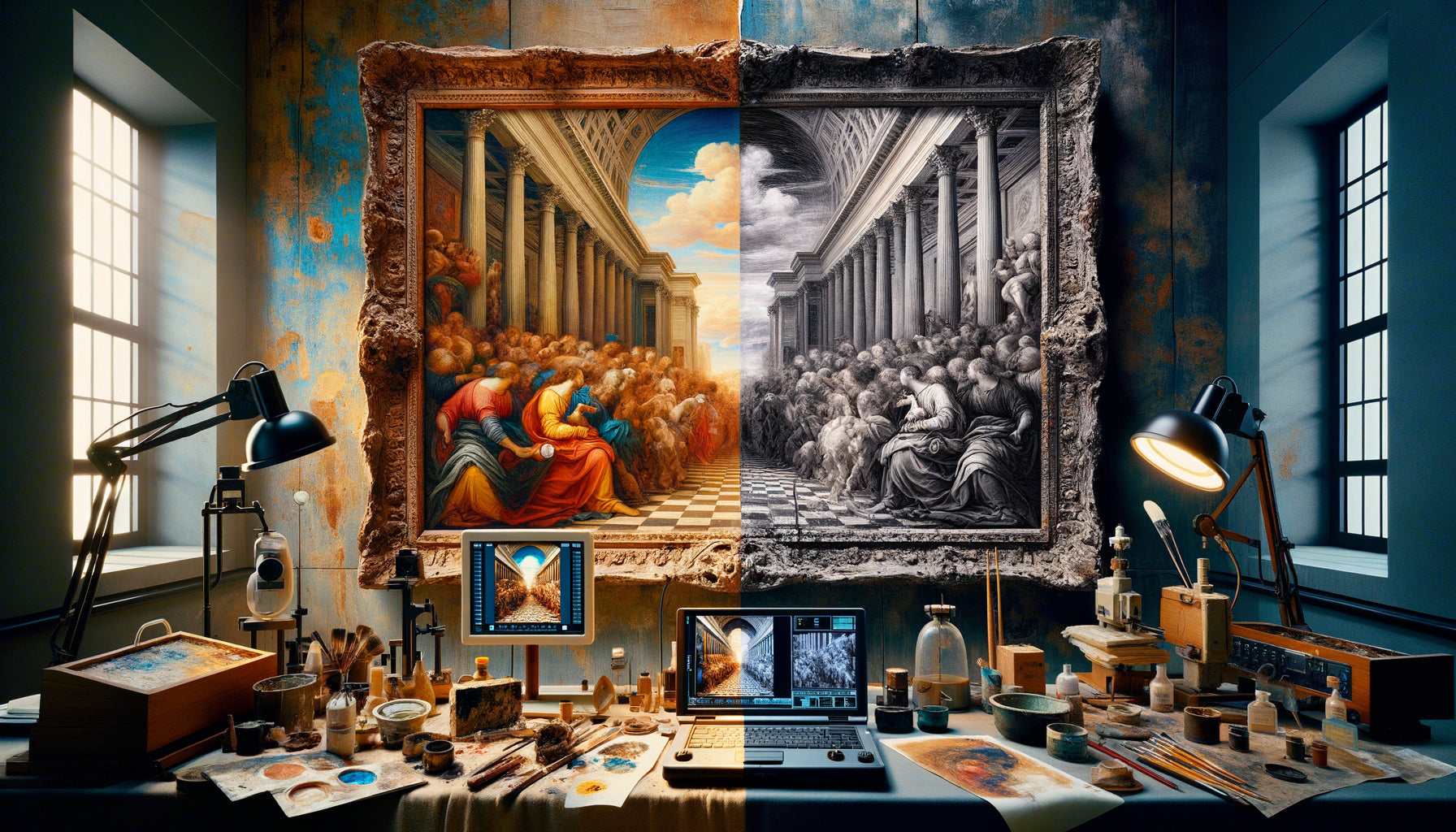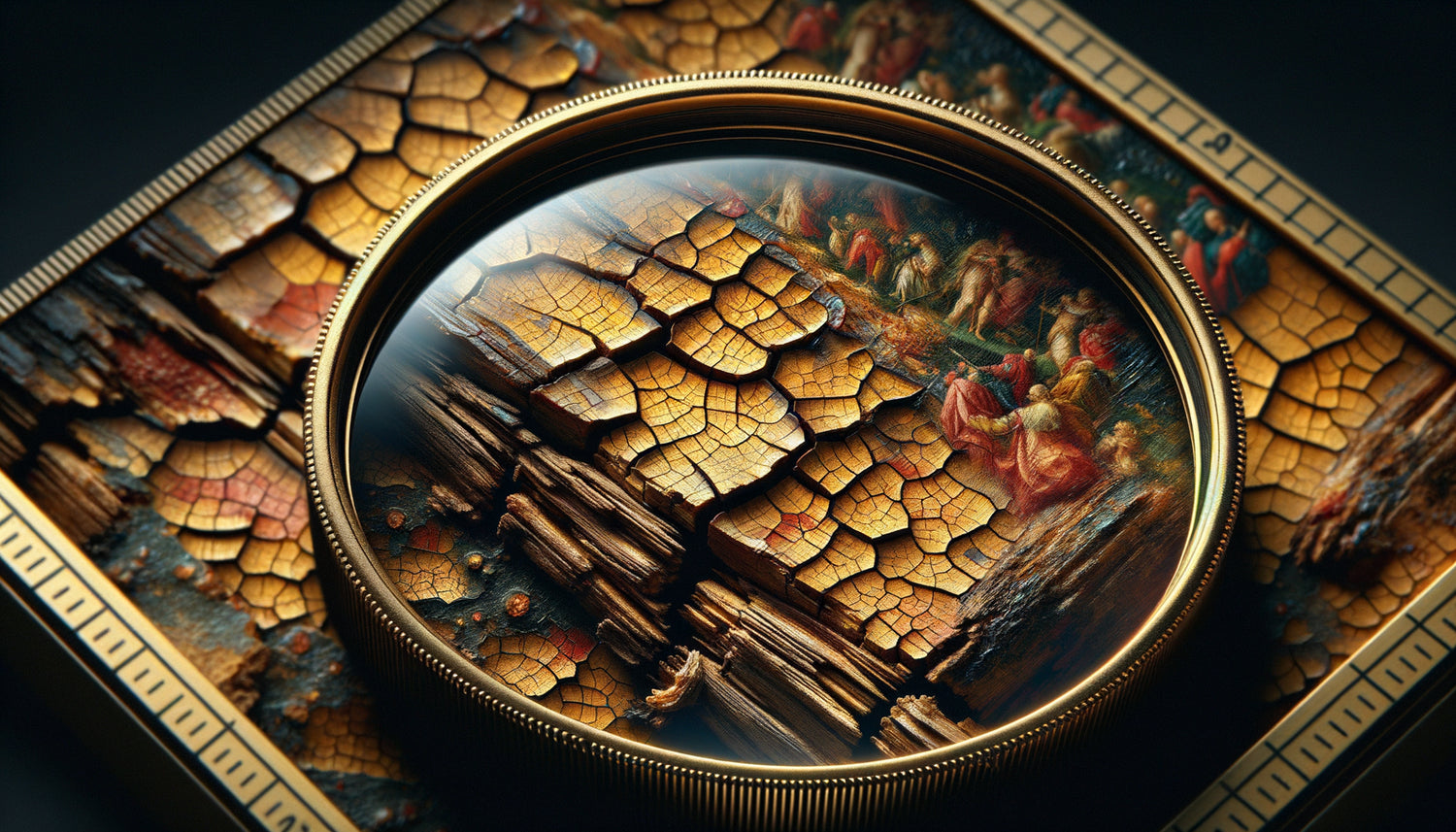
In the dimness of a clandestine workshop, a man hunched over a canvas examines under a magnifying glass a network of microscopic cracks. Each crack tells a story: that of time, humidity, thermal variations which have sculpted the surface of a painting over decades. Reproducing this language of natural aging represents the ultimate challenge for a talented forger. For if imitating a master's brushstroke is a matter of technical virtuosity, creating artificial hallmarks of age requires an intimate understanding of the chemical and physical processes that slowly transform a work. It is this obscure alchemy, this dialogue with the very substance of art, which separates crude imitation from a forgery capable of deceiving experts for years. Here's what the secret universe of forgers reveals: sophisticated techniques to artificially age a canvas, the microscopic traps that betray counterfeits, and why understanding these methods protects your artistic investment. Informed collectors now know that behind every crack lies a scientific truth, a material testimony impossible to totally falsify. Yet, forgers continue to innovate, pushing their mastery of accelerated aging ever further. Let's plunge into this fascinating universe where forensic science and art history meet to unmask imposture.
The secret anatomy of an authentic crack
Before understanding imitation, you must decipher the original. An authentic crack is never random: it results from accumulated internal tensions over decades, or even centuries. When a 17th-century painter applied his successive layers of oil and pigments, he unknowingly created a multi-layered system with different mechanical properties. The white ground layer absorbed the oil differently according to its porosity. The pigments themselves aged at variable rates: some became brittle, others retained relative elasticity.
Over time, these layers react differently to variations in humidity and temperature. The wood of the support expands and contracts according to the seasons. The network of cracks that appears therefore follows precise lines of tension, forming characteristic geometric patterns called “age cracks.” These fissures cross all pictorial layers consistently, creating a microscopic topography that no chance can perfectly reproduce. Experts examine the depth, orientation, and regularity of this network with manic attention.
The invisible signatures of true time
Authentic cracking exhibits microscopic characteristics that are impossible to fully reproduce. The edges of the cracks show natural wear, a gradual rounding caused by dust accumulation and handling over several generations. Within the cracks themselves accumulate organic traces: fossilized pollens, datable atmospheric particles, microorganisms that have colonized these tiny refuges. Under raking light, these cracks cast characteristic shadows that reveal their depth and authenticity. Laboratories now use electron microscopy to analyze these details invisible to the naked eye, transforming each crack into a chronological archive.
The bread oven and the legacy of master forgers
The oldest and most brutal method for creating artificial cracks dates back to the first Italian forgers of the 18th century: controlled baking. Once the paint was dry, the painting was placed near an intense heat source – traditionally a bread oven after baking – to accelerate the drying of the pictorial layers. This forced dehydration caused sudden mechanical stresses, creating a network of cracks in hours rather than decades.
But this primitive technique produces results that are easily detectable. Cracks obtained by baking exhibit excessive regularity, a too uniform appearance that betrays their artificial origin. The cracks do not respect the natural stress lines of the support, creating patterns inconsistent with the structure of the wood or canvas. Above all, they only affect the surface layers without penetrating deeply into the preparation, immediately revealing their relative youth under microscopic examination.
Modern variants of thermal aging
Contemporary forgers have perfected this thermal approach with more sophisticated methods. Some use controlled temperature cycles, alternating heating and cooling to simulate accelerated seasons. Others employ infrared lamps directed precisely to create localized stress zones. These techniques make it possible to obtain more irregular cracks, better mimicking the apparent randomness of natural aging. Yet, even these advanced methods leave chemical traces: baking irreversibly alters the molecular structure of oils, creating spectroscopic signatures that modern laboratories systematically detect during in-depth expertise.

The Chemistry Behind Deception
Beyond the warmth, forgers exploit the chemical properties of materials to accelerate aging. The addition of powerful driers in the paint itself fundamentally alters its drying behavior. These desiccating agents cause accelerated polymerization of oils, quickly creating the internal stresses that will generate cracks. Zinc sulfate, lead sulfate or cobalt salts are among the favorite additives, invisible in the final composition but detectable by chemical analysis.
Another approach is to apply specially formulated varnishes designed to crack quickly. These varnishes contain unstable resins that shrink as they dry, taking with them the surface layers of paint. By playing on the thickness and composition of these varnishes, the forger controls the pattern of cracks with remarkable precision. Some masters of counterfeiting combine several layers of varnish with different properties, creating superimposed cracking systems that mimic the successive re-varnishing of an old work.
Solvents and the Art of Instant Aging
Among the most vicious techniques is the use of selective solvents that attack the paint layers differently. By applying mixtures of alcohols, essences and ethers with precision, the forger can locally weaken certain areas, creating weaknesses that will naturally turn into cracks under normal atmospheric variations. This method has the advantage of producing fissures that continue to evolve after creation, reinforcing the illusion of authenticity. However, chemical analysis always reveals traces of these solvents, absent from truly old paintings that have only undergone gentle conservation cleaning.
When Time Becomes an Accomplice: Accelerated Exposure Methods
The most patient forgers adopt a different approach: rather than forcing brutal aging, they expose their creations to extreme environmental conditions for extended periods. A painting may be hung in a damp cellar for months, then transferred to an overheated attic, mimicking decades of neglectful preservation. These cycles of humidity and dryness create gradual tensions that generate more natural-looking cracks.
Some go so far as to literally bury their fakes for several years, exposing them to soil microorganisms and authentic seasonal variations. This remarkable patience produces results that are difficult to detect, because the aging, although accelerated, follows natural mechanisms. The painting authentically accumulates dust, spores, and organic particles, filling the cracks with truly old materials. Nevertheless, the chronology remains inconsistent: a thorough examination reveals that the deep layers of paint are too young compared to the surface deposits, creating a temporal contradiction impossible in an authentic work.

The perilous art of filling and masking
Creating cracks is only the first step. For a fake to be convincing, these fissures must have the patinated appearance of a century-old work that has been handled and cleaned. Experienced forgers therefore apply sophisticated "crack aging" techniques. Diluted natural pigments – burnt umber, bitumen – are delicately applied and wiped away, leaving residues only in the cracks. This accumulation mimics natural organic deposits.
Some even use controlled mold cultures, deliberately inoculating spores into the cracks before stopping their development with a fungicide treatment. Others rub the surface with cloths soaked in nicotine or strong tea, creating an artificial yellowing that accumulates preferentially in the cracks. The most daring collect dust from real museums or old collections to seed their fakes, literally transplanting authentically datable particles. These subterfuges can deceive even superficial examinations, but carbon-14 dating analyses of organic materials quickly reveal the anachronism between the supposed age of the painting and that of the deposits.
The Trap of Strategic Overvarnishing
A particularly effective tactic is to apply an authentically old varnish to the freshly cracked canvas, taken from a worthless work of art from the same century as the one being imitated. This authentic varnish partially fills in the artificial cracks, creating a complex stratification that can deceive surface analyses. When an expert takes a sample, they find a varnish from the correct period over the cracks, suggesting that the painting has been historically re-varnished. Only a complete analysis traversing all layers to the support will reveal that the underlying paint is much too recent, but such destructive examinations are only performed when serious doubts already exist.
Surround Yourself with Works Whose Authenticity is Beyond Doubt
Discover our exclusive collection of wall art inspired by famous artists that openly celebrate their nature as quality artistic reproductions, without ambiguity or false claims of authenticity.
Forensic Technologies That Unmask Imposters
Faced with the ingenuity of forgers, forensic science has developed ever more sophisticated analysis tools. Photography in grazing light reveals the topography of cracks with millimeter precision, allowing suspicious regularities to be identified. UV fluorescence makes modern restorations and recent varnishes appear, which react differently from ancient materials. Infrared reflectography penetrates the pictorial layers to examine the preparatory drawing and detect technical inconsistencies.
But it is physico-chemical analyses that offer the most irrefutable evidence. Raman spectrometry identifies pigments at the molecular level, revealing the use of synthetic colorants not available during the purported period. Gas chromatography analyzes the composition of binders, detecting modern additives or inconsistent chemical aging profiles. Carbon-14 dating, although expensive, precisely dates the organic materials in the support and pigments, establishing an absolute terminus post quem for the creation of the work.
Microscopic Examination: The Detail That Betrays
Paradoxically, it is often the simple microscopic observation that reveals the most sophisticated forgeries. An experienced expert examines how cracks traverse the different layers of paint. In an authentic work, an age crack affects all strata consistently, created by the same mechanical tensions. In a forgery, even an excellent one, the fissures often show revealing discontinuities: they mysteriously stop at certain interfaces, abruptly change direction without structural reason, or exhibit a uniform depth incompatible with gradual aging over several centuries. These microscopic inconsistencies, invisible to the naked eye, constitute definitive evidence of artificial intervention.
The eternal lesson of cracks
Understanding how forgers imitate the natural cracking of old paintings reveals a fundamental truth: time leaves signatures impossible to completely falsify. Each imitation technique, however sophisticated, produces anomalies detectable by modern scientific analysis. Artificial heat modifies the chemistry of binders. Chemical additives leave spectrographic traces. Accelerated aging creates chronological inconsistencies. Even prolonged exposure to extreme conditions cannot reproduce the slow accumulation of microscopic transformations that characterize the authentic patina of time.
For the collector, this knowledge offers valuable protection. Faced with a supposedly antique painting, examine the cracks with suspicion: are they consistent with the structure of the support? Do they logically traverse the different pictorial areas? Do they present the subtle variability of natural aging or the regularity betraying an artificial origin? Never hesitate to demand in-depth scientific analyses before a significant investment. Specialized laboratories can now detect even the most skillful forgeries, transforming what was once a black art into an exact science. In this eternal game of cat and mouse between forgers and experts, modern technology now clearly favors authenticity. Each crack becomes a witness, each fissure tells its true story – it is enough to know how to listen with the appropriate tools.
FAQ: Your questions about cracks and authentication
Can a painting be precisely dated by examining its cracks?
Cracks alone do not allow for precise dating, but they provide important chronological clues. A painting purportedly from the 17th century should exhibit a deep, well-developed network of cracks, with wear and tear characteristics accumulated over several centuries. The absence of cracks on a work supposedly 300 years old would be a major anomaly, unless under exceptionally documented conservation conditions. Conversely, excessively pronounced cracks on a recent work betray artificial aging. Experts consider cracks as one element among others in a body of evidence including analysis of pigments, support, pictorial techniques and documented provenance. It is the overall consistency of all these elements that establishes authenticity, cracks serving as a plausibility chronological verifier.
Does a painting with cracks necessarily mean it is old and authentic?
Absolutely not, and that's precisely what forgers are looking for when creating these marks of time artificially. Cracks can appear on a recent painting for multiple reasons: use of poor quality materials, inadequate drying, deplorable conservation conditions, or deliberate artificial aging. The presence of cracks therefore guarantees nothing about the age or authenticity of a work. What matters is the nature, consistency and distribution of these cracks. An expert examination seeks specific characteristics: variable depth, respect for the tension lines of the support, accumulation of authentically old organic matter, compatibility with other technical elements of the painting. A collector should never rely solely on the aged appearance of a surface to judge its authenticity – it is exactly the illusion that skilled forgers create.
How to protect your collection from forgeries and guarantee the authenticity of your acquisitions?
Protection begins with education: understanding the techniques of forgers naturally makes you more vigilant. Before any significant purchase, always demand complete provenance documentation tracing the painting's history since its creation. Systematically call upon recognized experts and, for works of significant value, do not hesitate to invest in scientific analyses in a specialized laboratory. These examinations, including UV fluorescence, infrared reflectography and physico-chemical analyses, cost a few hundred to a few thousand euros but can save you from acquiring a fake worth tens of thousands. Favor reputable galleries and auction houses that guarantee the authenticity of their works and accept return clauses in case of subsequent discovery of forgery. Finally, cultivate your eye by visiting museums and exhibitions, handling authentic works: direct experience develops a valuable intuition which is then complemented by technical analyses.