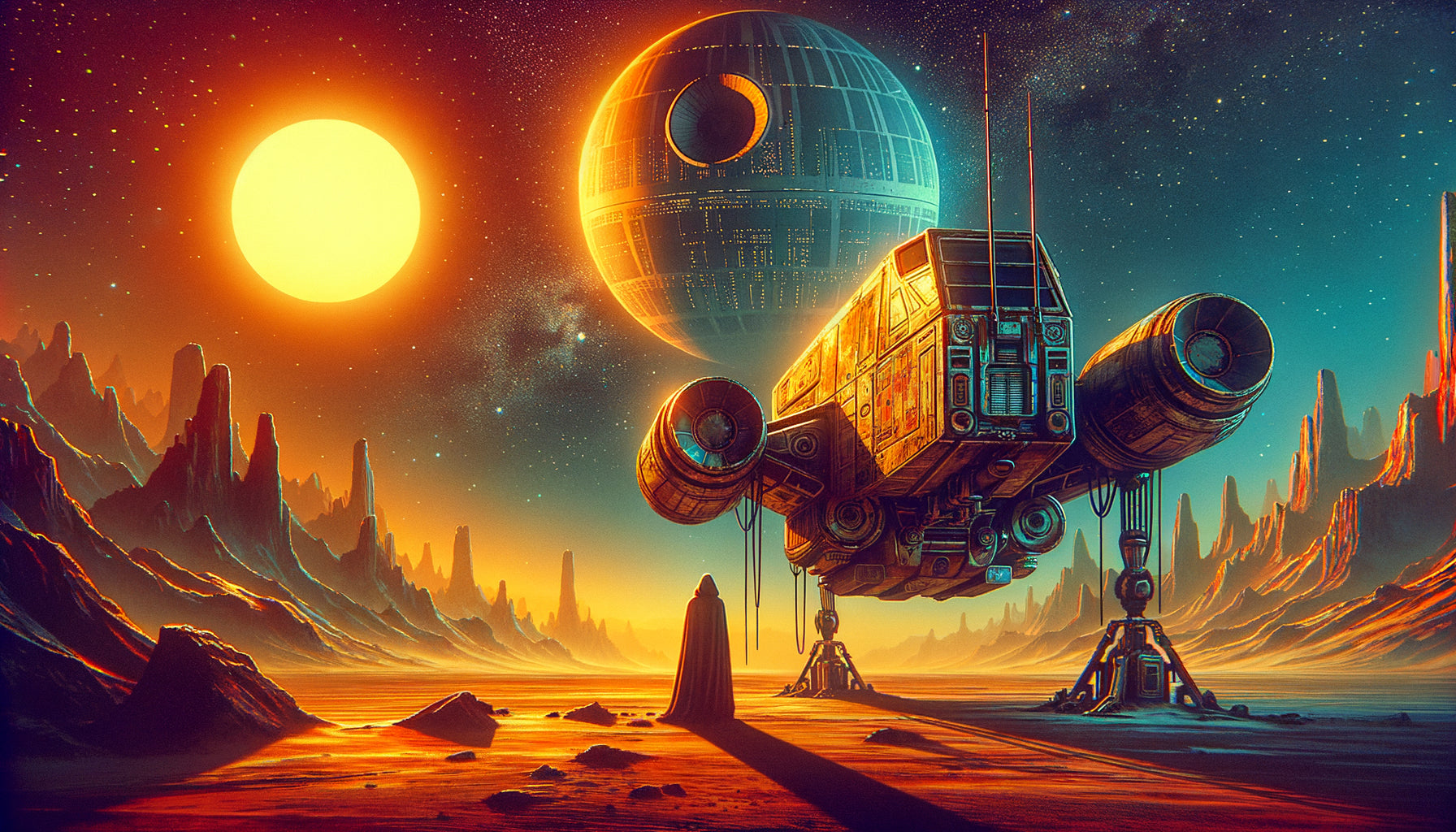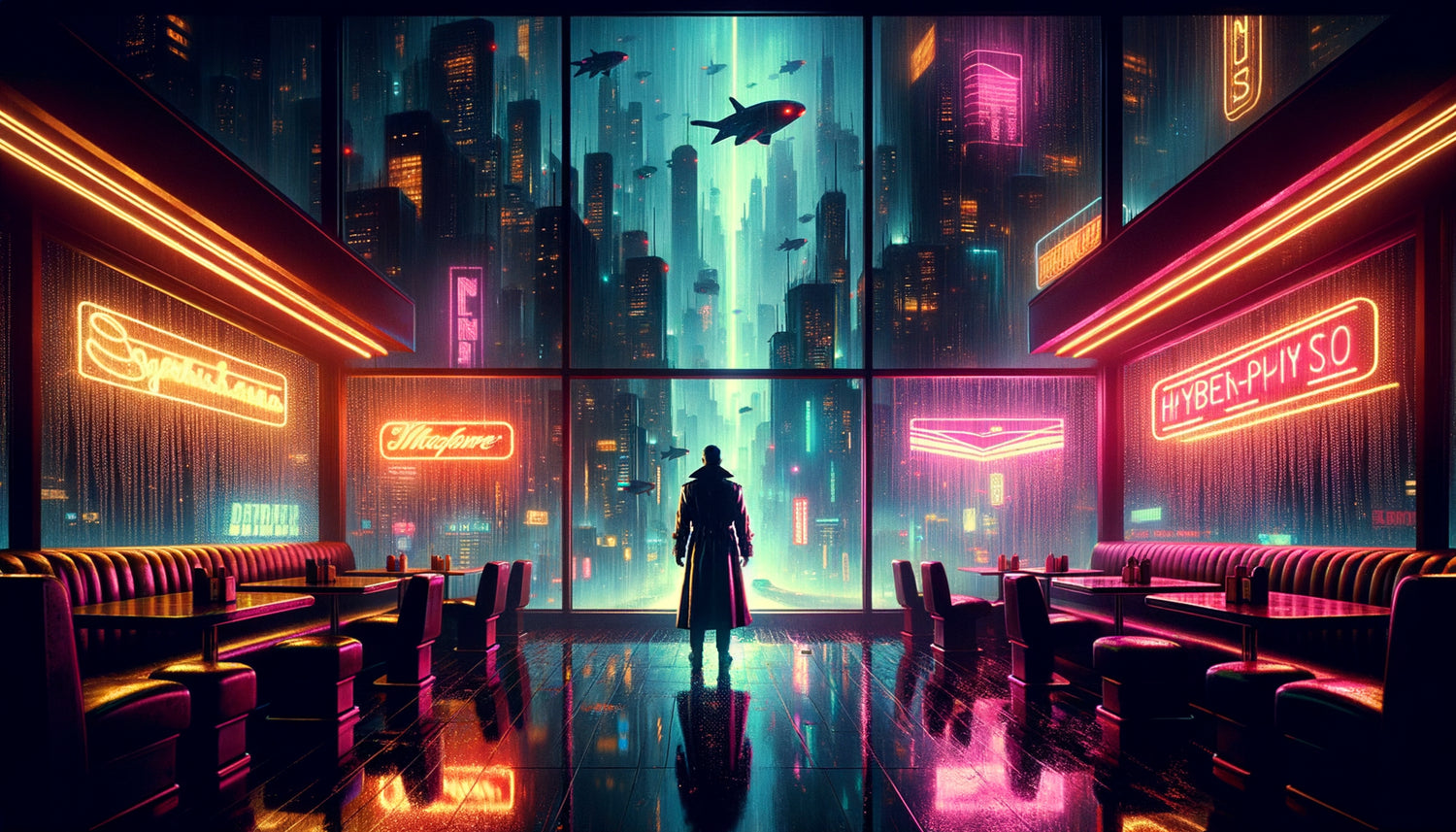
Have you ever felt that strange familiarity when looking at the wet neon lights of Blade Runner? That urban loneliness that seizes you, even in the heart of a bustling city? It's not a coincidence. Behind the futuristic sets of Ridley Scott hides the shadow of an American painter from the 20th century: Edward Hopper. His silent canvases, populated with isolated figures in urban spaces bathed in artificial light, have profoundly marked the aesthetics of science-fiction cinema. This influence extends far beyond Blade Runner to irrigate a whole section of contemporary visual culture.
Here's what Hopper’s legacy brings to science-fiction cinema: a visual grammar of urban loneliness, a dramatic mastery of artificial light that sculpts space and emotions, and a unique ability to transform architecture into a narrative character. Yet, this lineage remains largely unknown to the general public. We admire the visual universe of Blade Runner without always understanding its pictorial roots. We collect cyberpunk movie posters without realizing that they directly inherit the palette and compositions of a painter born in 1882. Rest assured: understanding this connection requires no academic knowledge of art history. I will guide you through this fascinating genealogical visual that connects Hopper’s deserted diners to our futuristic dystopian megalopolises. You will discover how an American realist artist shaped our vision of the future.
Urban loneliness: when Hopper foreshadows cyberpunk metropolises
The canvases of Edward Hopper are silent echo chambers. In Nighthawks (1942), four characters occupy a diner illuminated in the heart of a New York night. They are physically close but emotionally isolated, each locked in their psychological bubble. This urban loneliness will become the emotional signature of modern science-fiction cinema.
When Ridley Scott designs the Los Angeles of 2019 in Blade Runner, he transposes this same atmosphere into a futuristic context. Rick Deckard wanders through crowded streets but remains fundamentally alone, just like the anonymous customers of Hopper’s diner. The replicants themselves embody this existential loneliness: beings surrounded by humanity but excluded from the human community.
This kinship is not accidental. Syd Mead, the visual designer of Blade Runner, and Lawrence G. Paull, the production designer, explicitly referenced Hopper’s work in their preparatory research. They understood that to create a credible future, it was necessary to start from a universal emotional truth: the alienation of the individual in the modern urban environment.
The architecture of light: painting space with neon lights
Hopper's revolution wasn't just in his subjects but in his radical way of dealing with artificial light. Unlike the Impressionists who celebrated natural light, Hopper became fascinated by electric lighting: café neon signs, hotel lamps, nocturnal shop windows. He understood that this artificial light created dramatic zones of shadow and clarity, sculpting space in a quasi-theatrical manner.
In Blade Runner, this approach becomes the guiding principle of the cinematography. Jordan Cronenweth, the director of photography, floods the scenes with multiple and contradictory light sources: bluish neon lights, orange flames from oil towers, raw spotlights from flying cars. This fragmentation of light creates a complex visual geometry that directly evokes Hopper's compositions.
Windows as narrative frames
A recurring motif in Hopper’s work: the window. In Night Windows (1928) or Office at Night (1940), windows create frames within frames, isolating characters while allowing the viewer to observe them. This voyeuristic technique generates a unique narrative tension.
Post-Blade Runner science-fiction cinema has adopted this process massively. Think of the gigantic buildings in Ghost in the Shell, the transparent apartments in Her, or the towers in Altered Carbon. Everywhere, windows fragment urban space, creating living pictures that isolate protagonists within bubbles of artificial light. It's Hopper’s vision of urbanity, amplified on a megalopolitan scale.

The colors of melancholy: a palette for the future
Hopper's color palette might seem conventional at first glance: greens, yellows, deep reds. But it is in their juxtaposition that it becomes extraordinary. He creates dissonant harmonies, contrasts that evoke an indefinable urban melancholy.
Blade Runner directly inherits this colorimetric approach. The film constantly opposes warm lights (oranges, golden yellows) to cold tones (electric blues, neon greens). This permanent chromatic war creates a visual tension that translates the thematic conflict of the film: humanity versus technology, emotional warmth versus mechanical coldness.
This influence extends far beyond Blade Runner. Cyberpunk cinema has adopted this palette as a visual signature: the pink and blue neons of Drive, the saturated atmospheres of Only God Forgives, the retro-futuristic aesthetic of Ex Machina. All draw on the color vocabulary established by Hopper nearly a century ago.
When architecture becomes a character
With Hopper, buildings are never just scenery. They possess a psychological presence, almost a personality. The angles of roofs, the lines of facades, the perspectives of streets create an emotional geometry that influences our perception of characters.
This conception of narrative architecture becomes central to visual science fiction cinema. In Blade Runner, the gigantic structures of the Tyrell Corporation literally crush the characters, symbolizing the domination of corporate capitalism. The narrow and crowded alleyways of street level contrast with the vast and empty spaces of elite apartments, creating a visual mapping of social inequality.
Films like Metropolis by Fritz Lang had already explored this path, but it is the synthesis between German expressionist approach and Hopper's emotional realism that gives contemporary science fiction cinema its distinctive visual signature.
Immobility as dramatic tension
An often overlooked aspect of Hopper: his compositions suggest stillness, suspended time. His characters seem to be waiting for something that may never come. This temporal stasis generates a powerful narrative tension.
Blade Runner captures this quality in its most memorable moments. The scene where Deckard waits at a bar counter, the sequence where Rachel smokes near a window, the contemplative shots of the city in the rain: all these moments prioritize atmosphere over action, emotion over movement. It is deeply hopperian.

The visual legacy: from Hopper to the collective imagination
Hopper’s influence on science fiction cinema is not limited to Blade Runner. It now permeates a whole visual ecosystem that extends from cinema to video games, from contemporary photography to artistic installations.
Directors like Denis Villeneuve (Blade Runner 2049), Alex Garland (Ex Machina), or Duncan Jones (Moon) have all cited Hopper as a reference. His approach to urban solitude, his mastery of artificial light, and his ability to load architectural space with emotion have become essential narrative tools for representing our ambivalent relationship with technology and urbanization.
Video games like Deus Ex, Cyberpunk 2077, or Observer create interactive environments that allow players to wander through three-dimensional hopperian spaces. The loop is closed: what was motionless contemplation in painting becomes active exploration in the interactive medium.
Collecting atmosphere: reproducing the hopperian emotion
This aesthetic does not remain confined to screens. It also inspires contemporary interior decoration and art photography. Reproductions of Hopper’s works now adorn apartments that seek to capture this sophisticated urban melancholy, this chosen solitude rather than suffered.
The irony is delicious: we decorate our private spaces with images of public solitude, transforming alienation into aesthetics. It may be the ultimate form of appropriation of Hopper’s work – recognizing that this melancholy is an integral part of the modern urban experience, and choosing to embrace it rather than flee from it.
Transform your interior into a cinematic space
Discover our exclusive collection of famous artist inspired paintings that capture this unique atmosphere where American realism and futuristic imagination meet. Works that transform your walls into emotional screens.
Your gaze will never be the same
Now that you know this secret lineage between Edward Hopper and science fiction cinema, you won't look at Blade Runner the same way. You will recognize hopperian compositions in deserted bars, illuminated windows, characters isolated in oceans of artificial light.
This awareness also transforms your view of art. Hopper’s seemingly simple canvases reveal their extraordinary prescience: he didn't just capture his time; he anticipated our contemporary relationship with urban space and technology. His vision of modern solitude resonates more strongly today than it did in his time.
The next time you visit an exhibition, watch a science fiction film, or simply observe a neon-lit street at night, think about this visual genealogy. Art does not progress linearly: it weaves unexpected connections between eras and mediums. And sometimes, a 20th-century American painter helps us imagine the metropolises of the future.
Frequently Asked Questions
Did Ridley Scott directly draw inspiration from Hopper for Blade Runner?
Yes, it is documented. The art team of Blade Runner, including designer Syd Mead and production artist Lawrence G. Paull, explicitly studied the work of Edward Hopper during the visual design phase of the film. In several interviews, Ridley Scott mentioned the influence of 20th-century American painting on his aesthetic approach. This influence is particularly evident in the treatment of artificial light, the composition of interior shots (especially apartment scenes), and the overall atmosphere of urban solitude that permeates the film. It's not just a visual coincidence but a conscious and claimed lineage.
Which of Hopper’s works are closest to the Blade Runner aesthetic?
Nighthawks (1942) is the most obvious reference with its nocturnal diner bathed in artificial light and isolated characters. But other canvases deserve attention: Night Windows (1928) for its architectural voyeurism, Office at Night (1940) for its dramatic use of interior lighting, Gas (1940) for its rural solitude translatable into an urban context, and Morning Sun (1952) for its raking light and contemplative female figure that directly evokes Rachel in Blade Runner. Automat (1927) also captures this urban melancholy in a modern public space. These works share a common visual grammar: contrasting artificial light, psychologically isolated characters, architecture as a narrative character, and a color palette creating an atmosphere of sophisticated melancholy.
How to integrate this Hopper-cyberpunk aesthetic into my decoration?
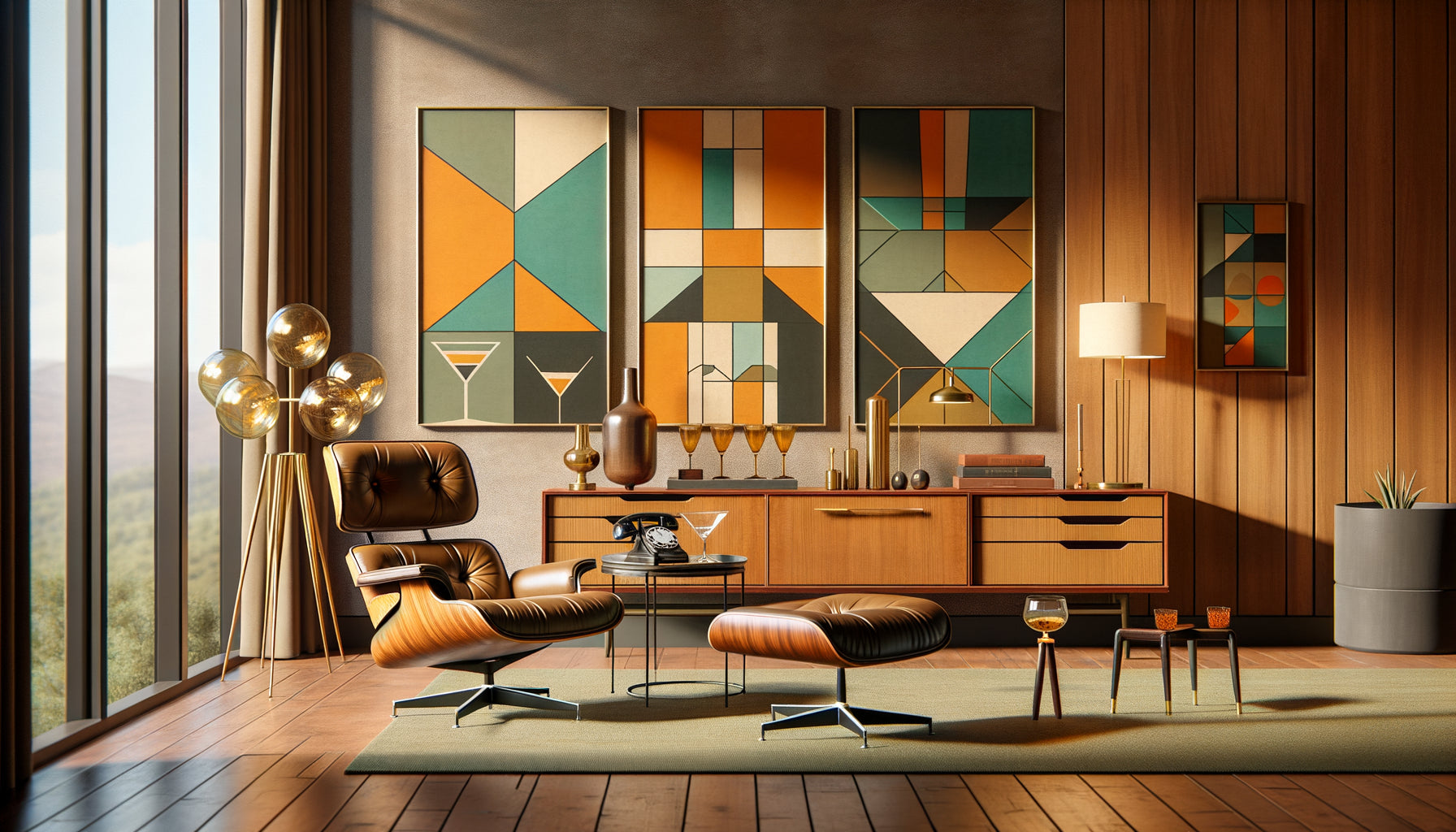
Start with the light: prioritize multiple sources at varying intensities rather than uniform lighting. Use LED neon lights (blues, pinks, greens) as accents, combined with warm lamps to create thermal contrasts. For wall art, alternate reproductions of Hopper and cyberpunk movie posters to create a visual dialogue. In terms of furniture, look for clean geometric lines inspired by mid-century design (Hopper's period) mixed with contemporary industrial elements. Windows are crucial: treat them as frames, use Venetian blinds to fragment the exterior light. The color palette should play on warm-cool contrasts: neutral walls (gray, concrete) animated by touches of saturated colors. Finally, embrace empty spaces: the Hopperian composition values the negative, the void that creates tension. Fewer objects, better arranged, with particular attention to the shadows and lights they generate.