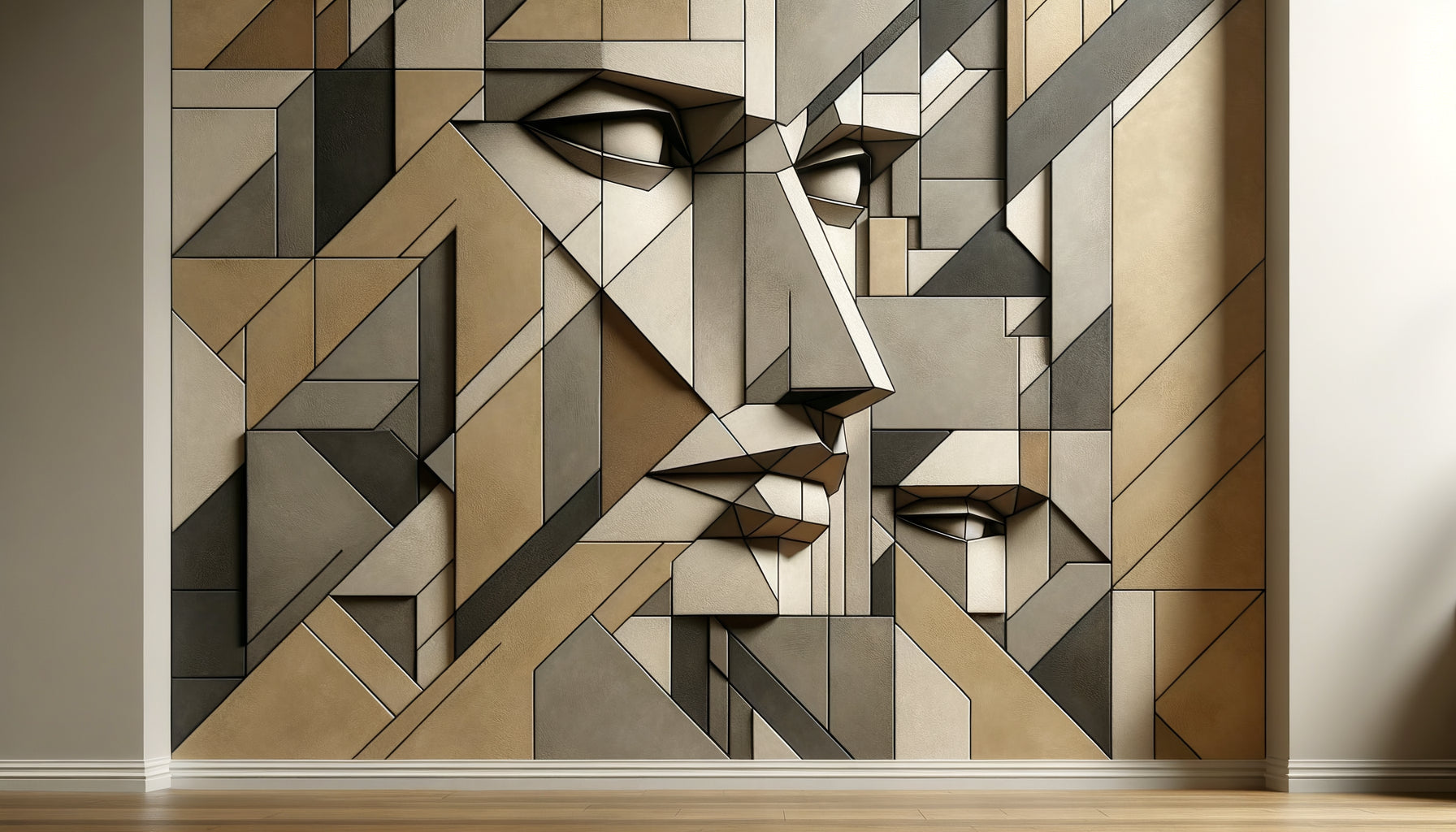
I spent twelve years organizing art exhibitions for private interiors, and I remember one client who said to me: "I want my living room to spark conversations, not yawns." That's the day I truly understood the transgressive power of surrealism in our living spaces. Because Dalí didn't just revolutionize painting: he exploded the codes of what an interior could tell.
Here’s what Dalian Surrealism brings to your decor: a liberation from aesthetic conventions that transforms your interior into a visual manifesto, a capacity to create points of fascination that tell your uniqueness, and this creative boldness that shifts a space from "pretty" to unforgettable.
The problem? You like the idea of a unique decor, but you fear that surreal absurdity will turn your living room into an unlivable cabinet of curiosities. You admire melting clocks and elephants with spider legs, but how do you translate this poetic madness without falling into kitsch?
Rest assured: incorporating the spirit of surrealism into your decor doesn't mean installing a lobster telephone in your entrance hall. It’s more about understanding the visual codes that Dalí and his contemporaries established, then distilling them intelligently into your decorative choices. This approach transforms absurdity into unsettling elegance.
In this article, I will show you how surrealism has become a major decor trend, which Dalian elements actually work in a contemporary interior, and above all how to create this delicate balance between artistic provocation and everyday comfort.
Why Dalí still fascinates our interiors in 2025
Salvador Dalí was not just a painter: he was a creator of total universes. When I visit the Dalí Museum in Figueres, I am always struck by this obsession with the environment: each room is an immersive experience where architecture, furniture and works dialogue in a disturbing choreography.
This holistic vision explains why Dalian surrealism works so well in decor. Unlike other artistic movements confined to walls, surrealism has always wanted to invade living space. Dalí himself designed furniture, jewelry, decorative objects. His famous Mae West sofa shaped like red lips? A decorative manifesto before it was a work of art.
Today, this aesthetic is experiencing a spectacular revival. Designers are appropriating surreal codes: impossible organic shapes, détournements of everyday objects, unexpected juxtapositions. I recently worked on a project where a melting mirror evoking soft watches created a hypnotic focal point in a minimalist dining room. Absurdity becomes trendy because it offers a poetic escape from the uniformity of interiors.
The visual legacy of Dalí in contemporary design
Observe current decor trends: these lamps with shades that seem to defy gravity, vases with biomorphic shapes, rugs that play with perspective. They all carry the DNA of surrealism. The Dalinian lesson? Questioning the expected function of an object to reveal its sculptural dimension.
Surrealism in decoration is not a fixed style but a creative attitude: one that accepts the illogical, celebrates dreaminess, and transforms the ordinary into the extraordinary through a simple shift in context.
The surreal codes that transform an interior
After dozens of artistic installations in private spaces, I have identified five surrealist principles that consistently work in decoration, even in the most conventional interiors.
Time distortion
The soft watches in The Persistence of Memory embody this concept: time that liquefies, rigidity that melts. Translate this into decoration with furniture featuring exaggerated curved lines, undulating mirrors, luminaires that seem to warp. This distortion creates a feeling of timelessness, as if your interior exists outside the usual physical constraints.
I installed a wall clock for a collector whose numbers seemed to be escaping from the dial. This simple element transformed his office into a meditative space where the notion of deadline lost its anxiety-inducing character.
Scale reversal
Dalí constantly played with proportions: gigantic elephants on spindly legs, monumental ants. In decoration, this principle translates to oversized objects in unexpected spaces or conversely, disturbing miniaturizations. An oversized lamp in a small living room, a collection of tiny frames on a cathedral wall: these scale disruptions create that delicious discomfort characteristic of surrealism.
Object détournement
The lobster telephone, the lips sofa: Dalí excelled at the metamorphosis of everyday objects. Today, this approach inspires furniture creators: chairs that resemble sculptures, vases that evoke bodies, luminaires that seem alive. The utilitarian object becomes conversation.
For a Parisian apartment, I selected a coffee table whose glass top rested on what looked like giant golden hands. Each guest stopped, intrigued, before smiling. That's exactly the effect sought: the absurd that opens dialogue.
Dreamlike landscapes
Dalí's endless deserts, his ambiguous skies, his impossible horizons: this landscape dimension of surrealism finds a magnificent echo in today's panoramic wallpapers. Landscapes that defy logic, dizzying perspectives, scenes where the real and the imaginary merge.
I wallpapered a loft hallway with a panorama depicting an Escher-esque staircase unfolding into a sky of clouds. This simple choice transformed a circulation space into an immersive daily experience.
The mysterious symbolism
Dalí was obsessed with personal symbols: eggs, crutches, snails, drawers. Create your own symbolic language in decoration. Choose a recurring motif that runs through your rooms, creating an encrypted narrative that only your loved ones will decode. This mysterious continuity gives depth to your interior.

How to integrate surrealism without descending into chaos
The real question: how to adopt Dalí's absurdity while maintaining a livable interior? After committing some spectacular mistakes early in my career, I developed a method.
The rule of the single focal point : in each room, allow yourself ONE truly surreal element. Not three, not five. One. It could be a delirious sculptural furniture piece, a disturbing work of art, an impossible luminaire. But one only. The rest of the room then becomes its setting, amplifying its impact by contrast.
I arranged a living room around a monumental mirror whose frame seemed to liquefy towards the floor. Everything else was understated: a simple sofa, neutral walls, clean lines. This mirror became the hero of the space, creating that characteristic poetic disturbance of surrealism without overwhelming the eye.
Chromatic balance as an anchor
Dalí's surrealism can be chromatically intense. To avoid visual cacophony, establish a restricted palette. Dalí himself often used golden, ochre and deep blue ranges. Adopt no more than three colors and decline them on all your surrealist elements.
In a recent project, I worked exclusively with black, gold, and emerald green. Surreal pieces – an anthropomorphic vase, a tentacled lamp, a painting with impossible perspectives – shared these tones. The result? An elegant consistency despite the strangeness of the forms.
Surrealism in progressive touches
Just starting out? Begin small. A cushion printed with a detail from a surreal painting. A clock with improbable hands. A photo frame with organic contours. These micro-interventions test your appetite for the absurd without major decorative commitment.
Observe how you react after a few weeks. If these elements still enchant you, gradually scale up to more assertive pieces. Surreal decor should be a daily pleasure, not a provocation that tires you.
Essential Dalí-esque Pieces for 2025
Certain surreal elements have proven their effectiveness in contemporary interiors. Here is my selection, the result of hundreds of projects and countless conversations with creators.
Organic Mirrors: these mirrors with irregular, asymmetrical contours that seem to have been shaped by an invisible force. They capture light unpredictably and create fragmented reflections worthy of Dalí's multiple realities. Place one facing a window: natural light amplifies its dreamlike character.
Sculptural Lighting Fixtures: surrealism excels in improbable light sources. Lamps that look like alien plants, suspensions that defy balance, sconces that seem to pass through the wall. Lighting is the perfect medium for the absurd: functional but freed from formal constraints.
Biomorphic Furniture: armchairs with exaggerated bodily curves, coffee tables evoking amplified natural forms, impossible geometry bookshelves. This furniture dialogues with our bodies in a disturbing way, creating a strange intimacy between the inhabitant and their space.
Dimensional Wall Art: beyond flat reproductions, prioritize pieces that create relief, come out of the wall, and create changing shadows. Sculptures, assemblages, bas-reliefs that transform your wall into a tactile landscape.
Where to find these surreal pieces
Contemporary design galleries are full of neo-surrealist creations. Scandinavian and Italian designers in particular brilliantly revisit this heritage. Antique shops also offer vintage pieces from the 70s and 80s, a period of surrealism renaissance in furniture.
For artwork, prioritize young artists who follow this surrealist lineage rather than academic reproductions. Their work brings an essential contemporaneity that avoids a "museum" effect.
Want to bring dreaminess into your everyday life?
Discover our exclusive collection of wall art inspired by famous artists that will transform your walls into windows to the imagination. Works that capture the surreal spirit while harmoniously integrating with your contemporary decor.

Piece by piece: where to place surreal absurdity
Not every room welcomes surrealism with the same receptiveness. Here is my functional map after twelve years of experimentation.
The living room: maximum expression ground
It's the conversation space, so the ideal place for pieces that provoke dialogue. A surreal piece of furniture, a large disturbing work, a rug with impossible perspectives. The living room forgives boldness because you stay awake, stimulated, in social mode.
However, I avoid overload: if your sofa is a living sculpture, your walls remain wise. Balance always relies on controlled tensions.
The bedroom: gentle surrealism
Space of rest obliges, surrealism becomes more contemplative there. Favor works with soothing dreamy atmospheres rather than aggressive provocations. A panoramic wallpaper depicting an unreal but serene landscape, a luminaire with soft and organic shapes, a mirror with hypnotic but harmonious curves.
The bedroom welcomes Dalí's meditative surrealism, that of silent deserts and infinite horizons, not that of swarming ants and decomposing flesh.
The entrance: the inaugural manifesto
Your entryway announces the identity of your interior. It's the perfect place for an unapologetically surreal statement. A console with impossible shapes, a spectacular mirror, a work immediately intriguing. Guests instantly understand that they are entering a territory where conventions are questioned.
In a Brussels apartment, I placed in the entryway a sculpture representing a monumental hand holding a bouquet of melting keys. Every visitor would stop, touch, smile. The tone was set.
The bathroom: sensual absurdity
An intimate and sensory space, the bathroom lends itself wonderfully to surrealism. Distorting mirrors, sculptural faucets, organic basins. Dalí himself had a fascination with water and its metamorphoses.
I recently installed a sink that seemed carved from liquid stone, with gilded faucets evoking branches. The effect was both luxurious and disconcerting, exactly the balance sought.
Beyond Dalí: expanding your surrealist vocabulary
While Dalí embodies surrealism in the collective imagination, other artists of the movement offer exciting decorative avenues.
René Magritte and his visual paradoxes inspire a more conceptual decoration: games on representation, sophisticated trompe-l'oeil, philosophical questioning. Wallpaper depicting a daytime sky on a bedroom wall creates that interior-exterior ambiguity so magrittian.
Max Ernst and his petrified forests, his obsessive textures, his delirious collages suggest a more tactile, more material approach to surrealism. Textured wall coverings, assemblages of incongruous materials, mysterious patinas.
Meret Oppenheim and her iconic fur-covered cup embody sensual and unsettling surrealism. This approach now inspires textile designers: fabrics with unexpected textures, surprising material combinations, subverted comfort.
Expanding your surrealist culture allows you to personalize your decorative approach, avoid clichés dalinian too expected, create a truly unique visual language.
Living with the absurd: everyday life transformed
After years of observing how people live in surreal interiors, I have noticed a fascinating phenomenon: the absurd becomes familiar without ever becoming banal.
This client who installed a chandelier evoking a golden octopus in her dining room confides to me that she still notices it, three years later. Not out of boredom, but because it continues to surprise her, differently capturing the light according to the time, creating new shadows.
It is the magic of surrealism in decoration: it re-enchants everyday life. Your interior does not become a frozen museum but a living space that stimulates your imagination, nourishes your creativity, reminds you that reality is always negotiable.
I myself have a mirror at home whose frame seems to liquefy. Every morning, as I get ready, I catch my fragmented reflection in its impossible curves. This daily ritual before the absurd reminds me not to take the day – or myself – too seriously.
The effect on your guests
Surrealist decor also transforms sociability. Conversations in front of a disturbing work take on an unexpected depth. People reveal their interpretations, their discomforts, their fascinations. The absurd becomes revealing.
I've noticed that surreal interiors naturally attract curious, creative, and open-minded people. Your decor becomes a subtle relational filter, a silent manifesto of your aesthetic values.
Imagine yourself in six months, welcoming friends into your transformed living room. Their gaze stops on this impossible lamp, this organic mirror, this work that defies logic. They smile, intrigued. “It’s so you,” they say. And you realize that you have succeeded: creating a space that truly resembles you, not a catalog decor. Your interior finally tells your singularity, that part of you that refuses conventions and embraces the imagination. Surrealism is not just a decor trend: it's an everyday invitation to see the world differently. Start small – one room, one element, one disturbing detail. Observe how this tamed absurdity enriches your daily life. Then, if you feel like it, let poetic strangeness gradually colonize your space. Dalí said: “I don’t drug myself, I am the drug.” Make your interior that gentle drug that re-enchants reality every day.
Frequently Asked Questions about Surrealism in Decor
Does surrealism in decor risk quickly going out of fashion?
This is a legitimate concern, but surrealism enjoys a particular status in art history. Unlike ephemeral trends, it is an artistic movement that has been around for a century whose visual codes have proven their timelessness. When you integrate authentic surrealism – not “trendy” gadgets but pieces that really dialogue with the legacy of Dalí, Magritte or Ernst – you are investing in an aesthetic that has crossed decades. My advice: prioritize pieces by recognized designers or serious contemporary artists rather than industrial reproductions. A well-designed surrealist lamp will age like a sculpture, gaining patina and character. I have clients who have been living with the same surrealist furniture for fifteen years and still find it captivating. The key? Choose pieces that really disturb you, not just those that are “in vogue.” Your personal fascination is the best safeguard against obsolescence.
How to integrate surrealism into a small space without visually cluttering it?Does surrealism suit all decoration styles or does it require an already artistic interior?
This is precisely the strength of surrealism: it works by contrast and can therefore be integrated into almost any style. I have installed surrealist pieces in Scandinavian minimalist interiors, industrial lofts, classic Haussmann apartments, even rustic country houses. The secret? Adapt the surreal intensity to the context. In a very clean interior, a single strong surrealist piece is enough – it benefits from the surrounding simplicity which amplifies its strangeness. In an interior already rich in textures and colors, opt for more discreet, monochrome surrealism that adds a conceptual dimension without visual saturation. Surrealism does not require an artistically prepared “ground”: it creates its impact by emerging where it is least expected. An organic mirror in a white country kitchen, an impossible lamp in a corporate office, a painting with disturbing perspectives in a soft bedroom – these controlled dissonances are precisely what makes surrealism so effective in decoration. It questions, displaces, opens poetic breaches in any context.
Does surrealism suit all decoration styles or does it require an already artistic interior?
This is precisely the strength of surrealism: it works by contrast and can therefore be integrated into almost any style. I have installed surrealist pieces in Scandinavian minimalist interiors, industrial lofts, classic Haussmann apartments, even rustic country houses. The secret? Adapt the surreal intensity to the context. In a very clean interior, a single strong surrealist piece is enough – it benefits from the surrounding simplicity which amplifies its strangeness. In an interior already rich in textures and colors, opt for more discreet, monochrome surrealism that adds a conceptual dimension without visual saturation. Surrealism does not require an artistically prepared “ground”: it creates its impact by emerging where it is least expected. An organic mirror in a white country kitchen, an impossible lamp in a corporate office, a painting with disturbing perspectives in a soft bedroom – these controlled dissonances are precisely what makes surrealism so effective in decoration. It questions, displaces, opens poetic breaches in any context.