I long believed that simply hanging pictures randomly would suffice to decorate my walls. The result? My living room resembled a disorganized art gallery, my bedroom an overloaded exhibition wall, and my guests didn't know where to look. After twelve years of assisting collectors in arranging their spaces, I understood a fundamental truth: the visual balance of an apartment is not measured by the number of paintings, but by the harmony of volumes and breathing room.
Here’s what the right balance of paintings brings to your apartment: a fluid gaze circulation that naturally guides the eye from one room to another, a defined personality without visual overload, and that soothing feeling of being at home, surrounded by works that tell your story. Most apartment dwellers fall into two extremes: bare walls out of fear of doing too much, or chaotic multiplication that turns each room into a flea market. Between these pitfalls lies a subtle path, a proven method that I will share with you. In a few minutes, you will know exactly how many paintings to hang in your living room, bedroom and transitional spaces to create this perfect balance that makes all the difference.
The 3-2-1 rule: the secret of harmonious apartments
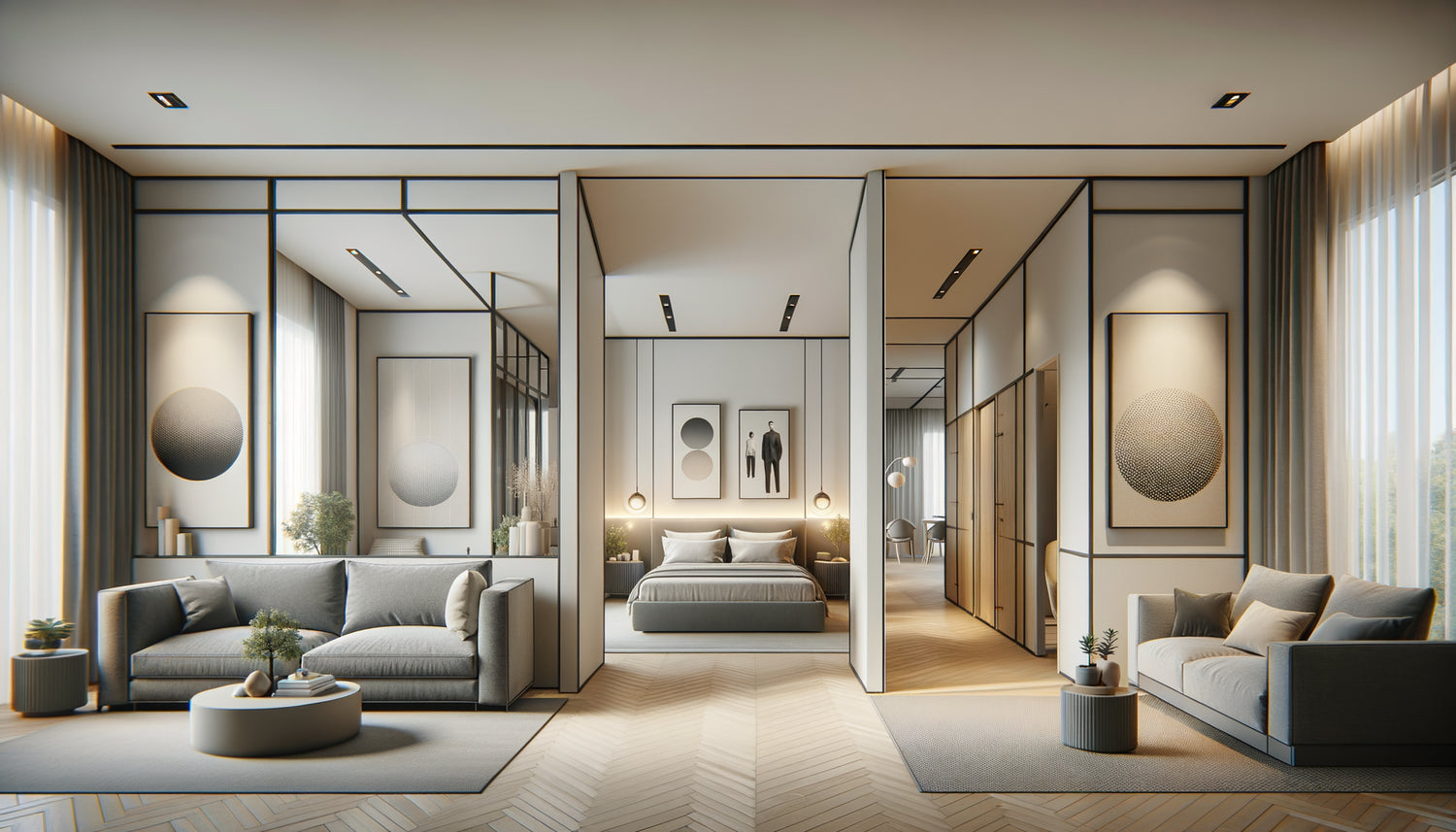
In a three-room apartment, I systematically apply what I call the 3-2-1 rule, a formula that I have refined over the years. The principle is simple but terribly effective: three paintings in the main living room, two in the bedroom, one in a transitional space such as the hallway or entrance.
This distribution respects the natural hierarchy of your spaces. Your living room concentrates most of your social life, it's where gazes linger, where conversations unfold. Three paintings allow you to create a visual narrative without saturating the space. In the bedroom, two works are enough to personalize intimacy without disturbing rest. As for the entrance or hallway, a single well-chosen painting acts as an elegant punctuation mark, a preamble to the atmosphere of your apartment.
But be careful: this rule is not a prison. It constitutes a safe starting point, especially if you are new to artistic arrangement. A 50m² apartment will follow this logic differently from a 90m² space. Ceiling height, natural light, and the style of your furniture influence these proportions.
The living room: orchestrate three paintings like a visual symphony
The living room deserves special attention in the distribution of your paintings. With three strategically placed works, you create what I call a visual triangle: the gaze naturally circulates between anchor points without ever getting lost.
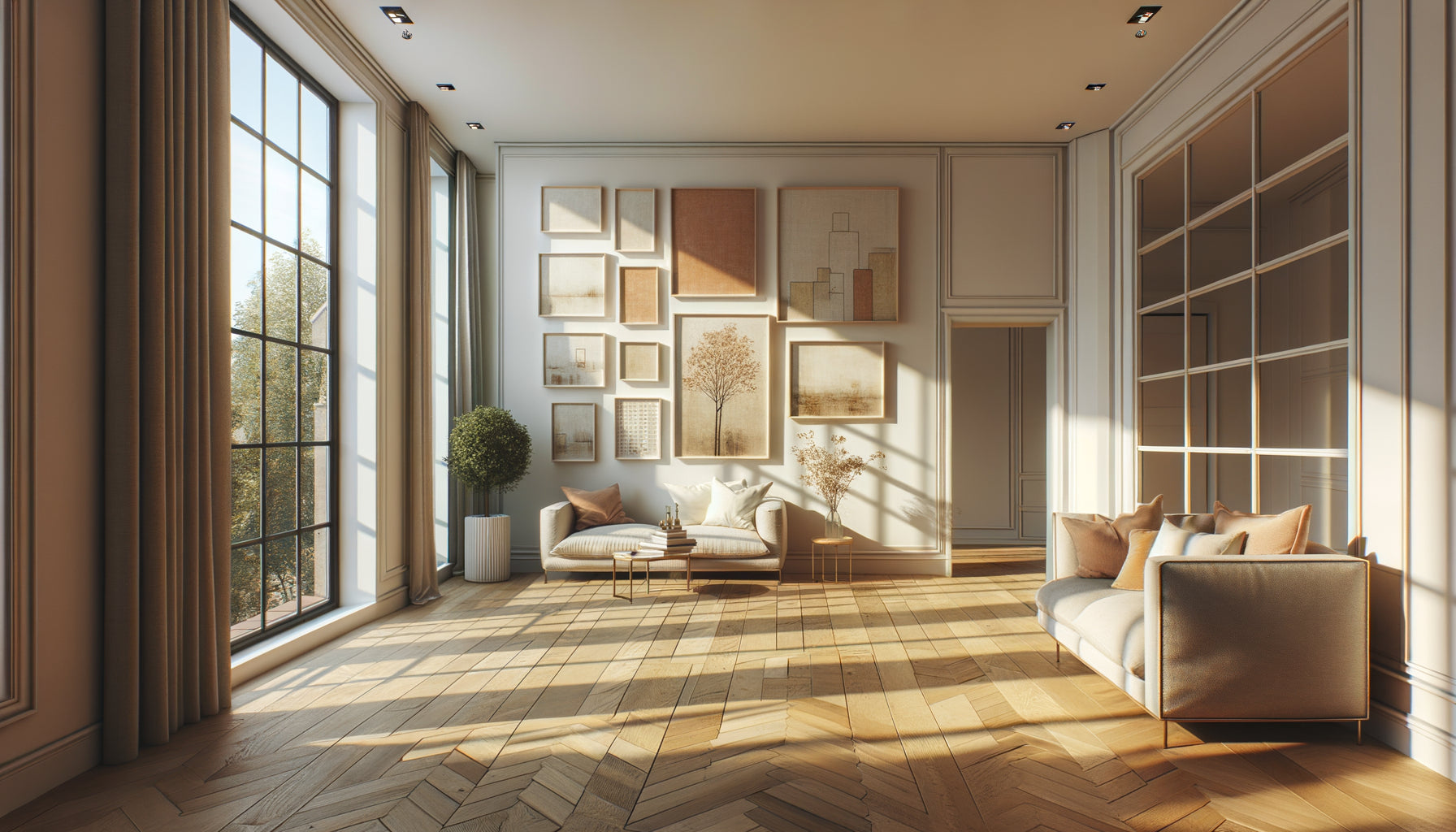
The first option is to create a grouped composition above the sofa. Three complementary-sized paintings – for example, two medium formats framing a larger one in the center – form a coherent ensemble that structures the entire space. This approach works particularly well in small living rooms where you want to maximize the visual impact of a single wall.
The second strategy disperses the three paintings across different walls. A large format above the sofa immediately attracts attention, a medium format on the opposite wall creates breathing space, and a third, smaller one, punctuates an angle or accompanies a bookcase. This scattered arrangement is suitable for large living rooms where you want to create multiple points of interest.
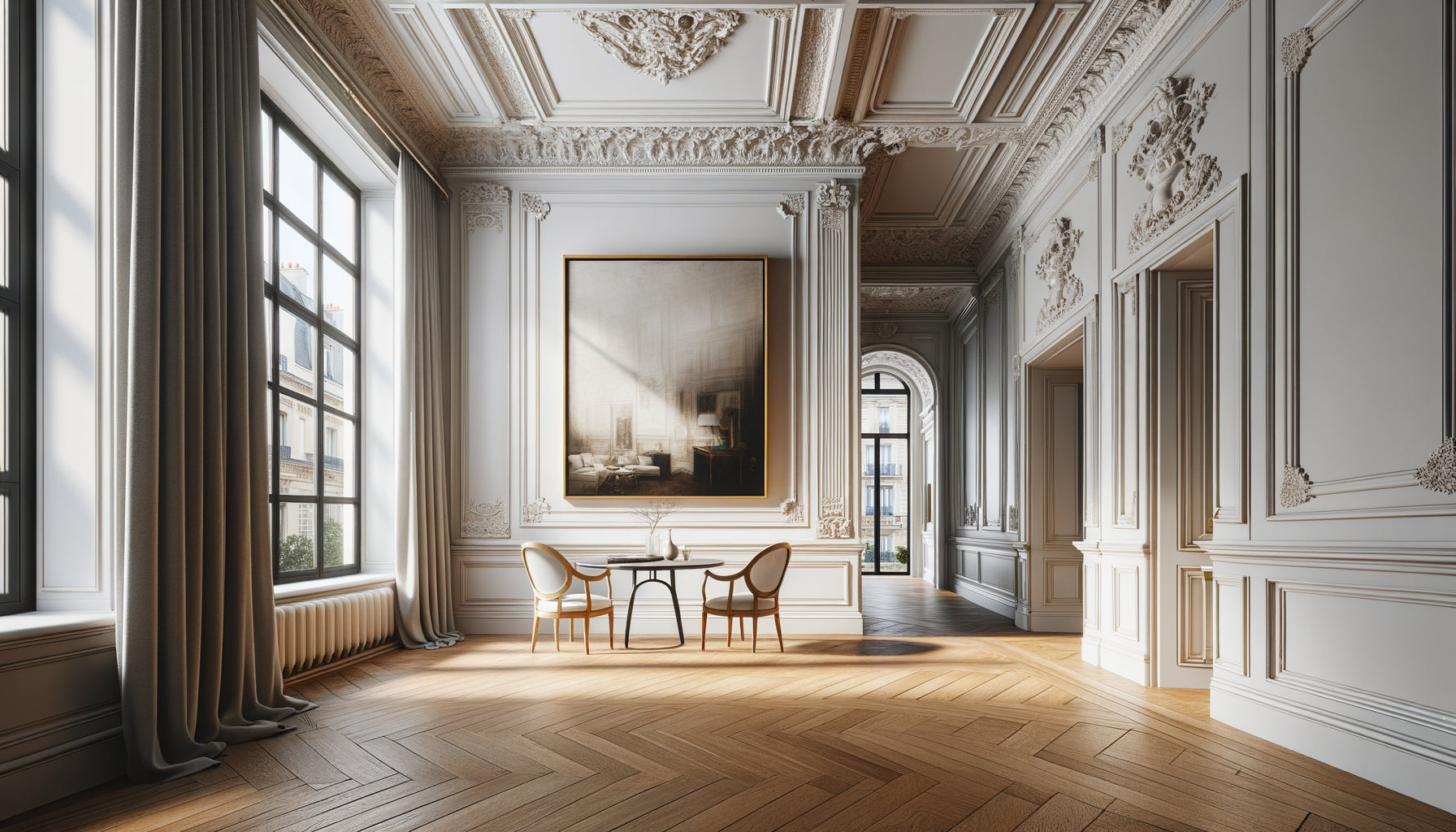
I recently assisted a couple in a Haussmannian apartment. We opted for three abstract paintings with complementary tones: a large vertical format of 80x120cm dominating the sofa, a square format of 60x60cm dialoguing with the fireplace, and a small horizontal format of 40x60cm illuminating a dark corner. The result? A perfectly orchestrated eye flow that makes the living room appear more spacious than it actually is.

The bedroom: two paintings to balance rest and personality
The bedroom requires a different approach. Too many paintings disrupt relaxation, too few create a coldness that is not conducive to intimacy. Two paintings constitute the ideal balance for this space dedicated to regeneration.
The classic location favors a painting above the bed, a central work that visually anchors the furniture. Horizontal format preferred, which follows the width of the bed without exceeding it. The second painting naturally finds its place on the opposite or lateral wall, creating a visual dialogue that enriches the space without cluttering it.
In a 12m² bedroom, I installed two photographs of soothing landscapes: a large panoramic composition of 100x50cm above the bed and a more intimate format of 50x40cm near the dresser. The bluish tones of both works create a chromatic continuity that envelops the room in a serene atmosphere.
Some prefer a single statement painting above the bed, without a second one. This minimalist option works perfectly in small bedrooms or pared-down interiors. But in a three-room apartment where you seek to assert a strong decorative identity, two paintings allow you to tell a richer story while preserving the necessary tranquility for sleep.
The entrance and hallway: a painting as a signature of your universe
The transition space – entrance, hallway, or that small segment between the living room and bedrooms – requires only one carefully chosen painting. It's the first or last impression you leave with from your apartment, so take care to treat it with attention.
In a narrow hallway, prioritize a vertical format that complements the length of the space without visually shrinking it. In a square entrance hall, a square or slightly horizontal format creates an immediate focal point that structures the welcome.
I have a fondness for bold works in these transitional areas: a large-format black and white photograph, a canvas with vibrant colors, a graphic illustration that surprises. This unique painting should have enough presence to stand alone, enough character to announce the style of the entire apartment.
In a modern apartment, we installed a single 70x90cm canvas in the entrance hall, depicting a geometric composition in terracotta tones. This single work dialogues with the three paintings in the living room visible from the entrance, creating a color continuity that visually unifies the entire apartment.

Adapt the number according to your architectural constraints
The 3-2-1 rule adapts to the specificities of your apartment. A cathedral living room with 3.5m under the ceiling can accommodate four paintings without overload, whereas an attic space will be content with two works to avoid visual oppression.
Architectural configurations considerably influence the optimal number of paintings. An open living-dining room of 35m² easily allows for four to five paintings if the dining room is considered a separate sub-zone. Conversely, a 30m² open studio will benefit from limiting the total to three maximum paintings to preserve fluidity.
The presence of large windows naturally reduces the available wall surface. In a very bright apartment with cross-ventilation, I installed only four paintings in total: two in the living room, one in the bedroom, and one in the entrance hall. The games of natural light largely compensate for the relative sobriety of the number of works.
Apartments with walls loaded – moldings, built-in bookshelves, ornamental fireplaces – also require moderation. Too many paintings in these contexts create a visual cacophony. It is better to have five perfectly integrated artworks than eight paintings competing for attention with architectural elements.
The art of composition: when the number meets the format
The number of paintings per room makes sense when combined with formats. Three small 20x30cm paintings will not have the same impact as three 60x80cm formats. The total visual mass counts as much as the quantity.
In a 20m² living room, three paintings can mean: one large central format of 100x80cm flanked by two small formats of 30x40cm, or three identical medium formats of 50x70cm in horizontal alignment, or even an asymmetrical composition mixing an 80x60cm, a 60x40cm and a 40x30cm.
I apply an empirical rule: the total surface area of the paintings in a room should not exceed 15% of the total wall surface. In a living room with 30m² of available walls, this represents approximately 4.5m² of artworks, or for example three paintings of 100x150cm or five works of 80x100cm. This proportion guarantees the balance between artistic presence and breathing space.
Hanging height also influences perception of quantity. Paintings suspended 1.60m from the floor (standard museum height) create a continuous line of sight that visually unifies several works, even if scattered throughout the room. This spatial coherence sometimes allows to slightly increase the number of paintings without creating overload.
Ready to transform your apartment into a harmonious gallery?
Discover our exclusive collection of paintings for Apartment that respect the ideal proportions for each room in your interior.
The final test: does your apartment breathe?
After hanging your paintings according to the chosen distribution, perform what I call the visual breathing test. Stand at the entrance of each room and observe: does your gaze settle naturally on the works, or does it flutter frantically without finding rest?
A successful balance is characterized by a smooth flow of vision. In the living room, your eyes should travel naturally from one painting to another, creating an enjoyable visual path. In the bedroom, the artworks accompany the gaze without capturing it insistently. In the entrance hall, the single painting captures attention for just the right amount of time before freeing the gaze towards the rest of the apartment.
If you feel saturation, a sense of excess, then you have probably exceeded the balance threshold of your space. Remove a painting, observe the effect for a few days. Often, less is indeed more. Conversely, if your walls seem bare despite your paintings, it may be a question of format rather than quantity: a single large painting sometimes creates more presence than three small formats.
The perfect balance occurs when you no longer count your paintings, but live naturally with them. When visitors compliment the atmosphere of your apartment without necessarily noticing each individual work. When the whole creates a harmony that transcends the sum of its parts.
Conclusion: your apartment, your personal gallery
The balance of a three-room apartment relies on a thoughtful distribution: three paintings in the living room to structure social life, two in the bedroom to personalize intimacy, one in the entrance to sign your universe. This 3-2-1 formula adapts to your architectural constraints, your preferred formats, and your personal sensitivity.
Imagine yourself in a few weeks, observing your walls transformed. The living room breathes with its three works dialoguing harmoniously. The bedroom welcomes you into an atmosphere balanced between character and serenity. The entrance impresses from the start with its statement painting. Your apartment is no longer just a place of residence, but an intimate gallery that tells your story, guides gazes, inspires conversations.
Start with the living room this week. Choose your first three paintings, hang them, live with them for a few days. Then gradually complete the other rooms. Perfect balance is built painting after painting, adjustment after adjustment, until that magical moment when you cross your door and simply think: I am home.
Frequently Asked Questions
Can I exceed three paintings in my living room if I love art?
Absolutely, but with method. If your living room exceeds 25m² and benefits from sufficiently clear walls, four or even five paintings can create an assumed gallery atmosphere. The essential is to maintain visual consistency: chromatic unity, harmony of frames, or common theme. I have accompanied passionate collectors who exhibit up to seven works in their 35m² living room, but always creating grouped compositions rather than anarchic dispersion. Test progressively: add a fourth painting, live with it for two weeks. If the space still breathes, if the gaze circulates naturally, you have found your personal balance. The 3-2-1 rule constitutes a secure foundation, not an absolute limit. Your artistic sensitivity and the generosity of your volumes guide the final adjustment.
Should I count photo frames as paintings in the total balance?
This question comes up constantly, and my answer varies depending on the formats. Small photo frames of 10x15cm or 13x18cm grouped on a shelf or console do not count towards your quota of paintings per room. They create a micro decorative composition that works as a single visual element. On the other hand, a large framed photographic print of 50x70cm or larger has the same visual presence as a painting and must be integrated into your balance calculation. In a living room where you have hung two large abstract canvases, adding a framed family photograph of 60x80cm is like creating a composition of three works. The eye does not distinguish the nature of the image – painting, photography, illustration – but reacts to the visual mass and spatial arrangement. Therefore, consider your large photographic formats as paintings in their own right within your overall distribution.
How to distribute my paintings if my bedroom also serves as an office?
The bedroom-office is a particular case that deserves a zoned approach. I recommend three paintings in total for this hybrid space: two in the sleeping area (one above the bed, one on a side wall) and one in the office area to stimulate creativity without disrupting rest. The trick is to create a subtle differentiation between atmospheres: soothing works with soft tones in the bedroom area, and a more dynamic composition, possibly graphic or inspiring, above or next to the desk. I recently arranged a 30m² space where the owner works from home. We installed two blue abstract landscapes on the bed side, and a motivational typographic poster near the screen. This visual distinction helps psychologically separate work time and relaxation moments, while maintaining the aesthetic unity of the room. If your space is really compact, two carefully positioned paintings are enough to personalize the whole without creating functional confusion.