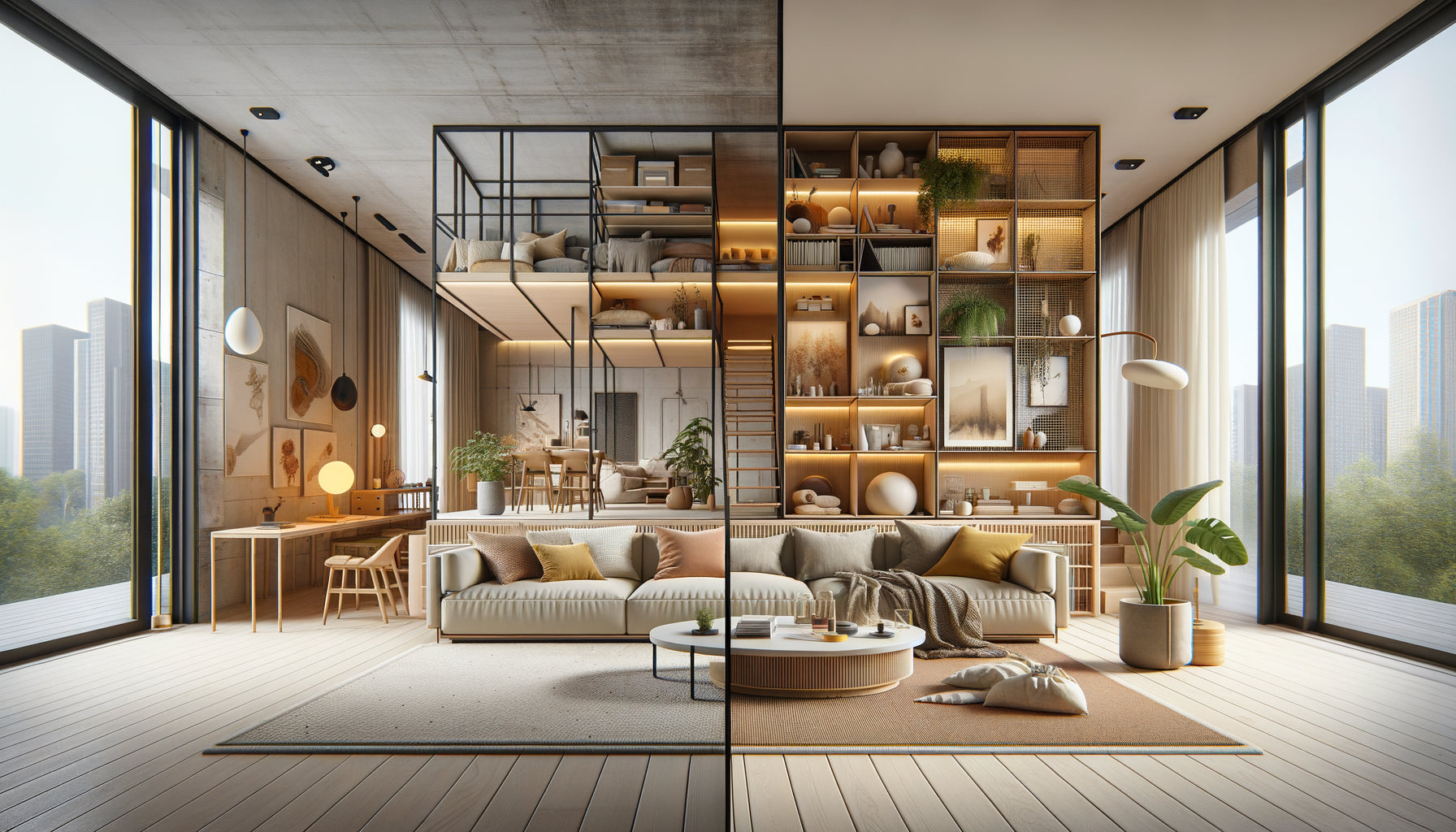
I still remember that April morning when I pushed open the door of a tiny gallery, nestled between a bakery and a florist, just two blocks from my new apartment. The smell of fresh paint mingled with the scent of coffee held by the gallerist. On the back wall, an abstract work in ochre and blue tones seemed to have been created specifically for my empty living room. That painting became much more than just decoration: it tells the story of my first weeks in this neighborhood, a magical time when everything remains to be discovered.
Here's what buying local during those first few weeks in a neighborhood brings: an authentic connection with your environment, the discovery of unknown talents that make the heart of your city beat, and the gradual transformation of your apartment into a place that tells your story. More than just a purchase, it’s a sensory exploration that transforms your relationship with your new living space.
When you move somewhere, there's a strong temptation to order online, reproduce what you see on Instagram, or rush to big stores to quickly furnish. You end up with an anonymous, impersonal interior that could exist anywhere. I’ve experienced this frustration: looking at your walls and wondering why this place doesn't feel like home.
Yet, the solution may be just a few steps from your door. The first weeks in a new neighborhood are a precious time, a parenthesis where your gaze remains fresh, curious, sharp. Taking advantage of this period to explore local galleries radically transforms your settling-in experience.
I'm going to show you how this simple but profound approach can revolutionize the way you live in a place, create a unique interior, and weave unsuspected connections with your environment.
The neighborhood as a treasure map: a hunt for hidden gems
The first weeks in a new neighborhood are like a treasure hunt where no one has given you the map. Each street holds its secrets, its confidential addresses, its exceptional places that only regulars know. Local galleries are part of these invisible nuggets to hurried eyes.
During my exploration mornings, I developed a ritual: setting off without a specific destination, letting my steps guide me, pushing open the doors that intrigue me. This approach led me to discover an art gallery in a former cobbler's shop, an atelier-boutique where an artist created ceramics in the back room, an artists’ cooperative occupying a converted warehouse.
Buying local during this period of exploration amplifies your natural curiosity. You are not just looking for a painting or sculpture: you are discovering the creative identity of your neighborhood, its history, its artists. Each gallery visited becomes a chapter in your own settling-in story. You learn that this quiet street is home to three artist studios, that this discreet passage leads to a collective of engravers, that this courtyard hides an experimental exhibition space.
This exploration radically transforms your relationship with the neighborhood. You no longer walk through anonymous streets: you stroll through a living, creative territory where each address tells a story. And this intimate knowledge eventually shines through in your interior.
Art that tells where you come from: creating a biographical interior
An apartment can resemble a catalog or a book. The difference? The objects that compose it. Buying from galleries in the neighborhood during your first weeks creates a biographical interior, where each piece retains the memory of a discovery, a meeting, a moment.
This framed lithograph in my entrance hall? I found it during my second week, in a gallery recommended to me by the waiter at the cafe downstairs. The artist was present that day; we talked for an hour about his creative process, his Japanese inspirations, this series he was preparing. Every time I walk past, I don't just see a work of art: I relive that conversation, that unexpected moment of connection.
The works purchased locally during the installation period carry the particular energy of beginnings. They crystallize your first impressions, your emotions of discovery, that freshness of perspective that fades with time. In ten years, these pieces will remind you who you were when you arrived here, what touched you, what you were looking for.
This narrative dimension completely transforms decoration. You no longer follow trends: you compose a personal visual story, deeply rooted in your lived experience. Your guests feel it immediately. Your interior breathes authenticity, that elusive quality that distinguishes a inhabited place from a simple decorated space.

The first weeks: the strategic moment to buy smart
Beyond the emotional dimension, buying local during the first weeks offers considerable practical advantages. Your apartment is still empty or being furnished: you can measure precisely, visualize clearly, imagine without constraint.
I made the opposite mistake during a previous move. I waited to be “settled” before looking for artworks. The result? My living room was already furnished, my walls partially occupied by temporary posters that became permanent. My options were drastically reduced. That magnificent canvas spotted in a gallery? Too large for the remaining space. That sculpture? Incompatible with the existing furniture.
Exploring the neighborhood galleries during the installation phase allows for a much more organic approach. Did you discover a work that moves you? You can adapt your layout accordingly, reserve the perfect wall for it, create ideal lighting. Art is no longer an afterthought: it becomes a structuring element of your decor.
This period also offers valuable budgetary freedom. Rather than compulsively spending on standardized furniture in the first few days, you can distribute your installation budget differently. Invest in a quality local artwork and then gradually compose around it with salvaged or second-hand furniture. This approach creates much more personal interiors and often more economical ones.
Weaving connections: the gallery as a social gateway
Moving into a new neighborhood can be strangely lonely. You cross faces in stores, greet neighbors on the stairs, but creating real connections takes time. Local galleries offer a privileged social ground to break this initial solitude.
Vernissages, these opening exhibition evenings, are golden opportunities to meet people who share a common sensibility. Art instantly creates a conversation starter. You don't need complicated approach strategies: commenting on a work, asking someone's opinion, exchanging with the artist is enough to initiate authentic discussions.
I have met some of my best friends in this neighborhood at vernissages. This architect who restores industrial buildings, this couple of collectors who organize themed dinners, this yoga teacher who shares my passion for abstract art. These encounters transformed my experience of the neighborhood, creating an organic social network impossible to force otherwise.
The gallery owners themselves become valuable allies. They know the neighborhood intimately, can recommend other addresses, warn you about upcoming cultural events. Buying a work during your first weeks establishes a relationship that goes beyond a simple commercial transaction. You become a resident of the neighborhood in the eyes of these cultural brokers, more than just a passing visitor.

The domino effect: how a local purchase transforms your entire decor
A surprising observation: buying a local artwork during the first few weeks often influences the entire decorative project. This piece becomes a cornerstone around which everything else naturally organizes.
This driftwood sculpture purchased during my third week here completely redirected my decorative vision. Initially, I imagined a minimalist Scandinavian interior. But this piece, created by an artist from the neighborhood working with salvaged materials from nearby shores, called for something different: more organic, more textured, more rooted in the territory.
I gradually composed around it: natural textiles, handmade ceramics found in other local shops, raw wood furniture. My apartment developed an aesthetic coherence that I would never have planned intellectually. The local artwork acted as a revealer, helping me discover what I was truly looking for.
This phenomenon goes beyond mere stylistic questions. Buying local creates a different purchasing dynamic. We prioritize quality over quantity, the unique over the reproducible, history over trends. This approach positively influences all your subsequent decorative decisions. You develop a more demanding, more patient, and more open eye to discoveries.
Practical strategies for intelligently exploring neighborhood galleries
Enthusiasm is not always enough. Effectively exploring local galleries during your first weeks requires a simple but structured methodology.
First, map out your territory. Dedicate your first weekends to systematic walks within a one-kilometer radius of your home. Note the galleries, workshops, and craft shops on a map application. You will be surprised by the number of places you would have otherwise missed. Some galleries occupy discreet spaces: courtyards, upper floors, covered passages.
Second, synchronize with the local cultural calendar. Find out about artist studio tours, gallery nights, and neighborhood festivals. These events concentrate the local cultural offering and facilitate discoveries. I visited fifteen spaces during a single open house evening, creating an overall vision impossible to obtain otherwise.
Third, don't buy compulsively on your first visit. Even if a work deeply touches you, take the time to let it settle. Return a few days later. If the emotion persists, then the connection is real. This patience avoids impulsive purchases that you will regret.
Fourth, dialogue openly with gallery owners and artists. Explain that you have just moved in, that you are discovering the neighborhood, and that you are looking to create a personal interior. This transparency often opens doors: access to reserves, recommendations for other artists, invitations to private events.
Finally, systematically photograph your empty apartment before buying anything. These images will help you visualize artworks in your space during your explorations. Some galleries even accept temporary loans to test a work at home before the final purchase.
Your apartment deserves more than just decoration: it deserves a story
Discover our exclusive collection of wall art for Apartment that captures the spirit of local discoveries and transforms your walls into captivating visual narratives.
When an apartment becomes a reflection of the neighborhood
Six months after moving in, I look at my living room with particular satisfaction. Each room tells a story of exploration, encounter, and discovery. This engraving above the sofa comes from the workshop on the parallel street. This ceramic on the shelf, from the artists' cooperative at the end of the neighborhood. This wall textile, from a creator I met at a local craft market.
My apartment has become a visual reflection of my neighborhood. Not a literal reproduction, but a personal interpretation, filtered by my sensitivity, my favorites, my encounters. When friends come for dinner, they don't just discover my interior: they discover the creative identity of this urban territory I live in.
This coherence between the inside and outside creates a sense of belonging that is impossible to buy. I don’t simply This permeability transforms everyday experience. Leaving home becomes a natural continuation of your intimate space. Returning home, a deep dive into the essence of the territory you’ve chosen to live in. Moving somewhere can be a logistical chore or a creative adventure. The difference often lies in the choices made during the first weeks. You’re not just decorating an apartment: you're weaving connections, discovering a territory, composing a personal visual narrative. Each work purchased becomes a biographical marker, a tangible trace of your first impressions, your emotions of discovery, those encounters that will never be reproduced with the same intensity. In a few years, when the novelty has eroded, when the neighborhood has become familiar to the point of invisibility, these works will preserve intact the magic of beginnings. They will remind you what you felt when you arrived here, this eager curiosity, this wonder at the unknown. So yes, buying local during the first few weeks to discover galleries in the neighborhood is not only recommended: it’s a rare opportunity to create an interior deeply rooted, authentically personal, that tells your story rather than one from a catalog. This weekend, go explore. Push those doors open. Let yourself be surprised. Your apartment will thank you. This apprehension is universal, but completely unjustified. Local galleries, unlike intimidating Parisian institutions, are generally run by enthusiasts delighted to share their love of art. Your status as a new neighborhood resident is even an asset: it naturally justifies your presence and curiosity. A simple approach works wonders: enter, look around quietly, and if a work touches you, simply ask “Can you tell me more about this piece?”. Gallery owners love to tell the story of the artworks and artists. You don't need any technical vocabulary, no prior knowledge. Your sincere emotion in front of a work is worth all learned speeches. If you really feel stuck, start with vernissages: the atmosphere is relaxed, you can blend into the group, listen to conversations, observe how others interact. In three or four visits, you will feel perfectly comfortable. And remember: buying local art is first and foremost trusting your instinct and supporting local creation, not taking an exam. This preconceived notion deserves to be intelligently nuanced. Yes, an original work by a local artist generally costs more than an industrial reproduction sold in a supermarket. But the comparison ends there. A unique piece purchased from a neighborhood gallery transcends trends and years without becoming dated, unlike trendy posters that become tiresome in six months. Financially, it is often a more profitable investment in the long term. In addition, local galleries offer a wide range of prices. Emerging artists in the neighborhood frequently sell works between 100 and 300 euros: less than an average Ikea piece of furniture, for a piece that will increase in value over time. Many galleries also accept installment payments for larger works. Finally, compare like with like: buying local means acquiring a unique piece, with a story, created by someone you can meet. This relational and emotional dimension simply has no equivalent in mass consumption. When you calculate the cost per year of use and per daily pleasure intensity, local art often becomes the most economical option. This question reveals a rigid conception of decoration that must absolutely be overcome. Your personal style is not an immutable essence to be discovered like a hidden treasure: it's an evolving process that builds over time and experiences. The works purchased during your first weeks are an integral part of this discovery process. They teach you what truly touches you, beyond the Instagram images you thought you admired. Often, it is precisely these instinctive, unplanned purchases that reveal your authentic sensitivity. If a piece really no longer speaks to you after a few months, several options are available to you. Most local galleries take back artworks on consignment, allowing you to resell them to other enthusiasts. You can also move the artwork to another room: this painting that is too imposing for the living room may find its place in the bedroom. Some people even create seasonal rotations, storing some pieces to bring them out later. But honestly, from my experience and that of many locals I know, artworks purchased during the magical period of the first weeks generally remain lasting favorites. They carry the particular energy of beginnings, and this emotional charge transcends stylistic evolutions. Trust yourself.Conclusion: transform installation into adventure
Frequently Asked Questions
How to dare enter a local gallery when you know nothing about art?
Isn't local art more expensive than classic decorative solutions?
What to do if I discover my personal style after buying local artworks?