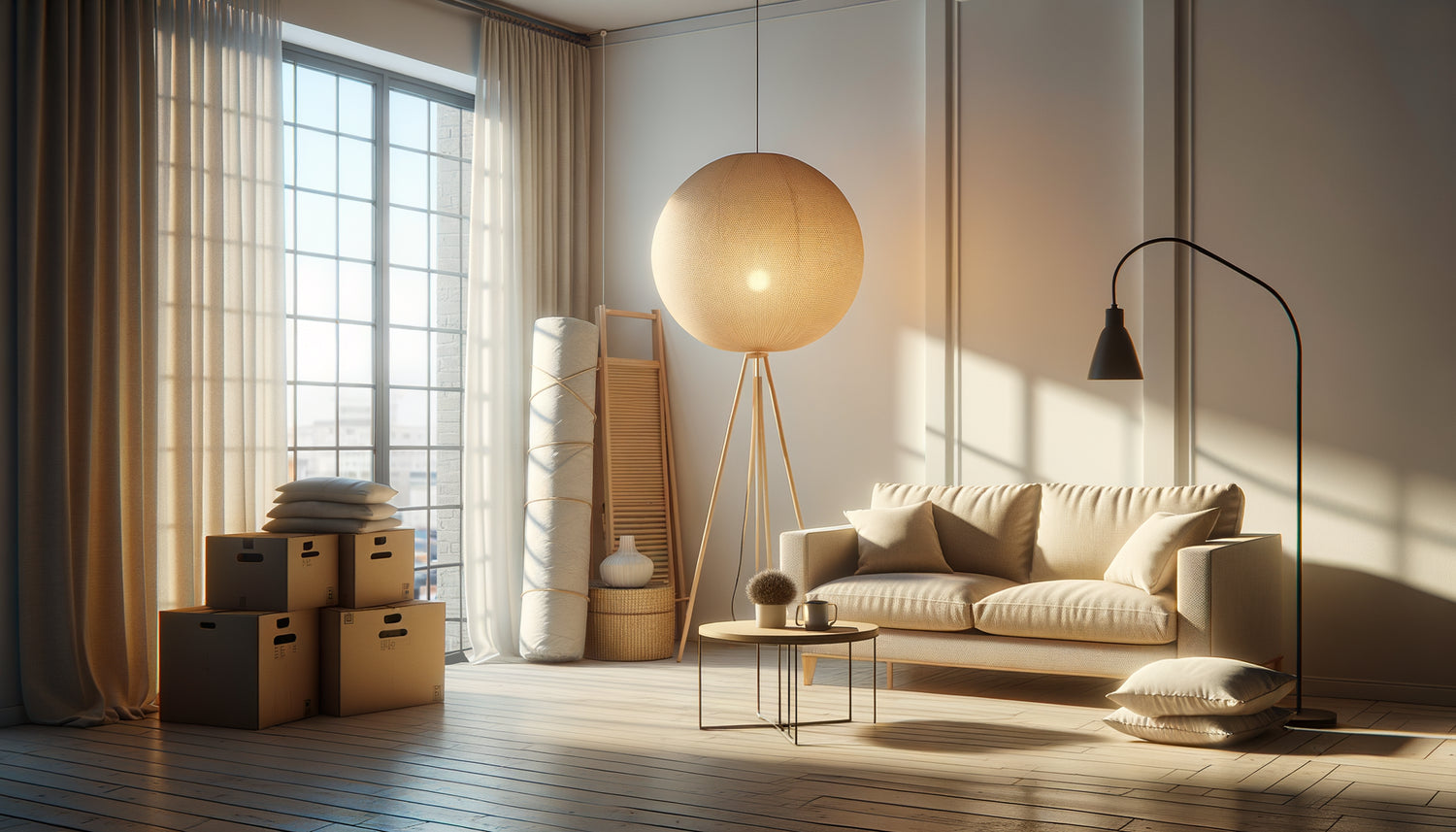
I've visited over two hundred newly rented apartments in the last ten years. Each time, the same observation: tenants sitting on camping chairs, surrounded by cardboard boxes, looking at me with that embarrassed smile that says “I know, it’s temporary.” Three months later, the chairs are still there. The temporary drags on, and with it, that unpleasant feeling of camping in your own home.
Here's what a smart minimal investment brings: an immediately habitable space that reflects you, a welcoming atmosphere from day one, and the ability to entertain without embarrassment from the first week. Because an apartment that is too bare isn’t just about aesthetics – it’s a barrier to your daily well-being, your social life, and your ability to project yourself into this new place.
The good news? You don't need to furnish everything or empty your savings. Between €300 and €800 is enough to transform an empty space into a real home. The trick lies in the strategic selection of a few key elements that instantly create comfort and character. Let me show you how I accompany my clients in this progressive furnishing approach.
The magic triangle: sofa, lighting, wall decoration
After guiding dozens of young professionals through their move-in process, I've identified three essential pillars to escape the “squat” effect. These priority investments radically transform the perception of an empty space.
The sofa is the heart of your apartment. You don’t need a designer model at €2000. A quality used sofa between €150 and €400 will do perfectly well. I systematically recommend Leboncoin, Emmaus or flea markets to find these gems. Opt for a neutral model – gray, beige, navy blue – that will last through your style changes. A two-seater sofa is more than enough to start: it structures the living room space, offers a comfortable resting place and allows you to entertain properly.
Lighting represents the best kept secret of budget furnishing. A well-lit room instantly appears warmer and lived-in. Invest €80 to €150 in two or three light sources: an angle floor lamp for the sofa area, a bedside lamp for the bedroom, possibly a discreet LED string. The golden rule? Banish the single central lighting that gives this cold and impersonal aspect. Multiply indirect light points that create areas of intimacy.
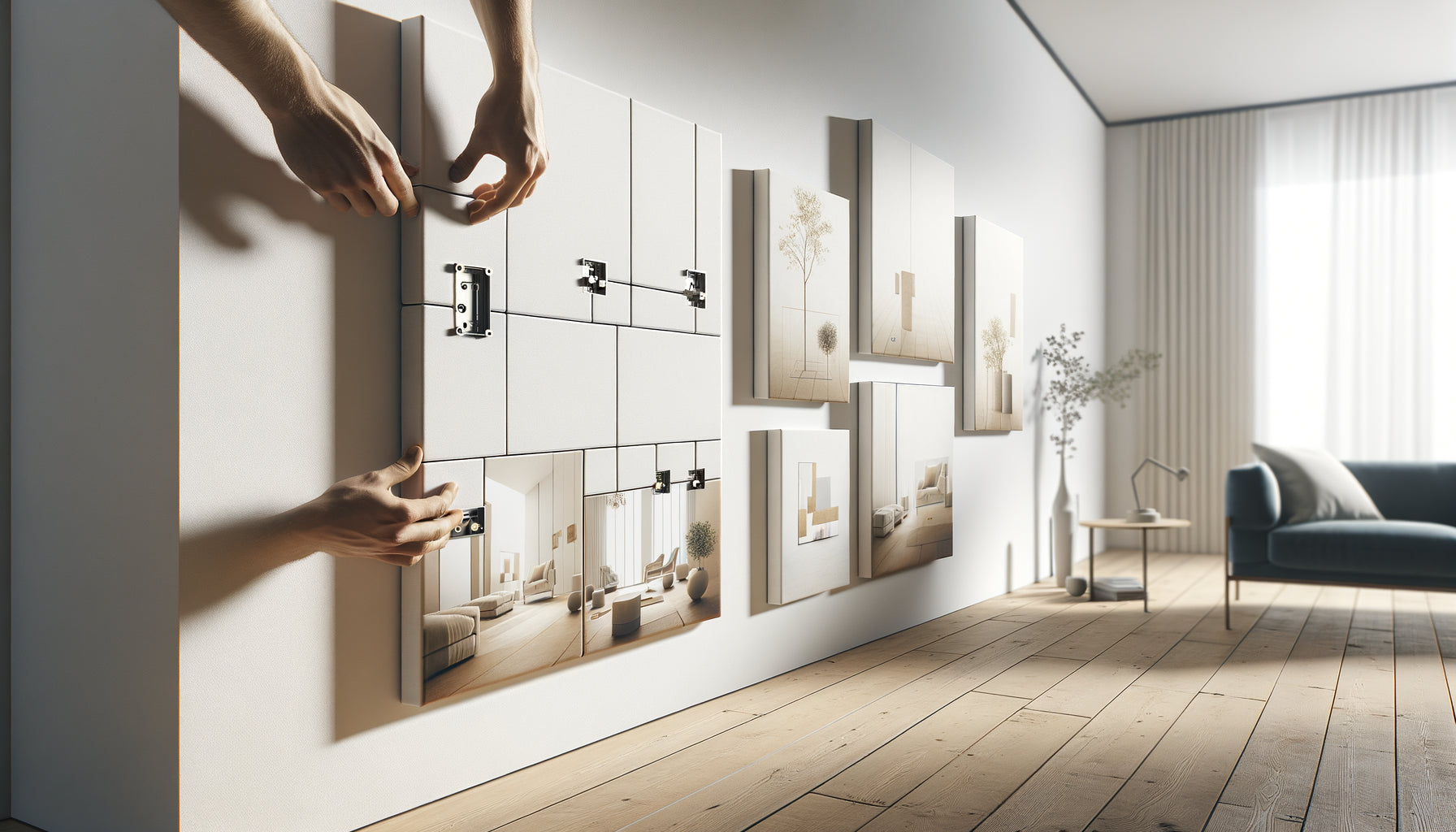
Wall decoration, often neglected by new tenants, nevertheless radically transforms a space. One or two well-placed paintings immediately humanize an apartment that is too bare. For an investment of €50 to €150, you can acquire works that tell your personality. Position them strategically in the entrance to create a welcoming first impression, or above the sofa to visually structure the living room.
The essential functional items that change everything
Beyond aesthetics, certain practical elements determine your daily comfort from the first few weeks. I consider them priority investments, not secondary expenses.
A modular coffee table or dining table quickly becomes essential. Between €80 and €200, you'll find folding or extending models that adapt to your needs. I particularly like these Scandinavian light wood tables which are just as suitable for breakfast as they are for dinner with friends. They anchor the space and give it an immediate social function.
Storage is the other essential functional pillar. A bookshelf or wall shelf for €50 to €120 solves several problems simultaneously: it hides unsightly boxes, displays your personal objects, vertically structures the space. Prioritize modular models like Ikea Kallax that you can gradually complete. I've seen entire apartments transformed by a simple shelf that brings verticality and visual rhythm.
Textiles deserve special attention for minimal investment. A medium-sized rug (120x170 cm) between €50 and €150 instantly defines your living area and adds warmth. Add two or three colorful cushions (€30 to €50 total) and a cozy throw blanket (€25 to €40): your basic sofa suddenly becomes welcoming and personalized. These small textile investments offer the best quality-transformation ratio.

The strategy of smart purchases
During my express interior design consultations, I always emphasize the acquisition method. Minimal investment doesn't mean buying anything anywhere anyhow. A strategic approach multiplies your purchasing power by two or three.
Second-hand platforms represent an untapped gold mine. Leboncoin, Vinted for decoration, local Facebook groups are full of quality pieces sold by people who are moving. I found a Habitat sofa for €200 – new value €1200 – simply because the seller was leaving the region in ten days. Patience and reactivity are your best allies: set up alerts for your priority searches.
Smart discount retailers deserve your attention. I’m not talking about disposable cardboard furniture, but brands like Action, GiFi or Maisons du Monde on sale that offer decorative items at low prices. For lighting and textiles, these stores offer excellent value for money. A budget of €100 at Action can properly equip a kitchen and bathroom with functional accessories.
The buying calendar significantly influences your investment. The January and July sales, end-of-season sales in March and September, garage sales from May to September: each period offers its opportunities. I encourage my clients to establish a prioritized list and wait for the right time for non-urgent items. A sofa purchased on sale represents 30 to 40% savings for identical quality.
When an empty apartment becomes an asset
Paradoxically, I’ve learned to see the initial empty apartment as an opportunity rather than a problem. This blank canvas avoids costly impulsive purchase mistakes that you will regret six months later.
Living in a minimal space for a few weeks reveals your true needs. You naturally discover your favorite living areas, your daily habits, and your real priorities. This conscious observation then guides perfectly adjusted investments. I’ve seen too many clients buy a large dining table only to realize they always eat on the sofa watching Netflix.
A gradual approach also allows you to refine your decorative style. Rather than importing the aesthetics of your previous home, you build a visual identity adapted to this new space. Start with neutral functional essentials, then gradually add personal touches that truly reflect who you are today. This organic method creates much more consistent and authentic interiors.

Investment mistakes that drain the budget
My experience has also taught me what not to do during the first few months of settling in. These classic mistakes sabotage the goal of minimal investment.
First mistake: buying new, low-quality furniture at a bargain price. This €299 kit sofa sags within three months. This particleboard bookshelf warps with the first humidity. You end up spending twice as much: the initial purchase plus the quick replacement. A second-hand mid-range brand piece lasts infinitely longer than a low-end new one at the same price.
Second pitfall: wanting to furnish everything at once. This rush leads to ill-conceived purchases and a blown budget. An apartment is built up in successive layers over six to twelve months. The first three months require only the essentials: comfortable seating, appropriate lighting, and a few decorative elements. The rest can wait until you truly understand your space and find the right opportunities.
Third fatal mistake: neglecting the psychological impact of wall decor. Many invest 500 euros in a sofa but leave the walls bare for months. Yet, two well-chosen paintings at 80 euros transform the atmosphere more than an additional piece of furniture. Walls are the permanent backdrop to your daily life: their arrangement should be among your first priorities, not optional finishing touches.
The 90-Day Action Plan
To summarize this approach, here is the minimum investment schedule that I consistently recommend. It balances immediate comfort and progressive construction.
Week 1 (budget 150-250 euros): Quality used sofa, a floor lamp, basic tableware and linens. The goal is to be able to sleep comfortably and prepare a meal. You're still camping a bit, but with dignity.
Weeks 2-4 (budget 100-200 euros): Wall decor with two to three paintings, textiles for the sofa (cushions, throw), living room rug, second light source. Your apartment truly starts to look like you. You can invite friends without feeling that paralyzing embarrassment.
Weeks 5-12 (budget 150-300 euros): Coffee table or dining table according to your priorities, vertical storage, houseplants, kitchen and bathroom accessories. You refine, personalize, and gradually optimize each functional area.
This step-by-step progression totals an investment of 400 to 750 euros over three months. It avoids the financial stress of a complete immediate makeover while guaranteeing satisfying daily comfort from the first week. Each euro invested responds to an identified need, not an abstract decorative injunction.
Transform your bare walls into a personal gallery today
Discover our exclusive collection of wall art for Apartment that instantly brings character and warmth to your new living space.
See Your Apartment as a Living Project
Three months after moving in, I always recontact my clients. Those who have followed this minimal and progressive investment approach consistently express the same satisfaction: their apartment truly reflects their personality, and they have no regrets about their purchases.
The initially bare apartment wasn't an urgent problem to solve, but an invitation to consciously build your environment. By investing wisely between €400 and €800 over three months, you create a living space that retains its ability to evolve. Each element chosen with intention contributes to a coherent whole rather than a disordered accumulation.
Start this week by identifying your first priority: that sofa which will transform your evenings, that floor lamp which will warm the atmosphere, or those paintings which will already tell your story. A single well-thought-out investment is enough to escape the effect of an empty apartment. The rest will follow naturally, at the pace of your discoveries and your true needs. Your home is built step by step, authentically and without financial haste.
Frequently Asked Questions
Can you really make an apartment welcoming with less than €500?
Absolutely, and I regularly prove it with my clients on tight budgets. The appeal of a space doesn't depend on the amount invested but on the relevance of the choices. With €400 to €500, you can acquire a quality used sofa (€200), two light sources (€100), some warm textiles (€80) and two beautiful wall paintings (€100). This combination radically transforms a bare apartment while simultaneously creating comfort and a personalized atmosphere. The secret lies in intelligent prioritization: it's better to have five well-chosen items than fifteen random objects. I always recommend prioritizing quality of use over quantity. An excellent used sofa from a recognized brand at €250 will last for ten years, whereas a low-end new model at the same price will collapse in two years. Smart minimal investment focuses on durability and visual impact rather than rapid space filling.
How long do you need to live in an apartment before knowing what to buy?
I generally advise a period of observation of two to four weeks before investments beyond the absolute essentials. This phase reveals your actual habits rather than your assumptions. You discover where you naturally like to sit according to daylight, whether you actually use the dining table or prefer to eat on the sofa, which areas require additional lighting in the evening. This conscious observation avoids costly mistakes such as buying a large bookcase for a wall that ultimately receives too much direct sunlight, or investing in a reading chair when you exclusively read in bed. However, some items do not require any adaptation period: a comfortable sofa, basic lighting and a few decorative wall accents immediately improve your quality of life without risk of error. The pragmatic rule: buy immediately what solves an obvious daily discomfort, wait a few weeks for the rest. This approach combines immediate comfort and informed decisions to optimize every euro invested in your new space.
Is it better to buy new or used when the budget is limited?
For a smart minimal investment, secondhand consistently offers better value for money on furniture and lighting, while new is justified for textiles and certain decorative accessories. I have compared hundreds of times: a mid-range branded sofa bought secondhand for 200 euros has superior quality to any new model at that price. Quality furniture lasts through decades without significant degradation, which makes the second-hand market extraordinarily advantageous. On the other hand, for cushions, throws, small accessories and decorative wall art, affordable new options from stores like Action or Maisons du Monde on sale offer satisfying choices between 10 and 50 euros. My standard recommendation: secondhand for expensive structural pieces (sofa, table, storage, designer lighting), accessible new for changeable decorative touches. This hybrid strategy maximizes your budget while guaranteeing the durability of major investments. Specifically, with a budget of 500 euros, allocate 350 euros to secondhand for essential furniture and reserve 150 euros for new items to quickly personalize your too-bare apartment with elements that immediately express your personal style.