



How Did George Stubbs Revolutionize Equine Anatomy Through Systematic Dissection?
December 9, 2025 · 6 min read · by Walensky
Imagine an artist from the 18th century, alone in a secluded Lincolnshire barn, meticulously dissecting horses for eighteen months. The unbearable fumes, carcasses suspended by hooks, muscle layers revealed scalpel after scalpel. George Stubbs was not merely an animal painter seeking to reproduce the surface of things. He pursued an obsessive quest: to understand the inner architecture of the horse to reveal its anatomical truth on canvas. This radical approach would forever transform the representation of horses in Western art.
Here's what Stubbs’ anatomical revolution still brings today: A scientific precision that elevates animal painting to the rank of scholarly disciplines, a method of direct observation that continues to inspire contemporary artists, and a striking demonstration that artistic beauty is born from a deep understanding of the subject.
For centuries, artists had depicted horses according to conventions inherited from antiquity or Italian Renaissance. Proportions remained approximate, muscles stylized, postures often fanciful. Even the greatest masters perpetuated anatomical errors passed down from generation to generation. How could one truly capture the power, elegance and nobility of a horse without intimately understanding its structure?
George Stubbs, born in Liverpool in 1724, realized that true revolution would come through an unprecedented approach: systematic dissection. Unlike artists who merely observed living horses or consulted rudimentary veterinary treatises, Stubbs decided to explore every fiber, every tendon, every bone himself. This decision would require extraordinary physical and intellectual courage.
The workshop of knowledge: eighteen months in the hell of dissection
In 1756, Stubbs rented a secluded farm in Horkstow, Lincolnshire. His project is as ambitious as it is grueling: to dissect a complete series of horses to map their anatomy with unparalleled precision. The method he develops demonstrates remarkable scientific rigor. Each horse is suspended vertically by hooks fixed to the ceiling, maintained in a natural posture by an ingenious system of pulleys and counterweights.
Stubbs proceeds layer by layer, first removing the skin, then meticulously documenting each muscle layer. Between dissection sessions, he draws with the precision of an anatomist. No detail escapes his observation: the exact insertion of muscles, the orientation of fibers, the relationship between superficial and deep structures. This titanic work takes place under grueling conditions, the smells of decomposition becoming so intense that he must work alone, without an assistant able to endure these conditions for long.
The artist thus produces hundreds of anatomical drawings of astonishing accuracy. Each plate reveals a three-dimensional understanding of the equine body. Stubbs does not merely reproduce what he sees: he understands the biomechanical logic, how muscles work together to produce movement. This intimate knowledge will permeate each of his future works.
The Anatomy of the Horse : when art meets science
In 1766, after years of extra work to engrave the plates himself, Stubbs publishes The Anatomy of the Horse. This monumental work comprises eighteen engraved plates depicting the horse from various angles and at different stages of dissection. The accuracy of the illustrations astonishes both artists and veterinarians of the time.
This treatise immediately revolutionizes equine representation. For the first time, artists have access to a reliable anatomical reference, based on direct observation rather than inherited artistic conventions. Stubbs' engravings show not only muscle structure but also how these muscles deform according to postures and movements.
The impact extends far beyond the circle of animal painters. Veterinarians use the work as a reference, art schools integrate it into their teaching. Stubbs’ approach establishes a new standard: henceforth, excellence in animal art requires thorough anatomical knowledge. This fusion between art and science foreshadows later developments in scientific illustration.

A visible transformation : before and after Stubbs
Compare equine representations before and after Stubbs, and the revolution is striking. Horses painted by his predecessors, even talented ones, often exhibit fanciful proportions: overly thick necks, too-thin limbs, misplaced muscle masses. These errors do not result from a lack of talent but from limited anatomical knowledge.
Stubbs' works, on the other hand, radiate an anatomical accuracy that gives his horses an almost sculptural presence. In famous paintings such as Whistlejacket (1762), every muscle is correctly positioned, every tension visible in the posture corresponds to biomechanical reality. The rearing horse is not a simple decorative composition: it is a study of movement based on a deep understanding of equine mechanics.
This anatomical precision does not produce cold or overly scientific works. On the contrary, it amplifies the emotional impact. Stubbs' horses breathe an extraordinary vitality precisely because their internal structure is correct. Anatomical knowledge becomes the foundation for a more powerful artistic expression. Aristocratic patrons, great horse lovers, immediately recognize this superior authenticity.
The Stubbs method : a lesson for today's creators
Stubbs’ approach resonates particularly with contemporary concerns about creative authenticity. At a time when artificial intelligence can generate images in seconds, his example recalls the irreplaceable value of deep knowledge and direct observation.
His method is based on several principles that are still relevant today. First, total commitment: Stubbs did not outsource the difficult part; he personally dissected, observed, understood. Then patience: eighteen months of preparatory work before producing the final plates. Finally, integration: he did not separate the research phase from artistic creation; the two enriched each other.
For contemporary artists working on animal subjects, this approach remains a model. Observing a horse in motion is not enough; understanding why muscles contract in such a way, how the skeleton supports weight, how anatomy determines gestural possibilities – that’s what allows you to create truly convincing representations. This philosophy applies to any subject: thorough knowledge liberates artistic expression rather than constraining it.
— Our selection


The living legacy: from Géricault to contemporary animal artists
Stubbs’ influence transcends the centuries. Théodore Géricault, fascinated by horses, carefully studied his work before creating his own equestrian masterpieces. Edgar Degas, renowned for his racing scenes, owned a copy of The Anatomy of the Horse annotated in his hand. These artists understood that Stubbs’ excellence did not lie in a style to imitate, but in a method to adapt.
Even today, art schools and animal illustrators refer to Stubbs’ plates. Equestrian sculptors consult them to verify their proportions. Digital special effects directors use them to model anatomically correct 3D horses. This longevity is a testament to the soundness of his approach: by anchoring himself in objective anatomical reality, Stubbs created a work that transcends fleeting artistic trends.
Stubbs’ revolution goes beyond equine representation. It establishes a precedent for all forms of naturalist art: artistic credibility is born from documentary rigor. This lesson applies as much to botanical illustrators as to wildlife painters, to animal sculptors as to creators of fantastic universes seeking to design imaginary creatures but biologically plausible.
Be inspired by the power of artistic observation
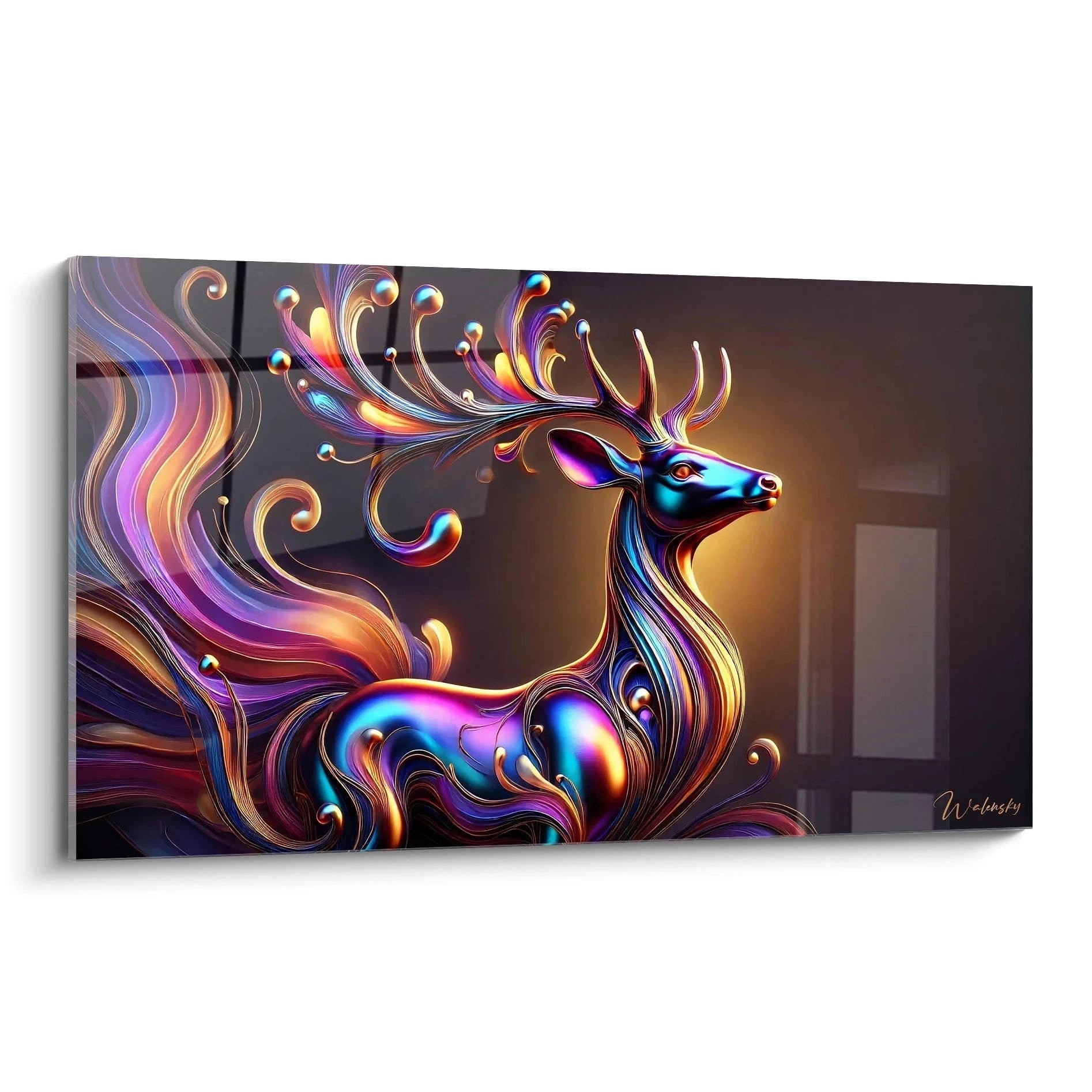
Discover our exclusive collection of animal paintings that celebrate anatomical beauty and the majesty of the living world with the same demand for truth.

You may also like
Hummingbird Magic of Movement Painting - Hummingbird Edition
232,90€
Discover this artwork →See with Stubbs' eyes: transform your gaze
The anatomical revolution initiated by George Stubbs invites you to transform your own way of observing. In front of a horse, don't just see the silhouette: notice how the muscles of the withers contract during the gallop, how the bone structure determines the natural angle of the neck, how each part of the equine body responds to a functional logic.
This attention to anatomical detail greatly enriches artistic appreciation. When you contemplate an equestrian sculpture or a painting depicting horses, you can now assess not only the overall aesthetics but also the anatomical accuracy. This critical skill allows you to distinguish superficial works from truly informed creations.
Start simply: observe photographs of horses in motion, identify the main muscle groups, note how they change according to the action. If you are creating yourself, invest in some books on animal anatomy. As Stubbs demonstrated, the time spent understanding structural aspects is never lost – it transforms into expressive power on canvas, paper or screen.
George Stubbs bequeathed us much more than an anatomical catalog. He demonstrated that artistic excellence and scientific rigor do not oppose each other but reinforce each other. His revolution reminds us that behind every great work lies an insatiable curiosity and a willingness to see beyond appearances. By spending eighteen months in a nauseating barn dissecting horses, this visionary artist has permanently transformed our way of representing the animal world. His legacy continues to inspire all those who reject approximations and seek truth beneath the surface.
Explore our collections


