Imagine stepping into a 9000-year-old home, where the walls still breathe with animal power. No frames, no sterile galleries: just monumental bulls emerging directly from the clay, as if their massive bodies were seeking to break through the wall. In Çatalhöyük, in central Anatolia, the first artists of humanity created something far beyond simple wall decoration. They invented a form of immersive art where sacred animals become architecture, where the spiritual literally merges with habitat.
Here's what the Neolithic artists of Çatalhöyük created: relief sculptures of bulls directly modeled into the plaster walls, murals with ochre and red pigments depicting processions of cattle, and actual bucrania – these bull skulls and horns – embedded in the walls as permanent installations. An artistic trinity that transformed every home into a living sanctuary.
You may be fascinated by parietal art and raw wall decoration, but you are confronted with a mystery: how did our ancestors technically achieve these works without modern tools? How can we integrate this primordial inspiration into our contemporary interiors without falling into pastiche? Neolithic aesthetics seem inaccessible, reserved for archaeologists and dusty museums.
Think again. Understanding the wall techniques of Çatalhöyük opens up unexpected perspectives for rethinking our relationship to animal decor, raw materials, and authenticity in our living spaces. These Neolithic artists mastered know-how that today inspires designers and decorators seeking symbolic depth.
I invite you on a journey into the secret workshops of the Neolithic era, where every creative gesture responded to an aesthetic, technical, and spiritual necessity. Prepare to discover how these masters of clay and pigment laid the foundations for our decorative relationship with animals.
The bull in clay: when sculpture becomes wall
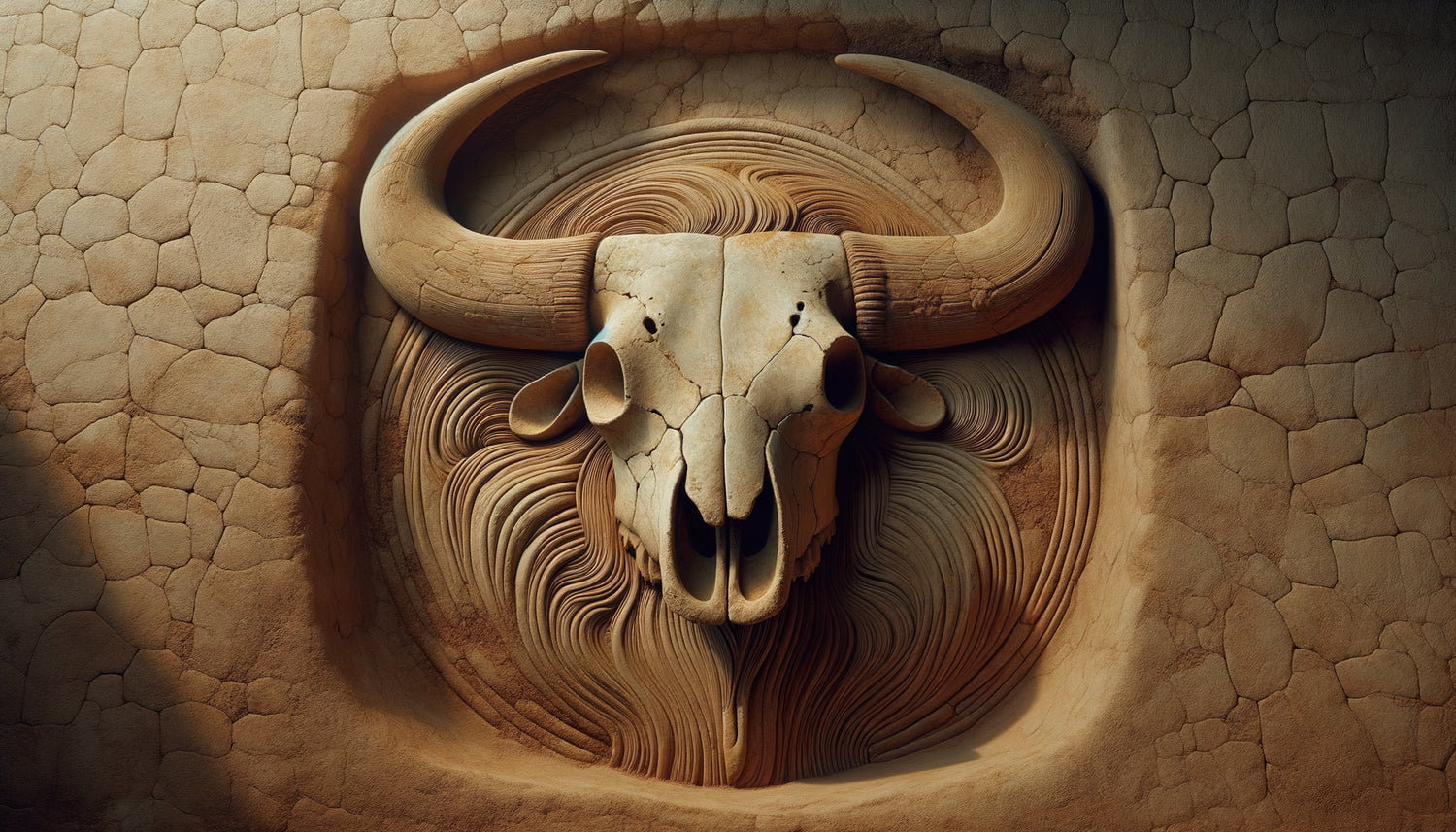
The signature technique of Çatalhöyük remains absolutely fascinating: artists did not sculpt bulls that they then hung, they modeled directly into the plaster wall. Imagine the scene: a mixture of local clay, chopped straw and lime is applied in successive layers on the raw brick walls. While this material remains malleable, the artisan-artist shapes with bare hands the powerful forms of bovines in relief.
Archaeologists have identified protuberances that can reach 40 centimeters of projection, representing bull torsos seen in profile, sometimes from the front. These reliefs were not simple bumps: one can distinguish the musculature of the shoulders, the curve of the withers, the tension of the chest. Animal anatomy was observed with remarkable precision, a result of daily proximity to livestock.
Once the modeling was complete, the artists polished the surface with smooth pebbles, creating an almost satin texture. Some reliefs then received a layer of pigments – mainly red ochre, sometimes charcoal black – applied using wool pads or rudimentary brushes made from plant fibers. The result? Bulls that seemed ready to charge out of the wall, capturing the flickering light of hearths in spectacular plays of shadows.
The pigments of the sacred: composing with the earth
The color palette of the Çatalhöyük artists reveals an unsuspected sophistication. Contrary to the received idea of a monochrome primitive art, these creators mastered a subtle range of colored earths. Red ochre, extracted from iron ore deposits, dominated the representations of bulls. This choice was not accidental: the color blood evoked vital power, fertility, ritual sacrifice.
The murals of bovines often followed a narrative scheme: rows of bulls in procession, some represented in lateral perspective with all four legs visible (a feat for the time), others stylized into almost geometric symbols. The pigments were bound with animal fats or plant resins, creating a fresco painting that penetrated the still-moist plaster.
Some analyses reveal the use of manganese black for outlines and details – the eyes, nostrils, separation of hooves. Traces of limestone white were used to create bright highlights on the horns, giving the painted bulls a striking three-dimensional presence. This polychromy, now largely erased, transformed Neolithic interiors into veritable wall chapels dedicated to the totemic animal.
The preparation of colors: a ritual in itself
Grinding the pigments on stone palettes, sifting them to obtain a fine powder, mixing them with binders in ceramic containers: each step constituted a ritual gesture. The artists of Çatalhöyük did not separate technique and spirituality. Preparing the color that would represent the sacred bull already participated in the creative act, a preparatory meditation for the final work.

When the real animal becomes a work: the bucrania embedded
Here is perhaps the most striking aspect of Neolithic wall decor: the integration of actual bull skulls with their horns directly into the architecture. These bucrania were not hung as hunting trophies, but literally embedded in the plaster, leaving only the front of the skull and majestic horns protruding.
The technique was elaborate: after carefully cleaning and preparing the skull (sometimes painted red ochre), builders carved out a cavity in the wall during its construction. The bucranium was positioned there, and then the plaster was applied all around, creating a perfect continuity between the animal bone and the architectural wall. Some houses in Çatalhöyük had up to twelve bucrania on a single wall, creating a monumental frieze of horns.
This practice reveals a radical conception of animal decoration: the animal is not represented, it is present. Its physical death is transcended by its permanent integration into the domestic space. The skull becomes guardian, collective memory, bridge between the visible and the invisible. A decorative philosophy that our modern interiors, with their printed reproductions, have largely lost.
Why the bull? Symbolism and Neolithic obsession
To understand the intensity of the technical skill deployed in these bull representations, it is necessary to grasp the central place of this animal in the cosmology of Çatalhöyük. The bull embodied masculine strength, herd fertility, the untamed power of nature. In a Neolithic society dependent on nascent livestock farming, cattle literally represented survival.
But beyond the utilitarian aspect, the bull had a mythological dimension. Some researchers see a lunar cult (the horns evoking the crescent), others a protective deity of the home. Positioning analyses reveal that bull reliefs systematically occupied the north walls of dwellings, suggesting a precise ritual orientation.
This thematic obsession distinguishes Çatalhöyük from other Neolithic sites. Where some cultures favored geometric motifs or human figures, Anatolian artists elevated the wall bull to the rank of dominant artistic expression. A focus that testifies to a deep, almost fusion relationship between humans and domesticated animals.
A visual language transmitted over centuries
The stylistic consistency of bovine representations throughout nearly 2000 years of site occupation indicates a structured transmission of know-how. Young artists probably learned by observation and imitation, perpetuating aesthetic conventions: the preferred lateral profile, emphasis on the horns, stylized musculature. A true Neolithic artistic school, as codified as Byzantine art or Japanese prints.

The contemporary lessons of an age-old art
What do these Neolithic artists teach us for our modern interiors? First, the power of architectural integration: rather than added elements, they created a total fusion between structure and decor. This holistic approach resonates today with trends in immersive design and in situ art.
Next, material authenticity: the artisans of Çatalhöyük worked with local resources – clay from the ground, regional pigments, bones from raised animals. This circular economy ahead of its time inspires contemporary ecological movements in decoration. There is no need to import exotic materials to create beauty: the earth beneath our feet contains all the necessary mediums.
Finally, the symbolic dimension: each bull representation carried an emotional and spiritual charge. Could our walls regain this depth, beyond mere aesthetics? Choosing a totem animal for one's interior, understanding its symbolism, integrating it with intention: here is the living heritage of Çatalhöyük.
Discover the power of totem animals in your space
Explore our exclusive collection of animal paintings that captures this ancestral presence to transform your walls into true contemporary sanctuaries.
Imagine your wall transformed
Close your eyes for a moment. You are standing in front of your main wall, one that desperately lacks character. Now imagine the monumental presence of a bull, not a smooth photograph, but a work that seems to emerge from the very material of the wall. The play of light throughout the day reveals its musculature, its contained power.
You don't need to model clay for weeks like in Çatalhöyük. But you can draw inspiration from this decorative philosophy: choose animal representations that dialogue with your architecture, that carry an intention, that tell a story. The bull of the Neolithic artists was not just a motif: it was a protective presence, a link to the natural forces, a daily reminder of what surpasses us.
The legacy of Çatalhöyük does not belong to museums. It lives every time we choose to welcome an animal into our intimate space, to give it a place on our walls, to recognize its symbolism. These artists from 9000 years ago posed a question that is still relevant today: which animal deserves to watch over your home?
Start simply: identify the animal that resonates with your values, your personal history. Look for a representation that has substance, texture, presence. Give it the wall of honor. And observe how this simple decision transforms your relationship with your interior. Neolithic mural art reminds us that decorating is not accessorizing, it's fully inhabiting.
Frequently Asked Questions about Çatalhöyük Wall Art
Why did the artists of Çatalhöyük prefer bulls over other animals?
The bull occupied a central place in Neolithic society in Çatalhöyük for both economic and symbolic reasons. Economically, livestock represented the main wealth: meat, milk, leather, labor force. Symbolically, horns evoked the moon and its cycles, masculine power and fertility. Excavations reveal that while other animals occasionally appear (leopards, deer), 90% of animal representations concern bovines. This focus probably indicates a structured cult around the bull, considered an intermediary between humans and cosmic forces. For the inhabitants, integrating the bull into their walls was tantamount to ensuring its permanent protection, far beyond simple decoration.
How did the pigments used in Çatalhöyük survive for 9000 years?
The exceptional preservation of Çatalhöyük's murals is explained by several technical and environmental factors. First, mineral pigments (iron oxides, manganese) are chemically stable, unlike organic dyes. Second, the technique of fresco on fresh plaster allowed pigments to penetrate deeply into the support, creating a durable molecular bond. Finally, the abandonment of the site and its progressive burial created a stable environment – constant temperature, controlled humidity, absence of direct light – ideal conditions for preservation. Ironically, it is the recent exposure during excavations that now threatens these works, requiring sophisticated conservation protocols. The lesson? Well-applied natural materials often outperform modern synthetic products in longevity.
Can we draw inspiration from Çatalhöyük techniques for contemporary wall decoration?
Absolutely, and it's even a growing trend in conscious decoration. You can embrace the Neolithic spirit by favoring natural lime plasters, mineral pigments, and wall reliefs made of plaster or clay. Several contemporary artisans offer custom frescoes using these ancestral techniques, creating unique works perfectly integrated into the architecture. If you are not ready for such a radical transformation, start by choosing artworks that prioritize authentic materials: paintings on textured supports, wall sculptures in natural materials, or even simple framed prints with raw wood or oxidized metal frames. The key is to find this intentionality: each wall element should carry meaning, create a presence, and dialogue with your space rather than simply filling it.