The depiction of whales in nautical art tells a fascinating story that spans over two centuries of cultural evolution. From Herman Melville to today's environmental advocates, this artistic tradition reveals how our view of these ocean giants has radically changed, influencing contemporary maritime culture.
When Melville Discovers French Nautical Art
It all began in 1851 when Herman Melville wrote his masterpiece "Moby Dick". The American author was directly inspired by the paintings of Louis Garneray, a French painter who knew the sea like the back of his hand. A former Surcouf corsair, Garneray painted whaling scenes with a striking realism that marks the maritime iconography.
Melville does not hesitate to praise him: "The best representation of whales and hunting scenes is that of Garneray." This artistic collaboration between literature and painting creates the visual codes that will mark nautical art for decades, establishing a lasting oceanic aesthetic.
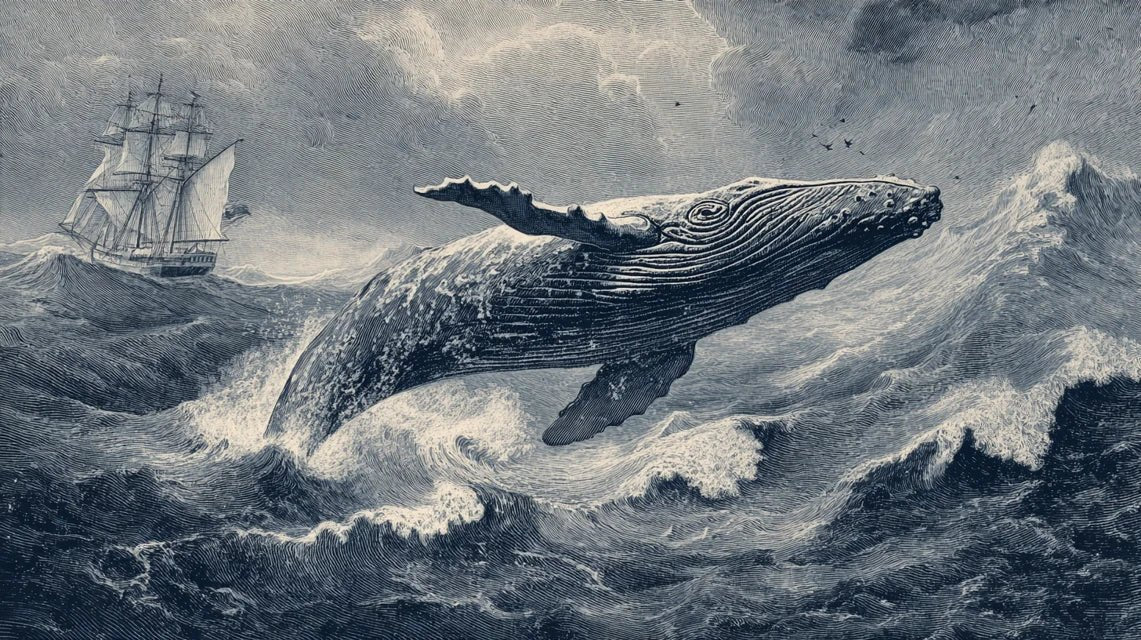
Charles Melville Scammon, the scientist-artist, complements this approach with his naturalistic studies. His oceanographic charts from 1872 capture every anatomical detail of whales thanks to monochrome lithography. These precise illustrations will permanently influence the scientific representation of cetaceans.
The Technical Secrets of 19th Century Masters
19th century artists develop specific methods to paint whales. Garneray masters the art of transforming a simple observation into a maritime epic. His paintings show the raw power of these marine mammals facing fragile human vessels.
Lithography becomes the tool of reference to faithfully reproduce the textures and proportions of cetaceans. Dotting and halftone effects allow capturing every nuance, creating images of remarkable documentary precision.
Large publishing houses democratize these works through color engraving. This industrial revolution transforms nautical art into a popular phenomenon, widely disseminating the iconography of whales in maritime society.
To admire this tradition that endures, contemporary animal paintings still draw inspiration from these proven techniques.
The triptych format revolutionizes the representation of large whales. This innovation allows embracing the immensity of these creatures across multiple panels, revealing their monumental scale in naval art.
Nautical Art Becomes Ecological
Since the 1970s, everything has changed. Artists abandon the glorification of hunting to embrace the environmental cause. This mutation radically transforms contemporary nautical art.
The most striking example? The "Skyscraper" sculpture in Bruges. This 11-meter whale, built with 5 tonnes of plastic waste (Source: Hawaii Wildlife Fund), confronts us brutally. The work denounces the 150 million tonnes of plastic (Source: Studio KCA Research) that pollute our oceans.
Agnès Varda already marked this evolution in 1981. Her Venice Beach fresco, showing two blue whales, inscribes the poetry of life into urban space. This approach still influences contemporary marine art and environmental awareness.
New technologies are revolutionizing possibilities: virtual reality, immersive installations, artistic performances. These tools create a new emotional connection between the viewer and threatened whales.
Art in service of science
Modern marine art collaborates closely with scientific research. The WHERE project in New Caledonia combines study of humpback whales and artistic creation, guaranteeing the biological accuracy of the works.
Digital applications are multiplying:
- Interactive maps of migratory routes
- Sound visualizations of whale songs
- High-definition photographic archives
- Simulations of virtual marine ecosystems
GREMM uses art for education. Artistic portraits of whales help guides and naturalists to identify the 900 belugas threatened (Source: GREMM) in the St. Lawrence River. This visual pedagogy strengthens emotional attachment to cetaceans.
Towards sustainable marine art
The future blends tradition and innovation. Contemporary artists draw on Garneray's heritage while adopting ecological codes. This synthesis creates committed and effective marine art.
Photographers like Laurent Ballesta develop respectful approach techniques. Their images then nourish artistic creation, in a virtuous circle between science and art.
The impact is measured concretely: reduction of maritime traffic in sensitive areas, increase in donations for conservation, development of responsible whale watching tourism.
With 7 out of 14 whale species classified as endangered (Source: IUCN), this artistic evolution becomes crucial. Marine art thus transforms Melville's legacy into a true tool for ocean preservation.
FAQ: Everything you need to know about marine art and whales
How did Melville influence the representation of whales?
Melville revolutionized the perception of whales by drawing inspiration from Garneray's paintings for "Moby Dick." He transformed these marine mammals from simple commercial resources into powerful literary and artistic symbols, creating a lasting iconography that still influences contemporary marine art.
Why does modern marine art prioritize ecology?
Contemporary marine art reflects environmental awareness. Faced with the threats to whales (pollution, maritime traffic, climate change), artists use their talent to raise public awareness and promote marine conservation, transforming art into a tool for protection.
What artistic techniques are best suited to represent whales?
Techniques vary depending on the era: monochrome lithography in the 19th century for scientific precision, oil painting for dramatic scenes, contemporary installations and digital art for emotional immersion. Each technique responds to specific objectives of representation and awareness.