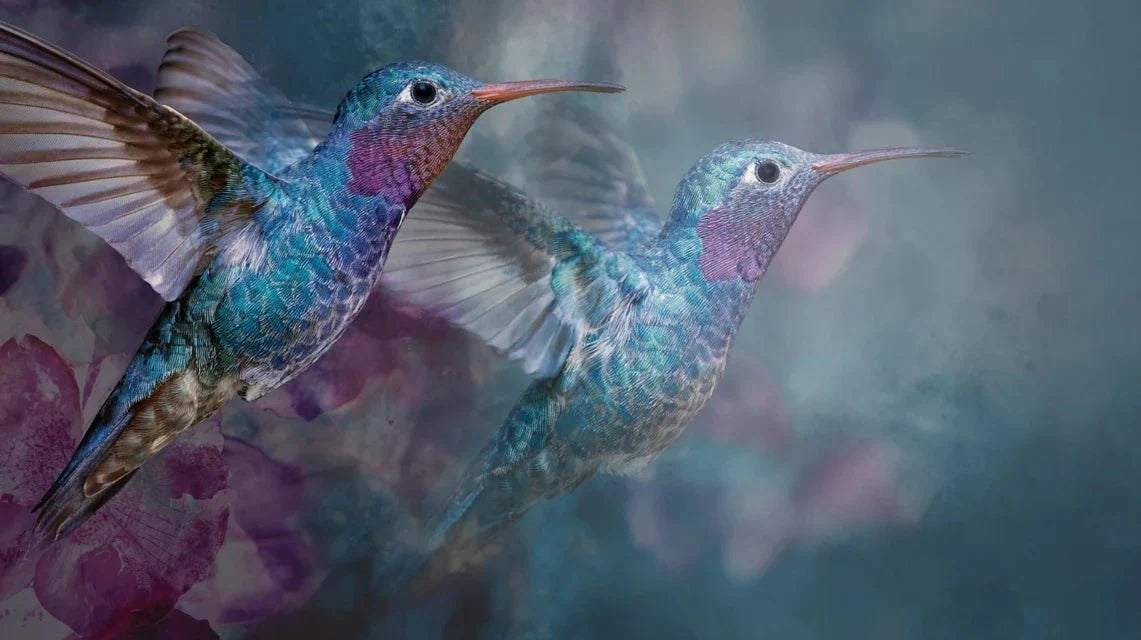
Imagine a hummingbird darting at 62 mph towards a flower, its wings beating 100 times per second. How do you freeze this breathtaking speed into a perfect image? That's the ultimate challenge faced by photographers specializing in hummingbird photography.
These hummingbirds defy all the rules of traditional wildlife photography. Their extraordinary speed transforms each shot into a high-level technical performance.
Taming Shutter Speed Against Hummingbird Speed
The battle begins with shutter speed. Facing a hummingbird, your camera must react faster than a fighter pilot. Minimum 1/1500th of a second: that's your survival speed to even capture the silhouette of the bird.
But if you want to capture every detail of the wings, every feather in motion, you need to go up to 1/5000th, or even 1/8000th. That's when your camera pushes its limits. ISO explodes to 2000-4000, the aperture is set to the maximum (f/4 to f/5.6). These extreme camera settings count.
This technique reveals details invisible to the naked eye. Suddenly, wings become sculptures of light frozen in eternity.
The Art of Autofocus Against Hummingbird Speed
Tracking a hummingbird in flight with autofocus? A near-impossible mission. These birds in flight change direction in 0.1 second. Your AF-C or AI Servo, however performant, gives up against this disconcerting speed.
Professionals have developed a formidable technique: memorization. They observe, analyze, and anticipate. Will this foraging hummingbird return in 30 seconds to exactly 20 cm from this flower? They bet on it and pre-set their focus.
Result: when the bird reappears in their viewfinder, they capture the perfect moment without waiting for the autofocus to think.
New cameras with animal eye detection are changing the game. Imagine: your camera recognizes the eye of a 6 cm wingspan hummingbird and automatically tracks it. Technology is finally catching up with the speed of nature.
The War Equipment to Capture Hummingbirds
Faced with the speed of hummingbirds, your equipment becomes your secret weapon. Minimum 300mm, 500mm to dominate: these focal lengths place you at a respectful distance while filling your frame.
A f/2.8 lens? It's your passport to high speeds. Brighter, faster, more precise. Every aperture increment gained gives you more room for maneuver against the speed of these acrobats.
The image stabilizer becomes crucial. At 1/1500th handheld, the slightest tremor sabotages your work. The best photographers combine IBIS body and optical stabilization for surgical precision.
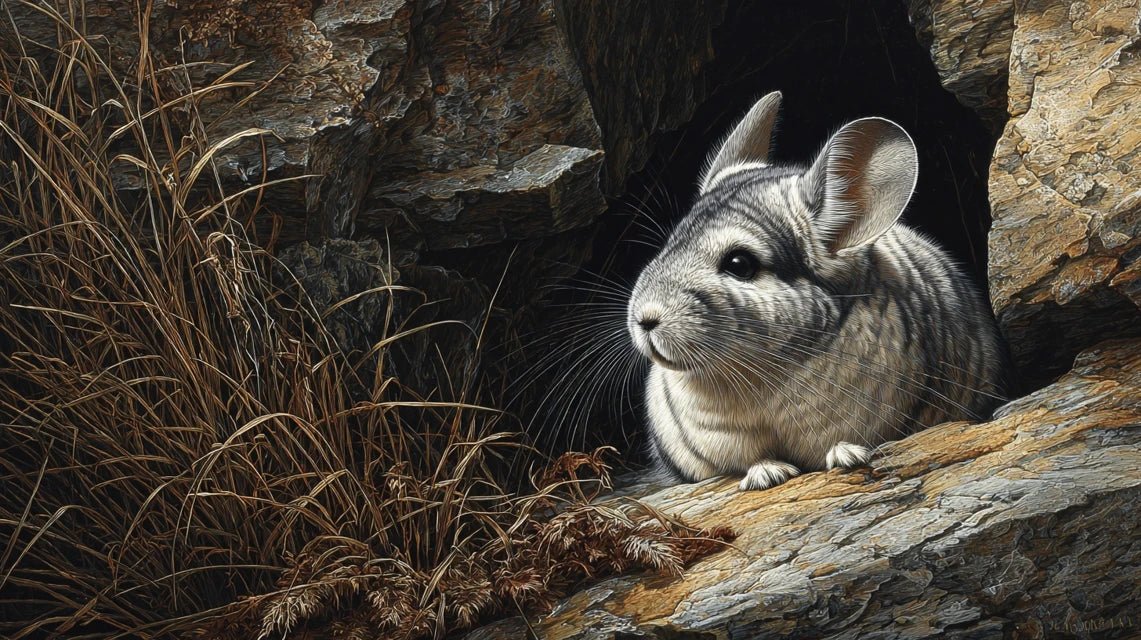
The most striking animal paintings often arise from this extreme technical precision.
The burst mode at 9 frames per second becomes your safety net. Out of 200 triggers, perhaps 2 or 3 will reveal the magic of these aerial performances.
Decoding behaviors to anticipate speed
Each hummingbird follows an invisible but rigid protocol. 1000 flowers per day, always the same circuit, the same pauses, the same favorite perches. This routine becomes your strategic advantage.
Observe: after foraging, the bird performs a hovering evaluation flight. 1 to 2 precious seconds where its speed slightly decreases. That's your firing window.
Feeders concentrate the action but intensify the speed. Hummingbirds become hyperactive, territorial, unpredictable there. A formidable training ground to sharpen your technique.
15 to 30 minutes of total stillness: that's the price to pay to tame their distrust. But once accepted into their environment, you capture exceptional scenes of intimacy.
High-speed flash: the secret weapon against speed
The high-speed synchronized flash revolutionizes the capture of hummingbird wings. Forget classic sync limits: increase to 1/4000th with flash and discover a world frozen in time.
This technique allows you to close at f/8-f/13 for optimal depth of field. The details of the feathers explode with sharpness, each barbule becomes visible in macro photography. Each wingbeat freezes with striking precision.
The Better Beamer extends the range of your flash without stressing the animal. Hummingbirds quickly get used to this artificial lighting. After a few sessions, they completely ignore the flash.
Fascinating data from these performances:
- Wingbeats: 50 to 100 times per second depending on the species (Source: Museum of Natural History of Le Havre)
- Maximum speed: 61 mph in a dive (Source: Futura Sciences)
- Heart rate: more than 1260 beats/minute (Source: Wikipedia Trochilidae)
- Flowers visited daily: up to 1000 (Source: Clement Blin Photography)
FAQ - Frequently Asked Questions
What shutter speed to capture a hummingbird in flight?
Minimum 1/1500th of a second to freeze the body with slightly blurred wings, 1/5000th to 1/8000th to completely freeze the wings. These speeds require high ISOs and maximum aperture.
How do you focus on a hummingbird that is so fast?
Use the memory technique: observe the bird's behavior, anticipate its hovering flight position, and manually pre-focus on that area. Continuous AF alone is not enough to keep up with their speed.
What is the minimum equipment needed to photograph hummingbirds?
Minimum 300mm telephoto lens (500mm recommended), f/4 or faster aperture, fast autofocus, burst mode 6-9 img/sec. A flash with high-speed sync significantly improves results.
The technique for capturing the speed of hummingbirds combines technical expertise and observational patience. These specialized methods allow you to reveal the beauty of these exceptional aerial performances, transforming the challenge of their speed into an artistic opportunity.