Manta ray stripes have danced in the imagination of Oceanic peoples since time immemorial. These giants of the deep, veritable living cathedrals that can reach 7 meters in wingspan, inspire an Oceanic art of extraordinary richness. Imagine these graceful creatures gliding silently through the crystalline depths of the Pacific, their wings spread like mystical sails. This majesty of nature has captivated Oceanic artists who have been able to transform their wonder into artistic masterpieces passed down from generation to generation.
When manta rays inhabit traditional Oceanic art
In Polynesian villages, as the sun sets over the lagoon, elders still tell how manta rays became the muses of Oceanic art. These creatures of the deep adorn the prows of sacred canoes, their stylized forms protecting navigators on their ocean voyages.
Polynesian artisans, true magicians of wood, sculpt Fafapiti (the local name for manta rays) with touching devotion:
- They meticulously choose woods washed ashore by storms
- Delicately carve their silhouettes on precious bamboos and shells
- Weave their patterns into ceremonial tapas in shimmering colors
- Integrate them into navigation instruments as protective talismans
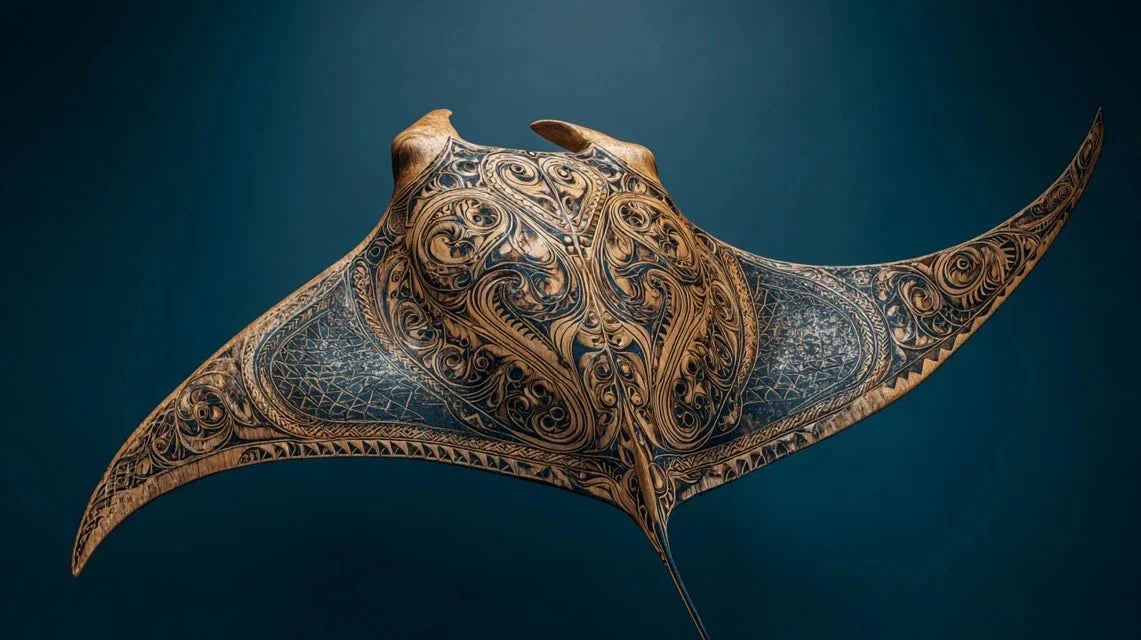
In New Zealand, the Maori transform these marine giants into spiritual symbols. The famous koru motif, this sacred spiral inspired by ferns, intertwines with representations of manta rays in wharenui (communal houses). There, carved in dark wood, they watch over families forever, embodying this majesty of the deep that transcends the visible world.
The sacred dimension of manta rays in the Oceanic universe
To understand the importance of manta rays in Oceanic art, you must dive into the soul of the Pacific peoples. These creatures are not just marine animals: they represent spiritual bridges between our world and that of ancestors.
In New Caledonia, the Kanaks speak with respect of manta rays as "guardian spirits of the depths". Local artists honor them by using exceptional materials: shimmering plumes from cassowaries, nacreous shells, fragrant sandalwood. These creations give birth to animal paintings of striking emotional power, like those offered in specialized collections https://walensky-shop.fr/collections/tableau-animaux.
This artistic veneration carries several profound meanings:
- Benevolent protection for all who face the ocean
- Millennial wisdom rising from mysterious depths
- Symbol of fertility and perpetual rebirth
- Messengers between the world of the living and that of spirits
- Embodiment of the majesty of oceanic forces
During initiation ceremonies, young people discover these sacred representations that mark their passage to spiritual adulthood.
The art of sculpting the grace of the depths
Watching an Oceanian master sculptor work on a ray manta is like watching a fascinating spectacle. Their expert hands caress the wood, gradually revealing the graceful form of the creature. These artisans perpetuate ancestral techniques of remarkable sophistication.
Their technical secrets include:
- Direct carving with a sharp shell knife
- Patient polishing with coral sand to obtain surfaces as smooth as silk
- Application of natural pigments extracted from multicolored reefs
- Careful incrustation of mother-of-pearl reproducing the silvery belly of ray manta
- Artistic assembly of fibers, feathers and rare shells
In contemporary workshops in Papua New Guinea, this tradition is evolving. Sepik sculptors now create monumental ray manta by combining flexible bamboo and modern pigments. They preserve traditional aesthetics while exploring new creative possibilities.
Stylization remains the soul of the Oceanian approach: rather than copying nature, artists amplify the inherent majesty of these creatures by simplifying their forms.
Contemporary Renaissance of Oceanic Ray Manta Art
Oceanic art today brilliantly reinvents the representation of ray manta without betraying its spiritual heritage. Young creators from Polynesia, Melanesia and Micronesia embrace new mediums while keeping the traditional flame alive.
Their artistic innovations explore:
- Metallic sculptures inspired by ancestral forms
- Immersive digital installations blending tradition and technology
- Contemporary marine paintings borrowing the colorful codes of yesteryear
- Ceramic art evoking the majesty of the depths
- Multimedia creations raising awareness about marine protection
In Bora Bora, local artists integrate ray manta into impactful environmental works. They alert to the vulnerability of these species classified as threatened (Source: International Union for Conservation of Nature) while celebrating their beauty. This approach harmoniously unites cultural heritage and modern ecological awareness.
Art galleries specializing in Oceanic primitive art bear witness to this creative renewal, exhibiting works where tradition and modernity dialogue harmoniously.
Passing on an artistic treasure to future generations
Preserving the art of oceanic manta rays is now a fascinating challenge. Faced with globalization, Pacific communities are mobilizing their creativity to keep their traditions alive.
Their inspiring initiatives include:
- Workshops where masters pass on their secrets to young people
- Careful documentation of ancestral techniques
- Cultural centers celebrating authentic oceanic art
- Educational programs revealing the symbolic richness of manta rays
- Fecund collaborations between tradition and modernity
In Bora Bora, 153 manta rays swim in crystal-clear waters (Source: Centre de Recherches Insulaires et Observatoire de l'Environnement). This natural wealth directly nourishes the creativity of local artists who draw inspiration from this ever-renewed majesty of the depths.
Oceanic museums now tell this beautiful artistic story, from precolonial art to the most contemporary creations. They show how this majesty of the depths continues to inspire artists who adapt traditional codes to modern realities.
This unique marine iconography reveals the extraordinary ability of Pacific cultures to transform wonder at the depths into timeless artistic expressions. Oceanic art of manta rays thus remains a living cultural heritage that continues to amaze and inspire.
FAQ - Manta Rays in Oceanic Art
What is the spiritual significance of manta rays in oceanic art?
Manta rays represent guardian spirits of the depths in oceanic art. They symbolize the protection of navigators, ancestral wisdom, and the connection between the terrestrial and spiritual worlds. Ocean peoples consider them divine messengers embodying the majesty of ocean forces.
What traditional techniques do Oceanic artisans use to depict manta rays?
Oceanic artisans employ direct carving with shell knives, polishing with coral sand, and applying natural pigments extracted from reefs. They also incorporate mother-of-pearl inlays and assemble organic materials such as fibers, feathers, and shells to create their works.
How does contemporary oceanic art perpetuate the tradition of manta rays?
Modern oceanic art reinterprets manta rays through metal sculptures, digital installations, and contemporary marine paintings. Artists preserve the traditional spiritual dimension while raising awareness about the protection of these vulnerable species, creating a dialogue between cultural heritage and ecological awareness.