Imagine an oiseau that chose to forgo flying to save its forest. This story, at the heart of Polynesian and Maori culture, reveals why the kiwi occupies such a special place in New Zealand art. More than just an animal, this small ground bird embodies the soul of a people and has inspired artists for centuries.
The kiwi, sacred treasure of traditional Maori art
In the Maori worldview, some beings transcend their nature to become taonga – cultural treasures of inestimable value. The kiwi is one of these chosen ones. The kiwi is considered a special bird by the Maoris. It is "the hidden bird of Tane," god of the forest.
This spiritual relationship materialized in the most refined Maori cultural heritage: feather cloaks. Kiwi feather cloaks were made by sewing together kiwi skins. These cloaks were taonga (treasures) reserved mainly for chiefs. Imagine these artisans meticulously assembling each brown and golden feather, creating portable works of art that told ancestral stories.
These creations required months of patient work. Each feather was chosen, positioned and sewn according to precise patterns that conveyed spiritual messages. The natural colors of the kiwi – deep brown, ochre and black – formed compositions of striking beauty that reflected the sacred connection between man and nature.
Maori art celebrates the wingless bird
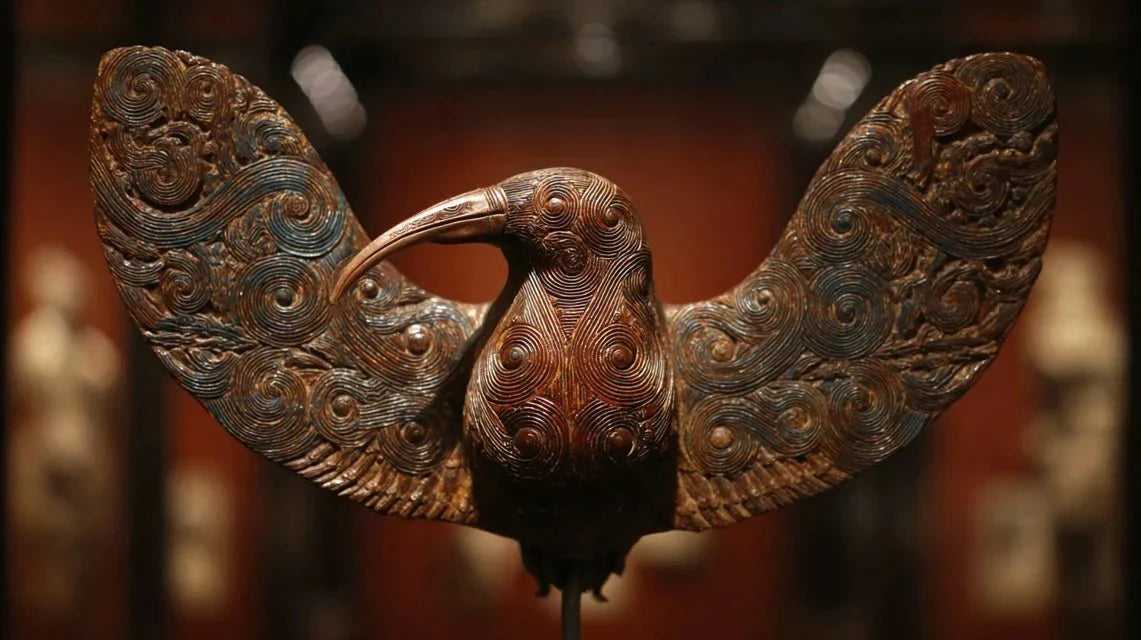
Maori artists have always found in the kiwi an inexhaustible source of inspiration. Wood sculptors reproduced its unique silhouette, highlighting its long sensitive beak and robust legs. These sculptures adorned sacred houses and watched over the community as spiritual guardians.
Maori body art, the famous ta moko, also draws on the aesthetics of the kiwi. Traditional tattoo artists were inspired by the graceful curves of its beak and the patterns of its plumage to create unique designs on the skin. These tattoos symbolized perseverance and resilience – qualities that Maori admire in this ground bird.
Today, this tradition continues in New Zealand craftsmanship. Sculptors work pounamu (New Zealand jade) to create pendants depicting stylized kiwis. These modern jewels carry within them centuries of tradition, as can be seen in some contemporary animal paintings that capture the spiritual essence of these revered creatures.
Traditional weaving also perpetuates this heritage. Artisans use natural fibers which they dye with ancestral pigments to reproduce the subtle nuances of the kiwi plumage. Each creation tells a story and transmits a millennial know-how passed down from master to apprentice in an unbroken chain of knowledge.
Legends that bring to life the sacred kiwi animal symbolism
Why can't the kiwi fly? Maori mythology answers this question with a touching story of sacrifice and courage. According to some legends, the kiwi would be a courageous bird who accepted living on the ground to save the forest, earning him the recognition of other species.
The story tells that one day, Tane, the god protector of forests, called upon all birds. The trees were threatened by destructive insects, and guardians were needed to descend to the ground and protect them. All the birds refused, fearing losing their freedom to fly – except one: the kiwi.
This little courageous bird accepted the sacrifice. In exchange for his generosity, Tane promised him an eternal place of honor among the most respected creatures. The kiwi lost his wings but gained something more valuable: the eternal admiration of his people.
This legend resonates deeply within Maori culture as it illustrates fundamental values: putting the common good before one's own desires, protecting the environment and accepting even difficult responsibilities. Elders passed down this story from generation to generation, teaching young people that true greatness comes from sacrifice for others.
The kiwi inspires today's Maori art
Contemporary Maori art constantly reinvents the symbolism of the kiwi while respecting its traditional roots. Today's artists use new materials and techniques, but the spirit remains the same: to honor this exceptional bird and transmit its spiritual message.
In modern galleries in New Zealand, exhibitions regularly showcase works inspired by the kiwi. These creations skillfully navigate between tradition and innovation, creating bridges between the past and present. Maori artists use their talent to raise public awareness of conservation of this fragile species.
The digital age offers new creative possibilities. Interactive applications are now telling the legends of the kiwi, allowing new generations to discover these stories on their screens. This modern approach allows reaching a wider audience while preserving the authenticity of accounts from ancestral traditions.
Maori art also generates a creative economy that benefits communities. The income from sales of artworks finances cultural and educational projects, creating a virtuous circle that strengthens cultural identity while ensuring its transmission.
Reality makes this mission even more urgent for conservation of endemic species: today, only 70 000 kiwis survive in the wild (Source: Department of Conservation New Zealand). Maori art therefore plays a crucial role in preserving this species by keeping alive the spiritual connection between the Maori people and their totem bird.
The facets of the kiwi in Maori art:
- Symbol of sacrifice and generosity
- Spiritual link between earth and sky
- Guardian of ancestral forests
- Unmissable artistic motif
- Inspiration for contemporary art
This unique relationship between art and spirituality ensures the survival of ancestral traditions while adapting them to modern challenges of conservation and cultural identity. The kiwi thus remains alive in art, carrying within it the soul of a people and the hope of a preserved future.
Frequently asked questions about kiwis in Maori art
Why is the kiwi so important in Maori culture?
The kiwi is considered a taonga (cultural treasure) and represents "the hidden bird of Tane", god of the forest. Its legend of sacrifice to save the forest makes it a symbol of generosity and courage in Maori spirituality.
How were kiwi feathers used in traditional art?
Kiwi feathers were used to make ceremonial cloaks reserved for chiefs. These artistic creations required months of meticulous work and represented a high social status while telling ancestral stories.
Does modern Maori art still represent the kiwi?
Absolutely. Contemporary Maori art reinterprets the symbolism of the kiwi through new materials such as pounamu (jade), digital art, and modern installations, while preserving its traditional spiritual meaning.