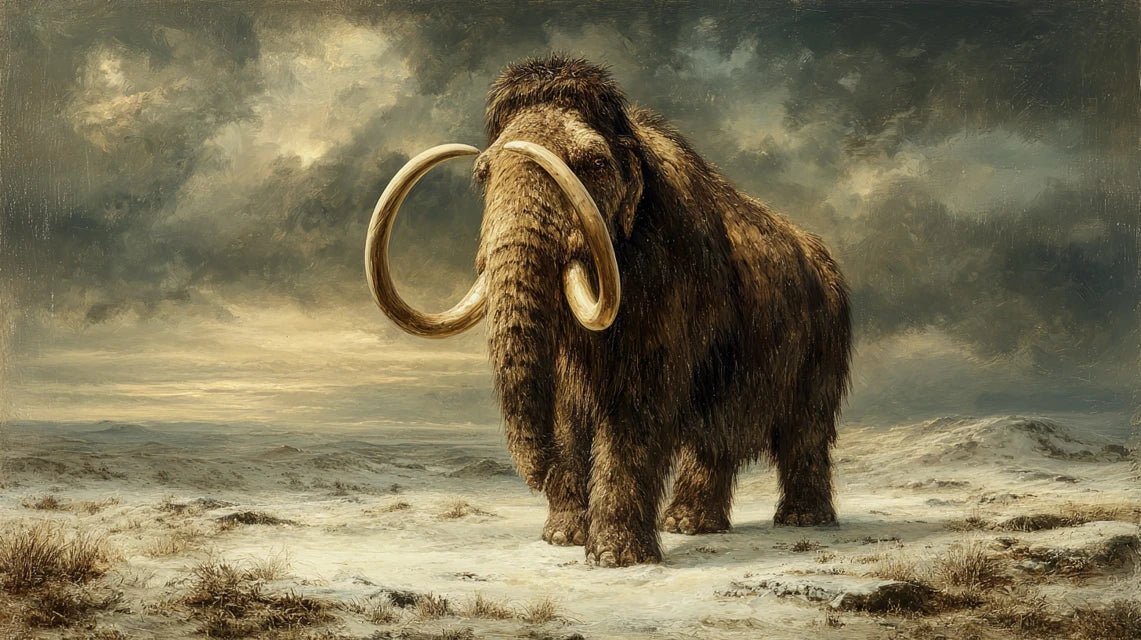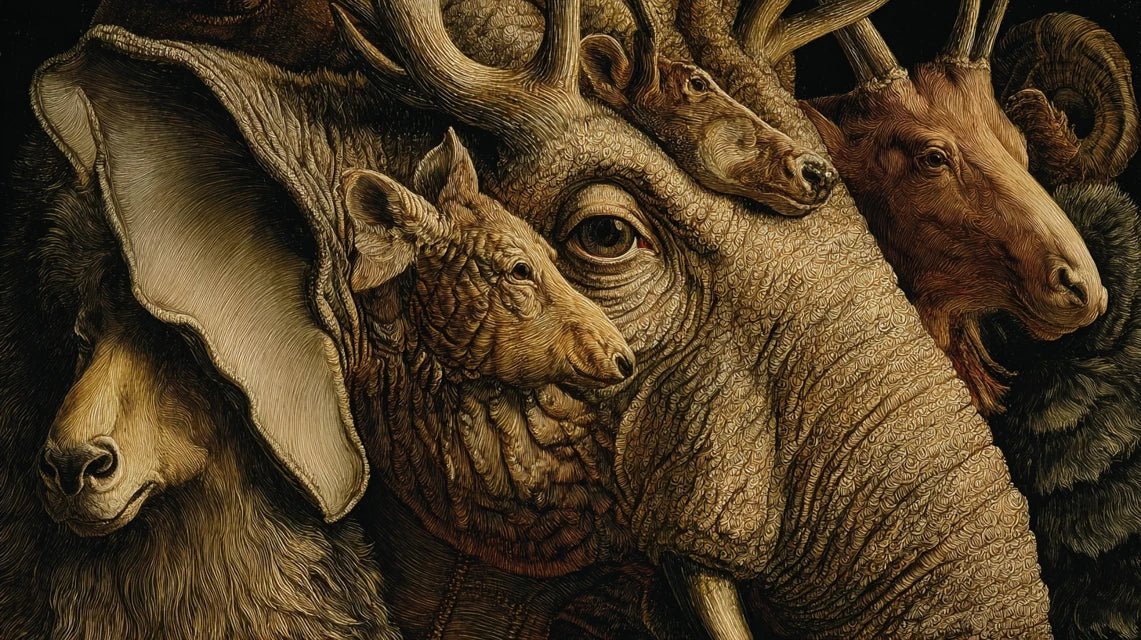
Imagine a moment discovering a portrait where your eye first distinguishes an elephant, then a lion, before suddenly realizing it is actually a human face. Giuseppe Arcimboldo created this magic in the 16th century. He revolutionized portrait art by inventing an extraordinary visual accumulation technique: animal-composed portraits.
A 16th Century Pictorial Innovation That Defies Imagination
In his workshop in Milan, and then at the court of Prague, Arcimboldo develops a unique method of Renaissance composite portraiture. Each composed portrait is born from a meticulous artistic zoological assemblage. Take "The Earth": the artist transforms an elephant's ear into a human cheek. The mouth of a wolf becomes an expressive eye through animal metamorphosis portrait.
This revolutionary innovation in Italian Mannerist art requires perfect knowledge of anatomy. Arcimboldo studies each creature in imperial menageries. He observes, draws, memorizes. More than 20 different species are found in a single work (Source: Louvre Museum).
Here's what makes his creations exceptional:
- Each animal is placed with surgical precision
- Human proportions remain perfect
- The natural colors of the pelts recreate skin tones
- The eye navigates between two distinct realities
When Animals Become Architects of the Face
Traditionally, animals in Renaissance art served as symbols. Arcimboldo breaks this convention with his visual accumulation technique. His creatures become the bricks of a human face. It is a major conceptual revolution of Renaissance composite portraiture.
The artist frequents the imperial menageries of Prague. He observes felines, draws exotic birds, studies African mammals. This quasi-scientific approach allows him to achieve a striking accuracy.
His animal paintings question our perception. How can our brain simultaneously see a mass of animals and a human portrait? Arcimboldo plays with this visual duality brilliantly thanks to his animal metamorphosis portrait.
The Art of Artistic Zoological Assemblage Perfected
Each composed portrait by Arcimboldo follows a rigorous mathematical logic. The artist positions his animals according to precise geometric axes. The result? A fascinating organic architecture characteristic of Italian Mannerist art.
His color palette also revolutionizes the art of portraiture. The natural tones of furs blend to recreate human skin tone. This technique allows animal portraits to retain their realism.
Modern research reveals that Arcimboldo uses between 15 and 25 species per composition (Source: Institut National d'Histoire de l'Art). This density creates an unparalleled textual richness.
An artistic movement that crosses Europe
Composed animal portraits launch the Mannerist movement in Northern Europe. This 16th-century pictorial innovation influences royal courts who rush to acquire these sophisticated works. Arcimboldo's innovation extends beyond art to touch natural philosophy.
His techniques spread rapidly. Flemish, German and French workshops draw inspiration from his methods of artistic zoological assemblage. A true transnational movement is born from this aesthetic revolution.
A legacy that transcends centuries
Arcimboldo's influence does not stop at the Renaissance. In the 20th century, Surrealists rediscover his techniques of Renaissance composite portraiture. Salvador Dalí acknowledges his debt to these revolutionary compositions.
Even today, conceptual art draws on his innovations. His composed portraits already questioned the limits between reality and representation. A central theme of contemporary art.
This permanence of influence proves the profound revolutionary depth of Arcimboldo's innovation. Arcimboldo did not just create beautiful portraits. He revolutionized our way of conceiving art itself.
FAQ - Composed Animal Portraits by Arcimboldo
Q: How many animals did Arcimboldo use in his composed portraits?
R: Arcimboldo generally used between 15 and 25 different animal species per composed portrait. Some works like "The Earth" contain more than 20 distinct species, creating exceptional visual richness.
Q: Why are Arcimboldo's animal portraits considered revolutionary?
R: These works revolutionize the art of portraiture because they transform animals from simple symbols into structural elements of the human face. This technique of artistic zoological assemblage creates a unique visual duality between animal perception and human recognition.
Q: How did Arcimboldo obtain his animal models for his composed portraits?
R: Arcimboldo studied animals alive in the imperial menageries of Prague and Vienna. He directly observed the exotic specimens collected by the Habsburg emperors, allowing him remarkable anatomical precision in his compositions.