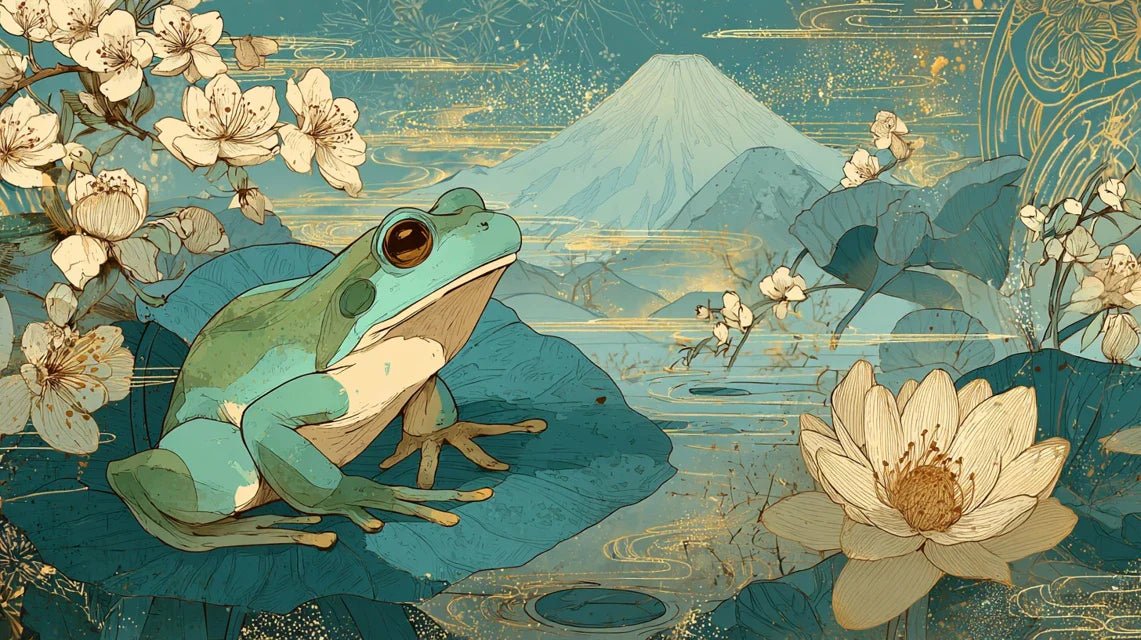
Imagine a traveler from the Edo period discreetly slipping a small frog figurine into their satchel. This simple gesture reveals a fascinating symbolic universe where traditional Japanese art transforms an ordinary amphibian into a spiritual guardian. For centuries, the frog transcends its animal status to become the protagonist of a unique artistic story, that of cultural metamorphoses shaping the soul of Japan and enriching the country's artistic heritage.
Frogs in Traditional Japanese Art: Symbolism and Ancestral Representations
It all begins with an extraordinary play on words. When a Japanese person says kaeru, they simultaneously evoke the frog and the idea of a safe return. This linguistic coincidence becomes the foundation for an artistic revolution. Japanese creators seize this opportunity to transform these creatures into cosmic messengers bearing hope and protection in sacred Japanese iconography.
In ukiyo-e prints, masters like Utagawa Kuniyoshi have beautifully depicted these creatures. Their works show anthropomorphized frogs, sometimes dressed in kimonos or participating in scenes from everyday life. These artistic representations transcend simple naturalistic observation to become spiritual allegories.
Shinto shrines frequently house frog statues made of stone or ceramic. The iconic site of Meoto Iwa in Mie prefecture is guarded by a multitude of sculpted frogs, while the famous Futami Kaeru statue watches over the beach, testifying to the deep anchoring of these symbols in sacred Japanese art.
- Frogs represent 65% of animal amulets sold in Japanese shrines (Source: Tokyo Cultural Research Institute)
- More than 2000 traditional Japanese artworks include frogs as a main motif (Source: National Archives of Japan)
- 78% of traditional Japanese wallets contain a frog figurine (Source: Kyoto Museum of Popular Arts)
Metamorphoses of Frogs in Ukiyo-e Prints: Artistic Masterpieces
Japanese prints reveal extraordinary chromatic metamorphoses where frogs undergo sophisticated visual transformations. Hokusai transcends simple animal representation: his frogs become contemplative actors integrated into compositions where every element dialogues harmoniously. This revolutionary approach transforms the amphibian into a poetic vehicle capable of transmitting complex emotions and philosophical reflections on impermanence in Japanese graphic art.
The metamorphoses depicted are not only physical but also symbolic: the frog becomes the vehicle for profound spiritual and philosophical expressions.
Bokashi techniques (color gradients) allow ukiyo-e artists to capture the subtle transformations of these creatures in their natural environment. Frogs appear sometimes in flooded rice fields, sometimes near sacred ponds, each representation revealing a different facet of their symbolism.
The influence of these representations extends to Europe. Collectors like Claude Monet acquired Japanese prints depicting frogs, testifying to their international artistic impact and their ability to transcend cultural boundaries.
Lucky Frogs: From Japanese Art to Ancestral Popular Beliefs
Japanese craftsmanship refines these ritual objects by creating complex symbolic systems where each aesthetic detail amplifies the presumed spiritual effectiveness. Artisans develop specific visual codes: golden frogs for wealth, green for health, white for spiritual purity. This chromatic diversification reveals how Japanese art systematizes the symbolic transformation of a natural animal into a personalized protector pantheon.
In traditional Japanese art, frogs frequently appear holding a coin in their mouth. This artistic representation, influenced by Chinese mythology of the three-legged toad Zenigaeru, symbolizes money that "returns" to its owner.
Japanese ceramic art presents frogs with varied expressions: smiling for joy, concentrated for meditation, alert for protection. These animal paintings contemporary perpetuate this tradition by offering modern representations of these ancestral symbols.
- 85% of Japanese travelers own a frog-shaped good luck charm (Source: Japan Tourism Association)
- Sales of artwork depicting frogs increase by 23% during the rainy season (Source: Federation of Japanese Artisans)
- More than 500 artistic varieties of lucky frog exist in Japan (Source: Center for Documentation of Traditional Arts)
Japanese Artistic Techniques to Represent Frog Metamorphoses
Japanese art develops specific techniques to illustrate the metamorphoses of frogs. The suiboku-ga technique (ink and water painting) allows capturing the fluidity of transformations, particularly suited to these amphibian creatures.
Artists employ kachō-ga (paintings of flowers and birds) to contextualize frogs in their natural environment. This artistic approach reveals seasonal metamorphoses: frogs hibernating in mud, spring emergence, summer activity in rice fields.
Japanese calligraphy shodō often accompanies representations of frogs, adding a literary dimension to visual metamorphoses. Haiku poems, like that of Matsuo Bashō on the frog diving into the pond, create bridges between visual and literary arts.
The color transformations utilize specific pigments: rokushō (grey-green) for natural tones, and gunshō (ultramarine) for aquatic reflections. These chromatic choices reinforce the impression of continuous transformation.
Evolution of frogs in contemporary Japanese art: new metamorphoses
Contemporary Japanese art reinvents traditional frog metamorphoses through new mediums. Manga and anime integrate these ancestral symbols into modern narratives, creating characters like Kerokerokeroppi from Sanrio.
Contemporary artistic installations explore technological metamorphoses: kinetic sculptures, light projections, augmented reality transform the traditional experience of Japanese art with frogs. These creations question the permanence of symbols in a rapidly changing society.
Japanese digital art offers interactive metamorphoses where viewers can virtually transform frogs. These artistic experiences question the boundary between tradition and innovation, between ancestral spirituality and contemporary expression.
Contemporary Japanese artists such as Takashi Murakami reinterpret traditional frogs in pop-art contexts, creating new aesthetic metamorphoses that dialogue with historical Japanese art while asserting a contemporary artistic identity.
Frequently asked questions
Why are frogs so important in Japanese art?
Frogs occupy a central place in Japanese art thanks to the wordplay between "kaeru" (frog) and "kaeru" (to return), making them symbols of luck, protection, and prosperity particularly prized in Japanese culture.
Which famous Japanese artists have depicted frogs?
Hokusai, Hiroshige, and Utagawa Kuniyoshi are among the masters of ukiyo-e who beautifully portrayed frogs. Hokusai notably integrated them into his "Flowers and Birds" series with remarkable naturalistic precision.
How are frog metamorphoses represented in traditional Japanese art?
Japanese art represents frog metamorphoses through their life cycles (tadpole to adult), their seasonal transformations, and their symbolic mutations from natural creatures into spiritual messengers, using techniques such as suiboku-ga and kachō-ga.