Imagine a dragonfly gently landing on the water. Its transparent wings shimmer in the light. This magical image has fascinated artists of Art Nouveau who transformed this fragile insect into a true artistic icon of the Belle Époque.
In the late 19th century, dragonflies become the muses of an unprecedented creative revolution. These ephemeral creatures perfectly embody the spirit of Art Nouveau: natural grace sublimated by human genius in exceptional period jewels.
When dragonflies inspire Art Nouveau
The story begins with René Lalique, a visionary genius who sees in the dragonfly much more than just an insect. For him, this delicate being symbolizes the modern woman in all her complexity. His legendary "Femme Libellule" antique brooch creates a sensation when Sarah Bernhardt wears it during her theatrical performances. The Parisian public then discovers a new revolutionary aesthetic that indelibly marks the history of art.
This fascination is not insignificant. Art Nouveau artists desperately seek to escape the massive industrialization that progressively dehumanizes European society. The dragonfly represents everything they cherish and defend with passion:
- The ephemeral beauty of the wild nature
- The transformation spiritual and artistic renewal
- Refined elegance facing industrial heaviness
- Absolute creative freedom
These small flying creatures quickly become the powerful emblem of a movement that wants to reconcile art with daily life, inspiring in particular the decorative arts of the time and permanently influencing contemporary creation.
Revolutionary techniques to capture lightness
How to faithfully reproduce the lightness of a dragonfly wing in metal? Art Nouveau artists meet this major technical challenge by inventing stunning antique jewelry techniques.
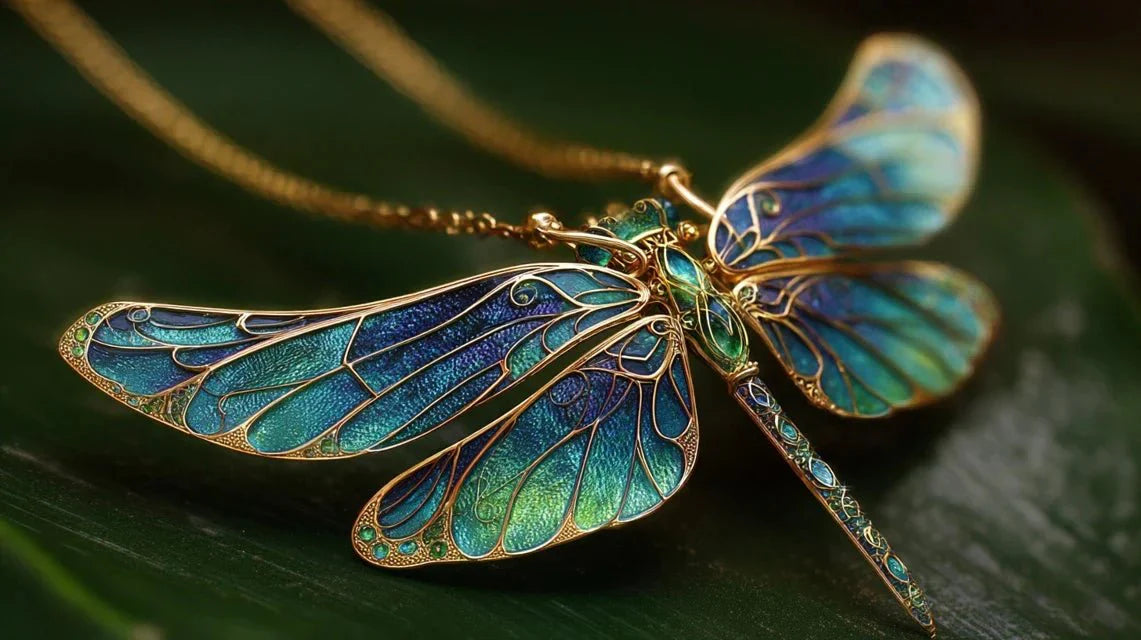
Enameling plique-à-jour becomes their secret weapon. This ancestral method, cleverly revived, creates a magical visual effect: the colored enamel is meticulously applied to a delicately openwork metal structure, without a metallic background. Spectacular result? Natural light shines harmoniously through the material as through a precious medieval stained glass window. The optical illusion is perfect: you would admire real living dragonfly wings.
Henri Vever and the renowned house of Boucheron master this complex technique to absolute perfection. Their exceptional creations seem miraculously to defy the laws of physics. Metal becomes mysteriously transparent, colors shimmer sublimely, grace is naturally expressed in every meticulous detail of these unique works of art.
Other innovative techniques further enrich this creative arsenal:
- Sophisticated cloisonné to precisely define colored areas
- Refined basse-taille that sculpts delicate reliefs
- Mechanical guillochage creating undulating patterns
- The subtle art of combining precious stones and innovative materials
These revolutionary technical innovations transform traditional jewelry into true visual poetry, definitively establishing new artistic styles.
A material revolution in the service of beauty
Libellules Art Nouveau creations radically disrupt all established codes of classical jewelry. No more exclusive worship of diamonds and gold! Visionary artists courageously explore new creative territories, consistently prioritizing pure beauty over market value in their avant-garde artistic creations.
Their material palette becomes extraordinarily rich and varied:
- Enamels with iridescent reflections perfectly imitating wings
- Crystalline aquamarines evoking pure water
- Oriental nacre with changing colors
- Noble opals with mysterious fires
- Cut crystal for absolute transparency
René Lalique pushes creative audacity even further in his experiments. He revolutionarily integrates blown glass into his jewelry, creating pieces of absolutely stunning modernity. His legendary "Quatre libellules" brooches remain timeless masterpieces where all these innovative materials blend harmoniously.
This revolutionary aesthetic still inspires contemporary creators around the world. This characteristic grace of dragonflies can be found in many animal paintings that beautifully perpetuate this exceptional artistic heritage.
The art of creating the illusion of lightness
Creating the magical impression of lightness in a heavy metal jewel is a true technical feat. Art Nouveau masters develop ingenious and revolutionary strategies to achieve it brilliantly.
Every meticulous detail counts enormously. Sophisticated articulation systems allow brooches to naturally and harmoniously follow the movements of the human body. More than just a decorative ornament, jewelry becomes a second skin that perfectly hugs the feminine silhouette.
Mathematical proportions are the subject of particularly meticulous study. The subtle balance between the body of the dragonfly and its wings determines the aesthetic success of the work. Lalique masters these technical subtleties with a quasi-mathematical precision, creating a grace that appears natural but is in fact carefully calculated.
Even hidden parts receive extreme care. This meticulous attention to detail significantly reinforces the impression of perfection and lightness.
The contemporary art market today recognizes the exceptional value of these creations. Authentic Lalique pieces achieve estimates of €220,000 to €300,000 (Source: Gazette Drouot), undoubtedly testifying to their status as major works of art.
A timeless artistic heritage
Art nouveau dragonflies perfectly embody the visionary spirit of a movement that revolutionized Western decorative art. More than just a passing fad, they represent a lasting philosophy: that of accessible beauty, of art that dialogues harmoniously with nature.
Even today, their grace and lightness continue to fascinate art lovers. These exceptional creations prove that authentic art transcends eras without aging. In a contemporary world often dominated by speed and artificiality, they remind us of the precious value of contemplation and pure beauty.
Art nouveau dragonflies remain valuable witnesses of a blessed era when artists dared to dream of a more beautiful world. Their legacy endures magnificently, inspiring each new generation of creators seeking harmony between art and nature.
FAQ - Art Nouveau Dragonflies
Why has the dragonfly become the emblem of art nouveau?
The dragonfly perfectly embodies the values of art nouveau: grace, lightness, transformation and harmony with nature. Its translucent wings inspire plique-à-jour enamelling techniques, while its metamorphosis symbolizes artistic renewal in the face of industrialization.
What technique makes it possible to reproduce the transparency of dragonfly wings?
The plique-à-jour enamelling technique is the signature method for creating the translucent effect of the wings. Enamel is applied to an open metal structure without a background, allowing light to pass through the material as in a stained glass window, perfectly imitating the wing membranes.
How much are René Lalique's dragonfly jewelry pieces worth today?
Authentic Lalique creations depicting dragonflies achieve estimates of €220,000 to €300,000 on the art market. These prices reflect their status as major works of art and their exceptional rarity.