

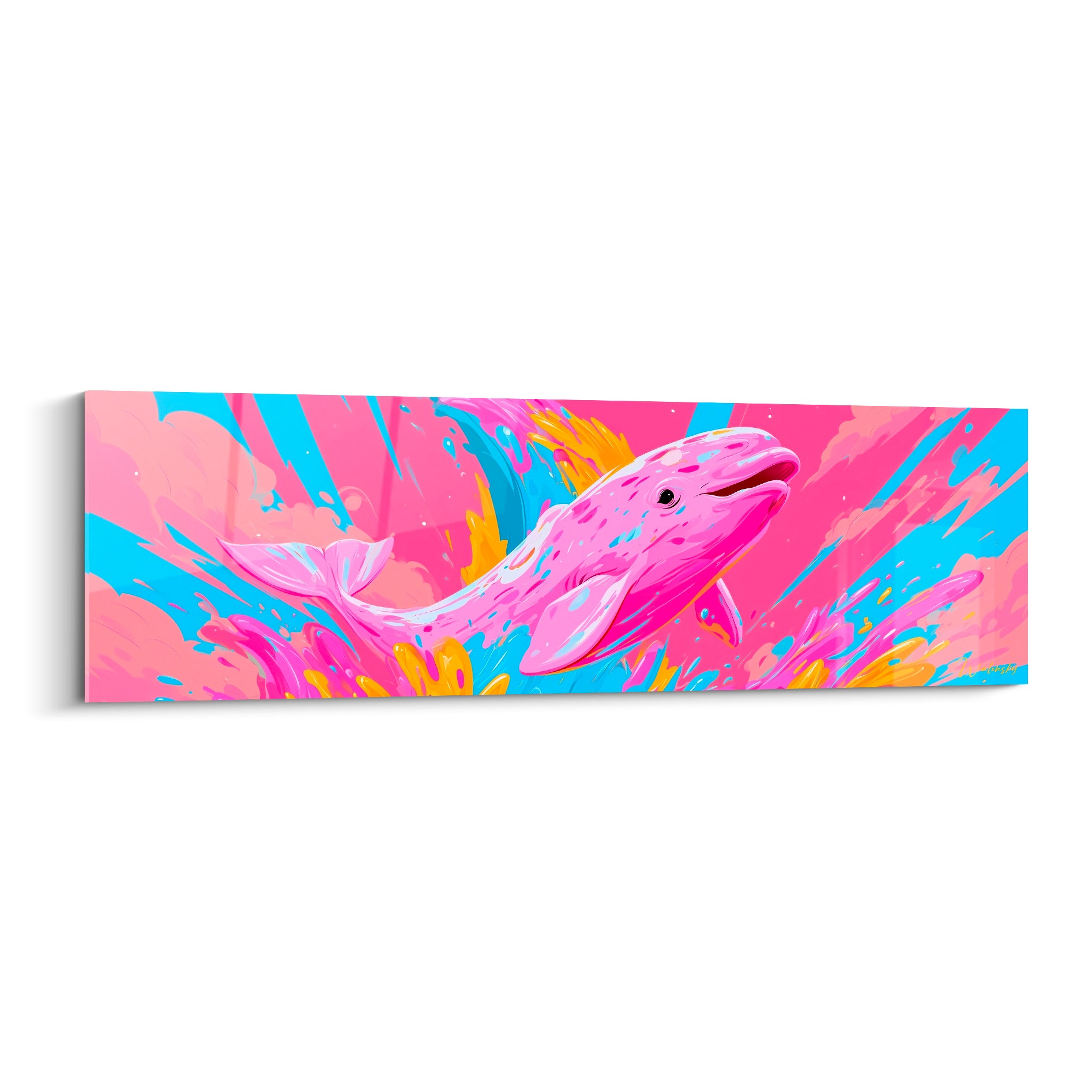
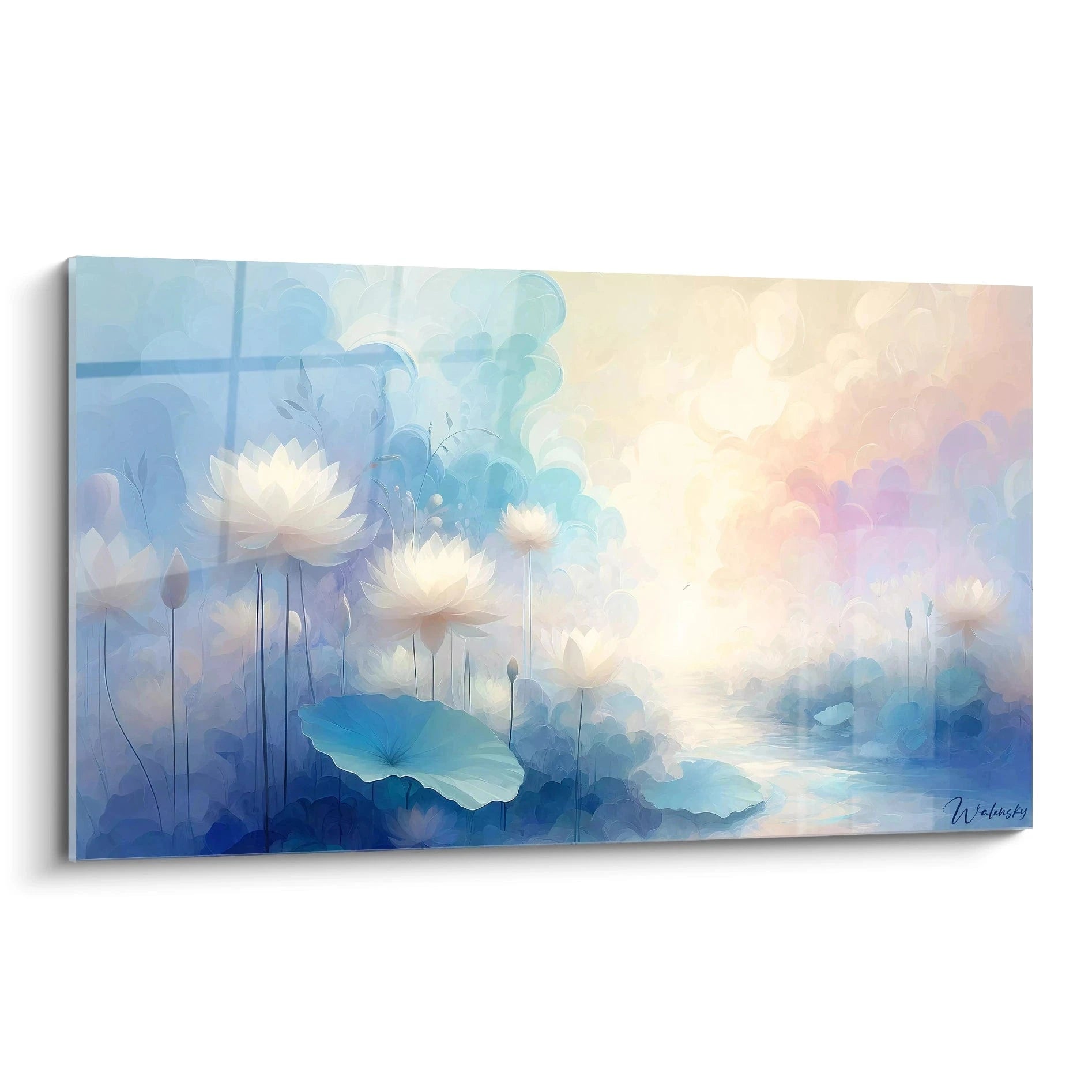
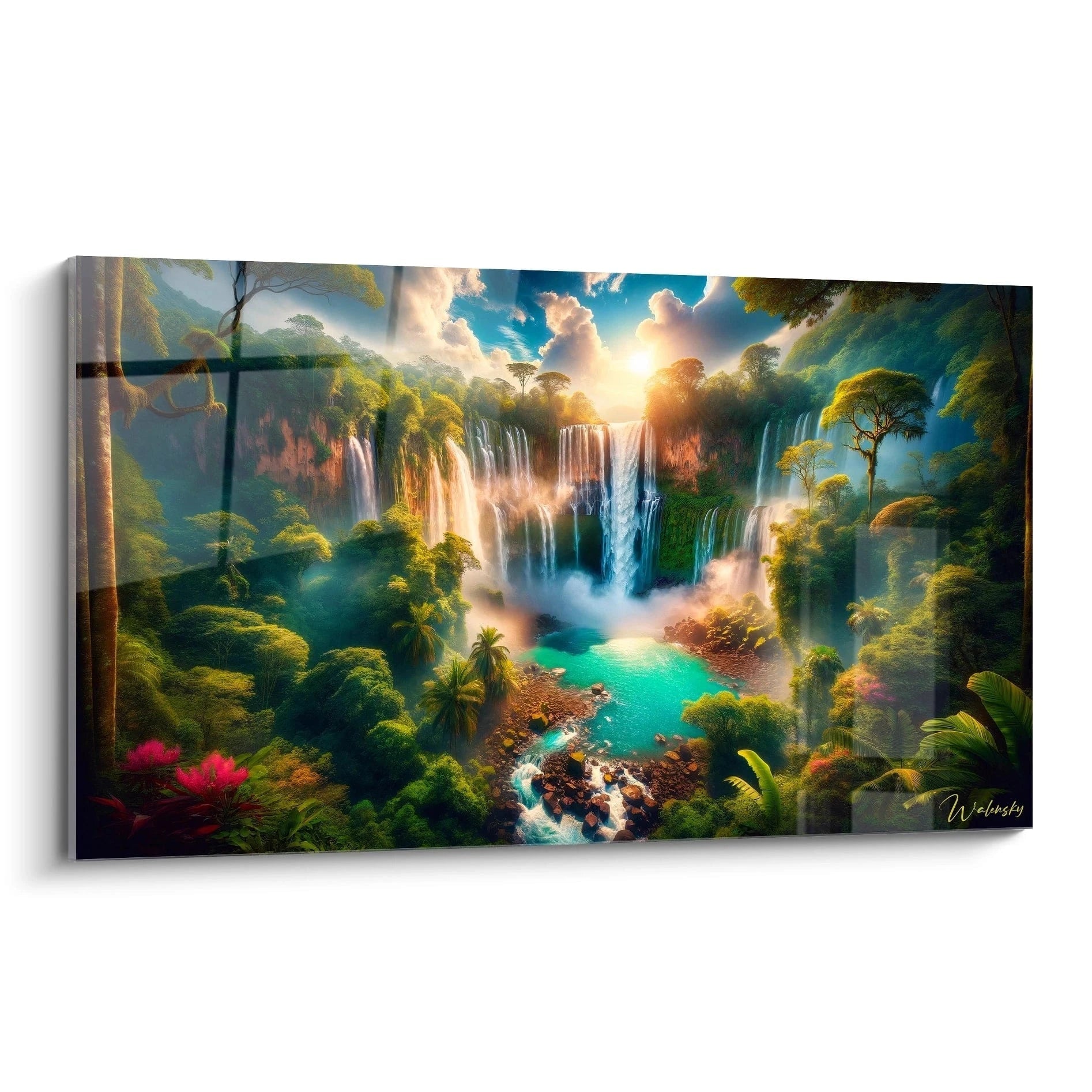
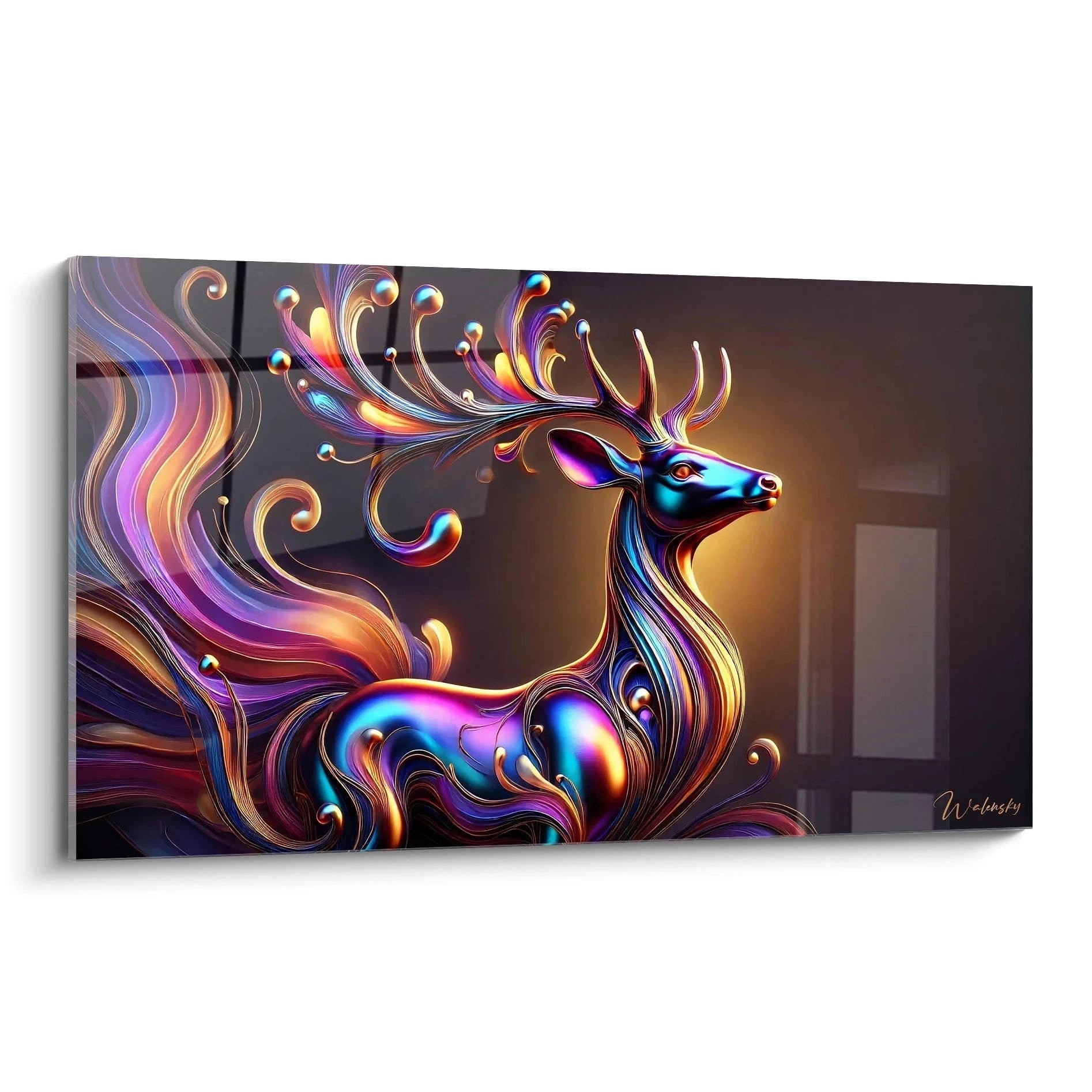
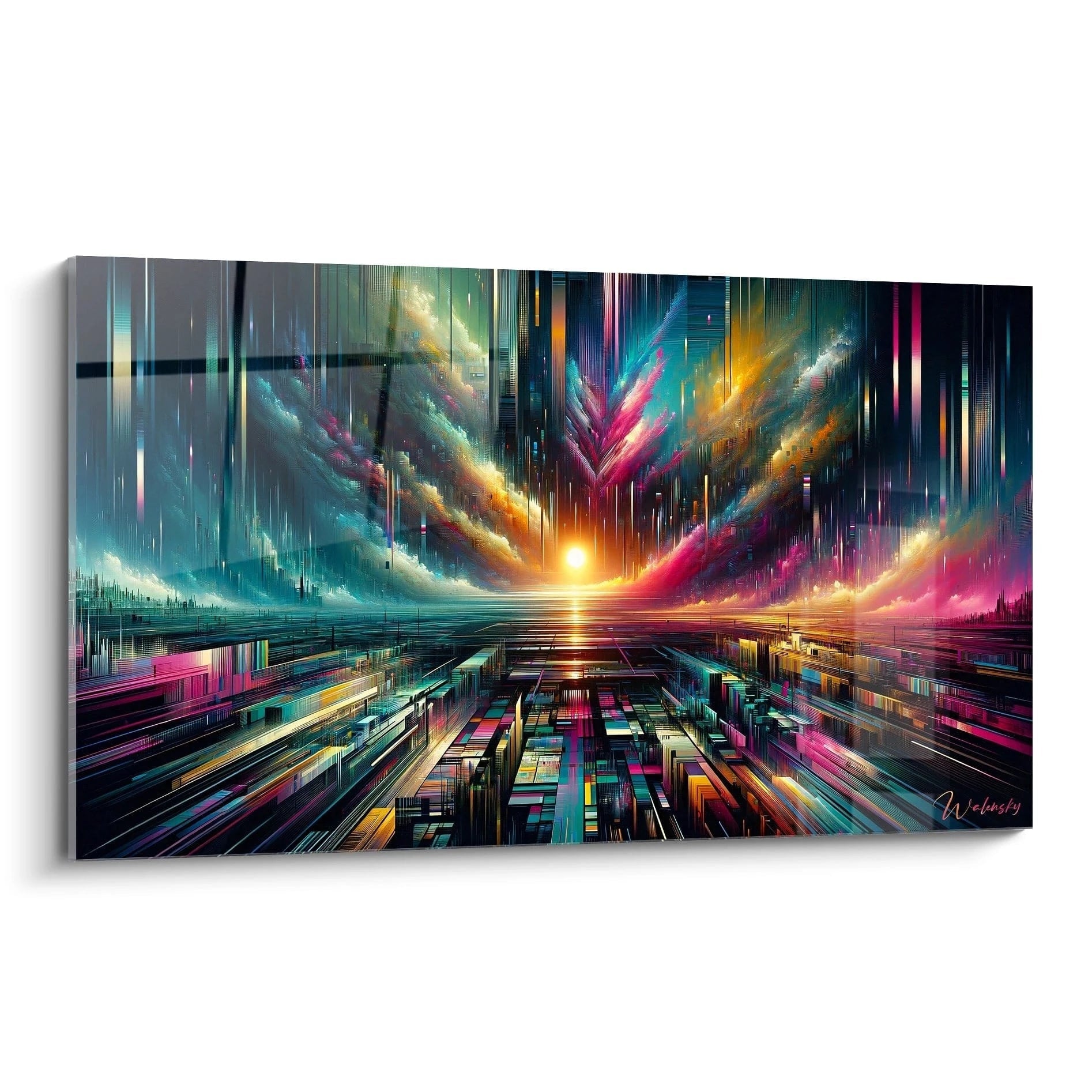
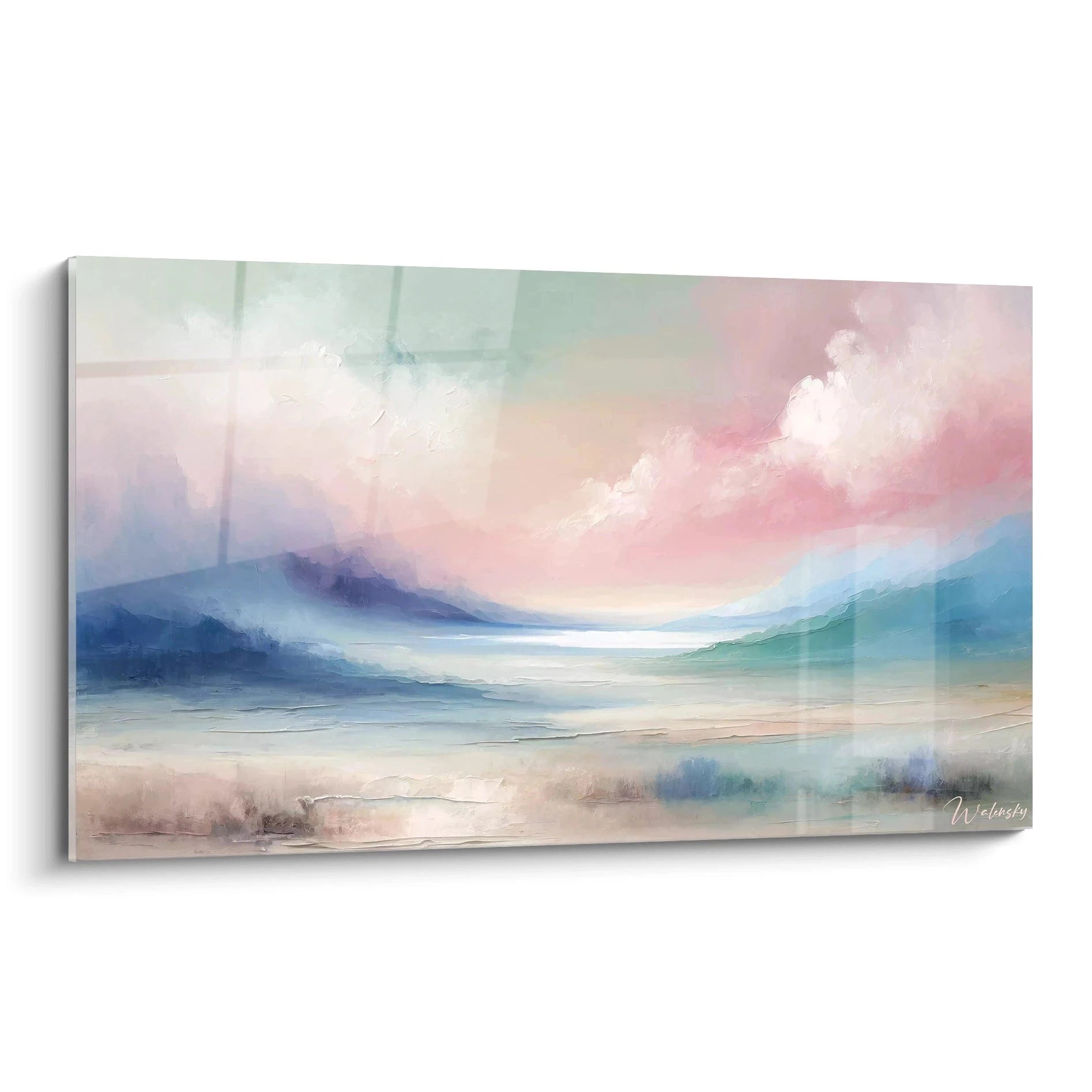

Change the atmosphere without touching the walls: the artwork method
October 11, 2025 · 18 min read · by Walensky
You've been looking at your living room for weeks, sighing. The atmosphere no longer reflects you, the walls seem dull, but the idea of repainting or wallpapering is totally discouraging.
You already imagine entire weekends sanding, protecting furniture, and breathing in solvent fumes. Not to mention that you are a tenant and transforming the walls isn't even an option.
You may have tried some colorful cushions, changed the curtains, moved the furniture. But the result is still disappointing: the atmosphere still lacks character and elegance.
This is perfectly normal! The problem isn't your sense of decor, but simply that small accessories aren’t enough to create a real visual transformation. You need a powerful focal point that structures the space.
By the end of this article, you will know exactly how to radically transform the atmosphere of any room in just one afternoon, without work or constraints, thanks to the painting method that is revolutionizing interior decoration.
Why a single painting can transform your interior better than a complete renovation?
Wall art has a unique power: it instantly captures the eye and defines the atmosphere of a room. Unlike other decorative elements that simply accompany, a well-chosen painting becomes the visual conductor that harmonizes the entire space. It's like adding perfect lighting to a theater scene: suddenly, everything makes sense and gains intensity.
🎨 Customer testimonial: Sarah, an interior architect, says: "I had a bland white living room in my new Parisian apartment. By hanging an abstract work with terracotta tones of 120x80cm above the sofa, I instantly created a warm and sophisticated atmosphere. My guests now ask me who decorated my living room!"
Conversation with a decor expert
The golden rule of modern decor: A strong focal point is better than ten small, scattered elements. Like a signature fragrance that reveals your personality, a statement artwork instantly transforms the atmosphere and reveals your refinement.

Discover what's really behind your decorative dissatisfaction
You may be feeling this frustration: your rooms lack personality despite your efforts, the ambiance remains cold even with beautiful furniture, or you can’t seem to create that “magazine” atmosphere you admire.
This isn't a matter of taste or budget. It’s simply that traditional decor focuses on volumes rather than visual hierarchy. Your eye naturally seeks an anchor point, a story to tell.
Imagine your living room as a symphony: without a first violin to lead the melody, even the best musicians create only a cacophony. The artwork is your decorative first violin.
The trap of “rules” of decor that limit you
Contrary to popular belief, it’s not the square footage or budget that determines the elegance of an interior. Professional decorators know this: visual impact comes from prioritizing elements.
It's like the art of setting a table: one beautiful plate on a simple tablecloth is more impressive than ten average place settings on the most beautiful of tables. The quality of a focal point outweighs the quantity of accessories.
This revelation will change your approach: instead of multiplying decorative purchases, you’ll create maximum impact with a strategic choice that structures your entire space.
🔍 Quick test: Look at your main room and close your eyes for 3 seconds. When you open them, note what element first catches your eye. If there isn't one or if it’s an insignificant detail (electrical outlet, corner of furniture), your space desperately lacks a strong focal point.
The proportion error that sabotages your efforts
Many think you should start small and add gradually. In wall decor, it’s exactly the opposite: starting big allows you to create the structure, then adjust the details around it.
Think of architecture: first you lay the foundations and load-bearing walls, then you add the partitions. Your main artwork is the load-bearing wall of your decor.
Without this strong base, you remain in the accumulation of secondary elements that never create the desired impact and give you that frustrating impression of an “unfinished” decor.
The little-known psychological factor: the sense of presence
What no one talks about is the psychological effect of a quality work of art in your daily life. Marie, a marketing consultant, testifies: “Since I hung this abstract painting in my office, I feel more creative and confident in my presentations.”
You can spot this effect at home: observe which rooms you feel most comfortable in, these are often those with a strong visual element that inspires you.
This influence on your mood and daily energy transforms your relationship with your living space. You no longer suffer from your decor, you become proud of it.
5 signs that your decor lacks structure:
- You often change accessories without being satisfied: This is a sign of an unstable base, like changing shoes when it's the outfit that doesn't fit
- Your guests never comment on your decoration: The absence of reaction indicates the absence of a striking element, your space remains neutral and forgettable
- You hesitate for a long time before inviting people over: You subconsciously feel that your interior does not represent you, it lacks that pride of "home"
The trigger for transformation: the decorative domino effect
The real secret of professional decorators: they never start from scratch, they create a powerful focal element that will "attract" and organize all other decorative choices. It's the positive domino effect: once the main artwork is chosen, the accent colors, textures, lighting are revealed naturally. You immediately know if this cushion, this plant or this lamp harmonizes or not with your new visual identity.
The rule of professional decorators: 70% of the impact comes from 30% of the elements. Focus on an exceptional focal element rather than ten average ones. Check by looking at the decoration photos you admire: there is always ONE element that structures the whole.
| ❌ Classic approach | ✅ Artwork method | 💡 Why it works | 🎯 Visible result |
|---|---|---|---|
| Multiplying small decorative objects | A strong artwork + a few accents | The eye prefers a clear hierarchy | Structured and soothing atmosphere |
| Perfectly matching all colors | Introducing a rich palette via art | Contrast creates sophistication | Dynamic and personal decor |
| Following current trends | Choosing according to your emotions | Authenticity transcends trends | Timeless and touching interior |
| Starting with small budgets | Investing first in the focal element | The quality of an element elevates the whole | Immediate "luxury decor" effect |

The 3-step method to transform your interior this weekend
Rest assured, this transformation requires neither technical skills nor significant investment. It's a progressive method that guides you from diagnosis to installation, as a chef prepares their ingredients before starting to cook. At each step, you will see your space transform and your decorative confidence grow.
🗺️ Overview of your transformation: Step 1: Analyze your space and define the desired atmosphere (immediate satisfaction of clarifying your desires). Step 2: Select the perfect artwork according to specific criteria (excitement of discovering "your" work). Step 3: Professional installation and harmonization of accents (pride in the finished result).
Step 1: Reveal the Hidden Potential of Your Space
Before choosing your artwork, you must understand the "personality" of your room and define the atmosphere you want to create. It's like choosing an outfit: you don’t start with the garment, but with the occasion and the impression you want to give. This step will give you immediate clarity on your true decorative desires.
What You Need for This Analysis
- A measuring tape or a measurement app: To assess the actual proportions of your walls. The eye often deceives us, and a poorly proportioned artwork can ruin the desired effect. Avoid "eyeball" estimates that lead to scale errors.
- A wide-angle photo of your room: Stepping back visually reveals invisible imbalances in everyday life. This photo becomes your “decor diagnostic” and helps you identify areas lacking structure. The camera captures what your accustomed eye no longer notices.
- A notebook or your phone to note your observations: Documenting your impressions and measurements avoids hesitations later. This written record becomes your roadmap and prevents you from starting over each time you have doubts.
Now, let's move on to the concrete analysis of your space
Diagnosis of Your Current Room
Identify your natural focal wall: Observe which wall your gaze naturally directs when entering the room. It is usually the wall facing the entrance or the one behind the sofa. This wall already has a visual strength that must be revealed, not fought against. Avoid choosing a side wall for ease.
⏱️ Time: 5 minutes | ✅ Successful when: You can clearly identify THE wall that attracts attention | ⚠️ Attention: Do not confuse "visible wall" and "focal wall" - the focal wall is the one that structures the perspective of the room
Measure the optimal display area: On your focal wall, measure the available width between furniture or obstacles. The golden rule: your artwork should occupy 60 to 75% of this width to create a strong visual impact without being overwhelming. This proportion creates the perfect balance between presence and elegance.
⏱️ Time: 3 minutes | ✅ Success when: You have noted the exact dimensions in cm | ⚠️ Attention: Many underestimate the necessary size for fear of it being too large, but a piece that is too small goes unnoticed
Define your target atmosphere: Note 3 adjectives that describe the atmosphere you want to create (e.g., warm, sophisticated, energizing). This emotional compass will guide all your choices and prevent impulsive purchases that don't match your vision. Think about the emotion you want to feel every day when entering this room.
⏱️ Time: 5 minutes | ✅ Success when: You have 3 precise words that inspire you | ⚠️ Attention: Avoid vague terms like "pretty" or "modern," be specific about your emotions
✅ Validation of step 1: You have identified your focal wall, its precise dimensions, and you can describe in 3 words the atmosphere you are aiming for. If you're still unsure, take a photo from the entrance of the room and observe where your gaze naturally falls. This well-executed step saves you hours of searching later!
— Our selection


OUR RECOMMENDED PRODUCTS
Step 2: Select your artwork according to the method of professionals
Now that you know your space and your vision, you will learn to choose like a professional gallery owner. This step is the most exciting: you are going to discover works that resonate with your personality and create this emotional connection that transforms a house into a home. The "masterful crush" effect multiplies your satisfaction.
Your professional selection criteria
- Artistic style aligned with your personality: Choose according to your emotional instinct rather than trends. An abstract work to express your creativity, a landscape for your need of escape, a portrait for your introspective side. Test your reaction: does the artwork make you want to contemplate it regularly?
- The color palette that enriches your space: Look for colors that complement without duplicating your existing decor. One or two colors from the artwork can be present in your room, but it should bring new nuances. This chromatic richness creates the sought-after visual sophistication. The quality of the support and print : Prioritize noble supports (stretched canvas, dibond, acrylic glass) that last over time and keep their colors vibrant. A quality support transforms a simple image into a true work of art and justifies your long-term investment.
Optimal selection process
Explore by artistic families : Start by identifying the style that instinctively attracts you (abstract, figurative, photographic, illustrative). Spend at least 5 minutes in each category to discover works you would never have considered. Your taste can surprise you when you break out of your visual habits.
⏱️ Time : 20 minutes | ✅ Successful when : You have selected 3-5 works from different styles that you like | ⚠️ Attention : Do not limit yourself to your first impression, some works reveal their beauty gradually
Test the harmony of dimensions : For each selected work, check that its proportions correspond to your measurements from step 1. Visualize the artwork on your wall using adhesive tape to outline its actual size. This simulation avoids unpleasant surprises and helps you project the final effect.
⏱️ Time : 10 minutes per work | ✅ Successful when : The work corresponds well to the proportions of your space | ⚠️ Attention : A beautiful but poorly proportioned artwork loses all its impact
Apply the emotional projection test : For your final selection, imagine yourself in your room with each work. Which one gives you the most positive emotion on a daily basis? The one that makes you smile imagining it at home, which corresponds to your target atmosphere defined in step 1. This emotional connection guarantees your lasting satisfaction.
⏱️ Time : 5 minutes per finalist | ✅ Successful when : One work stands out clearly by the emotion it evokes in you | ⚠️ Attention : Do not rationalize too much, trust your instinct for the final choice
Step 3: Professional installation and final harmonization
This last step transforms your acquisition into a true decorative element integrated. Careful installation multiplies the visual impact of your work and creates that "magazine decor" finish that impresses. You will master the techniques of professional hangers and reveal the transformative potential of your investment.
Expert installation of your artwork
Optimal height positioning : Hang your painting so that its center is 1m50-1m60 from the floor (eye level standing). This universal height ensures perfect visibility from all angles of the room. If your sofa is low, you can lower it to 1m45 to harmonize with the seating line.
⏱️ Time: 15 minutes | ✅ Successful when: The center of the artwork is at eye level | ⚠️ Attention: Many people hang too high out of fear, but a picture that is too high loses its visual impact
Secure fixing according to weight: Use appropriate fixings: molly plugs for hollow walls, expansion plugs for solid walls. Calculate wide: if your artwork weighs 3kg, allow for fixings for 6kg. This security avoids accidents and gives you the peace of mind necessary to fully enjoy your decoration.
⏱️ Time: 20 minutes | ✅ Successful when: The artwork is perfectly stable and straight | ⚠️ Attention: Check the level with a tool or application, the eye can be deceived by surrounding lines
Adjusting existing lighting: Reorient your spotlights or lamps to avoid direct reflections on the artwork while illuminating it sufficiently. Indirect light reveals colors without creating glare. Successful lighting brings your work to life differently depending on the time of day.
⏱️ Time: 10 minutes | ✅ Successful when: The artwork is clearly visible without annoying reflections | ⚠️ Attention: Test the lighting at different times to check consistency
Installation success signal: When you enter the room, your gaze naturally goes towards the artwork, then explores harmoniously the rest of the space. If the artwork "catches" the eye and then guides it to the other decorative elements, your installation is perfectly successful. Otherwise, adjust the height or lighting.
Congratulations! You now master the method used by professional decorators to create interiors that mark people's minds. Here are the expert subtleties that will make a difference and give you that decorative ease that your loved ones will immediately notice.
🎓 Professional gallery tip: The "visual breathing space" effect: Always leave a space equivalent to 1/3 of the width of your artwork on each side. This "breathing room" avoids saturation and allows the artwork to fully express its presence. This is what differentiates an amateur hanging from a gallery hanging.
Frequent question from our readers
"I'm a tenant, can I really transform my interior without risking my deposit?"
Absolutely! That's even the advantage of the picture hanging method. Unlike painting or wallpaper work, hanging an artwork does not modify the structure of the accommodation. The few small fixing holes are filled in 5 minutes with filler (2€ from a hardware store). Many tenants even use non-drilling mounting systems for lightweight artworks. Your landlord will even appreciate that you take care to enhance their property!
💡 Quick tip: Photograph your walls before installation and keep patching compound on hand. In case of a move, you can erase any traces in less than an hour. This preparation frees you from all apprehension and allows you to decorate with peace of mind.
— You may also like


The 5 mistakes that can ruin your decor transformation
Attention, some mistakes can turn your investment into disappointment. These traps are so common that even decorating enthusiasts fall for them. Here's how to avoid them to guarantee the success of your project.
- 🚫 Choosing a "just to see" size thinking you’ll enlarge later: It's tempting to start small out of caution, but an undersized artwork goes unnoticed and creates no impact. Result: you are disappointed with your purchase and your space retains its bland appearance. Solution: respect the 60-75% rule of available width from the first purchase. It’s a natural safety reflex, but in decoration, playing small = zero impact.
- 🚫 Hanging at your own height without measuring: Everyone instinctively hangs things at eye level, but this creates installations that are too high or too low for overall harmony. Your artwork becomes either visually inaccessible or overwhelmed by furniture. Always use the standard measurement of 1m50-1m60 from the floor to the center of the work, regardless of your height.
- 🚫 Exactly copying a magazine photo without adapting: Magazines show “perfect” but artificial interiors. Simply replicating this style in your home creates a cold and impersonal decor that doesn’t reflect you. Get inspired by atmospheres, but adapt them to your tastes, constraints, and personality. Your home should tell your story, not the magazine's.
- 🚫 Neglecting lighting thinking "it will be fine": Poor lighting kills the colors of your artwork and creates unpleasant reflections. Your investment then loses all its visual impact and you end up not noticing it. Test the lighting during the day and at night, readjust your light sources. Five minutes of adjustment multiplies the effect of your work.
- 🚫 Wanting everything to be perfectly matched in color: This obsession with perfect harmony creates bland and predictable interiors. Your decor then lacks character and sophistication, it looks like a furniture catalog. Let your artwork introduce new nuances that enrich your existing palette. Controlled contrast creates modern elegance.
🛡️ Your safety checklist before finalizing: 1) Does the artwork occupy 60-75% of the available wall space? 2) Is its center at 1m50-1m60 from the floor? 3) Does it introduce 1-2 new colors without exactly duplicating what already exists? 4) Does it give you a positive emotion when you imagine it in your home? If these 4 points are validated, your success is guaranteed!
— In the same vein


Your most frequently asked questions about transforming your decor with wall art
For a significant impact, allow between €150 and €400 depending on the size of your space. A living room generally requires a work of 100x70cm minimum (200-300€), while a bedroom can be transformed with 80x60cm (150-250€). Optimize by choosing canvas prints or aluminum Dibond: the same visual quality as an original painting for 1/10th of the price. Think cost per day: €200 over 10 years = 20 cents a day to transform your daily life!
The visual impact is immediate upon installation, but the full psychological effect unfolds in 2-3 weeks. The first few days, you rediscover your space with surprise. After a week, you begin to unconsciously adapt your other decor elements. After 3 weeks, your new atmosphere becomes your "new normal" and you can no longer imagine your room without this work. It's a sign of a perfectly successful choice!
Absolutely! 95% of our customers install their work themselves without difficulty. You need a drill, a level (or smartphone app) and a maximum of 30 minutes. The works include all fixing material with illustrated instructions. Zero-drilling alternative: adhesive hanging systems support up to 8kg and are perfectly suitable for lightweight works. Many of our tenants prefer them!
Your emotional instinct is your best guide! Unlike furniture that must function, art must move you. If a work attracts you for several days, it means that it resonates with your deep personality. Validation technique: show your selection to someone close who knows you well. If they say "that's totally you", you've found it. Authentic art transcends decor styles and integrates naturally.
That's the beauty of this method! Unlike permanent artworks, a painting can be easily changed if your tastes evolve. Plus, choosing according to your deep emotions (and not trends) creates a lasting connection. Our clients generally keep their works for a minimum of 5-10 years. Evolution tip: you can evolve the atmosphere by simply changing the accent elements (cushions, lighting) around your main artwork. Quality art transcends fashion!
Your new decor life begins now
In a few weeks, you'll look at your living room transformed with the deep satisfaction of finally living in a space that truly resembles you. Your friends will ask who decorated your place, and you’ll smile realizing that you created this personal and refined atmosphere. More than just decoration, you'll have gained the daily pride of coming home to a place that inspires you.
This transformation goes far beyond aesthetics: you've developed a sure decorative eye and a reproducible method. Now, you know how to create a strong visual impact, harmonize colors with elegance, and structure a space like a professional. These skills will serve you in all your future decor projects and strengthen your confidence in your artistic sense.
The hardest part was understanding the mechanisms of impactful decoration, and that's done! Now, all you have to do is choose the artwork that makes your heart beat and enjoy this method that transforms a simple purchase into a true decorative revolution. Your dream space is just a click and a weekend away.
🚀 Your transformation moment: You now have all the keys to create the interior that makes you vibrate. Trust your instinct, dare the artwork that moves you, and prepare to discover the transformative power of art in your daily life. Your future self will thank you for having this creative courage!
Also read: 📖 Discover our other decor guides
</div
Explore our collections


