The entrance hall of a five-star Parisian hotel. Three hundred passages daily, suitcases brushing against the walls, fingers seeking balance, glances scrutinizing. After six months, the immaculate wall decor resembled a topographic map of human contacts. I learned this lesson at my own expense during my first major installation: an unsuitable surface treatment transforms the most beautiful creation into a maintenance nightmare. Today, after equipping more than forty professional reception areas, I know that an appropriate surface treatment makes all the difference between a lasting investment and an expensive renewal.
Here's what a high-performance surface treatment brings to your reception area: exceptional resistance to daily marks and dirt, simplified cleaning that preserves the original aesthetics, and durability that protects your decorative investment in the long term.
You have probably already experienced this frustration: that magnificent wall decor which caught everyone's eye at the inauguration now displays persistent halos, fingerprints impossible to erase completely, or worse, an uneven patina that betrays areas of frequent contact. Each cleaning attempt seems to worsen the situation, and you wonder if you should have made a different choice.
Rest assured: this problem affects all managers of high-traffic spaces. The good news? Current technical solutions allow for impeccable aesthetics and ease of maintenance, provided you choose the appropriate surface treatment from the design stage of the project.
I'm going to reveal the protocols I systematically apply for my most demanding clients, those whose reception halls must maintain their brilliance despite hundreds of daily passages.
Polyurethane resin: the invisible shield that changes everything
In the world of surface treatments for wall decor, polyurethane resin occupies a special place. This transparent polymer forms a protective barrier that literally encapsulates your wall creation without altering its appearance.
I discovered its power during a project for a private clinic. The hall's wall decor, made up of high-end textured wallpapers, had to withstand the regular disinfection imposed by health protocols. After applying a two-component polyurethane resin, the surface became impervious and washable. Three years later, it retains its original brilliance despite intensive weekly cleaning.
Polyurethane resin offers several decisive advantages for high-traffic areas. Its absolute transparency preserves the chromatic nuances and reliefs of your decor. Its impermeability prevents water, skin oils and most substances from penetrating the support. Its abrasion resistance protects against repeated friction from bags, suitcases and clothing.
The resin treatment is applied with a brush, roller or spray gun depending on the texture of the support. For a wall decoration in a reception area, I recommend two thin coats rather than one thick coat: the result is more homogeneous and avoids runs. Complete drying time generally requires 48 hours before first use.
Matte acrylic varnish: when elegance meets practicality
Some wall decorations require a matte finish to preserve their character. Artistic frescoes, textured decorative plasters or large-format photographic prints lose their soul with a glossy finish. This is where matte acrylic varnish reveals its full potential.
I use this solution for high-end reception areas where aesthetics tolerate no compromise. Water-based acrylic varnish offers effective protection while maintaining the velvety appearance of the original support. Contrary to popular belief, a correctly formulated matte finish resists cleaning perfectly.
The secret lies in the quality of the product. Professional acrylic varnishes incorporate mineral fillers that strengthen the cohesion of the protective film. This microporous structure repels liquids while allowing the support to breathe, avoiding problems with condensation or blistering.
For a company lobby where I installed a mural depicting the history of the company, I opted for a matte UV-resistant acrylic varnish. Six months and thousands of passages later, the manager told me that maintenance was limited to a simple weekly dusting and a monthly wipe with a damp microfiber cloth. Fingerprints? They disappear with a single gesture.

When glass transforms your wall into a miracle surface
Let's now talk about the ultimate premium solution: under-glass wall decoration. This technique involves protecting your artwork behind a sheet of tempered or laminated glass fixed a few millimeters from the wall.
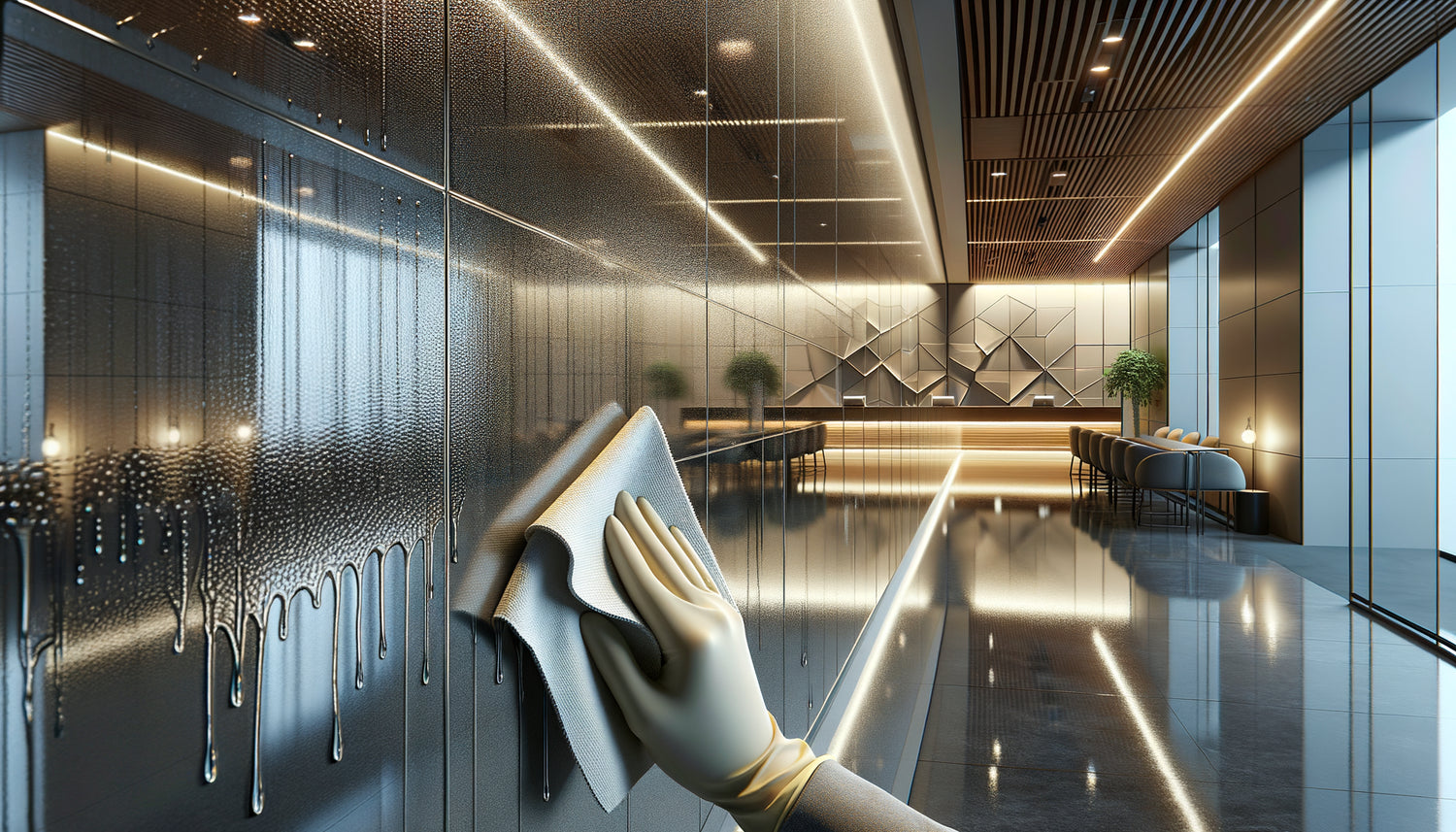
I deployed this solution for the reception hall of an international law firm. Their wall decoration, consisting of valuable antique engravings, required maximum protection without compromising visibility. The 6mm anti-reflective tempered glass transformed this space into a museum gallery where cleaning is reduced to a simple squeegee pass with window cleaner.
Acrylic glazing offers unparalleled benefits: total impermeability, extreme resistance to shocks and scratches, ultra-simplified cleaning with conventional products, and UV protection that preserves colors. The smooth surface prevents dust accumulation and the formation of persistent marks.
This solution is particularly suitable for prints on fragile supports, precious wallpapers, delicate murals or artistic collages. The initial additional cost is justified by exceptional durability and maintenance costs reduced to a minimum.
High-performance vinyl coatings: technology at the service of everyday life
In reception areas with truly intense traffic – think hospitals, train stations or shopping centers – technical vinyl coatings are the most pragmatic option.
These supports require no additional surface treatment: they incorporate a protective polyurethane or reinforced PVC layer from manufacture. I equipped the reception area of a student residence with high-performance vinyl wall decor. Despite the constant comings and goings of young people during moving periods, after two university intakes, the wall retains its original appearance.
The factory-treated vinyl has an optimized multi-layer structure: a stable base, a print layer, an integrated protective varnish and often a surface antibacterial treatment. This architecture guarantees exceptional resistance to water, detergents, friction and even hospital disinfectants.
Maintenance is limited to regular washing with a sponge and mild detergent. No special precautions, no specific products, no delicate gestures. For managers of public spaces, this simplicity translates into substantial savings in time and maintenance products.

Hydrophobic oleophobic: the invisible protection of porous supports
Some wall decorations owe their charm to their natural texture: exposed stone, polished concrete, lime plaster, clay. These porous materials pose a particular challenge in reception areas where contacts are frequent. The solution? A hydrophobic oleophobic treatment that penetrates deeply without altering the support's matte and natural appearance.
I applied this technique for an urban spa whose entrance featured a magnificent polished concrete wall. The owner feared that stains from massage oils carried by customers would alter the surface. After applying a hydrophobic oleophobic fluoropolymer-based treatment, the wall now repels water and grease while retaining its velvety feel.
This surface treatment works through molecular impregnation. Active agents penetrate the porosity of the material and create a hydrophobic and oleophobic network at the microscopic level. Liquids bead on the surface instead of seeping in, and cleaning becomes considerably easier.
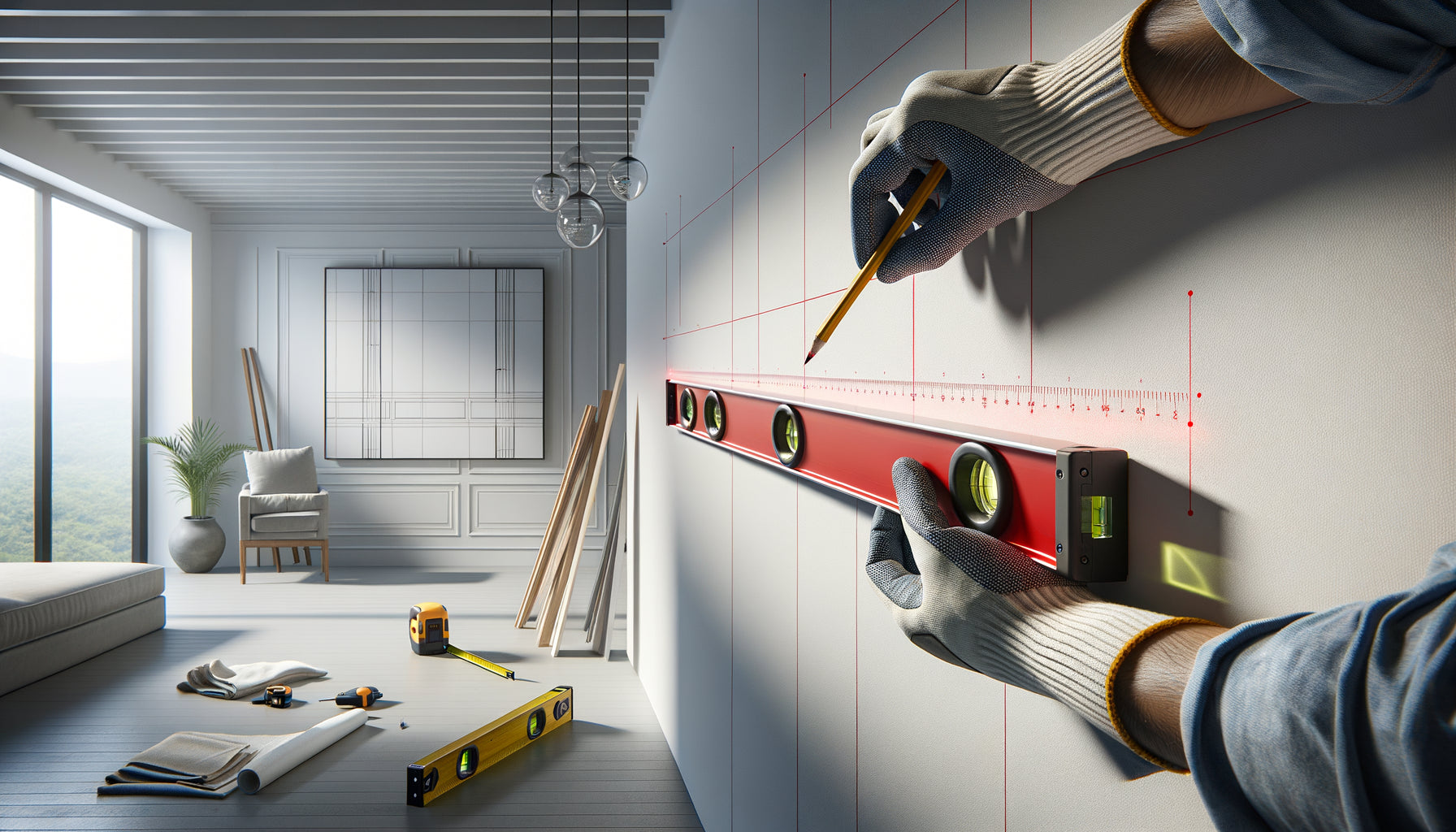
Application requires rigorous preparation: the substrate must be perfectly clean, dry, and degreased. The product is generally applied in two crosswise passes with a sprayer or brush. Protection becomes fully effective after complete polymerization, which takes 24 to 72 hours depending on the formulations.
How to choose the right treatment for your situation?
Faced with this diversity of solutions, how do you identify the optimal surface treatment for your reception area? I recommend a methodical approach based on four essential criteria.
First, analyze traffic intensity. A medical practice welcoming fifty patients daily does not stress walls in the same way as a hotel lobby with three hundred passages. For moderate traffic (less than one hundred passages daily), a quality acrylic varnish is generally sufficient. Beyond that, opt for polyurethane resin or under-glass solutions.
Second, consider the nature of your wall decor. A fragile substrate such as handmade wallpaper requires different protection than an impression on a rigid support. Unique and valuable creations justify an investment in under-glass protection, while digital prints on technical supports are perfectly suited to a varnish or resin.
Third, assess your maintenance constraints. Do you have a team trained in specific products, or do you prefer a solution compatible with conventional cleaning? Technical vinyl coatings and under-glass protections minimize maintenance requirements, while varnishes and resins require more attentive protocols.
Fourth, respect your overall budget. Remember to include maintenance costs over three to five years in your calculation. An initial surface treatment that is more expensive but requires less maintenance can be more economical than a low-cost solution requiring frequent interventions or premature replacement.
Transform your reception area into an elegant and durable showcase
Discover our exclusive collection of wall art for real estate agencies that combines refined aesthetics with easy maintenance thanks to professional surface treatments.
Your reception hall deserves protection worthy of its role
Imagine: your visitors step through the threshold of your space. Their eyes immediately focus on this wall decor that tells your identity, your values, your excellence. Months, years later, this first impression remains intact. No trace, no alteration, just preserved beauty that continues to seduce and inspire confidence.
This vision is nothing utopian. It results simply from the enlightened choice of a surface treatment adapted to your specific environment. Whether you opt for the protective discretion of a polyurethane resin, the matte elegance of an acrylic varnish, the robustness of under-glass protection or the practicality of a high-performance vinyl coating, you are investing in the durability of your image.
Start by honestly assessing the intensity of traffic in your reception area. Then consult a professional who can analyze the compatibility between your current decor and the different treatment options. Do not hesitate to ask for treated samples to test ease of cleaning before making your final decision. Your reception hall is more than just a transitional space: it's the first chapter of the story you tell your visitors. Protect it with the care it deserves.
Frequently Asked Questions
Can I apply a protective surface treatment to my wall decor myself?
Absolutely, and it's even more accessible than you might think! For acrylic varnishes and some water-based resins, application with a short-pile roller gives excellent results. The key is preparation: make sure your wall is perfectly clean, dry and dust-free. Work in a well-ventilated room, at a stable temperature (ideally between 18 and 22°C), and apply thin, even coats rather than a single thick coat. Always start by testing on a discreet area to check compatibility with your substrate and validate the aesthetic result. For two-component resins or specialized treatments, I recommend calling in a professional: dosage and application technique directly influence the quality and durability of the result.
How long does a surface treatment last in a high-traffic area?
Durability varies considerably depending on the type of treatment and the actual intensity of traffic. In my installations, I observe that a professional-grade acrylic varnish retains its protective properties for three to five years in a standard office lobby (50 to 100 passages per day). A two-component polyurethane resin easily lasts five to eight years, even with heavy traffic. Technical vinyl coatings with integrated protection have lifespans of seven to ten years. Glass protection, on the other hand, remains effective indefinitely as long as the glass is not broken. These durations assume regular maintenance adapted: overly aggressive cleaning or with unsuitable products can significantly reduce the longevity of the treatment. I advise you to visually inspect your decor every six months to detect the first signs of wear and intervene before degradation spreads.
Does a surface treatment change the appearance of my wall decor?
This is THE question that all my clients ask, and it is perfectly legitimate! The answer depends on the chosen treatment and its quality. Gloss varnishes do indeed create a glossy effect that intensifies colors and creates reflections – superb on some decors, inappropriate on others. This is why I primarily use matte or satin varnishes which preserve the original appearance while effectively protecting. Professional-grade polyurethane resins are formulated to remain perfectly transparent without yellowing over time. Hydrophobic-oleophobic treatments are invisible to the naked eye and do not alter the feel or appearance of the support. My advice: always request a test on a sample or hidden area before general application. You will then be able to verify that the result exactly matches your expectations. A serious professional will systematically offer this validation step before committing to the entire project.