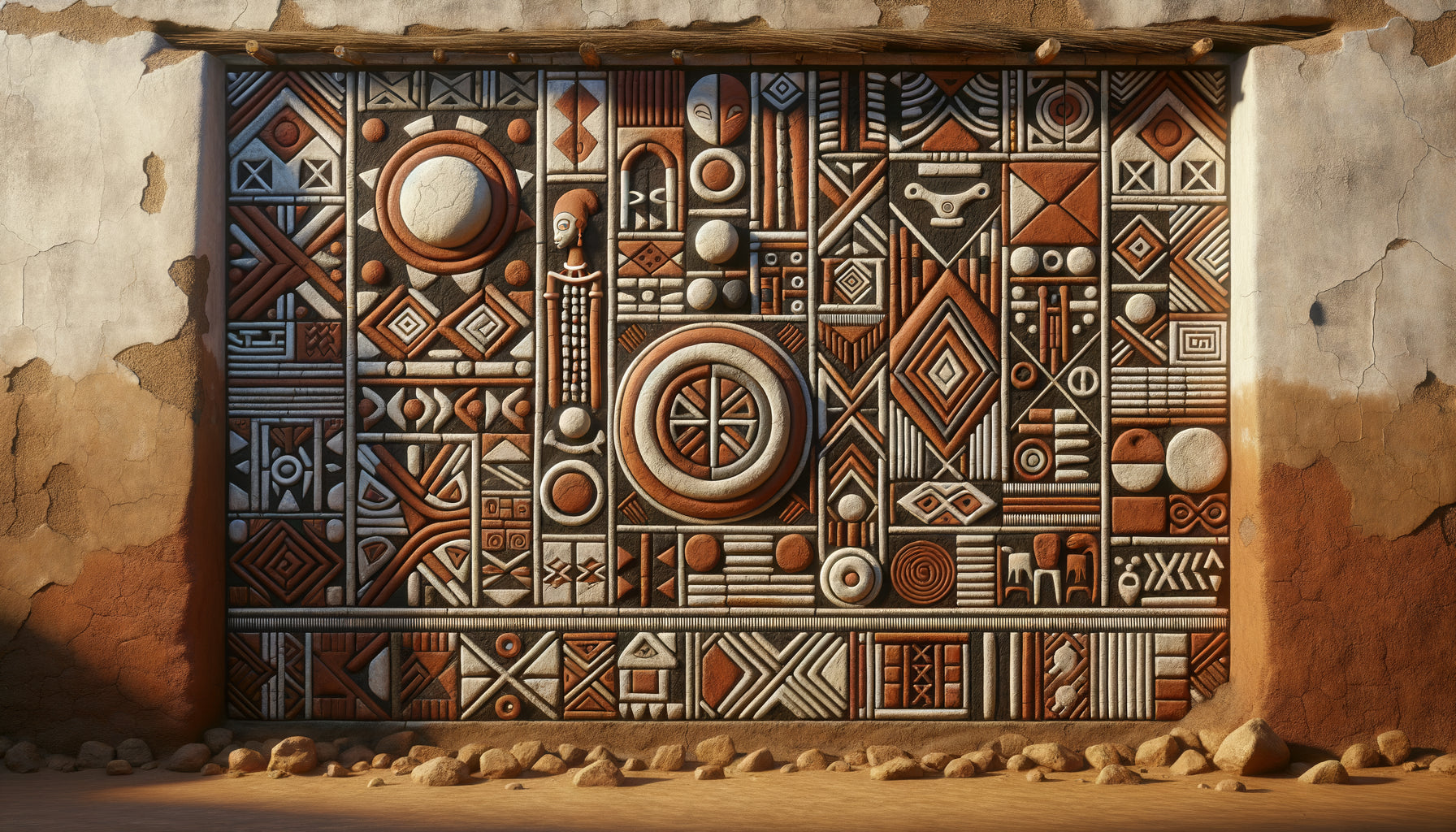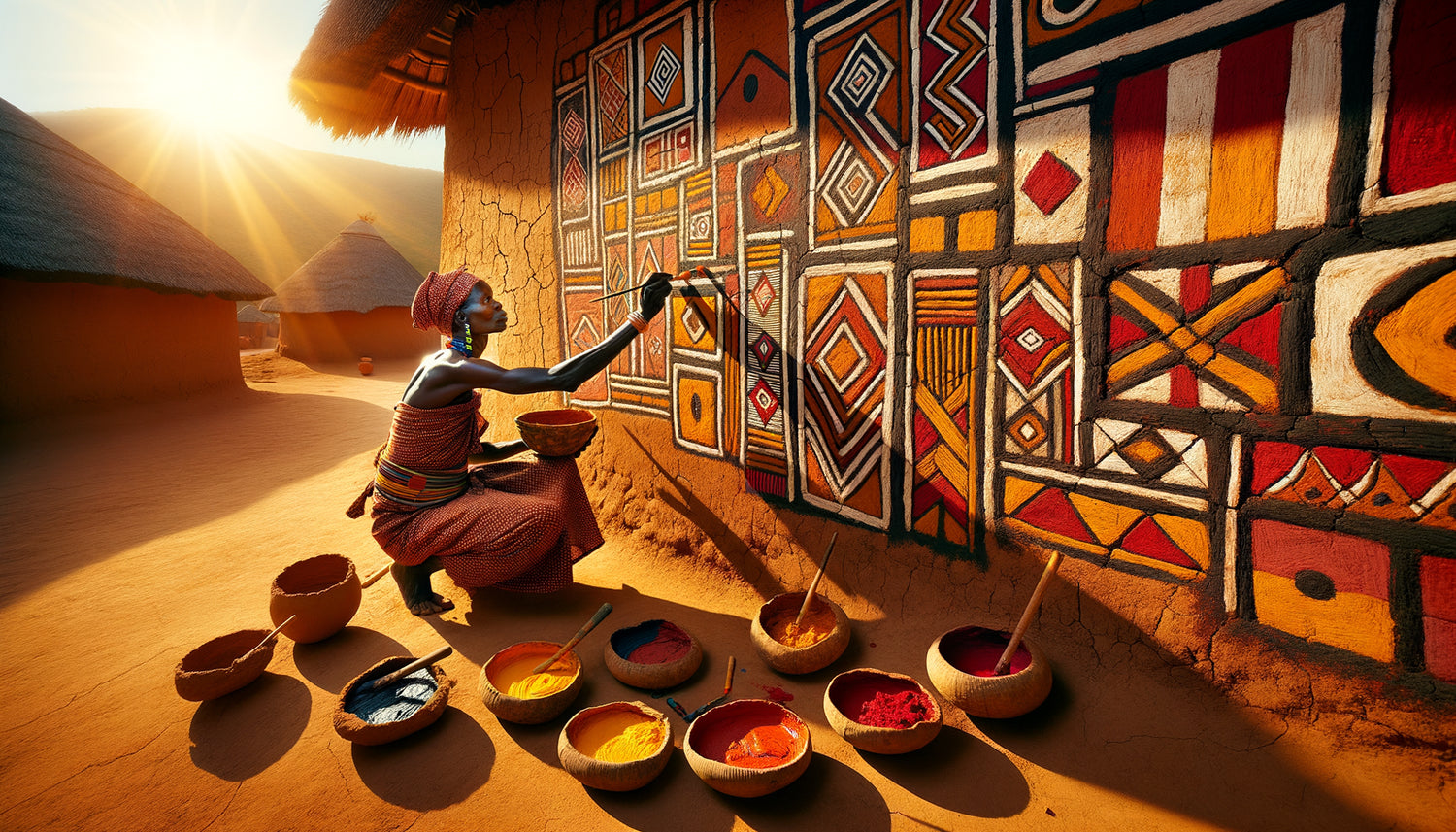
I felt that vertigo for the first time in 2012, standing before a Ndebele case in Limpopo whose geometric patterns seemed to vibrate under the August sun. The matriarch who had just finished her fresco smiled at me: "In three months, with the rains, everything starts again." That day, I understood that African murals were not only works of art, but choreographies intimately linked to the cycles of the earth.
Here's what this centuries-old tradition reveals: a technical mastery where clay, mineral pigments and climatic timing orchestrate to create vibrant frescoes that transform facades into cultural manifestos, while preserving the structural integrity of homes for months.
You admire these photographs of brightly colored houses in decorating magazines, you dream of understanding their secret, but explanations remain vague, reduced to clichés about "traditional art." Why this seasonal constraint? Why not during the rainy season, when nature explodes with color?
Rest assured: behind this practice lies a logic as beautiful as it is pragmatic, where vernacular science and artistic expression merge. After fifteen years documenting wall painting techniques from the Sahel to the Kalahari, I am going to reveal why the dry season is not a constraint, but the sacred moment when the earth becomes canvas.
Clay and water: an alchemy under close supervision
Traditional African murals are based on a living medium: clay plaster that covers walls made of rammed earth or banco bricks. This mineral base, applied in successive layers, must reach perfect hydration balance before receiving the pigments.
During the dry season, ambient humidity stabilizes between 20 and 40%, allowing the clay to dry evenly over several days. This progressive drying creates a microporous surface that "breathes", absorbing natural binders (gum arabic, yogurt, cow dung) without repelling them. In Burkina Faso, I observed how Gurunsi women test the maturity of their plaster: they press their palm against the wall and count to three. If the mark disappears slowly, it's time to apply the pigments.
Conversely, during the rainy season, atmospheric humidity rises to 70-90%. The clay remains soaked with water, refusing to absorb new layers. Pigments slide, dilute, create unsightly streaks. Worse still: the water trapped between the layers causes cracks when drying, compromising the entire fresco. The dry season eliminates this hydrological unpredictability, offering artists complete control over their medium.
When the sun becomes a natural fixative
The sun of the dry season plays a role as a chemical catalyst often unknown. Daily temperatures, oscillating between 30 and 40°C, accelerate the polymerization of organic binders used in African murals.
In Ghana, among the Kassena people, I documented the preparation of a black paint based on fermented néré seeds. This mixture, applied to the white kaolin plaster, requires exactly four hours of intense sun exposure for the tannins to permanently set. The constant sunshine of the dry season guarantees this precise timing, day after day.
The Himba people of Namibia, on the other hand, exploit heat to literally cook their red ochre mixed with goat fat. Applied warm to the walls, this paste hardens in twenty minutes under the zenithal sun, creating a waterproof protective film. Try this operation under a monsoon sky: the paste cools too quickly, does not penetrate the support, and flakes off within weeks.
Protection from the elements: anticipating the onslaught of rains
Wall paintings made during the dry season benefit from a crucial maturation period before the arrival of rainfall. This « grace period » of at least two to three months allows the different layers to fully consolidate, forming a resistant shell.
I measured with Soninké artists the hardness of a plaster painted three months before the rains versus a freshly decorated plaster: the former resists a jet of water at normal pressure without any degradation, while the latter partially disintegrates. This drying cure transforms the wall painting into a true architectural shield.
The Ndebele women of South Africa even incorporate preventative fixatives: they polish their geometric patterns with smooth stones for hours, compacting the surface until it is almost vitrified. This technique, called « ukuhlobisa », only works with the low humidity of the dry season. The physical effort generates heat by friction, which further accelerates the hardening of the mineral pigments mixed with cow dung.

The cultural calendar: when art marks community time
Beyond the technical constraints, the dry season marks a specific social moment in communities practicing African wall paintings. After the harvests, before the agricultural preparations of the following season, it is time for aesthetic transformations.
For the Surma people of Ethiopia, the period from December to February coincides with weddings and initiations. Repainting houses becomes a collective female ritual where knowledge is passed down from mother to daughter. The dry season offers the luxury of time: no fields to cultivate, no granaries to monitor for mold. Women can devote three to four weeks to elaborate complex frescoes, something unthinkable during the rainy season when every minute counts to protect harvests.
In the Bassari villages of eastern Senegal, I participated in these creative marathons where six to eight women simultaneously repaint all the facades of the family concession. The dry air prevents pigments from mixing from one house to another, preserving the visual coherence of the whole. This creative synchronization strengthens social bonds, transforming climatic necessity into community celebration.
Capricious pigments that require stability
The pigments used in traditional African murals come from mineral, vegetable or animal sources, each reacting differently to humidity. The typical palette – ochres (red, yellow, brown), kaolin (white), charcoal or néré (black), laterite – requires stable atmospheric conditions to reveal their intensity.
Red ochre, iron oxide extracted from the soil, must be finely ground and then mixed with an aqueous binder. In the dry season, the gradual evaporation of water concentrates the oxide particles on the surface of the plaster, creating that characteristic bright vermilion hue. With too much ambient humidity, the pigment's water never evaporates completely: the red turns to a dull brown, loses its luminosity.
Kaolin, white clay used for light motifs, poses an inverse problem. This hygroscopic mineral absorbs moisture from the air, becoming saturated with water and difficult to apply evenly. During a workshop with Mossi mural painters, I noticed that during the rainy season, their kaolin formed clumps impossible to smooth out, while in the dry season, the powder transformed into a creamy paste in just minutes of kneading.
The longevity of the works: investing for durability
A fresco made in the dry season according to ancestral rules can last through two or three rainy seasons before requiring a complete refurbishment. This durability justifies the considerable investment in time and materials that African murals represent.
I photographed the same Peul concession in Niger in 2014, 2016 and 2018. The motifs applied in November 2013 – in the middle of the dry season – remained perfectly legible in 2016, after three winters. Only a few minor touch-ups had been necessary. In contrast, an unfortunate experiment by a neighbor who had painted in June (start of the rains) had completely disappeared by September of the same year.
This longevity transforms seasonal constraints into efficiency strategies. Rather than repainting several times a year, focusing efforts during the dry season optimizes artistic work and preserves natural resources. Pigments, often collected far from the village, are not wasted in doomed applications.
Be inspired by this ancestral wisdom
Discover our exclusive collection of African artworks that capture the vibrant essence of these centuries-old mural traditions and transform your spaces into galleries of authenticity.

Bringing this wisdom into your contemporary decor
This climatic intelligence of African mural paintings offers valuable lessons for our modern decorative projects. How many times have we repainted an exterior wall in the fall, only to see it crack in the spring? Or applied a decorative plaster in humid weather, disappointed by the dull result?
The fundamental principle remains universal: respecting humidity cycles guarantees the durability of any wall intervention. In our temperate climates, this means prioritizing periods of stable good weather (late spring, summer, early autumn) for exterior painting or lime plasters.
Contemporary designers are also reintroducing natural pigments into interior decoration: ochres, earths, colored limes. These "living" materials, like those in traditional African mural paintings, require the same attention to application conditions. A lime plaster applied in too humid weather will never carbonate properly, remaining friable and dusty.
Now imagine your living room bathed in this warm ocher light, your walls bearing geometric patterns inspired by ndebele or kassena traditions, created with respect for natural rhythms. You no longer see a simple decoration, but a tangible connection to millennia-old knowledge that has crossed the centuries precisely because it agreed with the laws of nature rather than fighting them.
Living heritage: when tradition informs innovation
Today, African murals are experiencing a fascinating revival. Urban artists from Dakar, Johannesburg, or Accra are revisiting ancestral techniques with contemporary materials, but retain the principle of seasonal timing for their large outdoor frescoes.
I followed the work of Serge Attukwei Clottey in Ghana, who incorporates fragments of plastic jerrycans into his wall installations. Despite this modernity, he consistently waits for the dry season to fix his elements with natural resins, ensuring that his works withstand April's tornadoes.
This persistence of seasonal logic proves that African murals are not a relic of frozen folklore, but a vernacular science that is still relevant. Seasonality is not a limitation, but a framework that stimulates creativity and ensures transmission. Every year, the dry season marks the return of creative time, that moment when hands transform earth into color, when houses become manifest identities again.
In a world obsessed with continuous production, this wisdom of timing reminds us that waiting for the right moment is an integral part of the creative process. Lasting beauty is born from patience, observation of natural cycles, collaboration with the elements rather than forced domination.
When you now contemplate a photograph of these houses with vibrant facades, you will know that they carry much more than just patterns. They embody months of waiting, the accumulated wisdom of generations of women artists, an intimate understanding of the dialogues between clay, water, sun and time. They are living proof that true artistic mastery consists of creating in harmony with the world, not despite it.
Frequently Asked Questions about African Murals and the Dry Season
Can you really see the difference between a mural made in the dry season and one created during the rainy season?
Absolutely, and the difference is immediately apparent within the first few weeks. An African mural created in the dry season has vibrant, uniform colors with crisp outlines. The pigments penetrate deeply into the plaster, creating a lasting fusion between support and decor. Conversely, a fresco applied during the rainy season quickly shows defects: vertical streaks where water has run down, discolored areas where moisture has diluted the pigments, cracks due to uneven drying. During my stays in Burkina Faso, artisans would systematically show me their “youthful mistakes” – these failed frescoes attempted out of season – to illustrate the importance of timing. Nature does not forgive shortcuts: it demands respect for its rhythms to reveal lasting beauty.
How long does it take to create a complete traditional mural?
The complete realization of a traditional African mural typically takes two to four weeks during the dry season, depending on the complexity of the patterns and the size of the surface. This timeframe includes several essential steps: preparation and application of the base plaster (3-5 days), its complete drying (7-10 days), pigment preparation (1-2 days), color layer application (3-7 days) and final polishing (1-2 days). Each step must respect a precise drying time before moving on to the next. This is why the dry season, which can last 4 to 6 months depending on the region, offers a comfortable window for carrying out these ambitious projects. Experienced women often organize "campaigns" of painting, decorating several houses in the family concession successively, thus optimizing material preparation and collective work.
Can these traditional techniques be applied in our modern interiors?
Yes, with a few clever adaptations! The principles of African murals – natural pigments, organic binders, respect for drying cycles – fit perfectly into eco-responsible contemporary decoration. For an interior, you can use lime plasters tinted with natural ochres, clay paints or traditional whitewashes. The "dry season" then becomes the period when you heat your home (autumn-winter) or the hot, dry days of summer, when relative humidity remains low. I have accompanied several projects in Europe where owners have recreated patterns inspired by Ndebele or Berber traditions with natural pigments, achieving spectacular results. The trick is to measure the hygrometry of your room (ideally below 60%) and ensure good ventilation during application and drying. These natural materials also regulate ambient humidity and do not release any volatile organic compounds, creating healthy and aesthetically unique spaces.