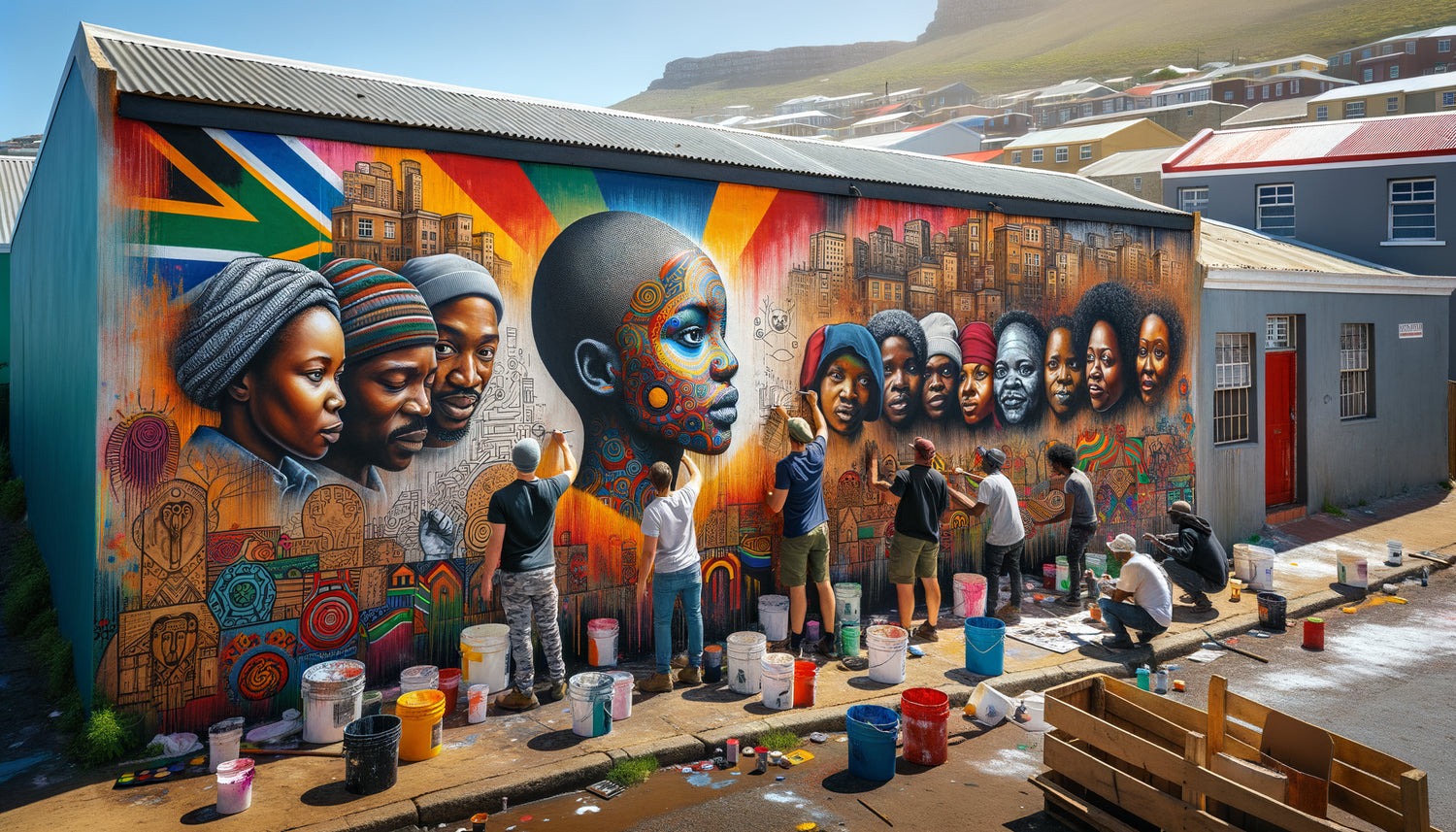
Imagine a gray alleyway in Cape Town, abandoned, where walls bear the scars of time. Then suddenly, an explosion of colors. A giant face emerges, telling the story of a grandmother from the neighboring township. That's what urban wall art does in South Africa since a collective of passionate artists decided to transform forgotten facades into open-air galleries. Brullpadda, this strange name which means « tadpole » in Afrikaans, has revolutionized the way South Africans perceive their urban environment.
Here's what the collective Brullpadda brought to South African urban wall art: a cultural legitimacy that took street art out of the margins, a community methodology that transforms each mural into a social project, and a unique aesthetic that blends African traditions and contemporary techniques. In a decade, these artists have painted more than 200 walls in townships and disadvantaged neighborhoods, creating a movement that now inspires all of Southern Africa.
For a long time, wall art in South Africa was seen as vandalism or, at best, as urban decoration with no real artistic value. Murals existed, certainly, but they remained marginal, confined to alternative areas or isolated initiatives. How to transform this perception? How to make it acceptable that these painted walls tell the soul of a nation under reconstruction?
But there is an approach that changes everything. A vision that makes each wall a manifesto, each color a conversation. And this revolution was born in the workshops of Cape Town, carried by artists who refused to let their city remain gray.
This article plunges you into the fascinating universe of Brullpadda, this collective that reinvented South African urban wall art. You will discover how they transformed entire neighborhoods, created bridges between divided communities, and inspired a generation of African artists. Ready to explore this chromatic metamorphosis?
The birth of a revolutionary tadpole in the townships of Cape Town
The story of Brullpadda begins in 2012, in the Woodstock neighborhood of Cape Town. Three artists – David Brits, Matthew van Rooyen and Ras Terms – find themselves around a common frustration: urban art in South Africa lacks cohesion, collective vision. Each paints in his corner, without a real strategy to reach communities most distant from contemporary art.
The name Brullpadda is not insignificant. The tadpole symbolizes transformation, this creature in perpetual metamorphosis that goes from one state to another. Exactly what the collective wanted for urban wall art: a profound mutation, an evolution towards something greater, more meaningful.
Their first major intervention takes place in the Langa township, one of the oldest and most densely populated in Cape Town. Rather than imposing their vision, they spend weeks discussing with residents. What stories do they want to see on their walls? What faces, what symbols represent their community? This participatory approach becomes the signature of Brullpadda: wall art as dialogue, not as monologue.
The first murals literally explode onto the urban landscape. Monumental portraits of residents, magnified scenes of daily life, Xhosa and Zulu cultural symbols reinterpreted with a contemporary palette. The impact is immediate: locals recognize themselves, tourists discover another facet of South Africa, and suddenly, these forgotten neighborhoods become cultural destinations.
A methodology that transforms each wall into a social manifesto
What distinguishes Brullpadda from other urban art collectives is their creative process. Each project begins with what they call a “community immersion.” The artists settle in the neighborhood for several days, sometimes weeks, sharing meals, listening to stories, photographing faces.
This phase of listening then nourishes creation. A portrait is never chosen at random: it's the grandmother who runs the local daycare, the fruit vendor who knows everyone, the adolescent champion football player. The mural art thus becomes a validating mirror, reflecting a positive image of themselves back to the communities.
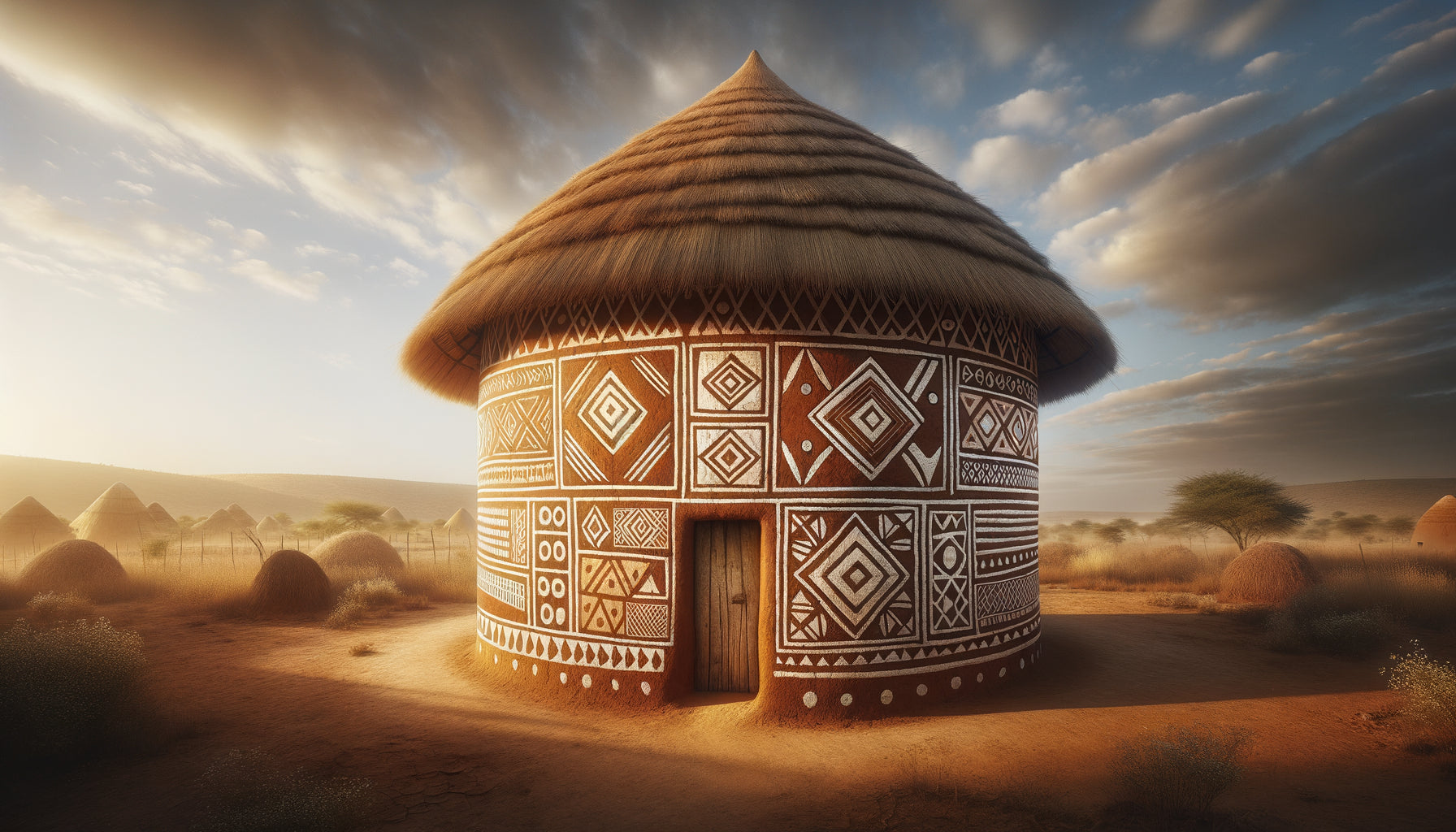
The collective has also developed a distinctive technical approach. Their murals blend the photographic realism of portraits with graphic elements inspired by traditional African art: Ndebele geometric patterns, Adinkra symbols, patterns inspired by wax fabrics. This fusion creates a unique aesthetic, immediately recognizable, which anchors urban mural art in the South African cultural context.
But Brullpadda doesn't just paint. Each project includes workshops for young people in the neighborhood, training sessions on fresco techniques, discussions about the history of urban art. The goal: to create a new generation of mural artists who can continue this work of urban transformation.

When walls tell the story of post-apartheid reconciliation
South Africa still bears the deep scars of apartheid. Cities remain largely segregated, predominantly black townships contrasting with historically white affluent neighborhoods. In this context, mural art takes on a powerful political dimension.
Brullpadda realized that their murals could become tools for reconciliation. Several of their iconic projects celebrate little-known figures in the anti-apartheid struggle: not just Mandela, but those thousands of anonymous activists who resisted. A wall in Khayelitsha represents a former combatant, now a seamstress, whose face tells both pain and hope.
The collective has also worked on inter-community projects, painting simultaneously in historically divided neighborhoods. In Muizenberg, a mural dialogues with another in Lavender Hill, creating a visual link between two communities that ignored each other. Mural art then becomes a bridge, an invitation to cross the invisible borders that still crisscross the city.
This social dimension has significantly contributed to legitimizing urban art in South Africa. Municipal authorities, initially wary, have gradually recognized the value of these interventions. Several cities have created official mural art programs, often in partnership with Brullpadda or collectives inspired by their approach.
The creative explosion: from Johannesburg to Durban, a national movement
The success of Brullpadda in Cape Town has created a ripple effect throughout the country. In Johannesburg, the Maboneng district has been transformed into a giant urban gallery, attracting artists from all over the world. In Durban, the annual mural art festival has become a major event, with murals covering entire buildings along the waterfront.
But what makes this movement authentically South African is its local roots. Unlike European cities where urban art is often dominated by international stars, mural art in South Africa remains deeply community-based. Local artists are at the center, the stories told are those of the neighborhoods, and the color palette reflects the colors of the continent.
Brullpadda has also exported its model to other African countries. Projects have emerged in Zimbabwe, Namibia, Mozambique. Everywhere, the same philosophy: mural art as a tool for social transformation, not just decoration. This continental expansion has helped create a pan-African visual identity of urban art, distinct from European or American codes.
Social media has amplified this visibility. A mural in a Port Elizabeth township instantly becomes visible in Lagos, Nairobi, or Dakar. Young African artists discover that they can tell their own stories, with their own aesthetic codes, without having to copy Western models. African urban mural art thus asserts its creative autonomy.

The tangible impact: tourism, property valuation and community pride
Beyond the artistic dimension, Brullpadda has generated measurable economic and social impacts. In Woodstock, a pioneering area of their intervention, property values have followed the murals. What was once a declining industrial zone has become a trendy neighborhood, with galleries, cafes, and artists' studios.
This gentrification obviously raises ethical questions that the collective does not ignore. How to beautify a neighborhood without driving out its historical residents? Brullpadda attempts to navigate this paradox by working directly with local communities, ensuring that economic benefits benefit residents, and training young people from the neighborhood to become actors in this transformation.
Cultural tourism has also developed around mural art. Guided tours now take visitors through townships to discover the murals, generating income for local guides. Some neighborhoods have even created "mural routes," marked trails that transform an urban walk into an immersive cultural experience.
But perhaps the deepest impact remains psychological. In communities long marginalized, seeing one's neighborhood celebrated as an artistic destination, seeing one's face or that of one's grandmother monumentalized on a wall, creates a sense of pride and legitimacy. Mural art redefines who deserves to be seen, who deserves to be celebrated.
The challenges and the future of South African urban mural art
Despite its success, the mural art movement initiated by Brullpadda faces several challenges. Funding remains precarious: most projects depend on private sponsors or one-off grants. How to make this activity sustainable? How to ensure that artists can live decently from their work?
The preservation of artworks also raises questions. Unlike gallery works, mural paintings are exposed to the weather, pollution, and sometimes vandalism. Some iconic murals have already disappeared, covered or degraded. Should they be restored? Documented? Accept their ephemeral nature?
The collective is currently exploring new directions. Augmented reality projects allow adding digital layers to physical murals. Collaborations with architects integrate mural art from the design of new buildings. Partnerships with schools develop educational programs around urban art.
The legacy of Brullpadda now extends far beyond their own creations. They have proven that urban mural art in South Africa can be both socially engaged, aesthetically powerful and economically viable. Dozens of collectives have emerged, each with its own approach, but all sharing the belief that walls can tell stories that transform.
Want to bring this creative African energy into your interior?
Discover our exclusive collection of African paintings that capture the vibrant spirit and bold colors of South African urban art.
Conclusion: Walls that whisper the future
The collective Brullpadda has not only popularized mural art in South Africa. They have redefined what urban art can be: not an aesthetic imposition, but a conversation; not a decoration, but a tool for social transformation; not a copy of Western models, but an affirmation of contemporary African identity.
When you walk through the streets of Cape Town, Johannesburg or Durban, look up. These giant faces watching you, these colors exploding on concrete, these patterns dancing between tradition and modernity, are witnesses to a silent revolution. A revolution that proves that art can still change our way of inhabiting the world.
And why not start your own exploration of African urban art? Visit these transformed neighborhoods, support local artists, or simply let these images inspire you to reinvent your own space. Because as Brullpadda has shown, a wall is never just a wall: it's an opportunity to tell a story that matters.
FAQ: Everything you need to know about urban mural art in South Africa
Who are the members of the Brullpadda collective?
The collective Brullpadda was founded in 2012 by three South African artists based in Cape Town: David Brits, Matthew van Rooyen and Ras Terms. Their name, which means “tadpole” in Afrikaans, symbolizes the permanent transformation they want to infuse into urban art. Each brings complementary expertise: Brits excels in realistic portraiture, van Rooyen masters graphic compositions inspired by traditional African art, while Ras Terms specializes in community integration of projects. Over the years, the collective has collaborated with many other local and international artists, creating an extensive network of mural art throughout South Africa. Their participatory approach, where each fresco is born from consultation with the local community, distinguishes them from urban artists who work more solitarily.
Where can we see Brullpadda’s murals in South Africa?
Brullpadda’s murals are mainly concentrated in Cape Town, particularly in the districts of Woodstock, Langa, Khayelitsha and Observatory. Woodstock has become a veritable open-air museum with over 50 major murals along Albert Road and adjacent streets. The township of Langa is home to some of their most iconic works, including a monumental portrait of a centenarian resident which has become a pilgrimage site for urban art enthusiasts. In Johannesburg, you will find several collaborations in the Maboneng district. Specialized guided tours exist in most of these districts, often organized by local guides who can tell the stories behind each mural. These tours are a fantastic way to discover urban wall art while supporting the communities that host it. Feel free to check the collective’s social media for new projects.
How does street art concretely transform South African neighborhoods?
The impact of urban wall art on South African districts is multiple and profound. First, there is an obvious aesthetic transformation: gray and dilapidated walls become monumental works of art that completely change the atmosphere of a street. But beyond beautification, mural art generates tangible community pride. Residents whose faces or stories are celebrated on these walls develop a sense of legitimacy and recognition often absent from marginalized neighborhoods. Economically, these murals attract cultural tourism which generates income for local guides, businesses and artisans in the neighborhood. Several studies have shown a decrease in crime rates in streets where major murals have been created, probably because art creates a sense of collective appropriation of public space. Finally, workshops and training organized by collectives like Brullpadda offer young people from neighborhoods new artistic skills and professional perspectives, creating a virtuous circle of social transformation through art.