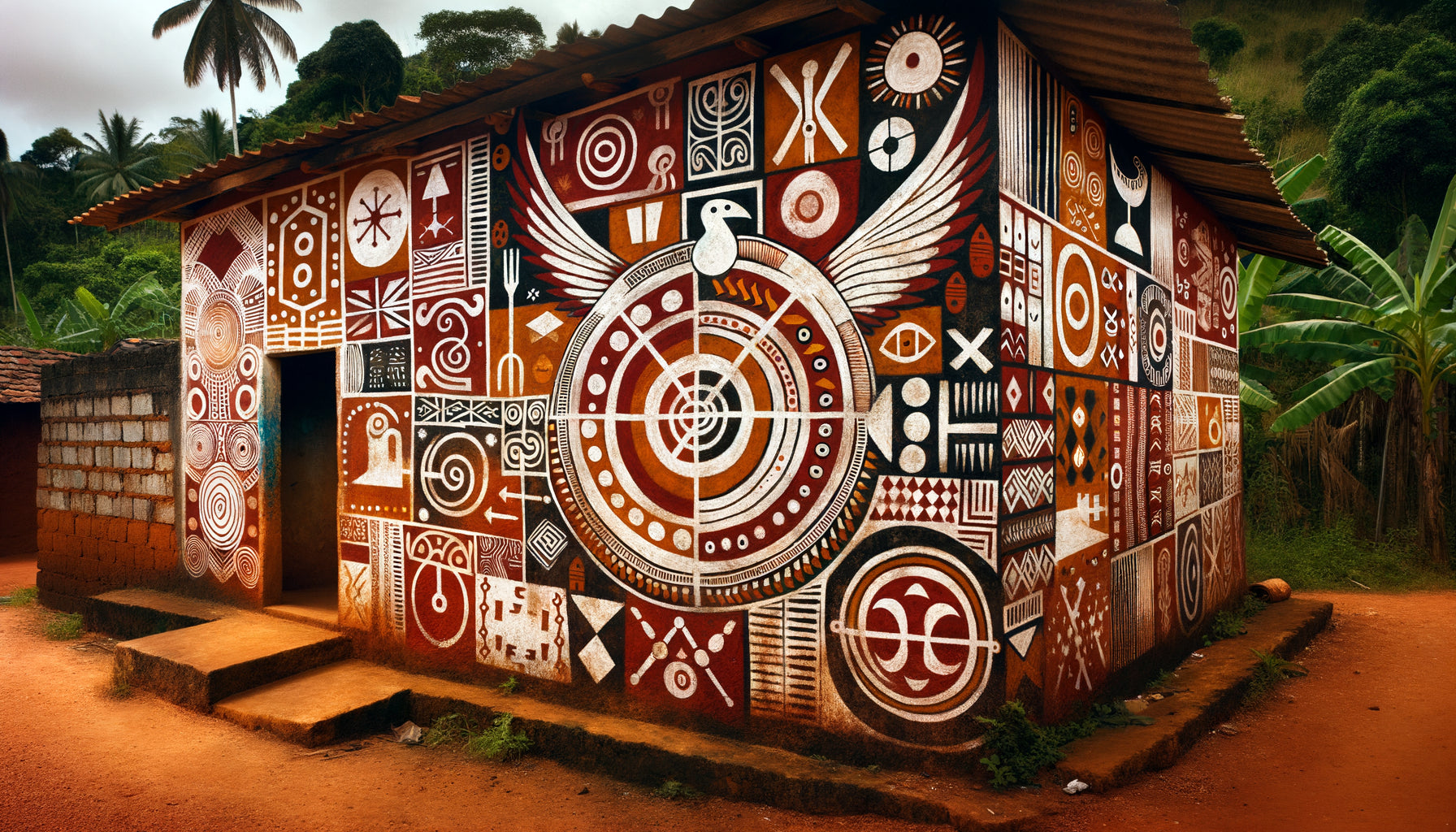
When I placed my hands on the ochre walls of a Fulani house in Mali, I felt centuries of history vibrate beneath my fingertips. These earth paintings, applied generation after generation, tell stories that our modern walls will never whisper. But today, these fragile witnesses to ancestral wisdom face an invisible and relentless threat: climate change is disrupting their millennial balance.
Here's what the conservation challenges reveal: an unprecedented heritage emergency, traditional knowledge put to the test, and a unique opportunity to reinvent our relationship with living materials. Because these earth paintings are not just decorations – they are the tangible memory of Africa.
You may be fascinated by the authenticity of African traditional arts, but you feel powerless in the face of their increasing fragility. How can we preserve these treasures when nature itself seems to turn against them? Rest assured: understanding these challenges is already participating in their solution. Every conscious look at these murals contributes to their transmission. I will take you to the heart of this silent battle where art, climate and tradition intertwine.
When seasons lose their ancestral rhythm
Earth paintings have survived for millennia thanks to a precise climatic balance. In villages in Burkina Faso, Niger or Sudan, traditional artists intimately knew the calendar of rains. They applied their natural pigments during the dry season, allowing the earth to slowly absorb residual moisture before the first showers.
Today, this millennial balance is faltering. Rainfall becomes unpredictable: torrential rains erupt during the dry season, followed by prolonged droughts. These erratic variations create cycles of expansion and contraction in the earth supports, causing cracks that our ancestors had never known.
I observed in Ghana how a violent and early rain had literally melted fifty-year-old geometric patterns in a few hours. The owner, a man in his seventies, confided to me with palpable sadness: 'My grandmother redrew these designs every year after the rainy season. Now we no longer know when they will come.'
The invisible assault of extreme humidity
African climate change amplifies hygrothermal contrasts. In coastal areas of West Africa, relative humidity increases dramatically, turning earth paintings into fragile sponges. These porous materials absorb water as never before.
This excessive moisture triggers several degradation processes. Mineral salts migrate to the surface of the walls, creating white efflorescences that progressively mask the original pigments. Microorganisms – fungi and bacteria – find in this persistent humidity a fertile ground to colonize painted surfaces.
Fading Pigments
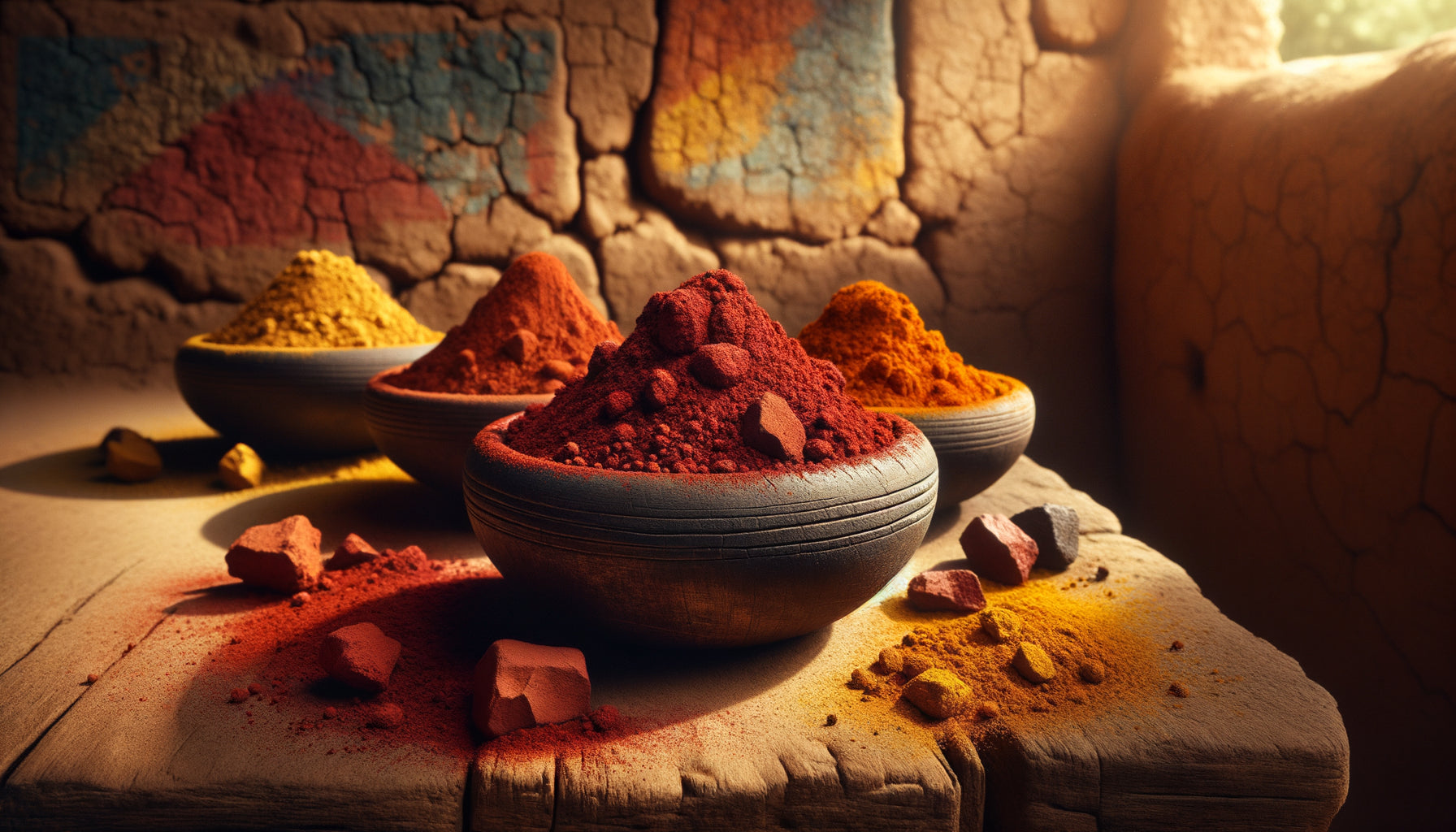
The natural pigments used in earth-based murals – ochres, kaolins, vegetable charcoals – are particularly sensitive to variations in humidity. Climate change accelerates their discoloration and migration within the support. What lasted for decades now fades in a few years, carrying away irreplaceable cosmogonic symbols.

The Drought That Cracks Memories
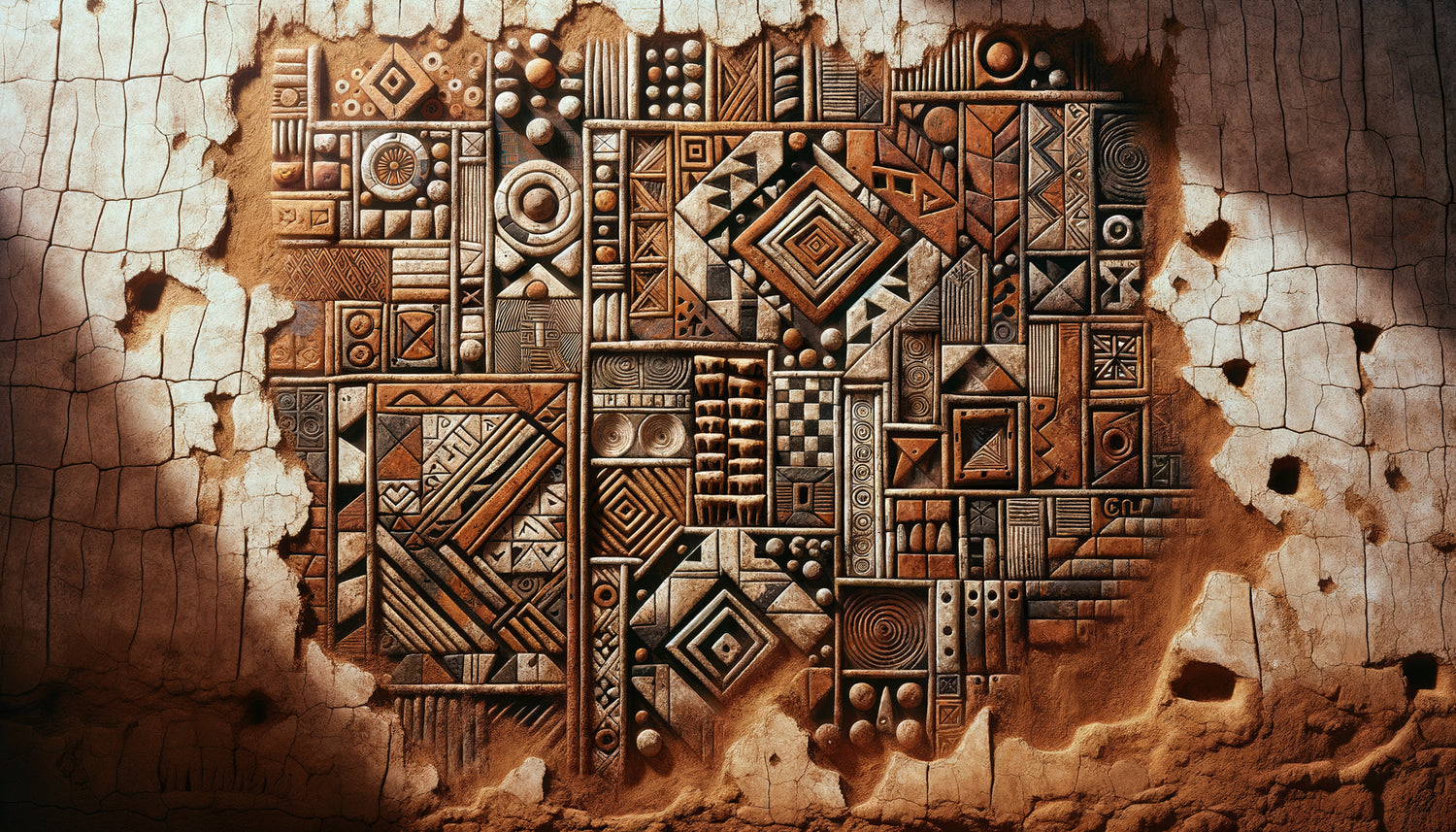
At the opposite end of the spectrum, prolonged droughts create another type of threat to earth-based murals. The Sahel is experiencing increasingly long and intense dry periods. The earth shrinks, loses its natural plasticity, and develops a network of cracks that literally fragment mural compositions.
In Senegal, in the Sérère villages, I documented how extreme temperatures – regularly exceeding 45°C – literally bake the earth plaster. These surfaces become brittle like poorly fired ceramics, losing that flexibility that once allowed walls to 'breathe' with the seasons.
The desert wind, also amplified by climate disruptions, acts like invisible sandpaper. Aeolian erosion gradually erodes the reliefs of mural paintings, flattening traditional textures that gave depth to symbolic motifs.
Traditional Knowledge Facing the Urgency of Adaptation
The guardians of these ancestral techniques find themselves in a delicate position. Traditional conservation methods – annual renewal of layers, choice of earth according to its grain size, precise timing of applications – no longer work in a climate context that has become unpredictable.
Some communities are innovating with remarkable creativity. In Togo, artisans are experimenting with adding more resistant vegetable fibers to their earth mixtures. Others, in Benin, are adapting ancient recipes by incorporating natural stabilizers such as gum arabic to improve water resistance.
The Dialogue Between Science and Tradition
Collaborative projects are emerging, bringing together heritage conservators, climatologists and traditional knowledge holders. These initiatives seek to precisely document conservation challenges while respecting the cultural integrity of earth murals. The goal: to develop strategies that adapt to new climatic realities without betraying the essence of these millennial practices.

Emerging solutions for a threatened heritage
Faced with these colossal conservation challenges, several avenues are emerging. Digital documentation is becoming a priority: photographing, scanning in 3D, archiving motifs before they disappear completely. This digital memory will never replace the physical presence of artworks, but it constitutes a cultural safety net.
Physical protection techniques are being developed: improved canopies to protect walls from torrential rains, adapted drainage systems to quickly evacuate water, vegetation barriers against wind erosion. These solutions remain faithful to a philosophy of minimal intervention, respecting the living nature of earth murals.
Education plays a central role. Training a new generation of artisans capable of maintaining these traditions while adapting them represents perhaps the most crucial conservation challenge. In Mali, intergenerational workshops allow elders to pass on their knowledge while listening to young people's observations about the environmental changes they are witnessing.
Why these walls matter to us all
The earth murals of Africa are not just a local heritage – they embody an architectural and artistic approach that our modern world desperately needs. At a time when we are looking for sustainable alternatives to concrete and synthetic paints, these millennial techniques offer valuable clues.
Their vulnerability to climate change brutally reminds us that environmental upheavals do not only affect nature, but also our collective memory, our artistic expressions, our cultural identity. Each motif that fades is a page of human history that closes definitively.
By understanding these conservation challenges, we become aware of the urgency to act – not by imposing standardized Western solutions, but by supporting local communities in their creative adaptation efforts. These murals teach us humility: we do not control everything, but we can accompany, document, transmit.
Celebrate the richness of African heritage in your home
Discover our exclusive collection of African paintings that capture the essence of the continent's artistic traditions, while resisting the challenges of modern time.
The challenges of preserving murals in raw earth facing African climate change tell us a larger story: that of our collective ability to preserve what connects us to our roots, even when the world is changing at a dizzying speed. Each restored wall, each adapted technique, each young person trained represents an act of cultural resistance and a bridge to the future.
The next time you contemplate an African artwork – whether it be on a raw earth wall in Niger or reproduced on canvas in your living room – think of the hands that created it, the millennial knowledge it embodies, and the challenges it faces silently. We are all guardians of this memory.
Frequently asked questions about the preservation of African murals
Why are raw earth murals so vulnerable to climate change?
Raw earth murals have been developed over millennia in relatively stable climatic conditions. They are living, porous materials that breathe and adapt to traditional seasonal variations. African climate change disrupts this millennial balance with unpredictable rainfall, extreme droughts and record temperatures. Raw earth does not have the rigidity of concrete: it expands with humidity, contracts with heat. These accelerated and erratic cycles create cracks, promote erosion and accelerate the degradation of natural pigments. What made these paintings resilient for centuries – their ability to adapt slowly – becomes their weakness in the face of changes that are too rapid and unpredictable.
Can these paintings really be preserved or are they doomed to disappear?
No, they are not doomed, but their preservation requires a new approach combining traditional knowledge and adaptive innovations. African communities demonstrate remarkable creativity in adjusting their ancestral techniques: modifying earth mixtures, adding natural stabilizers, adapting application calendars, creating protective physical structures that respect the environment. Digital documentation also helps to preserve the memory of these works. The real challenge is not so much technical as cultural and economic: financially supporting the guardians of this knowledge, training the younger generation, and valuing these traditional practices against the temptation of industrial materials. With collective commitment and adequate resources, these murals can continue to live and evolve, as they always have.
How can I contribute to the preservation of this heritage from outside Africa?
Your contribution begins with awareness and appreciation. By genuinely taking an interest in these artistic expressions, sharing their history, you participate in their cultural recognition. Supporting contemporary African artists who perpetuate these traditional techniques – by acquiring their works or publicizing their work – creates a viable cultural economy that encourages transmission. You can also support organizations that document and protect Africa's architectural heritage, or intergenerational training initiatives. Integrating authentic African artworks into your interior, such as wall art inspired by mural traditions, creates a cultural bridge that keeps the appreciation of these practices alive. Every conscious gaze, every informed conversation about these conservation challenges contributes to maintaining these traditions in our collective global consciousness.