Imagine discovering in the ruins of an Ethiopian palace frescoes that whisper stories from elsewhere, across the Red Sea. In Axum, former capital of a legendary kingdom, archaeologists have unearthed murals that question: do these geometric patterns, pictorial techniques, and pigments tell of a millennial artistic dialogue with Yemen? The question fascinates as much as it divides experts in ancient art.
Here's what the murals of Axum reveal: an exceptional cultural fusion between East Africa and the Arabian Peninsula, sophisticated fresco techniques transmitted by maritime trade routes, and a unique visual language that transcends geographical boundaries. These artistic testimonies overturn our understanding of intercultural exchanges in late antiquity.
You are passionate about ancient African art but feel lost amidst contradictory academic debates? Sources are scarce, fragmentary, often inaccessible to the general public. How can you separate fact from colonial fantasy in the interpretation of these works?
Rest assured: by exploring recent excavations and contemporary scientific analyses, we can now trace the invisible threads that linked Axum to ancient Yemen. Let's plunge together into this fascinating artistic investigation, where each pigment becomes a clue, each motif a message to decipher.
When the Red Sea Becomes a Cultural Bridge
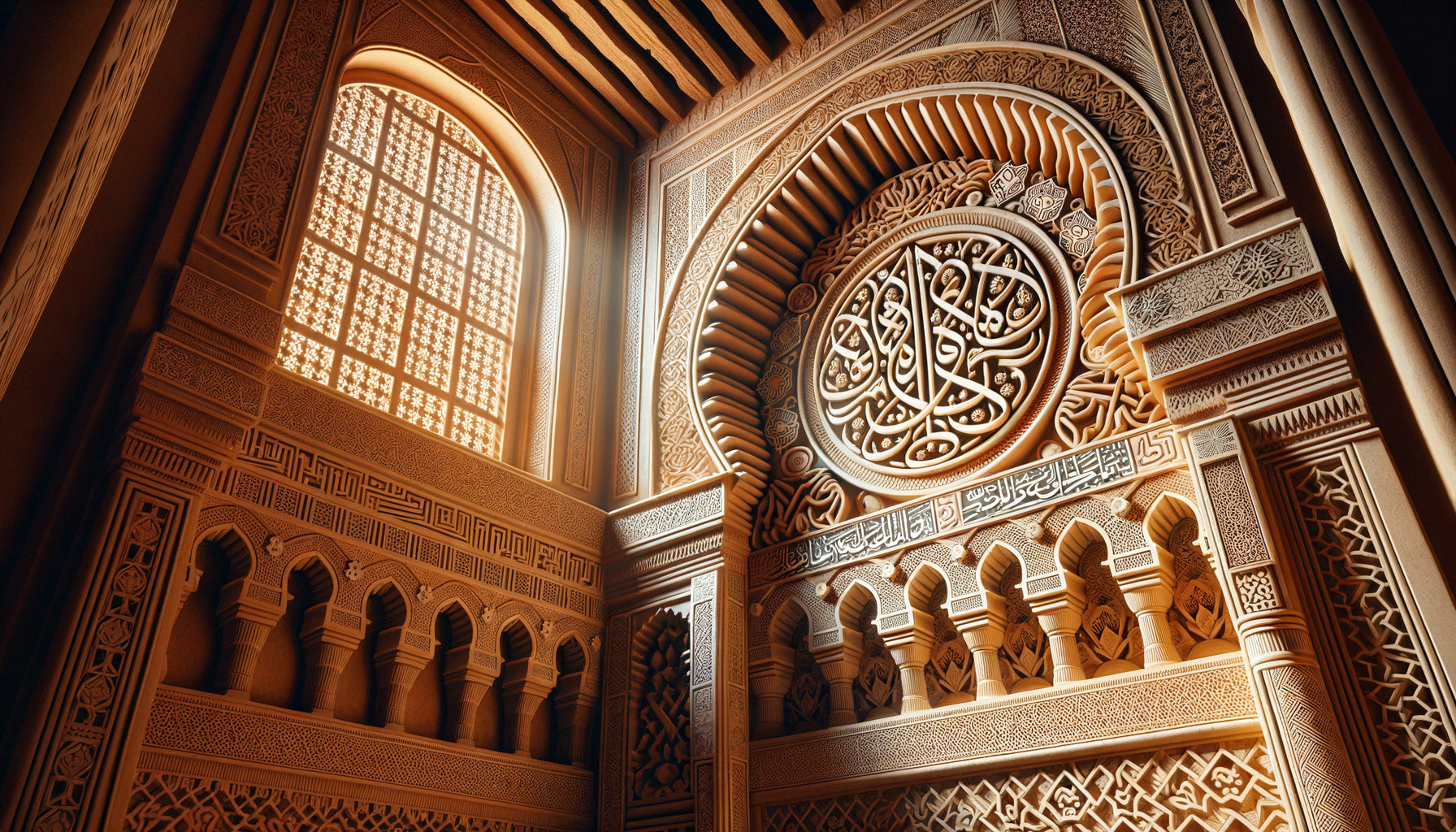
The murals of Axum cannot be understood without visualizing geography. Barely 30 kilometers separate the coasts of Ethiopia and Yemen in the Bab-el-Mandeb Strait. From the 1st century AD, this arm of the sea was not a border but a trade highway where incense, ivory, precious fabrics... and artists navigated.
The kingdom of Axum controlled strategic ports such as Adulis on the Red Sea. Yemeni merchants from the Kingdom of Saba established trading posts, married local families, set up their workshops. This geographical proximity naturally created Yemeni artistic influences in Axumite art.
The frescoes discovered in the palaces of Axum, notably those of the Dungur complex, show wall preparation techniques identical to those used in Yemen: fine lime plaster, meticulous polishing of the surface, application of pigments on a fresh support. This technical identity is not by chance but a transferred know-how by artisans circulating between the two shores.
The Pigments Tell Their Journeys
Spectroscopic analysis of the murals of Axum reveals valuable information. The red and yellow ochres come from local Ethiopian deposits, but Egyptian blue - this synthetic pigment so characteristic - indicates Mediterranean connections passing through Yemen.
Even more fascinating: some Axumite frescoes use cinnabar, a bright red mercury sulfide, the nearest sources of which were in Southern Arabia. This expensive pigment is evidence of refined trade exchanges but also of a shared knowledge of materials between Ethiopian and Yemeni artists.
The organic binders analyzed - vegetable gums, resins - also show similar compositions to Yemeni paintings from the same period. This technical convergence suggests not simply an importation, but a true artistic collaboration where skills mingled, enriching each other mutually.

Geometric motifs: dialogue or coincidence?
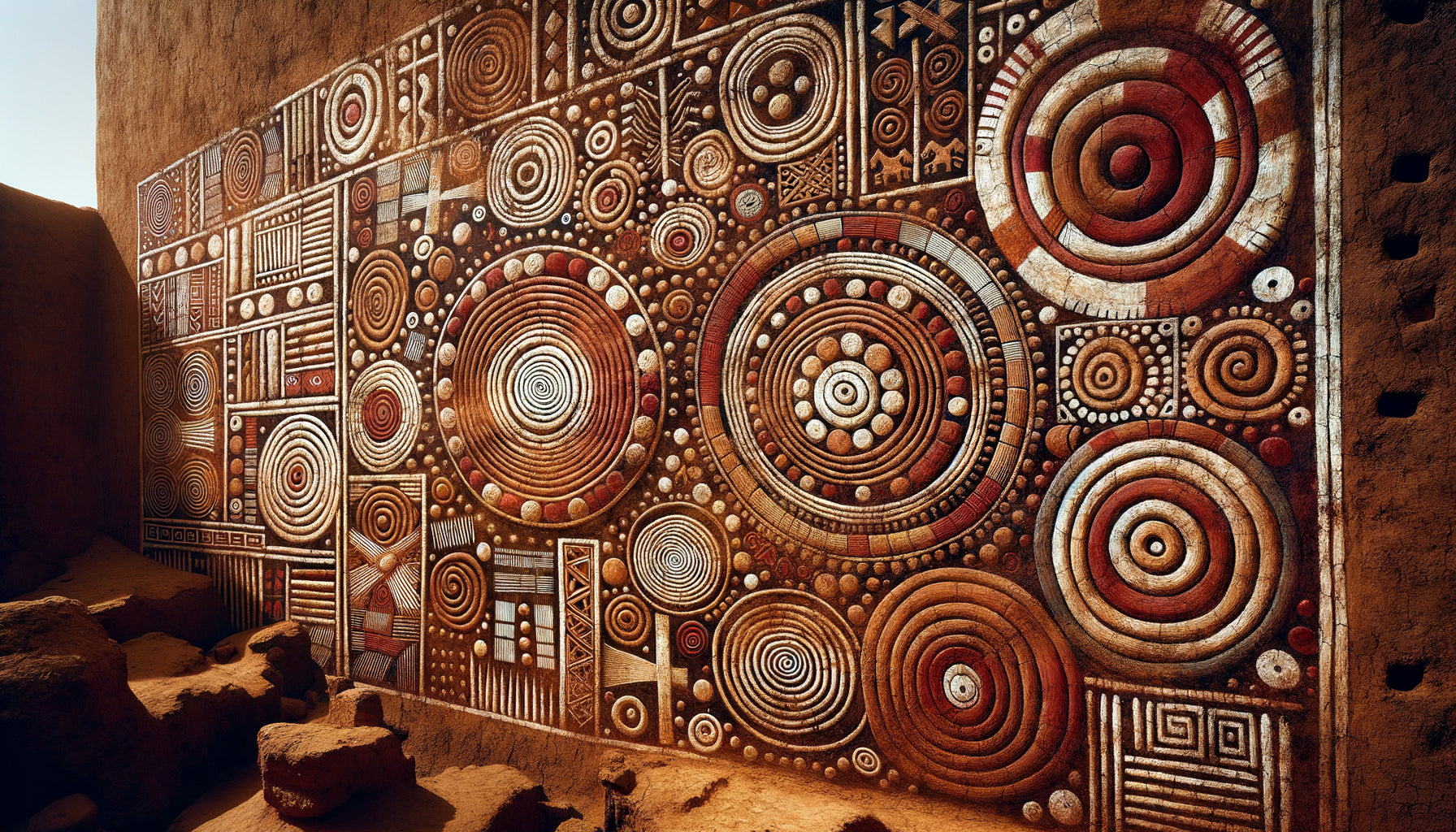
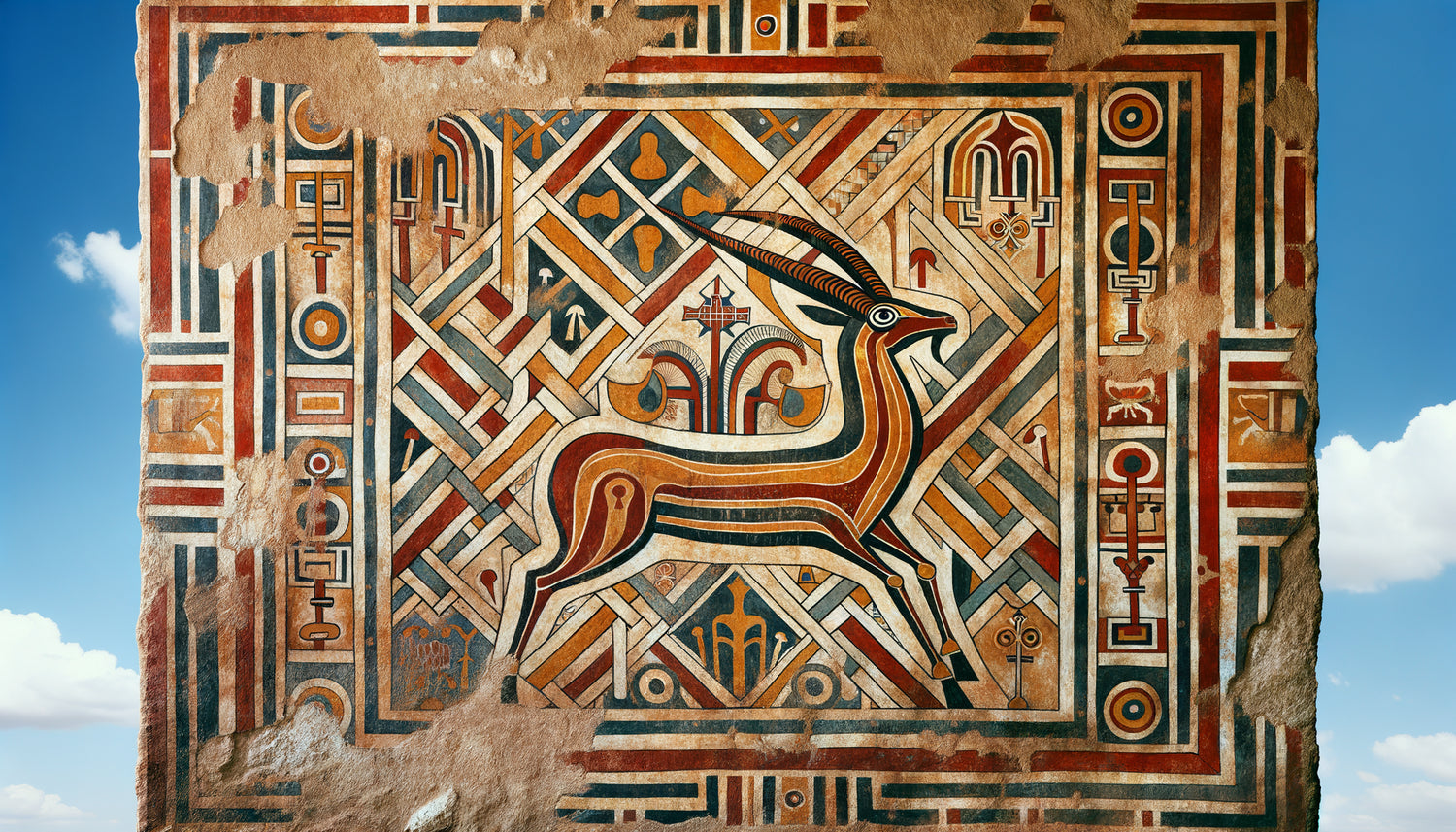
Observe the geometric motifs of the Axumite frescoes: these intertwined lozenge friezes, six-branch rosettes, polychrome checkerboards. They strangely resonate with the Yemeni architectural decorations, particularly those of the palaces of Shabwa or Marib.
These Yemeni artistic influences are particularly evident in the decorative borders that frame the figurative scenes. The meander motif, stylized plant intertwines, the rhythmic alternation of colors follow compositional principles found in South Arabian art.
However, look closer: the Axumite murals never servilely copy. They reinterpret, transform, africanize these motifs from elsewhere. Colors become more contrasting, shapes more angular, and the whole acquires a vitality that is uniquely Axumite. It is this capacity for creative absorption that defines the artistic genius of this kingdom.
Figurative scenes reveal a hybrid identity
Beyond abstract motifs, the figurative scenes in the Axumite murals tell a complex cultural story. The characters depicted sometimes wear Yemeni-style clothing - those long striped tunics characteristic - but their physical features and postures remain resolutely Ethiopian.
In the fragments discovered at the Däbrä Dammo monastery, we can distinguish processions where African and Arabic attributes are mixed: incense jars in the Sabaean style carried by figures with proportions reminiscent of classical Ethiopian art. This visual synthesis is evidence of a cosmopolitan society where identities were constantly negotiated.
The architectural representations in these frescoes also show this duality: columns with composite capitals combining Yemeni plant motifs and Axumite symbols, buildings with hybrid proportions. Mural art thus becomes a direct witness to a crossroads civilization.
Axumite Christianity: A Catalyst for Pictorial Innovations
With the conversion of the Kingdom of Axum to Christianity in the 4th century, wall paintings incorporate new religious motifs. Curiously, some representations of Axumite crosses show stylizations close to pre-Islamic Yemeni Christian art, suggesting that even in the religious sphere, artistic exchanges persisted.
The techniques of representing halos, draperies, and biblical scenes reveal striking similarities with the few preserved fragments of Yemeni Christian paintings. This convergence is explained by a Christian artistic community that circulated freely between the two shores, sharing iconographic models and technical innovations.

What Recent Excavations Reveal
Excavations carried out since 2015 in the Axum palace district have revealed painting workshops containing palettes, mortars for grinding pigments, traces of learning. These discoveries prove the existence of local artistic schools capable of producing these sophisticated frescoes.
However, among the tools discovered are spatulas and brushes of a particular type, identical to those found on Yemeni sites. This circulation of professional tools indicates that artisans trained in Yemen worked in Axum, or that Axumites were trained abroad before returning to practice their art.
Stratigraphic analysis shows that the wall paintings of Axum evolve stylistically over several centuries. The earliest (1st-3rd centuries) show marked south Arabian influences. The later ones (5th-7th centuries) develop a more autonomous style, while retaining some techniques inherited from Yemen. This artistic trajectory reveals a process of progressive creative emancipation.
Beyond the Debate: Understanding Intercultural Creativity
Finally, the initial question - do the wall paintings of Axum bear witness to Yemeni artistic influences? - deserves a nuanced answer. Yes, undeniably, techniques, pigments, and motifs crossed the Red Sea. But reducing Axumite art to a simple import would be a major historical error.
What these frescoes reveal is the extraordinary ability of a civilization to absorb, transform and transcend external influences to create something profoundly original. The artists of Axum were not imitators but cosmopolitan innovators, capable of dialoguing with multiple traditions while asserting their own identity.
This understanding radically changes our view of ancient African art: far from being isolated or 'primitive' as colonial narratives claimed, it participated fully in the major artistic currents of its time, while retaining its expressive singularity.
Let these millennial artistic dialogues inspire your interior Today, these Imagine a living space where the geometric patterns of Axum converse with your contemporary furniture, where these warm ochres and deep blues create an atmosphere that is both timeless and resolutely modern. It is this same ability of creative synthesis that the artists of Axum practiced: honoring legacies while creating something new. The
Discover our exclusive collection of African paintingsInvite Axum into your daily life