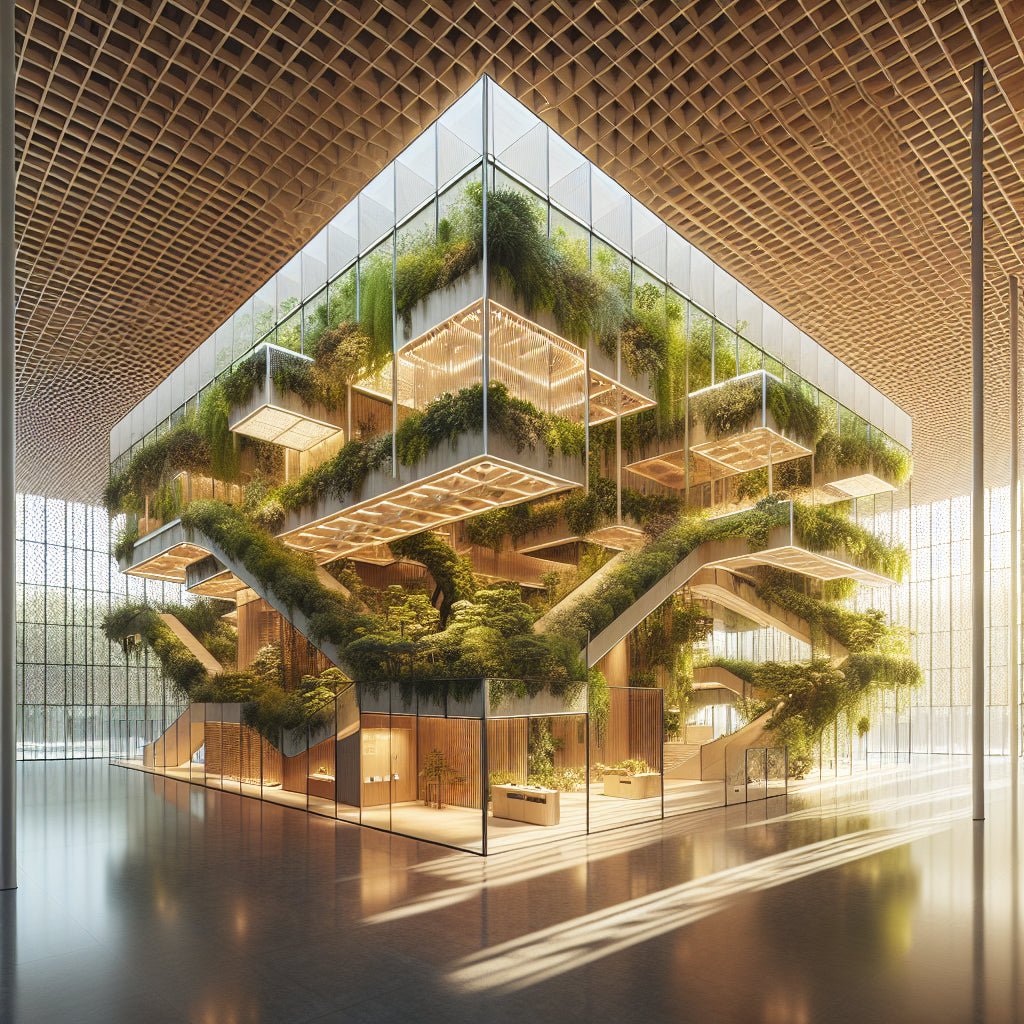
The 19th edition of the Venice Architecture Biennale, directed by architect-engineer Carlo Ratti, is poised to redefine the industry with its theme “Intelligens Nātura.” Facing an industry responsible for 40% of global CO2 emissions, the 2025 event aims to move beyond simple sustainability and impose architecture that “gives more than it takes.”
Regenerative architecture is no longer an option; it’s an existential necessity. By entrusting this 19th edition to Carlo Ratti, founder of the Senseable City Lab at MIT, La Biennale di Venezia sends an unequivocal signal: half-measures are a thing of the past. With the construction sector consuming 50% of global natural resources and producing 30% of our waste, urgency demands a radical overhaul of our practices.
Yet, the vision championed by Ratti rejects sterile catastrophism. His concept “Intelligens Nātura” proposes a bold reconciliation between cutting-edge technology and millennia-old wisdom from nature. Forget the idea of “doing less harm”: buildings must now become living organisms capable of capturing carbon, regenerating themselves, and improving their ecosystem. Biomimicry, bio-based materials, and artificial intelligence in service of energy optimization are no longer experimental curiosities but the foundations of a new architectural grammar.
This conceptual metamorphosis comes at a crucial time. To respect the Paris Agreement, the sector must reduce its emissions by 50% by 2030 and achieve carbon neutrality by 2050. A titanic challenge that requires prioritizing rehabilitation of existing structures over new construction, adopting the circular economy, and planning for resilience to extreme weather events. The more than 60 national pavilions expected at the Giardini and the Arsenale will have to demonstrate that these ambitions transcend cultural boundaries.
In reality, Ratti perfectly embodies this synthesis between innovation and responsibility. His work on the “senseable city,” where sensors and data transform the urban environment, or his research on self-repairing materials, illustrates an approach where technology amplifies nature's capabilities without seeking to replace it. This philosophy of open-source, collaborative, and demountable architecture could well define the next decade of the discipline.
The Biennale 2025 will therefore be more than just an exhibition: it promises to be an open-air laboratory, a built manifesto that questions our collective ability to transform climate constraints into creative opportunities. Following the 2023 edition by Lesley Lokko on decolonization and the 2021 edition on post-pandemic housing, Venice confirms its role as a barometer of global architectural mutations. Remains to be seen whether the tens of thousands of expected visitors will leave with sufficiently strong convictions to shift the sector into the era of regeneration.
Sources: La Biennale di Venezia (labiennale.org), MIT Senseable City Lab, ArchDaily