Large-scale additive manufacturing is emerging as the new territory of expression for high-end interior designers. From sculptural chairs to architectural lighting fixtures, 3D printing now allows the creation of unique pieces with impossible geometries, redefining the codes of contemporary luxury.
Long confined to industrial prototyping, large-scale 3D printing is making a remarkable entry into the hushed world of high decoration. This technology can now produce monumental furniture pieces, pushing the boundaries of creativity in a sector where uniqueness remains a cardinal value.
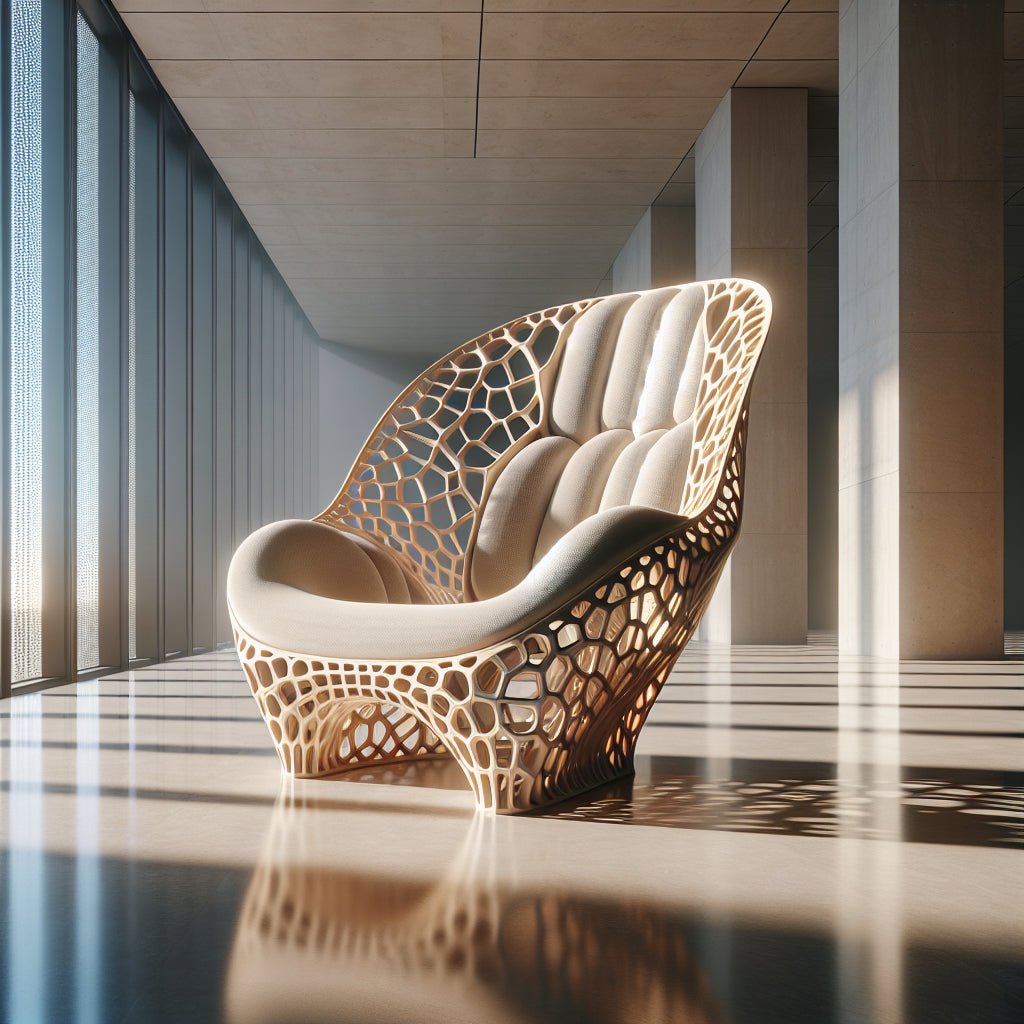
Tables with parametric lattice bases, biomorphic chairs inspired by bone structures, suspended luminaires generating complex shadow plays: the possibilities offered by additive manufacturing open up an unprecedented field of expression. Forms previously impossible to create using traditional methods are becoming reality, creating a visual language between art, design and technology.
Unprecedented creative freedom
The revolution is not only about the technique, but what it allows: ultra-detailed alveolar structures, fluid organic geometries, seamless assemblies. All with total personalization that fits perfectly within the logic of luxury. Each piece can be adapted to the specific dimensions of a space, to the precise tastes of a client, without the prohibitive costs of molds or specific tooling.
Technology serving creativity, not the other way around: this is the promise of this new generation of sculptural furniture.
The materials themselves are evolving. Polymers are gradually being replaced by bio-plastics, reinforced composites, or polymer concrete for monumental pieces. This diversity allows to achieve finishes worthy of traditional luxury, while meeting increasing sustainability requirements in the sector.
A market in full development
The pricing reflects this dual innovation-luxury nature: between 5,000 and over 100,000 euros depending on the complexity and dimensions of the pieces. Distribution channels pass through high-end art and design galleries, major international fairs such as those in Milan or Paris, and especially private orders for exceptional residential or hotel projects.
Collectors of contemporary art, prestigious interior architects and luxury hospitality are the early adopters of these creations where technical prowess and futuristic aesthetics blend. 3D printed furniture creates unique and memorable atmospheres, while allowing topological optimization: material is only placed where it is structurally necessary, combining visual lightness and solidity.
Challenges remain nonetheless numerous: production times that can reach several days for monumental pieces, the need for meticulous post-impression finishes, and above all, acceptance by a market where traditional artisanal know-how remains deeply valued. But hybridization between ancestral techniques and additive manufacturing could well represent the future of the sector.
Beyond technical prowess, it is the very definition of luxury that is being questioned: scarcity no longer lies solely in the precious material or the ancestral artisanal gesture, but in conceptual innovation, the unique generative algorithm, the piece impossible to reproduce otherwise. A silent but profound revolution, which inscribes high decoration into the era of computational design.
In brief
Large-scale 3D printing is transforming luxury furniture by enabling sculptural creations with shapes that are impossible to achieve traditionally. Between €5,000 and €100,000, these unique pieces appeal to collectors and prestigious interior architects. Technology redefines the codes of luxury, prioritizing conceptual innovation and total personalization, while integrating bio-based materials. An emerging market that merges art, design and additive manufacturing.
Sources: Industrial 3D printing technologies, Sectoral analyses of contemporary design and additive manufacturing, Trends in the luxury furniture market