Imagine a Scandinavian painter at the turn of the 20th century, trained in Parisian workshops, steeped in the dreamlike atmosphere of symbolism. Then suddenly, something shifts. Forms dissolve, allegories fade, and only color remains — vibrant, autonomous, absolute. This artistic metamorphosis still fascinates Nordic art lovers today and sheds light on our understanding of European abstraction.
Here's what the evolution of Carolus Enckell reveals to us: a progressive liberation from narrative conventions, a spiritual quest transcended by pure chromatic sensation, and an intimate dialogue between Finnish tradition and Parisian avant-gardes that redefines the possibilities of pictorial expression.
You may admire contemporary abstraction without fully understanding how Nordic pioneers constructed this radical visual language. This transition from symbolism to pure abstraction seems mysterious, almost elusive. Yet, Enckell's journey offers valuable keys to understanding for anyone interested in the evolution of modern painting and Scandinavian visual identity. Let's delve into this major artistic transformation that continues to inspire contemporary creators.
From the Symbolist Twilight to the Dawns of Color
In the 1890s, Carolus Enckell perfectly embodied Finnish symbolism. His early canvases breathed this melancholic atmosphere so characteristic of it: ethereal figures, twilight landscapes, that particular Nordic light tinged with mysticism. Trained in Paris among the nabis and exposed to French symbolists, he painted allegories of the human condition, representations of a tormented soul.
But something was fermenting beneath this narrative surface. The Finnish light itself — those endless summer sunsets, those surreal winter dawns — seemed to call for a more direct language. Enckell began to feel the inadequacy between what he felt and the symbolic conventions he had learned.
This creative tension marked the beginning of an artistic quest that would transform not only his own practice, but also contribute to defining the identity of modern Finnish art. Enckell's evolution from symbolism to abstraction was not a brutal break, but rather a progressive emancipation, as if color itself were claiming its autonomy.
The Decisive Influence of Italian Stays
Paradoxically, it was by moving away from the North that Enckell discovered the essence of his Nordic vision. His stays in Italy — notably Capri where he settled permanently — were decisive. The Mediterranean luminosity, radically different from that of Finland, offered him a new perspective on color itself.
In Capri, surrounded by a colony of international artists, Enckell experimented freely. The Mediterranean light became a laboratory for observing how color behaves in its greatest intensity. These observations would fuel a revolution in his palette. The muted tones of Nordic symbolism gradually gave way to more daring chromatic harmonies.
Color as a spiritual experience
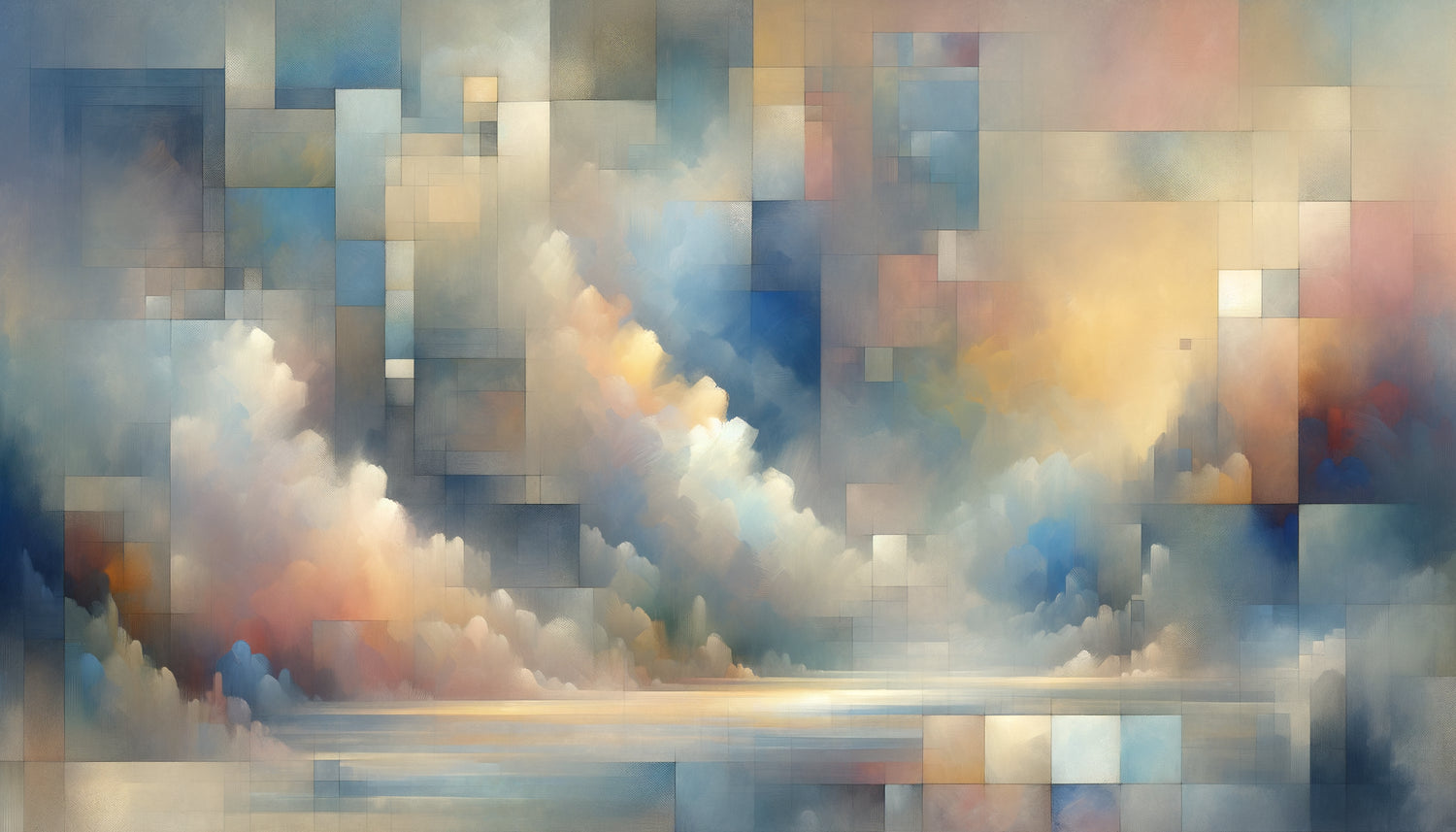
For Enckell, this evolution was not merely formal. Pure color became a more direct spiritual vehicle than any symbolic allegory. Why represent the soul with melancholic figures when a deep blue can instantly convey that interiority? This fundamental question guided his artistic transformation.
The Finnish artist thus joined, in his own way, Kandinsky's concerns about spirituality in art. But where the Russian theorized abundantly, Enckell progressed intuitively, letting color dictate its own logic.

The progressive dissolution of forms
Observing Enckell's work chronologically reveals a gradual dematerialization. In the 1910s-1920s, figures remain recognizable but lose their precise definition. The contours dissolve, bodies become chromatic suggestions. This intermediate period is fascinating: we see the artist negotiating between figurative tradition and abstract aspiration.
The female nudes he painted at that time—a recurring theme in his work—gradually became orchestrations of colored light. Flesh was no longer modeled by academic chiaroscuro but suggested by subtle tonal transitions. The form emerged from color rather than being defined then colored.
This revolutionary approach for a Nordic artist of his generation is explained by his unique position: sufficiently exposed to European avant-gardes to understand their issues, but rooted in a Finnish sensibility that valued interiority and the silent contemplation of nature.
When color becomes architecture
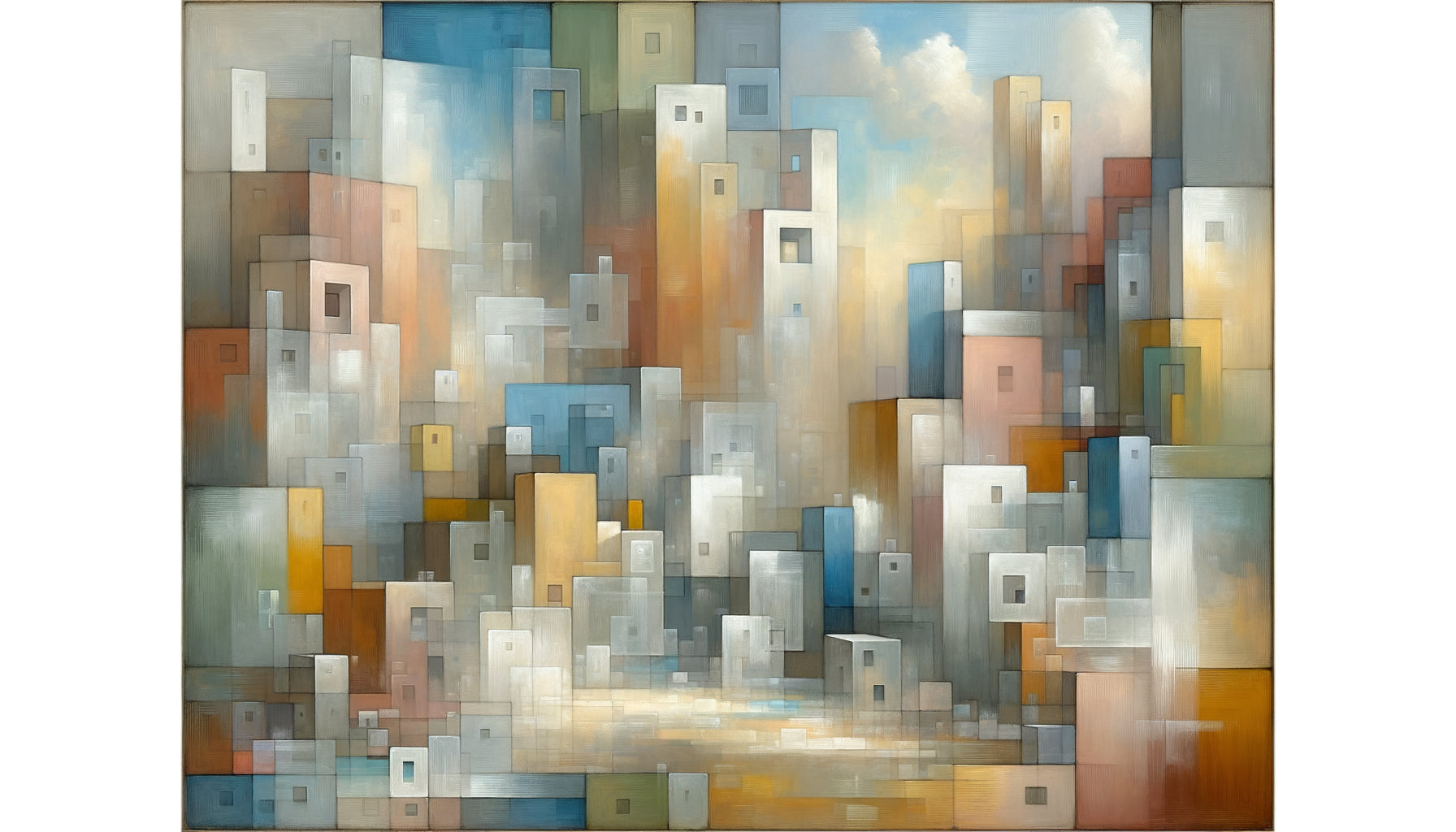
In his most accomplished works of the 1920s-1930s, Enckell achieved a chromatic abstraction where color literally structures the composition. No need to draw then paint: color itself generates space, creates tensions, establishes balances.
This architectural mastery of pure color makes Enckell a little-known precursor to European abstraction. His late compositions dialogue with the concerns of American colorists who will come after the war, while retaining that restraint, that Nordic elegance which distinguishes them from German expressionism or French Fauvism.
The legacy of contemporary Nordic art
Enckell's evolution from symbolism to pure color paved the way for subsequent generations of Finnish artists. He demonstrated that one could be deeply Nordic without being confined to folklore or naturalism, that a Finnish sensibility could express itself through abstraction as authentically as through depictions of forests and lakes.
This liberation has obvious contemporary resonances. In our current interiors, Nordic abstract art naturally finds its place precisely because pioneers like Enckell established that abstraction and cultural identity do not oppose but can nourish each other.

Why this evolution still inspires us
Carolus Enckell's artistic journey resonates particularly today as we constantly seek to simplify our living spaces while retaining emotional depth. His transition from narrative symbolism to chromatic abstraction perfectly illustrates how formal simplification can intensify — rather than diminish — emotional impact.
For lovers of contemporary Scandinavian design, understanding this evolution sheds light on the current Nordic minimalist aesthetic. This preference for clean-surfaced colors, compositions where a few carefully chosen tones create a complete atmosphere—all finds its roots in the work of pioneers like Enckell.
His approach also reminds us that authentic stylistic evolution is never an artificial break with the past, but a progressive distillation towards the essential. Enckell did not reject symbolism; he extracted its chromatic and emotional quintessence.
Let pure color transform your space
Discover our exclusive collection of abstract art that captures this Nordic essence where color becomes emotional architecture.
Finnish abstraction in your everyday life
Integrating the spirit of this Finnish abstraction into our contemporary interiors doesn't require becoming a collector of antique artworks. It’s more about understanding the principles that guided this evolution towards pure color: prioritizing chromatic impact over narrative complexity, valuing subtle tonal transitions, creating spaces for visual contemplation.
Enckell's legacy invites us to consider color not as decoration but as a structuring element of our environments. A wall panel in a deeply saturated blue, an abstract work with carefully calibrated harmonies—these choices transform the atmosphere of a room as surely as architectural modifications.
This approach resonates particularly in our era of conscious minimalism, where we seek to reduce visual clutter while enriching our daily sensory experience. Enckell's lesson: fewer elements, but maximum chromatic intensity.
Carolus Enckell’s evolution from symbolism to pure abstraction was therefore less a rupture than a quest for expressive truth. By gradually dissolving narrative forms, he liberated color so that it could become itself a carrier of meaning and emotion. This major artistic transformation, nourished by Italian stays but rooted in Nordic sensibility, opened up new possibilities for Finnish and European art. Even today, his journey inspires us to seek the essential, to trust the power of pure color, to create spaces where chromatic contemplation becomes a spiritual experience. Start by observing how light transforms colors in your interior at different times—you will intuitively understand what Enckell spent his life capturing.
Frequently Asked Questions
Who was Carolus Enckell and why is he important for Finnish art?
Carolus Enckell (1876-1925) was a Finnish painter who made a remarkable transition from narrative symbolism to chromatic abstraction. His importance lies in his ability to integrate the influences of European avant-gardes—particularly Parisian and Italian—while retaining a deeply Nordic sensibility. He demonstrated that Finnish art could engage with international modernity without losing its cultural identity. His experiments with pure color paved the way for contemporary Nordic abstraction. For lovers of Scandinavian art, understanding his journey illuminates the evolution of all modern Nordic aesthetics, from painting to current interior design.
How can one recognize the influence of symbolism in his early works?
Enckell's early works display the typical characteristics of Finnish Symbolism: ethereal human figures with melancholic expressions, twilight landscapes charged with atmosphere, a palette often dominated by muted and nocturnal tones. The compositions generally featured a narrative or allegorical dimension, seeking to represent states of mind or philosophical concepts through recognizable images. Frequent references can be found to Norse mythology, idealized Finnish nature, and the particular light of northern regions. These Symbolist works served as a foundation for his later evolution: even when becoming abstract, Enckell retained this concern for the interiority and spiritual dimension of art, simply expressed by other visual means.
How to integrate the spirit of this Nordic abstraction into your interior?
Integrating the spirit of Enckell's Finnish abstraction into your interior relies on a few key principles. Prioritize purified chromatic compositions where a few carefully chosen colors create a complete atmosphere, rather than decorative accumulations. Seek abstract works with subtle tonal transitions, avoiding contrasts too violent typical of other abstract movements. Value the quality of natural light that transforms colors throughout the day — exactly what fascinated Enckell. Opt for pieces where color structures space without figurative narration. The Nordic approach also favors medium formats rather than monumental ones, inviting intimate contemplation. Finally, balance chromatic intensity with neutral spaces to create this visual breathing so characteristic of contemporary Scandinavian design, a direct heir to this Nordic abstract revolution.