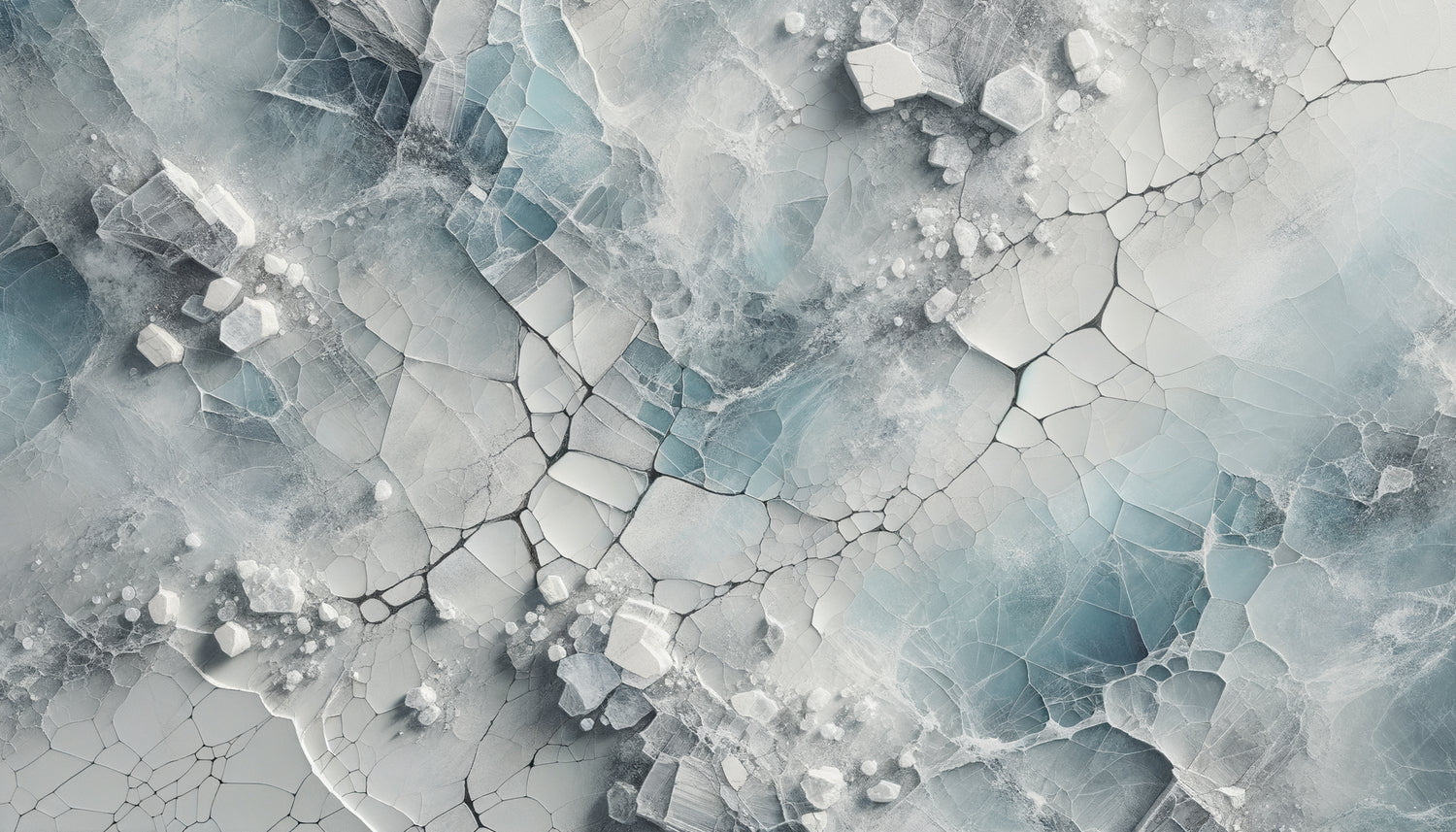
One February morning in Reykjavik, I observed the frozen surface of Lake Tjörnin crack under a sudden thaw. These irregular, organic, almost living cracks formed a network of lines that told the story of the invisible tensions between cold and heat. This moment of pure observation transformed my artistic practice: I realized that the Arctic nature offered the most authentic visual language to express simultaneous fragility and resilience. These freeze-thaw cycles, which have sculpted Nordic landscapes for millennia, have become the main source of inspiration for voluntary cracks in Scandinavian contemporary abstraction.
Here's what this approach inspired by Arctic phenomena brings to your interior: a textural depth that captures light differently depending on the time of day, a narrative dimension that evokes primordial natural forces, and an authentic Nordic aesthetic that transforms a wall into a contemplative landscape. Many believe that cracks in abstract art are solely about pictorial technique or controlled chance. But when their origin is understood in Arctic geological processes, these fissures reveal a profound intentionality, a dialogue between the artist and millennia-old natural cycles. I will reveal to you how these natural phenomena shape a unique aesthetic, perfectly suited to contemporary interiors seeking authenticity.
The Arctic genesis: when ice dictates the visual language
In Arctic territories, freeze-thaw cycles create crack patterns of fascinating complexity. When water freezes, it expands by 9%, exerting considerable pressure on surfaces. During thawing, contraction generates opposing tensions. This process repeated day after day, season after season, produces networks of cracks that follow no predictable geometry, but obey a deep organic logic. I spent three winters documenting these formations in the Icelandic fjords and the frozen lakes of Finnish Lapland.
What I discovered transforms our understanding of Nordic abstraction: each crack tells a story of resistance and adaptation. Contemporary Scandinavian artists do not simply reproduce these patterns, they integrate the very philosophy of the process. Some place their canvases outdoors during winter, allowing actual freeze-thaw cycles to initiate the first cracks in layers of gesso or acrylic medium. Others artificially recreate these conditions in the studio, alternating heat and cold to obtain authentic cracks that bear the physical memory of these transformations.
Crack techniques inspired by natural phenomena
The artistic reproduction of arctic cracks relies on an intimate understanding of materials and their thermal behaviors. Nordic artists use mediums based on rabbit skin glue or casein, whose hygroscopic properties mimic the reaction of ice to temperature variations. By layering different flexibilities, they create controlled tensions that generate cracks as they dry.
I have experimented with textured pastes mixed with marble powder and natural binders. Applying a thick layer followed by rapid drying with a hairdryer, then sudden cooling, produces cracks that capture the very essence of frozen arctic surfaces. Some artists go further by applying pigments into the still-wet cracks, creating dark lines that evoke glacial crevasses filled with meltwater. Others prefer to let the cracks reveal the underlying color layers, like geological strata exposed by erosion.
Contemporary mediums at the service of arctic aesthetics
Recent innovations in acrylic mediums have revolutionized the possibilities for voluntary cracking. Modern crackle gels allow precise control over the amplitude and direction of cracks. But the most accomplished artists combine these modern products with ancestral Scandinavian techniques, creating fascinating hybrids. I personally use a mixture of modern acrylic medium and natural chalk extracted from Danish cliffs, which brings an incomparable mineral texture and unpredictable cracking properties, faithful to the spirit of natural phenomena.

The arctic chromatic palette: beyond white and blue
The mental association between the Arctic and a limited palette of whites and blues is a reductive impoverishment of reality. Arctic landscapes reveal an unsuspected chromatic richness: the pale pinks and oranges of the aurora borealis, the anthracite grays of Icelandic volcanic rocks, the muted greens of arctic mosses, the ochres of millennial lichens. This diversity directly informs the palette of contemporary Nordic abstractions.
In my compositions inspired by freeze-thaw cycles, I integrate off-whites with shades of cream, ivory and pearl grey, layered in transparent glazes that evoke the translucency of ice. Cracks reveal underlayers of deep Prussian blue or Payne's gray, creating a depth reminiscent of glacial crevasses. But it is the introduction of unexpected touches - a burnt ochre evoking tundra soil, a mineral pink recalling Scandinavian granites - that gives these works their Nordic authenticity. These chromatic choices are never arbitrary: they carry the sensory memory of Arctic landscapes.
How to integrate these artworks into your living space
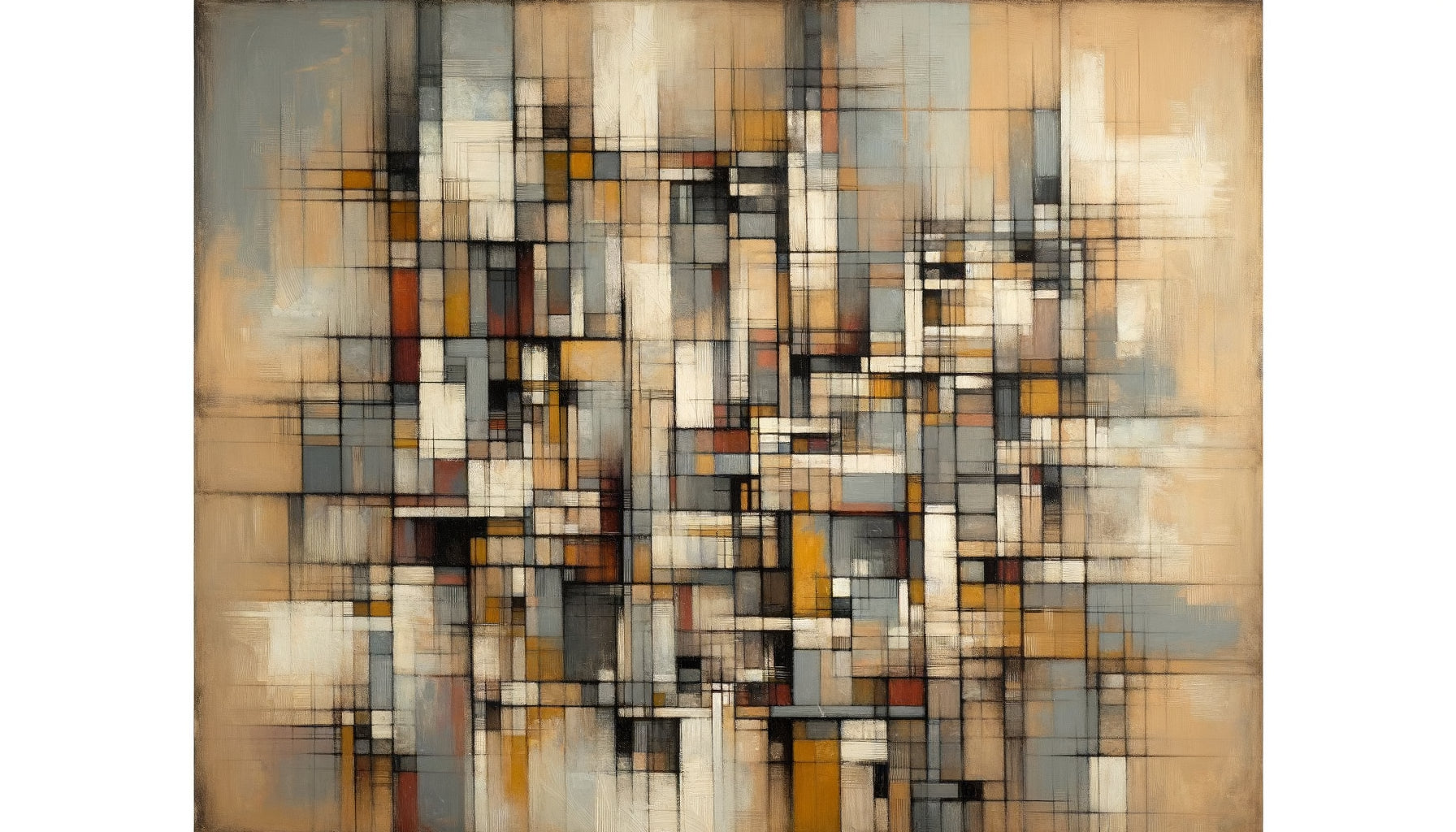
Nordic abstraction with cracks inspired by the Arctic possesses a unique contemplative quality that transforms the atmosphere of an interior. These works work particularly well in spaces where one seeks calm and connection with nature. A large format above a natural linen sofa creates a soothing focal point that captures the changing light throughout the day. The cracks project micro-shadows that evolve with the angle of the sun, making the artwork lively and dynamic.
I have found that these compositions harmonize beautifully with the natural materials favored in Scandinavian design: light wood, natural stone, wool and linen textiles. In a bedroom, a work with delicate cracks in shades of pearl grey and off-white promotes a serene atmosphere conducive to rest. For an office or workspace, opt for more dynamic compositions where the cracks create guiding lines that stimulate concentration without assaulting the eye. Lighting plays a crucial role: sidelight accentuates the texture of the cracks, while front lighting softens the reliefs for a softer atmosphere.
Compose a coherent Nordic environment
Integrating an abstract artwork with Arctic cracks ideally fits within a global design approach. Create visual echoes by incorporating other elements that evoke Nordic landscapes: smooth pebbles in handcrafted ceramic containers, dried birch branches, textiles with geometric patterns inspired by Sami craftsmanship. This consistency does not mean uniformity: the goal is to weave a subtle narrative thread that reinforces the emotional impact of the main artwork. I particularly appreciate pairing a large cracked canvas with smaller satellite compositions exploring details - a zoom on a particular crack, a chromatic variation - thus creating a visual conversation in space.

The philosophical dimension: fragility and permanence
Beyond their formal beauty, the cracks inspired by Arctic freeze-thaw cycles embody a meditation on the duality of existence. They simultaneously manifest fragility - these fissures bear witness to the vulnerability of surfaces facing natural forces - and permanence - these patterns persist, transform but remain. This dialectic resonates deeply with our contemporary experience, marked by an acute awareness of our environmental impact and the fragility of Arctic ecosystems.
When I create a cracked work, I am not only trying to reproduce a visual effect. I try to capture this tension between destruction and creation, between rupture and continuity. The cracks are not defects, but revelations: they expose hidden layers, they map invisible forces, they make the passage of time visible. In an interior, these works function as contemplative reminders of our connection to natural rhythms, cycles that exceed the human scale. They invite you to slow down, observe the details, accept imperfection as an essential component of beauty.
Ready to transform your interior with the essence of Arctic landscapes?
Discover our exclusive collection of abstract artworks that capture the textural and contemplative beauty of Nordic phenomena.
The future of Nordic abstraction: towards a visual ecology
The growing interest in cracks inspired by Arctic cycles reflects a broader evolution towards what I call a visual ecology: an artistic approach that integrates environmental awareness into the formal language itself. Contemporary Nordic artists do not simply represent nature, they adopt its processes, its rhythms, its organic logics. This approach resonates with a generation of collectors and decorators who are looking for works that carry meaning, rooted in a reflection on our relationship to the natural world.
I also notice a fascinating trend towards hybridization between traditional Scandinavian techniques and contemporary innovations. Some artists incorporate natural pigments extracted from Arctic minerals, while others experiment with bio-based binders that react to climatic conditions in a similar way to historical materials. This search for material authenticity reinforces the conceptual connection with the source landscape inspirations. The Arctic freeze-thaw cycles, far from being a simple aesthetic reference, become the foundation of an artistic practice that questions our relationship with time, the elements, and inevitable transformations.
Conclusion : Invite the Arctic forces into your daily life
The deliberate cracks inspired by Arctic freeze-thaw cycles offer much more than a fleeting decorative trend. They constitute a gateway to an aesthetic deeply rooted in natural phenomena, an everyday invitation to contemplation and connection with the elemental forces that shape our planet. By choosing a Nordic abstract artwork for your interior, you are not simply acquiring a decorative object: you are welcoming a fragment of Arctic landscape, a meditation on fragility and resilience, a constant reminder of the beauty that emerges from processes of transformation.
Start by carefully observing the cracked surfaces around you - an old paint job, dry earth floor, even the bark of a tree. Train your eye to appreciate these organic patterns. Then, during your next visit to a gallery or when exploring artworks online, look for these texture qualities inspired by Arctic cycles. You will discover that your sensitivity to these details will transform your perception of Nordic abstract art, revealing unsuspected depths in what might seem at first glance simple minimalist compositions.
FAQ : Everything you need to know about Arctic cracks in abstract art
Are the cracks on an abstract canvas a defect or a deliberate effect?
This is an excellent question that reveals the subtlety of contemporary Nordic abstraction. In the context of works inspired by Arctic freeze-thaw cycles, cracks are absolutely intentional and constitute the very heart of artistic expression. They result from specific techniques that the artist masters to achieve precise effects: amplitude of cracks, direction, depth, revelation of lower layers. Unlike accidental cracks due to aging or technical errors (use of unsuitable supports, poor preparation), these voluntary cracks are created with specific mediums, applied under controlled conditions. If you observe a work of quality, you will notice that the cracks follow a consistent visual logic, harmoniously integrate into the composition and present a regularity in their irregularity - exactly as the natural phenomena from which they draw inspiration. When investing in such a work, always ask the artist or gallery owner to confirm that the cracks are intentional and made with stable materials that guarantee the durability of the artwork.
How to maintain an abstract canvas with textured cracks?
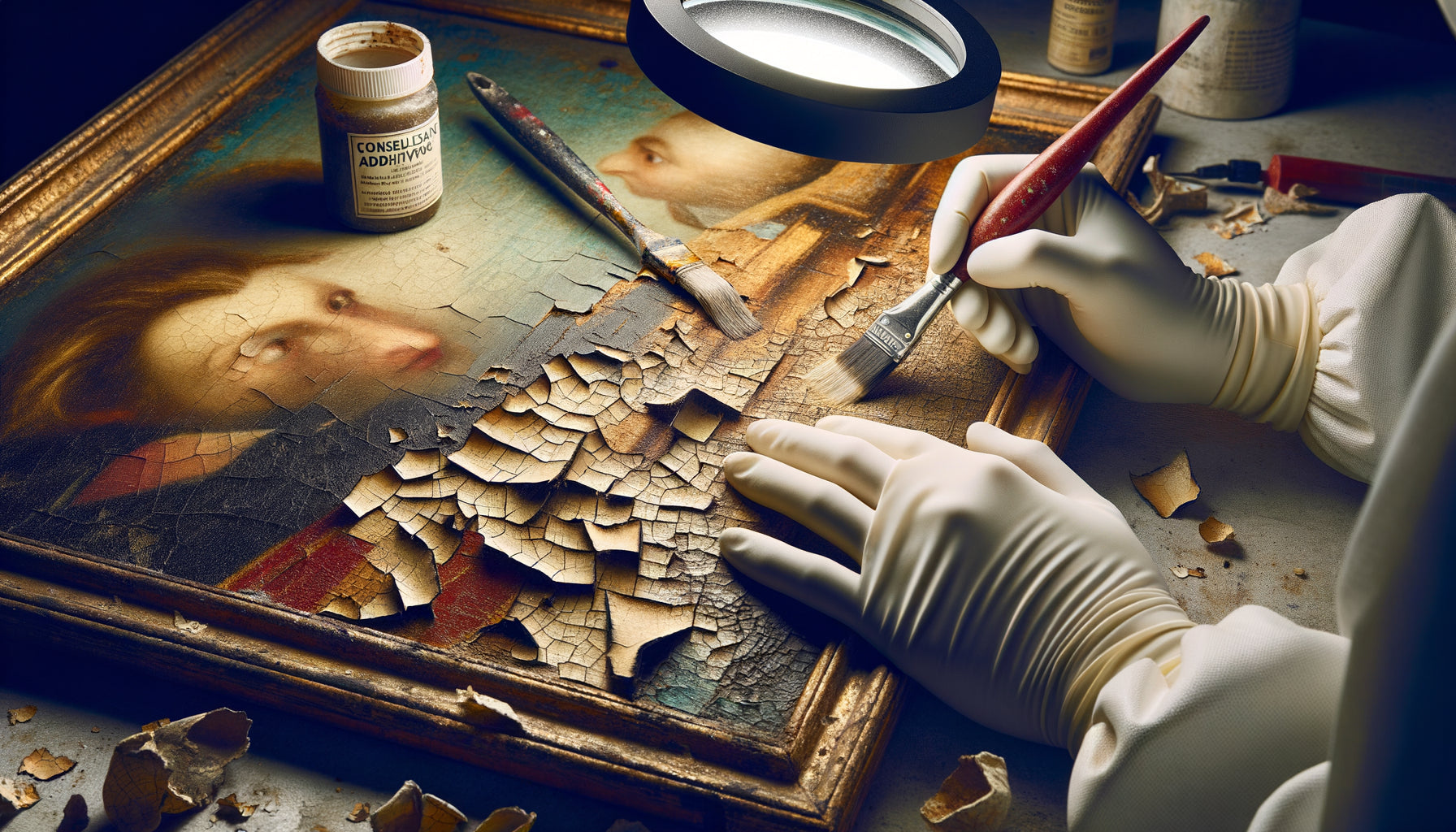
Maintaining a Nordic abstract work with pronounced cracks is simpler than one might imagine, but requires some specific precautions. The golden rule is to avoid any direct contact with the textured surface. For regular dusting, use a soft natural hair brush (like those used for calligraphy) or an air blower, working gently so as not to force into the cracks. Absolutely avoid cloths or feathers that could snag the reliefs and tear off fragments. As for location, keep the artwork away from direct heat sources (radiators, fireplaces) and humidity (bathrooms, kitchens) which could accentuate cracks in an uncontrolled manner. Prolonged direct natural light can alter pigments, so prefer indirect lighting or locations where sunlight does not directly hit the canvas for hours. If you need to move the work, always handle it by the frame, never by the painted surface. By following these simple precautions, your artwork will retain its integrity and beauty for decades. Voluntary cracks created with professional mediums are stable and will not worsen over time, unlike accidental cracks.
Can one create their own cracks inspired by Arctic phenomena?
Absolutely, and it’s even a deeply rewarding creative experience! Creating cracks voluntarily is accessible to beginners, although mastering subtle effects takes practice. To get started, acquire an acrylic crackle medium (available in art supply stores), which provides the most reliable solution for predictable results. First, apply a base coat of acrylic paint in the color you want to appear in the cracks, let it dry completely. Then, generously apply the crackle medium in a thick, even layer, without going over the same spot again. Let it dry naturally: cracks will gradually appear. The thicker the layer, the wider the cracks. Once dry, apply a contrasting color coat on top, which will beautifully reveal the cracks. For more advanced approaches approaching authentic Nordic techniques, experiment with mixtures of white vinyl glue and paint, or explore texture pastes mixed with fine sand. The secret lies in patient observation: each material reacts differently depending on thickness, ambient temperature, humidity. Document your experiments to gradually understand the behavior of materials. This experimental approach will connect you directly to the spirit of Nordic artists who observe natural cycles to inform their practice.