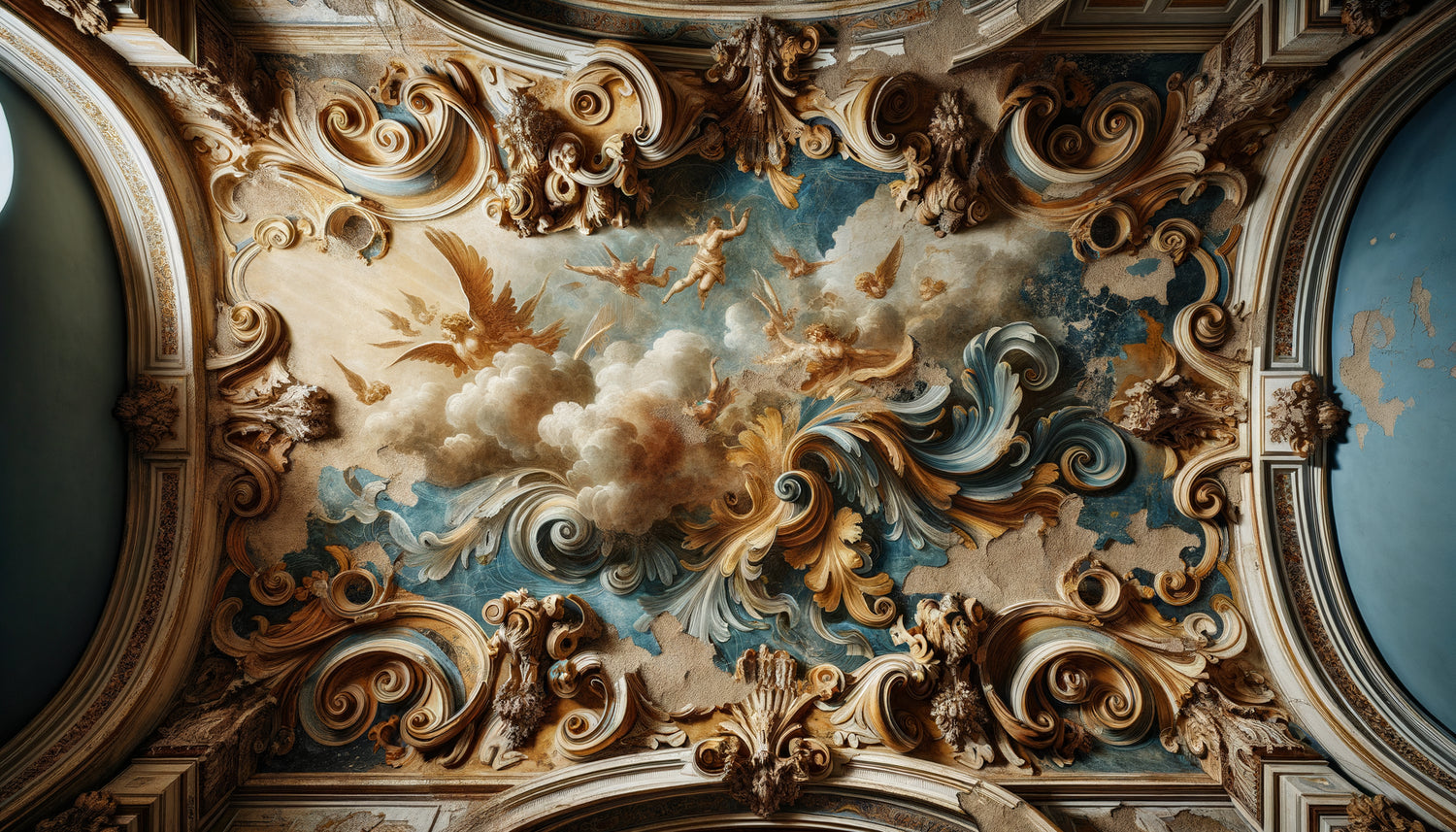
Three months ago, I was urgently called to a 17th-century Venetian palazzo. On the ceiling of a forgotten living room, beneath decades of dust and humidity, lay a monumental fresco. Baroque abstract volutes, splashes of lapis lazuli and gold that seemed to dance in the raking light. The owner, distraught, looked at me: “It crumbles every day. Does it really have value, or should I just let it go?”
Evaluating the heritage value of a distressed baroque abstract mural fresco is much more than a simple financial assessment. It's about revealing the history buried in each pigment, understanding the audacity of an artist who dared to experiment with abstraction four centuries before the term existed, and measuring the urgency of preservation. This approach brings three essential dimensions: it reveals the work’s historical authenticity, it quantifies its cultural and artistic significance, and it defines restoration priorities to preserve this fragile treasure.
Too often, faced with a deteriorated fresco, owners hesitate. Restoration costs are daunting. Expertise seems reserved for institutions. What if this work was ultimately just an insignificant decoration? This uncertainty sometimes leads to the irreversible: abandonment, the definitive disappearance of a unique fragment of our heritage.
Yet, evaluating a distressed baroque abstract mural fresco is an accessible, structured process that combines historical investigation, technical analysis and artistic sensitivity. In the lines that follow, I will guide you through the five fundamental dimensions of this assessment, those very ones that I have applied for fifteen years on projects throughout Europe. You will discover how to transform uncertainty into certainty, and how to give these frescoes the future they deserve.
The quest for origins: historical investigation as a first pillar
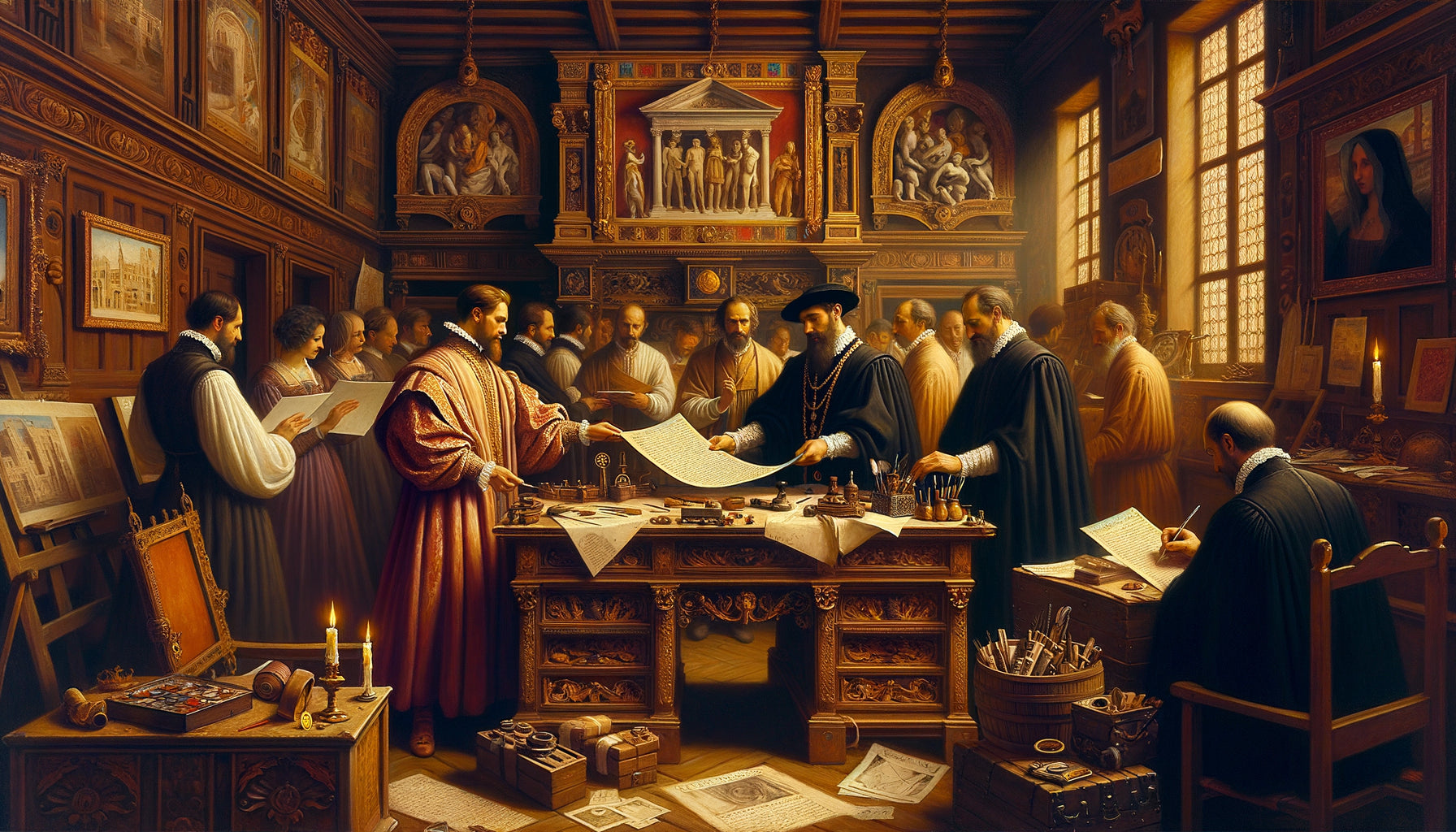
Before even touching a fresco, I always start with the archives. Historical investigation forms the foundation of any heritage assessment. For a distressed baroque abstract mural fresco, this documentary research can reveal unsuspected treasures: artist contracts, palace inventories, correspondence mentioning the works.
In state archives, parish registers, and private collections, I seek three crucial pieces of information: the identity of the patron (cardinal, art-collecting benefactor, noble family), possible attribution to a workshop or master, and the context of creation. A fresco commissioned by a prince-bishop collector of experimental art has far greater heritage value than an anonymous decoration.
Baroque abstraction is a fascinating and rare phenomenon. Contrary to popular belief, some baroque artists explored non-figurative compositions: pure light games, dissolved imaginary architectures, decorative explosions where form frees itself from subject matter. Documenting this early audacity significantly increases the historical value of the fresco.
Sources that speak when the fresco is silent
I have learned to consult unusual sources: travel journals of Grand Tour travelers, where aristocrats described visited interiors; memoirs of 19th century restorers who sometimes documented frescoes before altering them; old photographs, even blurry ones, which prove the earlier state of the work.
For a baroque abstract fresco in danger in a Tuscan villa, I discovered that it had been mentioned in 1782 in a letter from a French architect as an “unequaled chromatic fantasy”. This single sentence has multiplied its estimated heritage value by three, because it attested to a European reputation since the 18th century.
The connoisseur's eye: stylistic and formal analysis
Once the historical context is established, I move on to in-depth stylistic analysis of the baroque abstract mural fresco. This step requires an intimate knowledge of the visual languages of the time: recurring motifs, composition techniques, cross-influences between workshops.
I photograph the fresco under different lighting conditions, in grazing light to reveal the reliefs of the stucco, in ultraviolet to detect repaints, in infrared to penetrate the pictorial layers. Each shot tells a technical story: the quality of the wall preparation, the sophistication of the pigments used, the virtuosity of the execution.
Baroque abstraction has its own codes. I look for atmospheric perspective systems, these gradations that create the illusion of infinite spaces. I identify ornamental motifs freed from their decorative function, these volutes that no longer support anything, these cartouches devoid of any inscription. This formal liberation, so early in art history, constitutes an exceptional heritage value marker.
When technique reveals genius
On a baroque abstract fresco in a Roman palace, I discovered an astonishing technique: the artist had incorporated fragments of colored glass into the fresh mortar, creating luminous shards that capture natural light. This technical innovation, documented by stratigraphic analysis, made it possible to attribute the work to an avant-garde workshop and establish its heritage value as major.
Stylistic analysis also evaluates iconographic coherence with the location. A baroque abstract fresco in a music room, visually evoking sound waves, has a superior conceptual value to a generic decor.

The truth of pigments: scientific expertise as a revealer
The heritage assessment of a baroque abstract mural in danger cannot be done without non-invasive scientific analyses. These examinations transform hypotheses into certainties and reveal truths invisible to the naked eye.
I call upon specialized laboratories for X-ray fluorescence spectrometry analyses, which precisely identify the pigments used without sampling. The presence of authentic lapis lazuli, true gold, vermilion from cinnabar, confirms the high quality of the original order. These materials cost a fortune in the 17th century; their generous use attests to the prestige of the work.
Stratigraphic analyses on micro-samples reveal the sequence of pictorial layers, allowing dating of execution and identification of subsequent restorations. On a Venetian fresco, I discovered that what appeared to be deterioration was actually a voluntary degraded glazing technique, creating a hazy effect. This understanding radically changed the restoration approach.
Health condition as a decision factor
Scientific expertise also documents the state of danger of the fresco: the extent of surface detachments, the depth of cracks, biological attacks (mold, hygroscopic salts), chemical alterations of pigments. This pathological mapping is essential to quantify the urgency of intervention.
A baroque abstract fresco in immediate danger (risk of partial collapse within six months) requires accelerated heritage valuation to justify emergency funding. I use standardized risk scales that speak the language of insurers and institutions for the protection of heritage.
The market verdict: understanding economic valuation
Let's address a delicate but unavoidable question: the economic value of a baroque abstract mural. Unlike a canvas, a fresco cannot be sold separately from its architectural support. Its heritage value nevertheless directly influences the real estate value of the building and possibilities for funding its restoration.
I consult international auction databases to identify prices achieved by comparable artworks (Baroque frescoes, early abstractions, works in peril restored). I refer to the valuation grids of Historic Monuments, which establish ranges according to rarity, condition, attribution, historical significance.
A Baroque abstract fresco attributed to a recognized workshop can justify a restoration investment between 80,000 and 300,000 euros. This valuation allows for tax deductions, public subsidies, and foundation patronage. Without this quantification, the owner remains helpless in the face of the financial scale of the challenge.
Beyond the figure: contemporary usage value
I also evaluate the current usage value of the fresco: can it become a cultural asset for a luxury hotel? A heritage argument for an exceptional residence? A visitable site generating tourist revenue? This indirect economic dimension reinforces the justification for restoration.
In a Florentine project, the restored Baroque abstract fresco became the heart of a paying cultural itinerary, generating 45,000 euros annually. This profitability convinced a bank to finance 40% of the work as a cultural investment.

The urgency that transcends: criteria of collective cultural importance
The final dimension, often decisive for protection bodies, concerns the collective cultural importance of the Baroque abstract mural fresco in peril. Beyond its market value, what place does it occupy in our common memory?
I evaluate several immaterial criteria: the typological rarity (how many Baroque abstract frescoes survive in Europe?), the testimonial value (does it bear witness to a disappeared artistic practice?), the local identity dimension (is it linked to the history of the community?), and the pedagogical potential (what can it teach about the history of abstraction?).
These qualitative criteria transform a fresco of local interest into a treasure of national, or even European importance. They open access to the most prestigious funding: European Union programs, international heritage preservation funds, patronage from major cultural foundations.
For an abstract Baroque fresco in danger within a Slovenian monastery, I demonstrated that it constituted the only known example of non-figurative decoration in Central European Baroque religious architecture. This uniqueness mobilized UNESCO and unlocked exceptional funding.
The assessment report as a mobilization tool
The culmination of this heritage assessment is a structured report of 30 to 60 pages that synthesizes all these dimensions. This document becomes the essential advocacy tool for authorities, funders, and media. It transforms a neglected ruin into a legitimate heritage cause.
I systematically include: exhaustive photographic documentation, a sourced history, an argued stylistic analysis, the results of scientific analyses, justified economic valuation, and prioritized recommendations for restoration. This report makes the fresco exist in the public debate.
Baroque abstraction strangely resonates with our contemporary sensibility
Discover our exclusive collection of abstract paintings that dialogue with this timeless boldness and bring the same liberated visual energy to your interior.
When the fresco finds its future again
Evaluating the heritage value of an abstract Baroque mural fresco in danger is giving it a second life. It's transforming uncertainty into evidence, discouragement into mobilization. Each saved fresco enriches our understanding of art history, proves that abstraction was not born in the 20th century, and inspires our contemporary gaze.
In this Venetian palazzo where everything began for me, the fresco has been restored. It now hosts artist residencies that dialogue with these four-century-old abstract volutes. The owner, transformed into a passionate guardian, personally guides visitors. The heritage assessment was not an end, but a beginning.
If you are facing a fresco in danger, do not let it disappear into indifference. Start by documenting, photographing, and searching. Contact the heritage services of your region. Each Baroque abstract fresco saved is a victory against oblivion, proof that beauty transcends centuries when we decide to protect it.
Frequently asked questions about the assessment of Baroque frescoes in danger
How much does it cost to assess a Baroque abstract mural fresco?
A comprehensive assessment of a baroque abstract mural painting in peril typically ranges from €3,000 to €12,000, depending on the complexity of the work and the extent of scientific analyses required. This cost includes historical research in archives (approximately €800-€1,500), stylistic analysis by a specialist expert (€1,500-€3,000), non-invasive scientific analyses such as spectrometry (€1,200-€4,000 depending on the number of points analyzed), and drafting of a detailed heritage report (€500-€2,000). This amount may seem high, but it is often eligible for grants from Regional Directorate of Cultural Affairs (DRAC) or heritage foundations, which can cover 40 to 70% of the costs. The investment is quickly recouped as this assessment report becomes an essential tool for unlocking restoration funding that can reach several hundred thousand euros. Without this professional assessment, no serious institution will commit significant funds to the preservation of the mural.
How do I know if my baroque mural really has value or is just ordinary decoration?
Several clues can alert you to the potential heritage value of your baroque abstract mural painting, even though only a formal expertise will provide certainty. First, observe the quality of execution: meticulous details, subtle gradations, an obvious mastery of atmospheric perspective suggest a trained artist, not just a decorator. Secondly, examine the pigments and materials: deep blues (possibly expensive lapis lazuli), genuine gold leaf (which does not darken), vibrant reds indicate a prestigious commission. Thirdly, consider the architectural context: a mural in a state reception room, a private chapel, or a historic library is more likely to be significant than a hallway decor. Fourthly, originality counts: if your baroque abstract mural features unusual compositions, non-figurative, geometric or purely chromatic, you may be facing a rare avant-garde work. Finally, research locally: consult municipal archives, heritage preservation associations, which may have information about your building. If in doubt, contact your Regional Monuments Historic Service for free initial advice.
Can a very damaged mural still have significant heritage value?
Absolutely, and this is an important misconception to correct: the state of preservation of an abstract baroque mural does not negate its heritage value, it simply modulates it. I have assessed frescoes with 60% of the surface missing, which nevertheless possessed major cultural significance as unique testimonies of an artistic practice. What matters in heritage assessment is the historical and artistic significance of what remains, even fragmentary. A fresco attributable to a recognized workshop retains its attribution value even if incomplete. An innovative abstract baroque composition retains its conceptual importance even partially legible. The precarious condition sometimes adds a dimension of urgency that facilitates the mobilization of emergency preservation funds. Heritage institutions have specific programs for works threatened with imminent disappearance. The heritage assessment of a mural in poor condition should simply be accompanied by a precise mapping of pathologies and an estimate of restoration possibilities. Some fragments of baroque frescoes, reduced to just a few square meters, have been listed as Historic Monuments and restored with substantial budgets, as they constituted the last testimonies of disappeared workshops or lost techniques.