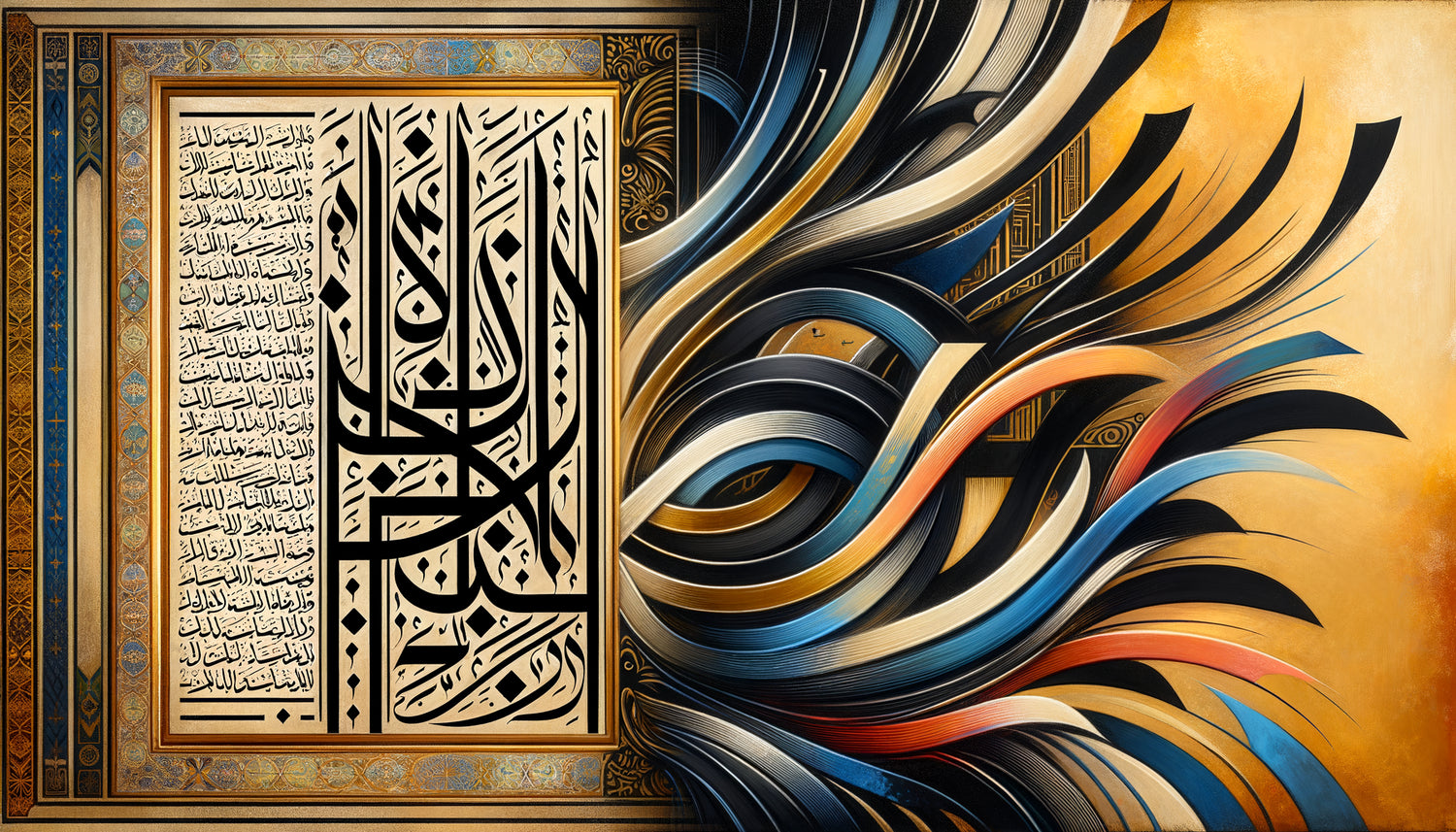
In the hushed workshop of a grand Parisian museum, a restorer observes side by side a 12th-century Koran manuscript and a Kandinsky painting. The gesture is the same: this liquid curve, this spatial tension, this rejection of figuration. Between angular Kufic letters and the abstract compositions of the early 20th century, a silent dialogue has been woven through the centuries.
Here's what Arabic calligraphy has offered to Western abstraction: a radical liberation from figurative constraints, a sacralization of pure gesture, and a spiritual dimension that transcends mere decoration. These three contributions have revolutionized the very conception of what painting could be in the West.
For centuries, Western art has been locked into an obsession: faithfully representing the visible world. The Renaissance glorified perspective, anatomical realism, perfect illusion. But at the turn of the 20th century, some artists were suffocating in this golden cage. How to express the invisible, pure emotion, the spiritual dimension of existence?
The answer came from elsewhere. At universal exhibitions, orientalist salons, and especially through the first journeys of European artists to North Africa and the Middle East, a revelation occurred. In mosques, on ancient manuscripts, on palace walls, Arabic calligraphy has been displaying for centuries what the moderns desperately sought: a non-figurative art that touches the soul.
When the letter becomes pure emotion
Arabic calligraphy does not represent: it presents. Each letter is a living organism that breathes, stretches, dances on the page. Arab calligraphers have developed for over a thousand years a tradition where form takes precedence over figuration, where the gesture of the brush or reed pen carries within it a spiritual charge.
This approach fascinated the pioneers of abstraction. Kandinsky, during his trip to Tunisia in 1905, discovered this evidence: one can deeply touch the viewer without ever representing a recognizable object. Arabic calligraphic compositions prove that a curve, a patch of black, a spatial rhythm are enough to create emotion.
Paul Klee, after his stay in North Africa in 1914, wrote in his diary: 'Color possesses me. I no longer need to chase it'. What he discovers in Islamic architecture and calligraphy is precisely this autonomy of form. Kufic lettering, with its sharp angles and austere geometries, offers him a radically new visual vocabulary.
The sacred gesture: when art becomes meditation
In the Islamic tradition, calligraphy is not simply decorative craftsmanship. It is a spiritual practice where the calligrapher enters into meditation through the gesture. Each curve of the alif, each dot of the ba' carries an intention, absolute concentration. The whole body participates: posture, breathing, state of mind.
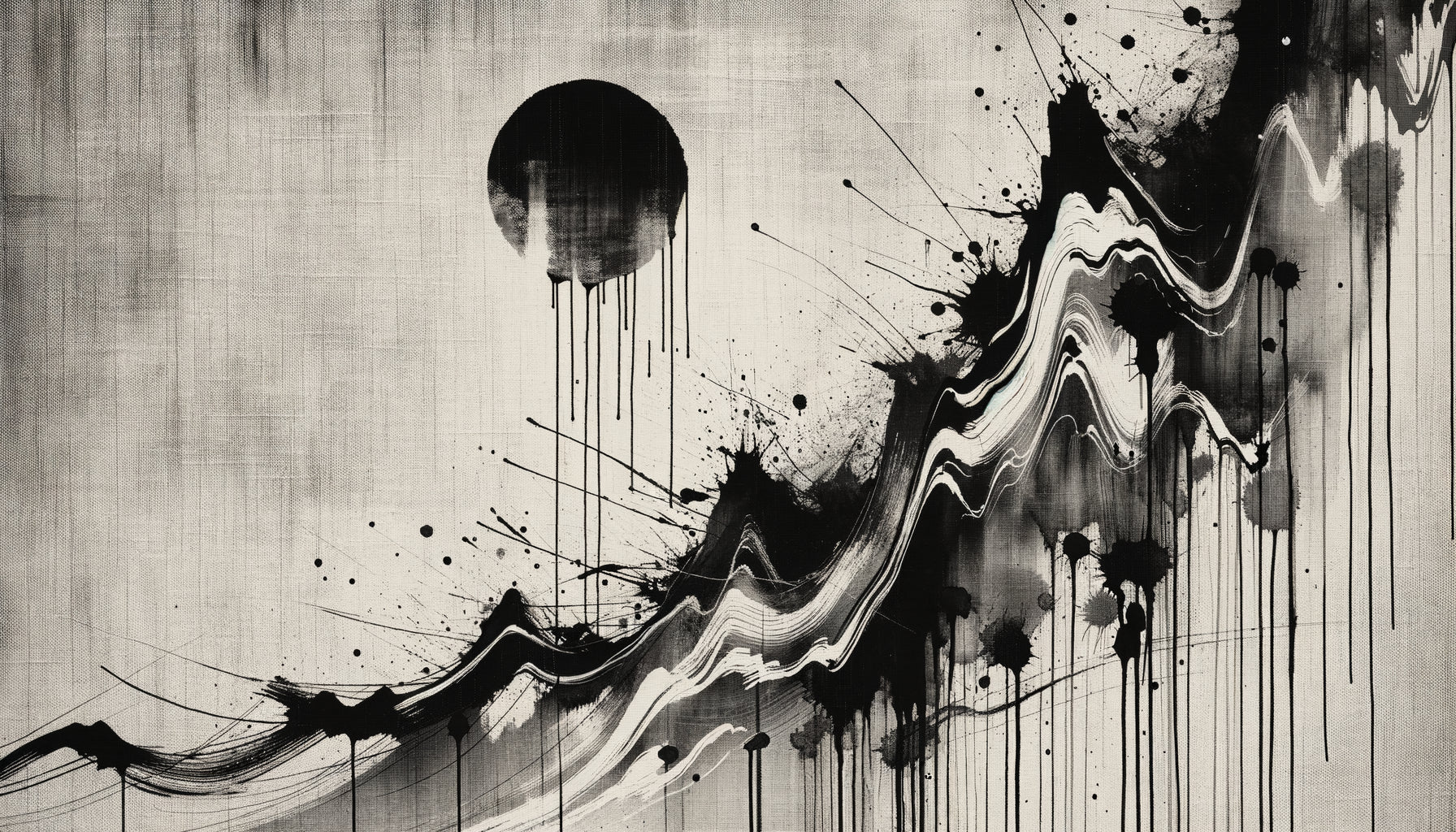
This dimension has profoundly influenced American action painting and abstract expressionism. Jackson Pollock, with his gestural drippings, intuitively joins this conception of the gesture as a trace of an inner state. Mark Tobey, who studied Chinese calligraphy and was interested in Islamic art, develops his 'white writing': canvases covered with interlacing lines that directly evoke Arabic calligraphic compositions.
Art critic Michel Tapié will speak of 'informal art' to describe these works where the process counts as much as the result. This idea, revolutionary in the West in the 1950s, was at the heart of Arabic calligraphy practice since the 8th century. The master calligrapher Ibn Muqla already codified perfect proportions in the 10th century, but insisted that technical mastery must give way to the inspiration of the moment.
The direct influence on great masters
Henri Matisse, settled in Nice, collects embroidered fabrics with calligraphy. His late cutouts, these organic shapes that float in space, dialogue with the spatiality of calligraphic compositions. The 'Jazz' series shows this influence: abstract forms, a visual rhythm, an economy of means that recalls illuminated manuscripts from the Arab world.
Joan Miró explicitly acknowledges his debt to Arabic calligraphy after visiting the Alhambra in Granada. His canvases from the 1960s-70s, with their floating signs, sensual curves, and mysterious commas and periods, create a non-verbal visual language directly inspired by Eastern calligraphic practices.

Negative space: the revolution of emptiness
One of the deepest lessons that Western abstraction has received from Arabic calligraphy concerns the treatment of space. In a traditional calligraphic composition, white is not a passive background: it is an active element that breathes, structures and gives meaning to the full.
This conception was totally foreign to classical Western painting, where space had to be filled, furnished, justified by perspective. Arabic calligraphers, on the contrary, cultivate an elegance of emptiness. The spaces between letters are as important as the letters themselves. This breathing of the composition creates a subtle visual dynamic.
Kazimir Malevich, with his 'White Square on White Background' (1918), pushes this logic to its paroxysm. But before him, Arabic calligraphic compositions had already explored this tension between presence and absence, between form and void. The diwani style, with its complex interweaving punctuated by breaths, or the naskhi style with its delicate balance, already offered this spatial dance.
From sacred to universal: abstraction as a spiritual language
Arabic calligraphy is inseparable from the Quranic text. For centuries, calligraphers have sought to make the invisible visible, to give form to divine speech. This spiritual quest through abstraction has found a profound echo among Western artists seeking transcendence.
Kandinsky, in his treatise 'Concerning the Spiritual in Art' (1910), theorizes exactly what Arabic calligraphers were practicing: the idea that a pure form, freed from any reference to the visible world, can directly touch the soul of the viewer. Colors and forms become a universal language, beyond words, beyond cultures.
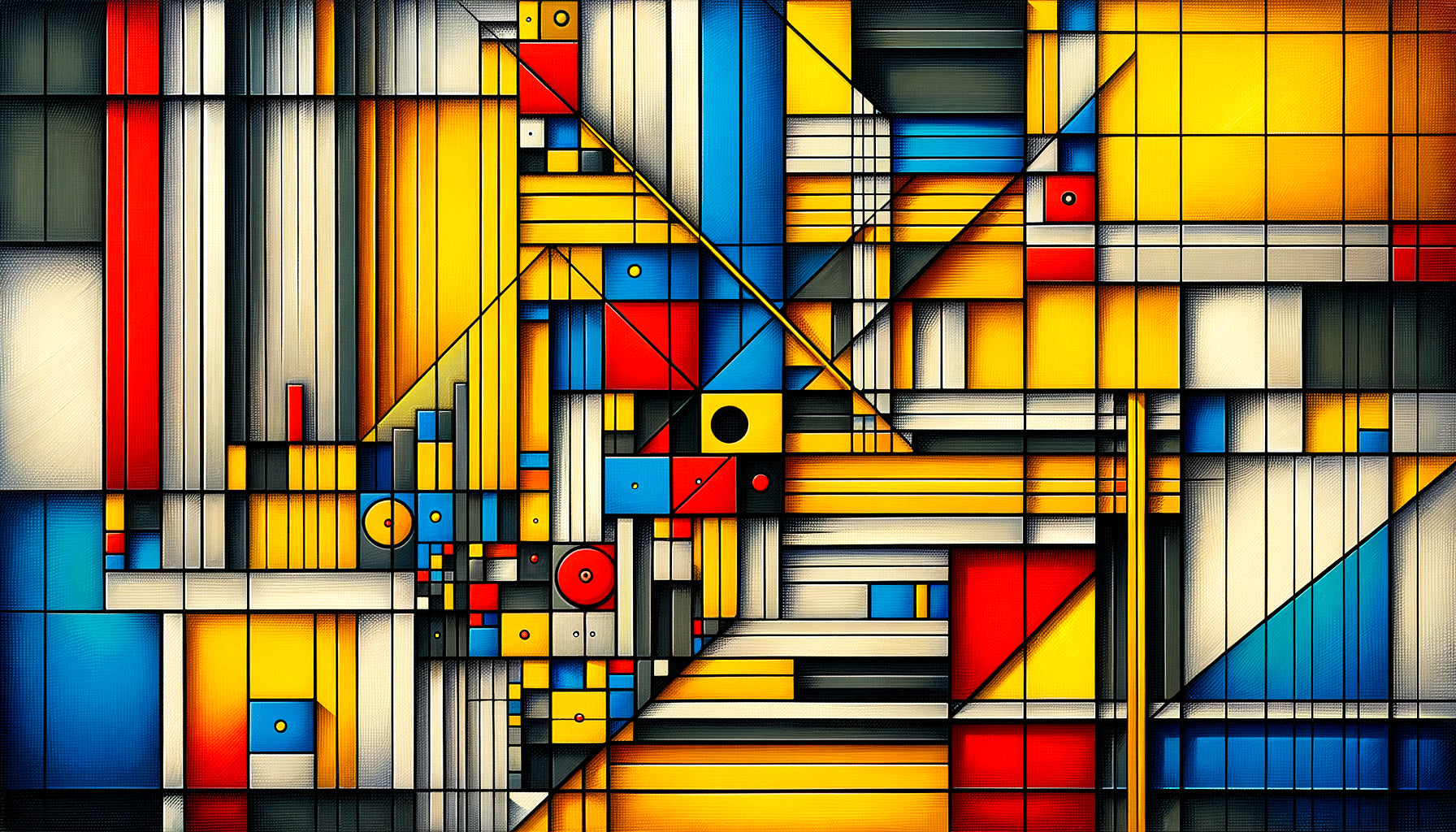
Piet Mondrian, with his orthogonal grids and primary colors, also seeks a universal harmony. His approach joins that of calligraphers who, by stylizing writing until geometric abstraction (as in the square Kufic style), sought to touch the spiritual essence beyond immediate readability.
The contemporary dialogue continues
Even today, this influence persists. Artists such as Rachid Koraïchi or eL Seed bring together traditional calligraphy and contemporary art. Their works show that this bridge between Arabic calligraphy and abstraction was not a superficial borrowing but a profound recognition of a spiritual kinship.
In contemporary art galleries, we find the same search: for a visual language that transcends words, that speaks directly to intuition, that makes pure form a vector of emotion. Monumental installations of abstract calligraphy, performances where the artist traces signs in space, all this prolongs this century-old dialogue.

Integrate this heritage into your space
This encounter between Arabic calligraphy and Western abstraction is not just a page in the history of art. It offers concrete keys to thinking about contemporary decoration. A successful abstract work, like the calligraphic compositions that inspired it, creates a balance between dynamism and serenity.
In a modern interior, an abstract piece works exactly like calligraphy in a traditional Islamic space: it structures the space without cluttering it, it brings a contemplative dimension without imposing a figurative subject, it leaves room for personal interpretation. Organic curves, black-and-white contrasts, and rhythmic compositions recall this millennial aesthetic while remaining perfectly contemporary.
The mistake would be to try to 'understand' an abstract work as you would decipher a text. The lesson of Arabic calligraphy is the opposite: let yourself be touched by the gesture, the rhythm, the energy. A successful abstract composition dialogues with your intuition, not with your intellect. It transforms a wall into a point of meditation, just as calligraphies transformed the walls of mosques into spaces of contemplation.
Let this visual poetry into your daily life
Discover our exclusive collection of abstract paintings that prolong this millennial dialogue between calligraphic gesture and pure emotion, to transform your walls into spaces of contemplation.
Abstraction as a bridge between cultures
What this story reveals is that abstract art is not purely a 20th-century Western invention. It's a millennial tradition that the West rediscovered by looking to the East. Arabic calligraphy taught modern artists that it was possible to create beauty, emotion, and spirituality without ever representing the visible world.
This lesson remains strikingly relevant. In a world where figurative images saturate us, where screens bombard us with representations, abstraction offers refuge. It provides a visual breathing space, just as calligraphy did in ancient manuscripts: islets of contemplation in an overfull world.
Understanding this genealogy enriches our gaze. Before a Rothko canvas, with its large areas of vibrant color, one can think of calligraphers who, through their games of ink and emptiness, sought to make the invisible visible. Before Cy Twombly's nervous scribbles, one can recognize the distant echo of calligraphic exercises where repetition of gesture leads to transcendence.
Western abstract art owes an immense debt to Arabic calligraphy. Not a debt of superficial borrowing, but a debt of profound revelation: that another kind of art was possible, an art where pure form, gesture and space could be enough to touch the human soul. This encounter between two traditions has enriched both, creating a universal visual language that continues to speak to us today.
Frequently Asked Questions
Why is Arabic calligraphy considered abstract?
Arabic calligraphy is abstract in the sense that it transforms letters into autonomous visual forms that appeal to the eye and emotion before being intellectually read. Even for someone who masters Arabic, a calligraphic composition first functions as a pure visual experience. The great master calligraphers have developed styles where stylization is so advanced that readability becomes secondary. This is exactly what Western abstract artists were looking for: to create forms that speak directly to sensitivity, without going through the recognition of familiar objects. Arabic calligraphy proved that an art could be non-figurative while being deeply meaningful and moving.
Which Western artists were directly influenced by Arabic calligraphy?
Among the major artists, Paul Klee was transformed by his trip to Tunisia and integrated calligraphic elements into his visual vocabulary. Henri Matisse collected objects decorated with calligraphy and drew inspiration from them for his cutouts. Mark Tobey studied calligraphy directly and created his style of 'white writing'. Joan Miró recognized the influence of the Alhambra and Arabic calligraphy on his floating signs. Kandinsky, although more influenced by Russian art and icons, integrated this oriental idea that a pure form can have spiritual significance. The influence was sometimes direct (travels, studies) and sometimes diffuse, transmitted by the spirit of the times and colonial exhibitions which showed Islamic art in Europe.
How to integrate this calligraphic aesthetic into my decoration?
The spirit of Arabic calligraphy in your interior is not necessarily hanging authentic calligraphies (which can seem exotic in a modern context). It's more about choosing abstract works that share its principles: compositions with beautiful contrasts between full and empty, organic curves that evoke the gesture of the calligrapher, graphic black and white that structure space. Favor pieces where the gesture is visible, where you feel the movement of creation. Avoid accumulation: as in an illuminated manuscript, let the space breathe around the work. A single strong piece on a clean wall creates more impact than a multiplication of elements. It is this economy of means and spatial breathing that gives all the elegance to the calligraphic aesthetic transposed into our contemporary interiors.