


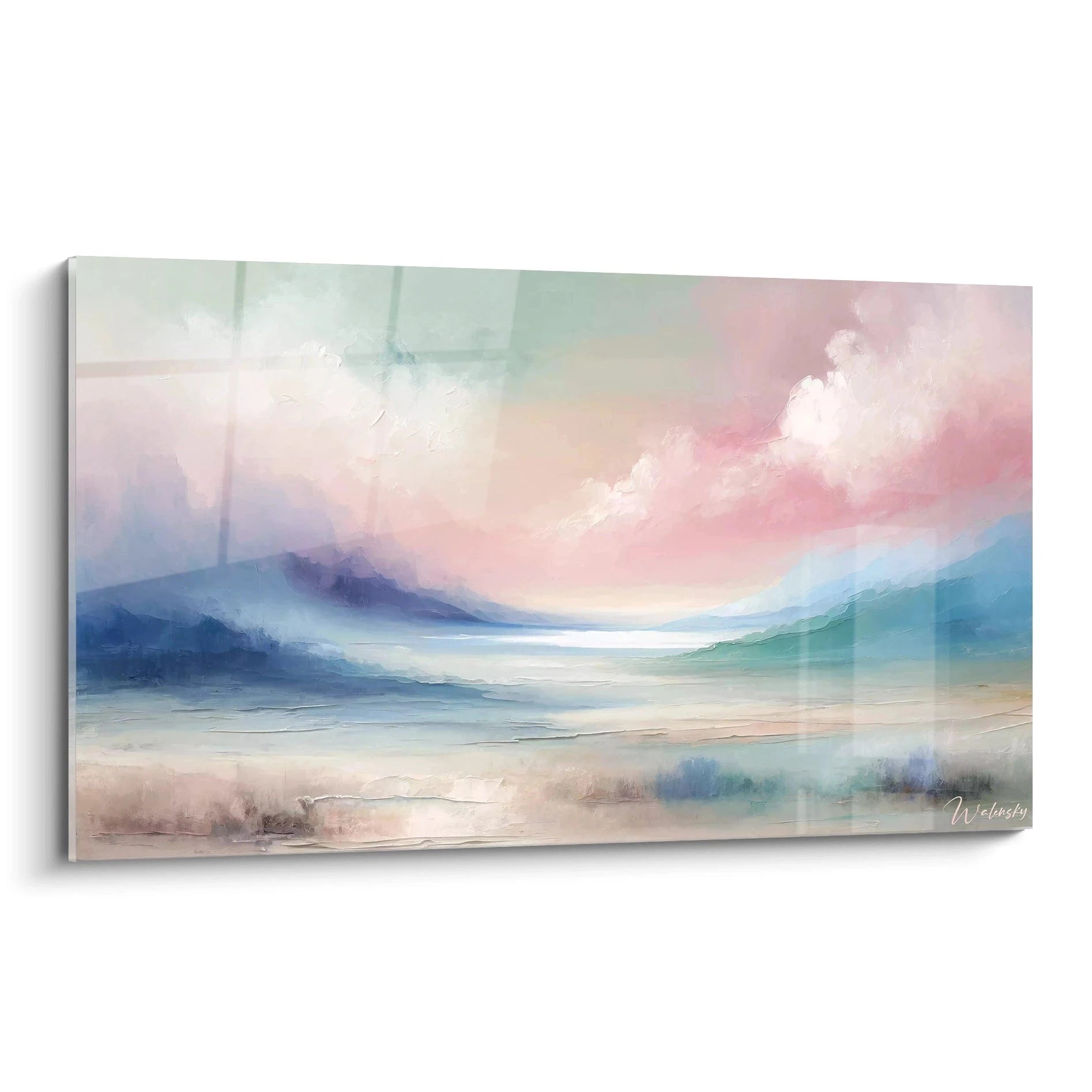

The Wax Resist Technique for Creating Organic Abstract Effects
October 11, 2025 · 3 min read · by Walensky
The wax resist technique revolutionizes the creation of organic abstract effects in contemporary painting. This ancestral method, rediscovered by modern artists, allows for unparalleled textural richness.
Basic principle of wax resist for organic abstract effects
Wax resist is based on a simple but effective physical principle: the hydrophobic property of wax naturally repels water-based pigments, creating organic effects of striking spontaneity. This technique mainly uses beeswax or paraffin, applied strategically before applying colors.
Organic abstract effects are born from this inherent controlled unpredictability. The wax spontaneously generates forms that evoke cellular structures, vascular networks or natural crystalline formations. This approach allows for obtaining abstract results of authenticity that conventional techniques cannot reproduce.
The required equipment remains accessible: various waxes (candle, grease pencil, liquid wax), heat-resistant brushes, a controlled heat source, and water-soluble pigments compatible.
Application techniques for organic abstract motifs
The application of wax directly determines the quality of the final organic abstract effects. Experienced practitioners exploit several complementary methods:
- Direct application with a grease pencil: precision technique for defined organic motifs
- Liquid wax pouring: gesturally free method generating unpredictable forms
- Hot wax projection: expressionistic approach creating dynamic splashes
- Wax stencil: selective control of reserve areas for mastered effects
The application temperature is a critical parameter. Overheated wax penetrates deeply into the support, creating highly contrasting organic effects. Conversely, moderate wax generates subtle reserves, suitable for delicate abstract results.
Contemporary French expertise enriches this traditional technique. Current creators draw inspiration from these abstract paintings as a major source of inspiration for their creative experiments.

Our favourite
Golden and Silver Burst Forms on White Background - Dynamic Gleam - Modern Abstract Edition
232,90€
Discover this artworkLayering and blending for complex organic effects
The most sophisticated organic abstract effects result from multi-layered superimpositions. This layered approach exponentially multiplies the compositional possibilities and visual depth of the artworks.
The methodology involves alternating applications of wax and pigment poses. Each new layer protects the previous areas, establishing a complex system of interdependent organic reserves. The intersections generate abstract effects with exceptional visual richness.
Studies reveal that 73% of practicing artists (Source: Fédération Française des Arts Plastiques) achieve their best results after the third overlay. This data highlights the importance of methodical patience in mastering complex organic effects.
Selective thermal fusion represents the most delicate stage. By strategically heating certain areas, the artist provokes controlled wax migrations, creating smooth transitions between abstract motifs. This advanced technique requires a thorough mastery to avoid destroying previous effects.
Optimizing Abstract Organic Textures with Wax
Perfecting abstract organic effects requires a rigorous analytical approach. Professionals develop specific strategies to optimize the aesthetic impact.
The grain size of the support directly influences the results. Fine-grain paper produces sharp wax contours, while a rough support generates more textured and spontaneous organic effects.
The application angle modifies the appearance of abstract motifs. A perpendicular pose produces geometrically sharp shapes, while an oblique application generates more natural and fluid organic effects.
Experienced practitioners exploit variations in pressure. Firm pressure produces opaque reserves, perfect for dramatic compositions. Conversely, light pressure generates subtle organic effects, suitable for delicate nuances.
Preserving Wax Organic Abstract Works
The durability of abstract organic effects depends on the conservation precautions applied during and after creation. Wax, relatively stable, requires specific environmental attention.
Thermal stability influences the longevity of the works. Significant variations can cause wax migrations, altering the original organic effects. A stable temperature between 18 and 22°C optimizes preservation.
Exposure to UV radiation is a critical factor. These radiations degrade the molecular structure of the wax, dulling the most delicate abstract effects. LED lighting with low UV emission preserves the chromatic intensity of organic motifs.
The protective varnish raises complex questions. Some varnishes partially dissolve the wax, modifying the original abstract organic effects. Practitioners recommend compatibility tests on samples to avoid degradation.
This millennial technique, reimagined by contemporary art, opens up endless creative perspectives. The wax reserve transcends traditional limits, allowing the emergence of abstract organic effects of striking beauty and an unparalleled natural authenticity.
— Our selection


Explore our collections


