Mark Rothko’s artistic revolution rests on a radical approach to pure color as the sole means of emotional expression. Rothko did not consider himself a colorist but declared "using the intimate life of colors" to create what he defined as pictorial “dramas.” His mastery of composition transforms colored rectangles into veritable emotional cathedrals, forever revolutionizing the approach to contemporary abstract art.
Mark Rothko Color Layering Technique
Rothko’s technical genius lies in the application of multiple translucent layers - up to 20 layers - creating a vibrant and luminous depth. This revolutionary layering technique revolves around several fundamental principles that distinguish his method from all his contemporaries.
Preparing the support constitutes the first crucial step in his creative process. Each canvas was previously coated with a layer of fine glue on which Rothko applied the first color, the background color, in a very thin layer. This methodical base allows for optimal adhesion necessary for subsequent layers.
Application of thin layers represents the heart of his technique. He immediately continued painting areas of colors over different areas of colors, each almost transparent, always applying a limited amount of pigments mixed with a solvent such as turpentine. This meticulous approach transforms pure color into living matter, creating what critics call a “supernatural inner light.”
Controlled layering generates unique visual effects. It is not uncommon to guess under one color the vestiges of another, moreover the rectangles never completely cover the previous layers which can be very clearly distinguished. This technique allows to obtain nuances of infinite chromatic richness where the gaze can absorb itself in a limitless contemplation.
Rothko Pure Color Rectangular Composition
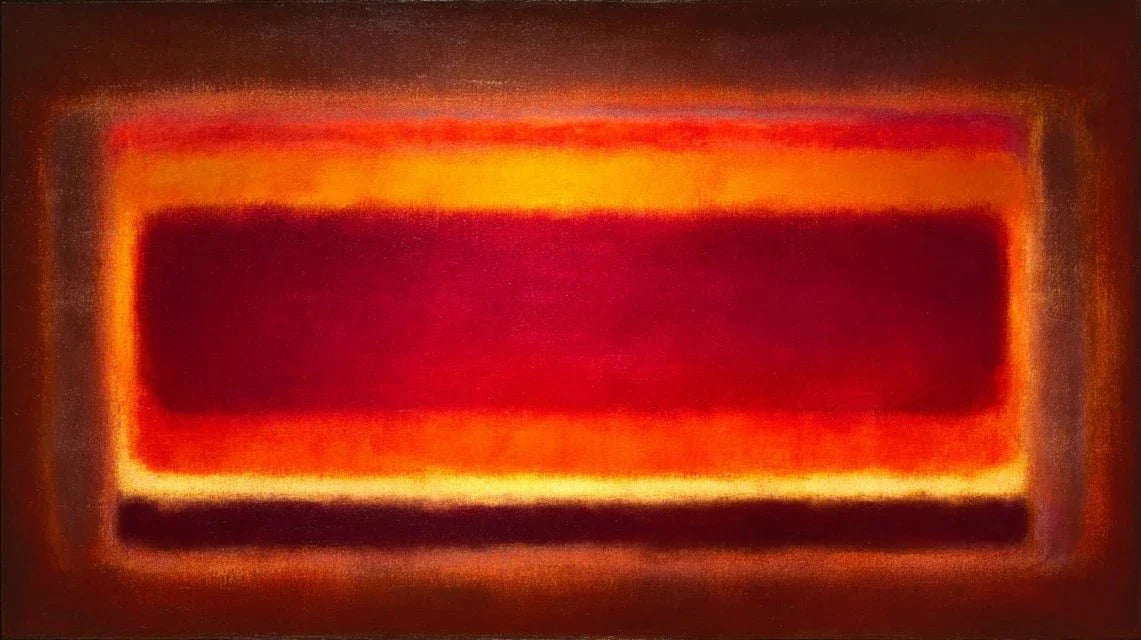
Composition rothkian reaches maturity around 1949 with the definitive adoption of the horizontal rectangular format. Rothko develops his distinctive visual language based on large floating rectangular blocks, arranged in superposition over colored backgrounds. This apparent simplification conceals an extraordinary technical and conceptual complexity.
Compositional elements follow a rigorous logic. Blurred outlines and floating forms create blocks of color that are never sharp; they seem to melt into the background, reinforcing the illusion of weightlessness. This technique generates an optical vibration effect that animates the composition and suggests a cosmic breathing.
Monumental format is an essential element of emotional impact. Large-format works allow viewers to feel like they are part of the work, as Marcus Rothkowitz chose this format because he wanted his viewers to feel like they were part of the work. This spatial immersion transforms the pictorial experience into a true spiritual journey.
These contemporary abstract paintings still draw inspiration from this revolutionary approach to composition through pure color, testifying to the lasting influence of his creative method.
Color Emotional Applications Mark Rothko
Rothko designs his works as dramas, as a representation of an eternal tragedy, using color as a vehicle for expressing "fundamental human emotions - tragedy, ecstasy, destiny." His color applications follow a precise emotional logic, calculated to produce specific psychosomatic effects on the viewer's perception.
Expansive warm colors dominate his first mature period. In the 1950s, Rothko used vibrant colors, particularly reds and yellows, expressing energy and ecstasy. These bright tones create a radiating expansive effect that literally envelops the viewer in an intense emotional aura.
The transition to dark marks the evolution of his color palette. From the mid-1950s, he employed dark blues and greens, representing a growing darkness in his personal life. This evolution reflects his increasing spiritual quest for a more introspective and meditative expression.
Optimization Pure Color Composition Effects
The maximum emotional effectiveness of Rothko's compositions results from careful optimization of each visual parameter. Rothko draws inspiration from a very wide range of colors which he chooses according to the expression they convey and intensifies through contrasts between them.
Optical vibration is one of the major technical secrets. The deliberately blurred outlines create an optical vibration effect that animates the composition and suggests cosmic breathing, transforming the static work into a dynamic experience. This revolutionary technique makes it possible to obtain surfaces with infinite color richness.
Spatial immersion guides every compositional decision. The choice of large format aims to transport the viewer into a universe far from any oppression, we will be led to immerse ourselves in a world at once joyful and full of mystery. This search for technical excellence in service of emotion through pure color makes Mark Rothko one of the undisputed masters of modern art, whose influence endures in contemporary creation.