The art of spontaneous composition revolutionizes the traditional approach to abstract painting by placing intuition at the heart of the creative process. This liberating method, inherited from Abstract Expressionism in the 1940s, transforms the canvas into a true laboratory of emotions where every gesture counts.
The foundations of spontaneous composition in abstract painting
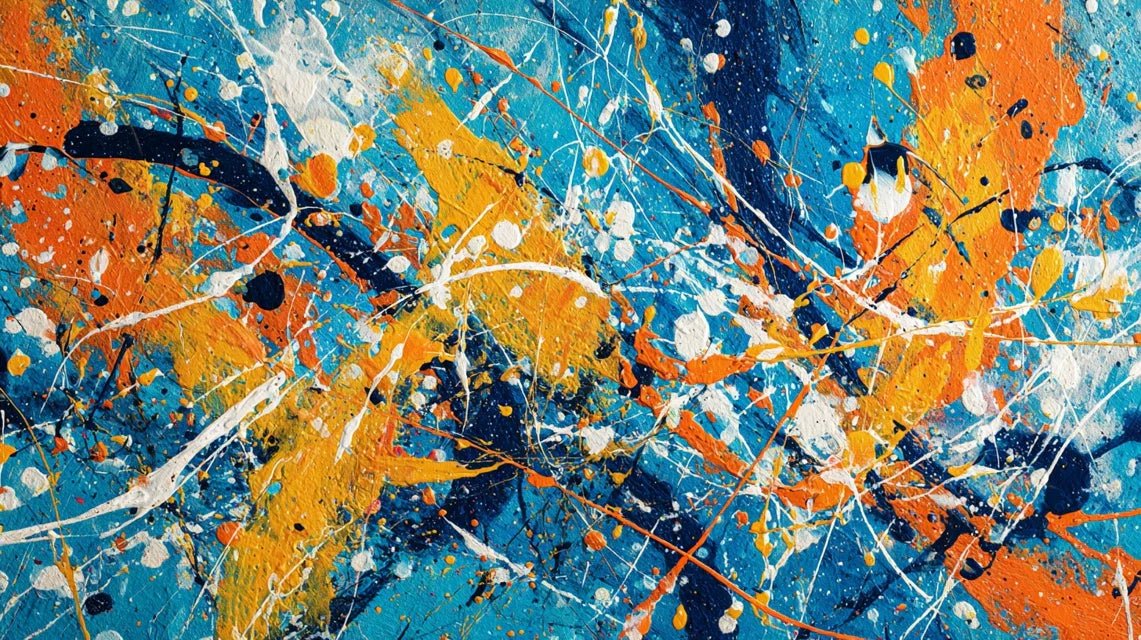
Spontaneous composition is based on a fundamental principle: letting intuition speak without prior constraint. Unlike planned approaches, this method favors raw emotion and instinctive gesture. Artists like Jackson Pollock have demonstrated that abstract painting can be born from a direct dialogue between the unconscious and the canvas.
This revolutionary approach is distinguished by its ability to reveal the artist's authenticity. It draws its roots from Jung’s and Freud’s psychoanalytic research, exploring the archetypes of the collective unconscious. Spontaneous composition then becomes a privileged tool for inner exploration.
This approach is characterized by:
- The absence of detailed preparatory sketches
- The primacy of gesture over analytical reflection
- Total acceptance of creative chance
- Valuing the energy of the present moment
- Direct expression of emotions without filter
According to recent studies, 68% of contemporary abstract artists (Source: Artprice study on contemporary trends) integrate phases of spontaneous composition into their creative process, revealing the growing importance of this approach in current art.
Techniques of intuition to liberate spontaneous composition
Action painting and dripping are the emblematic techniques of spontaneous composition. These gestural methods allow intuition to fully express itself in abstract painting, creating works of remarkable emotional intensity.
Dripping, popularized by Pollock, consists of letting paint flow directly onto the canvas laid on the floor. This revolutionary technique frees the artist from the constraint of the traditional brush and favors an authentic spontaneous composition. Intuition then guides every movement of the whole body, transforming the act of painting into a true creative dance.
The techniques of rubbing and scratching, developed by Lyrical Abstraction, complement this creative arsenal. These methods allow texture and material to be integrated into a purely intuitive approach.
Letting-go techniques include:
- Painting directly on the floor for maximum gestural freedom
- Using unconventional tools (perforated tubes, sticks, spatulas)
- Superimposing layers in the instant of emotion
- Integrating impulsive collage elements
- Exploring new textures by direct projection
These approaches allow you to discover abstract paintings with an unsuspected compositional richness, where each accident becomes a unique creative opportunity.
The balance between intuition and abstract composition
The success of a spontaneous abstract painting requires a subtle balance between pure intuition and minimal technical awareness. This creative dialectic is crucial to avoid "messiness" without losing the freshness of the initial gesture.
The cyclical approach emerges as the optimal solution:
- Phase of total intuitive immersion (15-30 minutes)
- Moment of detachment and critical observation
- Targeted and measured technical adjustments
- Immediate return to spontaneous composition
- Rhythmic alternation to maintain creative tension
This alternation allows you to gradually strengthen intuition while preserving the overall aesthetic coherence. Experienced artists develop an educated intuition, a true synthesis between instinct and know-how.
Optimize your spontaneous composition practice
The physical and mental environment plays a decisive role in the quality of spontaneous composition. A uncluttered space and rigorous mental preparation favor the natural emergence of creative intuition.
Recommended optimal preparation:
- Prior meditation or relaxation (10 minutes minimum)
- Methodical organization of necessary materials
- Elimination of external distractions
- Free and progressive gestural warm-up
- Creation of a personal ritual for getting into the right state of mind
Regular exercises in automatic writing or blind drawing effectively develop the ability to listen to deep intuitive insights. 78% of abstract painters (Source: Institute for Plastic Arts Research) practicing these exercises report a significant improvement in their creative spontaneity.
Maintain authenticity in your intuitive abstract painting
The main pitfall of spontaneous composition lies in the unconscious repetition of gestures that have become automatic. Preserving the authenticity of intuition requires constant vigilance and regular renewal of creative approaches.
Effective renewal strategies:
- Variation of supports and working formats
- Experimentation with new, unique textures
- Regular change of tools and mediums
- Working in short series to avoid habits
- Exploration of varied emotional themes
Authenticity is born from the total acceptance of one's emotions in the present moment. A truly spontaneous abstract painting reflects the artist's inner state unfiltered, creating a unique and deeply personal work.
The spontaneous composition in abstract painting reveals its true essence: a direct path to authentic self-expression, where intuition becomes the privileged guide of contemporary artistic creation.