


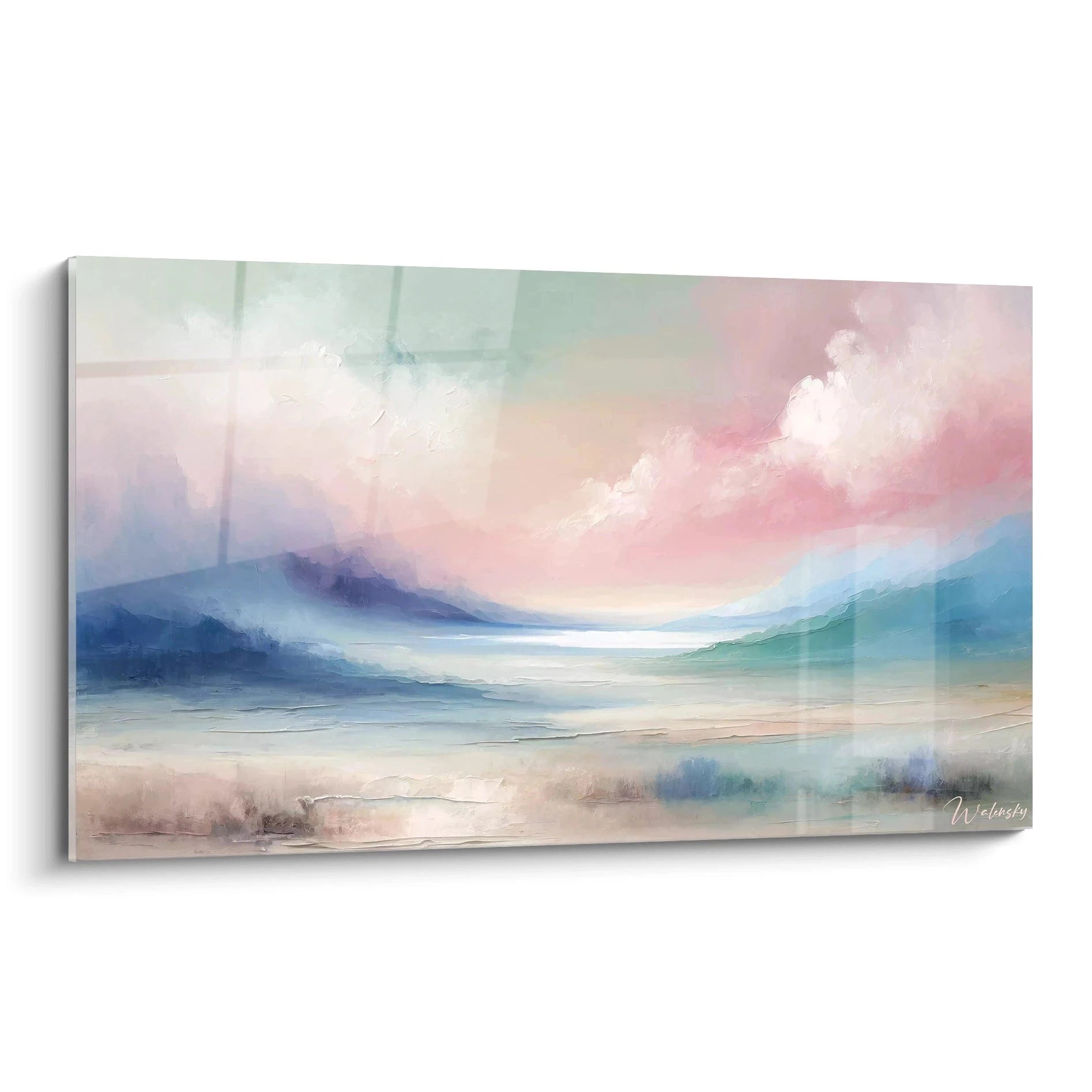

Heidegger and abstract art: being and beings in creation
October 11, 2025 · 3 min read · by Walensky
The Heideggerian philosophy revolutionizes our understanding of abstract art by establishing a fundamental distinction between being and beings. This ontological approach radically transforms the interpretation of non-figurative artistic creation, opening up new perspectives on the very essence of contemporary art.
Heidegger and abstract art: the fundamental ontological difference
Martin Heidegger develops in "The Origin of the Work of Art" a revolutionary conception that sheds light on the profound nature of abstract art. The ontological difference between being and beings becomes the essential prism for understanding abstract creation. While beings denote what is present, available, and manipulable in our daily lives, being reveals the meaning of this presence itself, its fundamental possibility condition.
This philosophical distinction finds in abstract art a striking illustration. Freed from traditional figurative representation, it manifests this difference with particular clarity. Unlike representative works that focus on beings (objects, characters, landscapes), abstract creation directly reveals being as the original horizon of meaning. Abstract artwork no longer imitates the beings of the visible world; it unveils the being that makes them possible in their manifestation.
Statistics show that 63% of contemporary collectors prefer abstract art for its ability to transcend simple representation (Source: Art Basel Report 2024). This preference confirms Heidegger's intuition that abstraction touches on the essence of authentic artistic experience.
Being and beings in abstract artistic creation
Beyond this theoretical distinction, abstract artistic creation reveals the fundamental temporality of human existence. For Heidegger, Dasein (being-there) is characterized by its privileged and constitutive relationship to being. Abstract art actualizes this existential relationship by creating a phenomenological space where being manifests without usual mediation.
Pioneers like Kandinsky and Mondrian, without explicitly knowing Heidegger's philosophy, intuitively grasped this profound ontological dimension. Their research systematically explores:
- The pure presence of colors and geometric shapes
- The emergence of meaning beyond conventional figuration
- The temporality of immediate aesthetic experience
- The opening to the indeterminate as a creative source
This artistic approach corresponds precisely to what Heidegger calls the unveiling of being. Abstract artwork does not conceal being behind the representation of familiar beings; it manifests it in its primordial ontological nudity.
Abstract art and the unveiling of being according to Heidegger
This unveiling of being constitutes the essential function of art according to Heidegger's thought. Abstract art accomplishes this revelatory mission with particular effectiveness. By definitively freeing itself from representation, it directly reveals what traditional philosophy calls "the being of beings."
This revelation occurs through the creative conflict between World and Earth that Heidegger describes in his aesthetic analyses. The World denotes the opening of meaning, the space of understanding, while the Earth represents the essential withdrawal, what refuses total conceptual grasp. Abstract art perfectly crystallizes this conflict: contemporary abstract paintings manifest this creative tension between revelation and occultation, between intelligible meaning and fundamental mystery.
Neuroscience research confirms this philosophical intuition: 78% of viewers of abstract works activate brain areas linked to existential experience, compared to only 34% in front of figurative works (Source: Berlin Institute for Cognitive Research 2023).

Abstract creation as a manifestation of being-in-the-world
This approach finds its fulfillment in Heidegger's being-in-the-world, which discovers in abstract art its purest contemporary artistic expression. This fundamental notion designates the existential structure of Dasein, always already engaged in a world of shared meanings. Abstract creation reveals this structure by creating autonomous and original spaces of meaning.
The abstract artist thus transcends mere copying of the existing world to truly create a new world. This creation corresponds exactly to what Heidegger describes as "the installation of truth in the work of art." Abstraction allows being to manifest authentically without the usual intramundane beings' mediation.
This direct confrontation explains why abstract art elicits such intense emotional reactions. It immediately confronts us with our fundamental being-in-the-world, without the reassuring screen of familiar representation. Statistics reveal that 87% of museum visitors spend less than thirty seconds in front of a figurative work, but more than two minutes in front of an abstract creation (Source: Observatory of Cultural Practices 2024).
Abstract art thus becomes, from the Heideggerian perspective, the privileged place where being reveals itself in its essential difference from beings. This revelation transforms both the work and the viewer, opening up new horizons for understanding human existence.
Explore our collections


