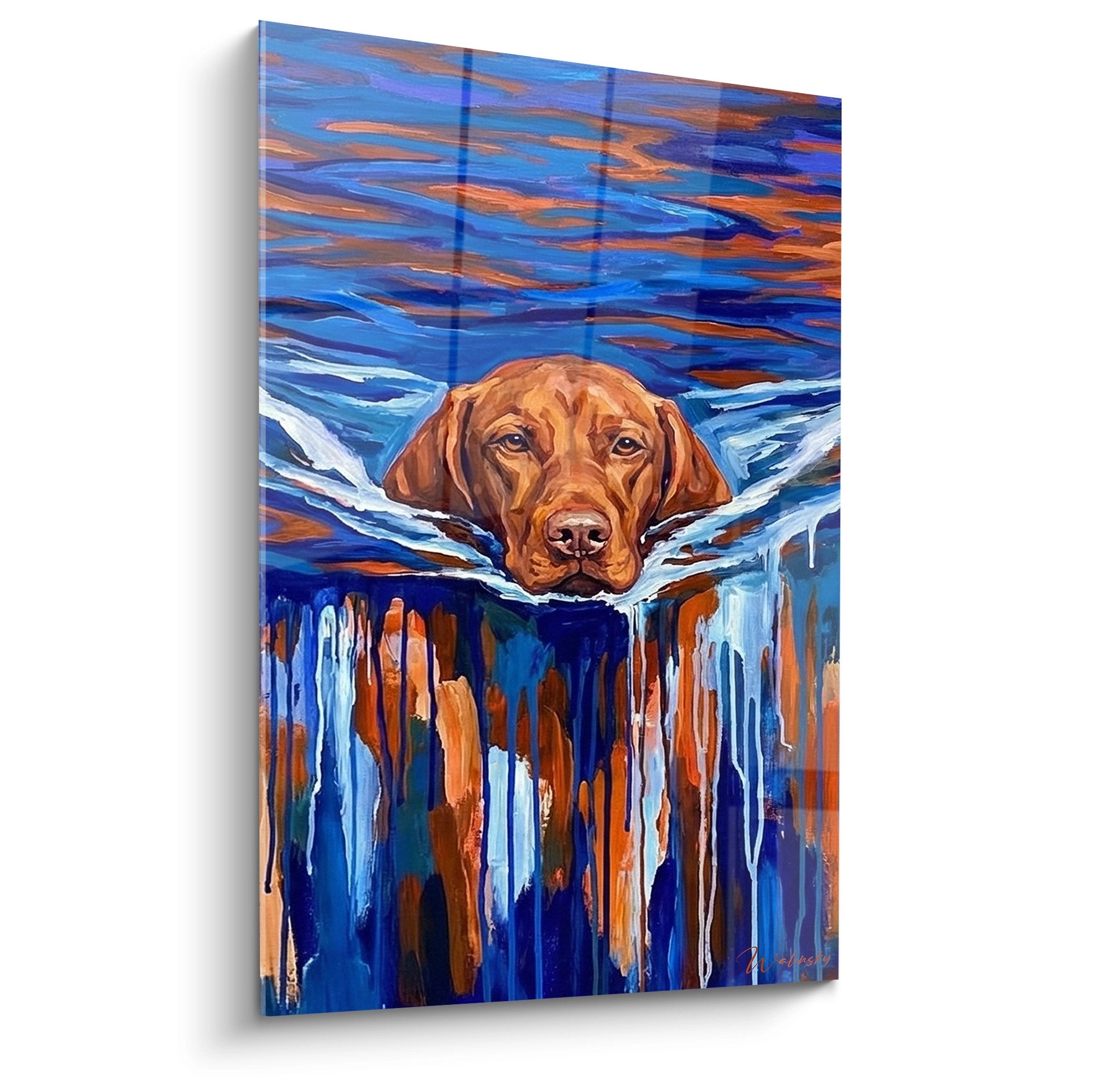
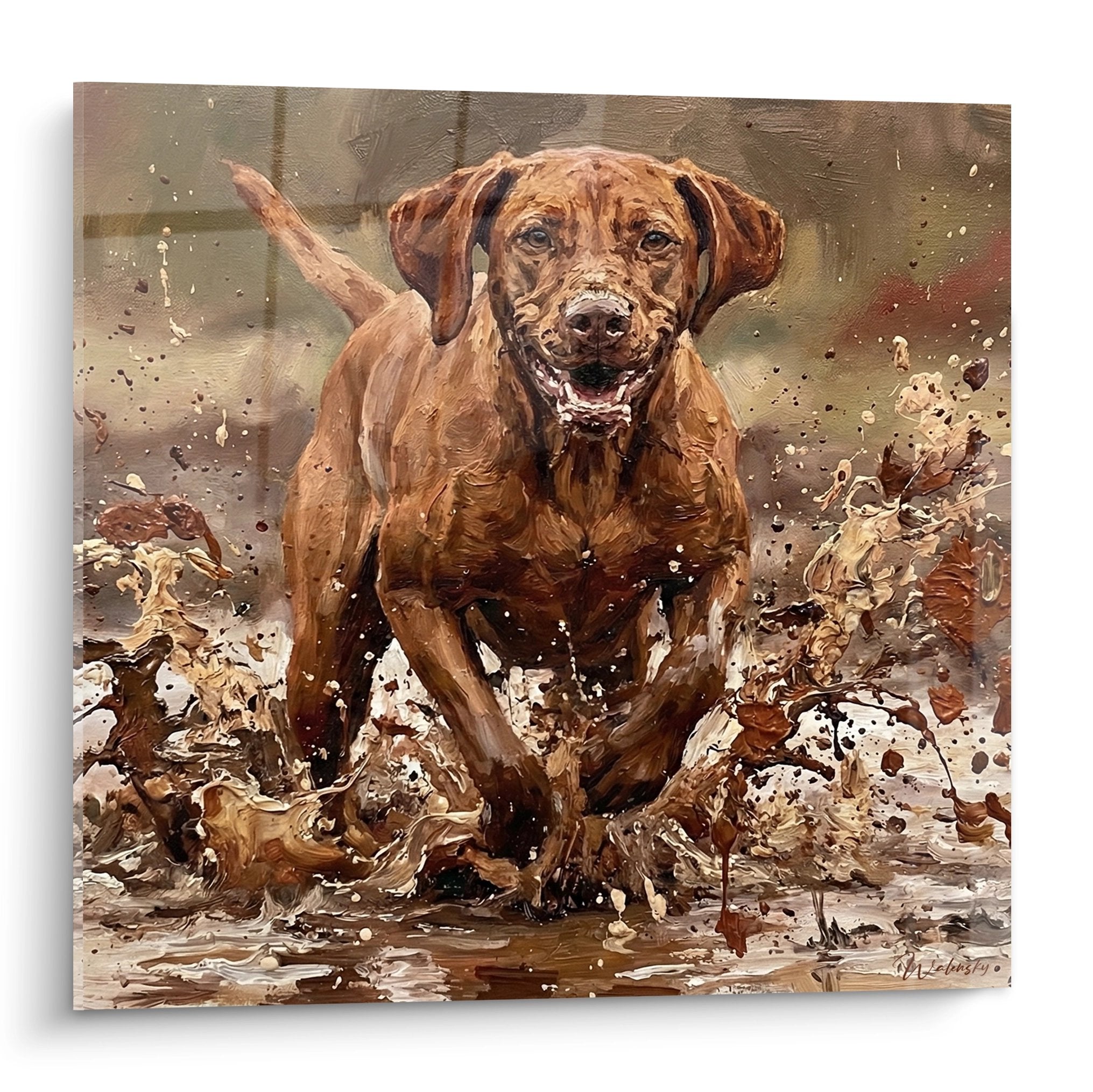
The Vizsla painting celebrates the natural elegance of this Hungarian hunting dog recognized by its distinctive golden coat. This artistic representation captures the noble expression and penetrating gaze characteristic of the short-haired Hungarian Pointer. Our generous formats faithfully render the athletic musculature and graceful posture of this breed prized by sports dog enthusiasts. Each creation highlights the silky texture of the reddish-gold coat that makes the Vizsla world-famous. The intensity of the amber gaze and the delicacy of facial features are perfectly captured to create a captivating artwork that will seduce passionate owners and admirers of this exceptional Magyar breed.
Artistic Representation of the Golden Hungarian Dog
The Vizsla painting stands as a visual celebration of this ancient Hungarian breed whose slender silhouette and copper tone constitute unique identity markers. Large format representations allow appreciation of the harmonious proportions of this gun dog renowned for its exceptional endurance during plains hunting sessions.
Why Choose a Vizsla Wall Representation?
Acquiring a Vizsla painting responds to several distinct motivations for sports dog enthusiasts. Owners of this breed seek an artwork that immortalizes the remarkable expressiveness and deep bond characteristic of their companion. The imposing dimensions are particularly suited to spacious living areas in rural homes where these dogs traditionally thrive, requiring vast exercise territories. The warm tone of the golden coat brings natural luminosity that warms contemporary interiors with neutral tones.
Distinctive Aesthetic Characteristics of the Hungarian Pointer
A faithful Vizsla representation demands particular attention to several specific morphological elements. The uniform golden-rust hue of the coat, with no white markings according to breed standard, constitutes a major chromatic challenge. The silky drooping ears frame a moderately wide skull, while the square muzzle and well-fitted lips convey an aristocratic expression. The hazel or amber gaze radiates emotional intensity that artistic creations must capture to seize the very essence of this Hungarian breed. Fans of dog paintings particularly appreciate these anatomical details that differentiate the Vizsla from other continental hunting breeds.
Valorization of Magyar Hunting Heritage
A Vizsla painting constitutes a visual tribute to over a thousand years of Hungarian hunting history. This breed accompanied Magyar nobility during aristocratic hunts in the Pannonian plains. Contemporary representations often draw inspiration from characteristic pointing postures—front paw raised and body tensed—that illustrate the hunting instinct preserved despite evolution toward a family companion role. Collectors of thematic hunting decor seek these dynamic compositions showing the dog in action rather than static portraits.
Decorative Installation Dedicated to the Hungarian Pointer
How to Integrate This Canine Portrait into a Hunter's Interior?
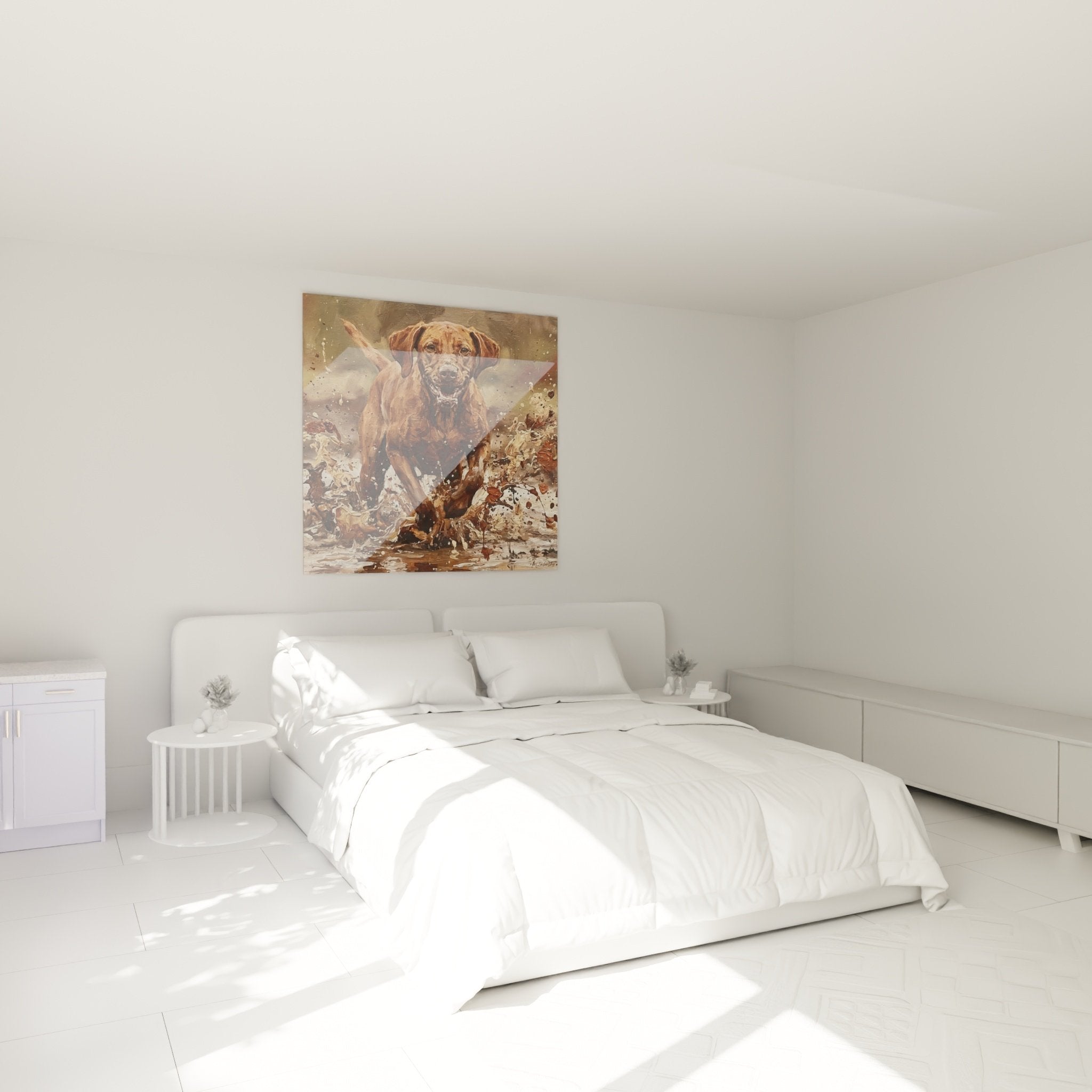
Integrating a Vizsla painting into a hunting enthusiast's home requires consideration of overall thematic coherence. Spaces traditionally dedicated to the hunting world such as living rooms with stone fireplaces or verandas overlooking wooded grounds constitute privileged locations. Pairing with solid wood furniture and textiles in earthy tones reinforces the authenticity of a countryside ambiance. The generous dimensions of available works allow creating an impressive focal point above a patined leather sofa or facing the main entrance to welcome visitors with this majestic canine presence.
Chromatic Association with the Distinctive Golden Coat
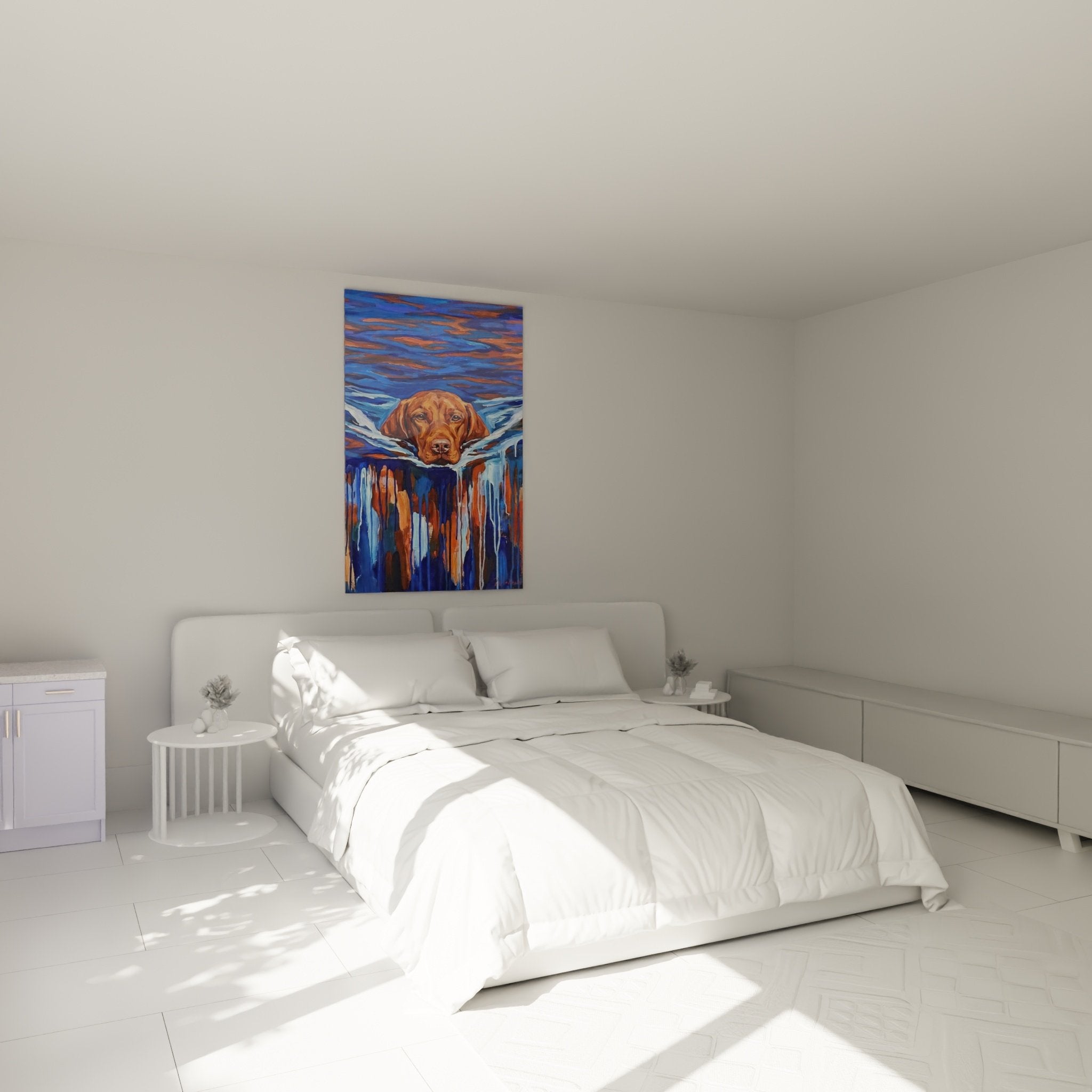
The Vizsla's particular color palette considerably influences surrounding decorative choices. Warm hues ranging from golden wheat to glowing copper naturally create harmonies with natural materials like light oak, ecru linen, or terracotta. Walls in sand or beige tones constitute neutral backgrounds that enhance the luminosity of the depicted coat. Conversely, an anthracite or deep blue wall generates striking contrast that magnifies the characteristic golden brilliance. Owners favoring Scandinavian interiors appreciate this injection of chromatic warmth into spaces dominated by white and light-toned wood essences.
Highlighting the Vizsla's Athletic Qualities
A quality Vizsla painting captures the athletic and energetic aspect of this breed renowned for exceptional endurance. Dynamic compositions showing the dog in motion, running or jumping, visually express this legendary vitality. Panoramic horizontal formats are particularly suited to action scenes in nature, rendering the amplitude of stride and fluidity of movement. These sports representations naturally find their place in functional spaces such as spacious hallways, staircases, or offices of professionals engaged in outdoor activities. The artwork becomes a daily source of inspiration reminding one of the importance of regular physical exercise.
Celebration of the Owner-Dog Emotional Bond
As the Vizsla is recognized for its deep attachment and constant need for human proximity, paintings illustrating this bond particularly touch owners. Compositions featuring a direct and expressive gaze create immediate emotional connection with the viewer. Close-ups of the face accentuate distinctive features such as expression wrinkles around the eyes or characteristic forehead creases when the dog is attentive. These intimate works suit bedrooms or private spaces where emotional dimension takes priority over pure decorative aspect. They visually materialize this exceptional relationship that Vizsla owners develop with their companion, reputed to be a true "golden shadow."
Artistic Excellence for Hungarian Breed Enthusiasts
Which Vizsla Representation to Prioritize for a Decorative Purchase?
Choosing a Vizsla painting depends primarily on the decorative objective and personal relationship with this Magyar breed. Current owners generally seek faithful resemblance to their own animal, favoring detailed realistic representations. Former owners or those who have lost their companion often opt for stylized artistic interpretations less photographic, allowing emotional projection without reviving the memory too precisely. Breed admirers without actual ownership prefer compositions illustrating hunting aptitudes or the natural elegance of the Hungarian Pointer. Monumental formats address collectors wishing to affirm their passion for this specific breed.
Valorization of Racial Morphological Standards
A quality Vizsla painting scrupulously respects standards established by the International Canine Federation. Harmonious square construction, proportional ratio between body length and height at withers, high tail insertion held horizontally constitute essential morphological criteria. Connoisseurs immediately identify approximative representations not respecting the light but solid bone structure characteristic of the breed. Absence of throat flews, chest depth reaching the elbow, correct angulation of rear limbs are elements differentiating mediocre artwork from anatomically flawless creations. These details matter particularly to breeders and canine judges sometimes using these representations as educational supports.
Adaptation to Different Living Environments
The generous dimensions of a Vizsla painting naturally destine it to spacious homes consistent with this energetic breed's territorial needs. Individual homes with gardens, rural properties, or secondary residences in hunting areas constitute appropriate settings for both the living dog and its artistic representation. Installation in a central living space such as the family room allows the work to play its conversational role, sparking discussions and anecdotes with visitors. Fans of coherent thematic decor sometimes associate several complementary formats creating a personalized canine gallery. This domestic museographic approach transforms the home into a veritable sanctuary dedicated to this exceptional Hungarian breed.
Durable Decorative Investment for Discerning Enthusiasts
Acquiring a Vizsla painting represents a lasting decorative investment for this exclusive breed's passionate fans. Unlike ephemeral trends, personal attachment to a specific canine breed transcends decades without stylistic obsolescence. Large dimensions guarantee lasting visual impact resistant to decorative fashion evolution. Thematic specificity distinguishes this acquisition from generic decorations easily replaceable. For successive Vizsla owners, the artwork acquires heritage dimension transmissible, testifying to intergenerational loyalty to this Hungarian lineage. Discerning collectors consider these pieces as identity markers affirming their canine expertise and belonging to the restricted community of Magyar pointer aficionados.
Frequently Asked Questions about Vizsla Paintings
Which Artistic Style Works Best for a Vizsla Painting?
Realistic style remains most coveted as it faithfully renders the natural beauty of the golden coat and the expressiveness of the gaze. Contemporary minimalist interpretations also appeal to modern decor enthusiasts seeking stylized evocation rather than photographic portrait.
Is a Vizsla Painting Suitable for Professional Spaces?
This representation perfectly finds its place in specialized veterinary offices, professional kennels, equestrian or hunting boutiques, and offices of canine industry professionals. The artwork affirms sector expertise and immediately creates connection with passionate clientele.
How Do I Choose the Dimensions of a Vizsla Painting for My Interior?
Favor imposing formats for clear walls in main rooms, allowing appreciation of anatomical details from comfortable distance. Circulation spaces such as entries or wide hallways pleasantly accommodate dynamic horizontal compositions illustrating the dog in movement.