


Black and White Akita Inu Dog Wall Art
The Black and White Akita Inu Dog Painting captures the majesty of this legendary Japanese breed. Our collection celebrates the Akita Inu in monochrome art, highlighting its deep gaze, noble posture, and loyal character. Each artwork reveals the timeless beauty of this samurai guardian through refined graphic compositions. Perfect for lovers of Japanese dog wall decoration, this collection brings elegance and authenticity to your interior while paying homage to one of Japan's living symbols.
 Akita Inu on Rock at Sunset - Majestic Solitude - Akita Inu Edition233,90 €
 Black Akita Inu Silhouette with Red Moon Wall Art - Nocturnal Howl - Akita Inu Edition233,90 €
 Stylized Dog Wall Art with Japanese Calligraphy - Traditional Art - Akita Inu Edition213,90 €
Explore further
In Black and White Akita Inu Dog Wall Art
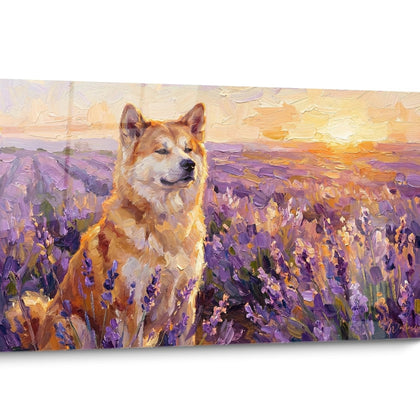
All about Black and White Akita Inu Dog Wall Art
- Presentation Akita Inu Black and White Painting
- Monochrome Aesthetic
- Minimalist Japanese Art
- Contemporary Decor
The black and white Akita Inu painting represents the perfect alliance between the majesty of this iconic Japanese breed and the timelessness of monochrome contrast. This artistic interpretation captures the essence of the Akita through a reduced palette that magnifies the nobility of its gaze, the texture of its dense coat, and the elegance of its characteristic posture. Unlike colored representations, this refined version highlights the interplay of light and shadow that sculpts the distinctive features of this breed, revered in Japan for centuries. Every shade of gray reveals the quiet strength and natural dignity of the Akita Inu, transforming your space into a contemplative gallery where canine art meets absolute graphic refinement.
The Visual Power of Pure Contrast in Canine Representation
The black and white Akita Inu painting stands as a radical artistic statement that transcends usual decorative conventions. The absence of color is not a limitation, but an amplification of the visual presence of this majestic breed. The accentuated contrasts between dark and light areas create a sculptural depth that literally makes the animal emerge from its support.
How does monochrome reveal the Akita’s unique facial structure?
The black and white palette acts as an exceptional anatomical revealer for this breed with strongly marked features. The shadows emphasize the powerful musculature of the neck, the characteristic width of the skull, and those triangular erect ears that define the recognizable silhouette from a mile away. The areas of light capture the penetrating intelligence of the gaze, this almost human expression that has fascinated Akita Inu enthusiasts forever. This pure graphic treatment is particularly suitable for sleek architectural interiors where every decorative element must justify its presence by its expressive strength.
The psychological impact of monochrome tones on spatial perception
A large-scale black and white Akita Inu painting generates an immediate visual anchor in any environment. This chromatic neutrality allows for harmonious integration with various wall palettes, from pristine white to anthracite gray, without creating any color dissonance. Interior design professionals prefer this monochrome approach for spaces requiring a strong canine presence without visual overload. The photographic or illustrative composition in black and white also accentuates the timelessness of the work, escaping the fleeting trends of seasonal hues.
Artistic techniques specific to the monochrome rendering of dense fur
The representation of the Akita’s double and thick coat in black and white requires a particular mastery of gradations and tonal transitions. Each hair seems individualized thanks to the subtle variations of gray that mimic the real texture of this Nordic fur. Artists specializing in this interpretation use techniques of cross-hatching, pointillism, or high-definition photographic rendering to restore the characteristic density of the winter coat of this breed adapted to harsh climates. This attention to detail transforms the painting into a virtual tactile exploration, inviting the eye to scan each area with the same fascination as a physical caress.
For those who appreciate this refined approach, the universe of geometric Akita Inu painting offers a complementary alternative where angular shapes meet the same philosophy of visual simplicity.
Japanese Heritage Reinterpreted by Monochrome Aesthetics
The Akita Inu black and white dog painting naturally fits into the Japanese artistic tradition where chromatic restraint has been a path to expressing the essential for centuries. This breed, a national treasure of Japan since 1931, finds in monochrome treatment a profound cultural resonance that evokes sumi-e inks and ukiyo-e prints in grayscale.
The wabi-sabi philosophy applied to animal representation
The Japanese concept of beauty in imperfection and simplicity finds a perfect embodiment in the Akita Inu black and white painting. The elimination of chromatic distractions allows to focus attention on the raw and authentic presence of the animal, on its natural asymmetries and this imperfect dignity that characterizes living beings. This aesthetic approach rejects ornamental overload to celebrate pure form, the right line, the necessary shadow. Collectors sensitive to this philosophy seek imposing formats where the physical grandeur of the support amplifies this message of expressive sobriety, creating a fascinating visual paradox between monumentality and minimalism.
Why associate the Akita Inu with traditional Japanese graphic style?
This breed embodies Japanese cultural identity as much as Mount Fuji or cherry blossoms. Representing it in black and white establishes an aesthetic bridge between tradition and modernity, between the ancestral art of printmaking and contemporary visual codes. The clean lines, the frank contrasts and the balanced composition recall the engravers of the Edo period while perfectly adapting to current design interiors. This temporal duality gives the painting a rare decorative versatility, capable of dialoguing as well with Scandinavian furniture elements as with authentic zen-inspired pieces.
Lovers of this cultural dimension will also appreciate the symbolic richness of the Japanese Akita Inu dog painting, which explores other facets of this Japanese artistic heritage.
Black and white as a universal language transcending cultural borders
Paradoxically, by adopting a monochrome palette deeply rooted in Japanese aesthetics, the Akita Inu black and white painting acquires international readability. This chromatic neutrality facilitates its integration into Western, Scandinavian or Mediterranean decorative contexts without requiring cultural translation. The expressive force of the contrast and the immediate recognition of the canine silhouette are sufficient to create the desired visual impact. Professional spaces such as architects' offices, showrooms or urban lofts prefer this approach which simultaneously evokes Japanese rigor and the timeless elegance of European black and white photography.
Staging Strategies to Maximize the Decorative Impact of Monochrome
The installation of a Akita Inu black and white painting of large size requires specific spatial reflection to fully exploit its graphic potential. Unlike colorful works that attract the eye with their chromatic vibrancy, this monochrome representation captures attention by its contrasted density and sculptural presence.
What wall backgrounds amplify the power of monochrome contrast?
The decorative success of this type of painting largely depends on the dialogue it establishes with its wall support. On a pure white wall, the black and white painting generates a graphic window effect, like an opening onto a purified parallel universe. This configuration is suitable for bright spaces where the artwork can absorb and redistribute natural light through its tonal variations. On a medium gray wall, the effect is reversed: the white areas of the painting seem to radiate while the blacks recede into the depths, creating an illusory three-dimensionality. Dark anthracite or black walls offer the most dramatic staging, where only the light areas of the fur and gaze emerge from the surrounding darkness, a technique particularly appreciated in contemporary art galleries.
Directional lighting as a revealer of depth in monochrome
A large-format black and white Akita Inu painting extraordinarily benefits from directional lighting that accentuates its own internal shadow play. Directional spotlights placed in height create mobile reflections on the surface that animate the static composition, giving the impression that the animal breathes and moves according to the hours of the day. This museum lighting technique transforms the painting into an almost living installation, particularly spectacular in reception rooms where the effect must impress visitors. The absence of colors avoids chromatic distortions caused by variable light temperatures, guaranteeing constant visual fidelity regardless of the light source.
To explore other visual atmospheres with the same breed, the Akita Inu sunset painting offers a warm and colorful alternative, while the Akita Inu autumn painting celebrates golden seasonal tones.
Decorative associations and aesthetic complements for monochrome environments
The chromatic neutrality of the black and white Akita Inu painting opens up multiple decorative association possibilities. It naturally dialogues with raw materials such as polished concrete, brushed steel or bleached wood, creating an industrial-organic aesthetic coherence. Natural linen, gray wool or black leather textiles reinforce this atmosphere of understated luxury. Discerning collectors sometimes accompany it with traditional Japanese ceramic raku decorative objects or monochrome ikebana compositions, establishing a coherent cultural narrative. In radical contemporary interiors, this painting can also serve as a soothing counterpoint to neon lighting installations or colorful designer furniture, its monochrome permanence acting as a stabilizing visual anchor.
Why choose a large format for a monochrome Akita Inu painting?
Generous dimensions exponentially amplify the impact of a black and white composition. A large format allows you to appreciate the infinite tonal subtleties that truly lie within a good monochrome rendering: these dozens of shades of gray that differentiate the fur areas, these almost imperceptible transitions between shadow and light on the muzzle, these reflections in the iris that capture the soul of the animal. At a small scale, these refinements disappear; in a large format, they become the subject of contemplation itself. This monumentality also transforms the function of the painting: from a decorative element, it becomes an artistic installation structuring the architectural space itself.
Lovers of varied artistic interpretations will discover with interest the Akita Inu expressionist painting, which revisits this breed with a radically different pictorial approach. For an overview of all decorative possibilities, the complete Akita Inu painting collection offers a comprehensive panorama of available styles.
Would a black and white Akita Inu painting suit colorful interiors?
Absolutely. Its chromatic neutrality works as a visual respite in color-saturated environments, offering a soothing anchor point where the eye can rest. The monochrome even amplifies the surrounding colors by simultaneous contrast effect, making adjacent tones more vibrant and pure.
What is the ideal viewing distance for a large black and white Akita Inu painting?
For an imposing format, a distance equivalent to 1.5 times the diagonal of the painting allows to embrace the overall composition while perceiving the details. However, the close approach reveals textural subtleties invisible from afar, making this type of work a visual experience that evolves according to the observer's position.
Does the black and white rendering accentuate certain physical characteristics of the Akita Inu?
Undeniably. The monochrome intensifies the perception of the prominent bone structure, the width of the chest and this proud posture characteristic of the breed. The contrasts also reveal the layered texture of the double coat in a way that color can sometimes mask under a uniform appearance.


