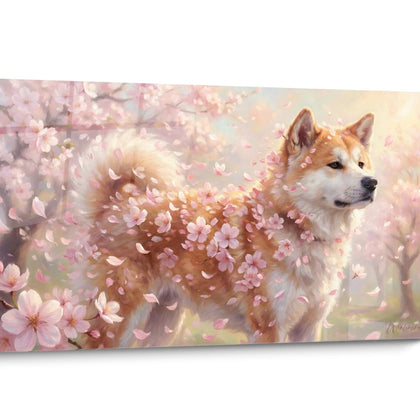
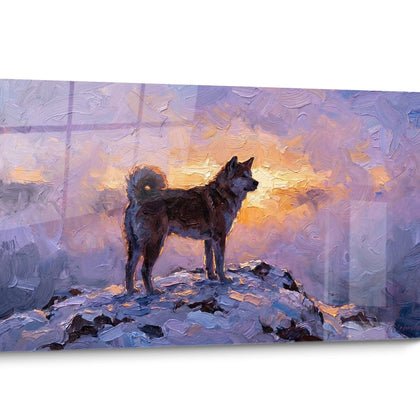
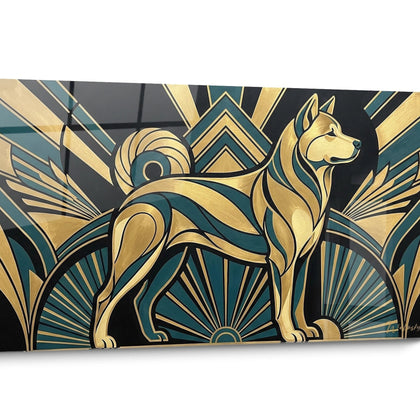
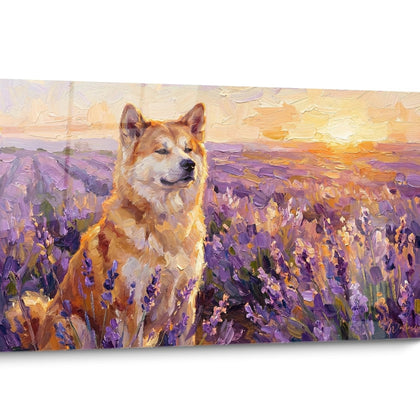
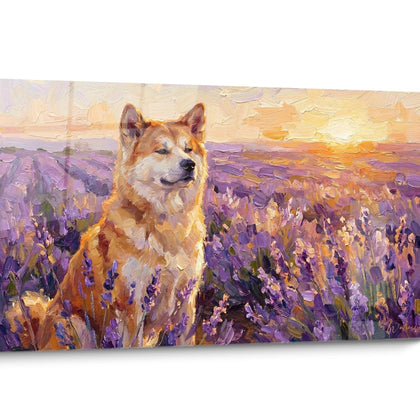
The expressionist Akita Inu dog painting represents a bold fusion between the nobility of the legendary Japanese dog and the emotional intensity of the expressionist movement. This large-scale wall artwork captures the profound soul of this emblematic breed through energetic brushstrokes, saturated hues, and subjective distortion that transcends simple realistic representation to reach the very essence of the Akita Inu's character.
The Chromatic Intensity of Expressionism Applied to the Akita Inu
The expressionist Akita Inu dog painting is characterized by a palette of non-naturalistic colors that challenges conventional animal representation. Unlike classical depictions, expressionism frees color from its descriptive function to make it a vector of raw emotion. The Akita's coat can thus feature saturated hues ranging from vermillion red to ultramarine blue, creating a visual tension that immediately captures attention in contemporary living spaces.
Why choose expressionist tones to represent the Akita Inu?
Arbitrary and emotionally charged colors allow transcendence of simple visual documentation to express the loyal and protective temperament of this Japanese breed. Brilliant yellows can symbolize unwavering loyalty, while deep violets evoke the ancestral dignity of the Akita. This chromatic approach transforms canine representation into an emotional statement that resonates with collectors seeking a visceral connection with their wall decoration.
The dynamics of contrast in animal expressionism
Expressionist artists apply violent chromatic juxtapositions that create a distinctive optical vibration particularly striking in large formats. The Akita's muzzle can be treated in pure complementaries, generating visual energy that animates the surrounding space. This technique transforms the piercing gaze characteristic of the breed into a magnetic focal point, ideal for large walls requiring dominant visual presence. If you also appreciate other stylistic approaches, discover our geometric Akita Inu dog painting collection that offers a complementary structural vision.
Pictorial matter and expressive gesture
The impasto characteristic of expressionism grants a tactile and sculptural dimension to the painting's surface. Visible and directional brushstrokes translate the powerful musculature of the Akita, its latent movement, and imposing physical presence. This pictorial materiality captures light in changing ways throughout the day, creating dynamic dialogue between the artwork and its architectural environment. Monumental formats amplify this effect, transforming the wall surface into a vibrant energy field.
Expressionist Symbolism and Cultural Heritage of the Akita Inu
The expressionist Akita Inu dog painting establishes a fascinating bridge between the early twentieth-century European artistic movement and the ancestral Japanese symbolism of this venerated breed. Expressionism, with its quest for emotional authenticity and rejection of academic conventions, finds natural resonance in the noble and independent nature of the Akita. This cultural convergence produces works that simultaneously dialogue with the history of Western art and Japanese spiritual traditions.
How does expressionism amplify the spirituality of the Akita Inu?
The Akita Inu holds a sacred place in Japanese culture as a spiritual guardian and symbol of absolute loyalty. The expressionist approach, with its intentional distortion and emotional intensity, allows visualization of this immaterial dimension that photographic representations cannot capture. Disproportionate eyes, rendered with touches of pure color, become portals to the dog's soul, transforming the work into a visual meditation on transcendent fidelity. This symbolic depth particularly suits spaces of contemplation and interiors seeking spiritual dimension.
Expressive distortion serving canine character
Expressionist artists intentionally deform anatomical proportions to express profound psychological truths. An elongated muzzle can accentuate the legendary vigilance of the Akita, while oversized triangular ears evoke its listening capacity and constant environmental awareness. These formal freedoms create monumental presence far exceeding the simple physical size of the painting, generating considerable psychological impact in large residential or professional spaces. For a different approach to cultural representation, explore our Japanese Akita Inu dog painting.
What role does texture play in emotional expression?
The rough and worked surface characteristic of expressionism creates a tactile analogy with the dense coat of the Akita Inu. Superimposed layers of matter mimeticallythe double fur of the breed, establishing sensory coherence between subject and technique. This correspondence reinforces the emotional authenticity of the work and creates a multisensory experience that engages the viewer beyond simple visual contemplation. Large formats allow full appreciation of this textural richness that progressively reveals itself through successive viewings.
Decorative Impact and Architectural Presence of the Expressionist Akita Inu Painting
The expressionist Akita Inu dog painting functions as a dramatic focal point capable of entirely structuring an architectural space's ambiance. Its bold palette and visual energy generate radiance that influences the perception of the entire room. In contemporary lofts, minimalist spaces, or eclectic interiors, this large-scale wall artwork creates a stimulating visual break that energizes the atmosphere and asserts a singular decorative identity.
Which spaces benefit most from expressionist intensity?
Environments with generous volumes and natural luminosity allow the expressionist painting to fully deploy its visual potential. Cathedral-like living rooms, monumental entrance halls, or professional reception spaces constitute ideal settings where the chromatic energy of the work can dialogue with architecture without visual saturation. The imposing presence of the Akita, amplified by expressionist treatment, immediately establishes a visual hierarchy that guides the eye and structures spatial circulation. This organizational capacity particularly suits open spaces requiring strong visual markers.
The interaction between expressionism and contemporary furniture
The expressionist Akita Inu dog painting creates dynamic chromatic dialogues with dominant neutral palettes in contemporary design. Architectural grays, refined whites, and natural furniture tones serve as a backdrop that amplifies the impact of the work's saturated colors. This complementarity allows introduction of emotional and organic dimension into environments risking otherwise mineral coldness. For warmer atmosphere, also discover our autumn Akita Inu dog painting with enveloping seasonal tones.
How do light variations transform the expressionist work?
The thick pictorial matter and characteristic impastos interact spectacularly with changing light intensity and angle throughout the day. Morning's raking light accentuates brushstroke relief, creating micro-shadows that reveal the artist's gesture. Midday zenith lighting intensifies saturated colors, while evening's warm light creates unprecedented chromatic harmonies. This variability transforms the painting into a living element that continuously evolves, fully justifying its positioning in daily-use living spaces with high frequency. If you seek specific twilight atmospheres, our sunset Akita Inu dog painting offers an alternative atmospheric choice.
Visual balance in multiple wall compositions
The intensity of the expressionist Akita Inu painting requires thoughtful compositional strategy when integrated into a wall gallery. Its dominant visual energy functions ideally as a central piece surrounded by more contemplative works creating visual breathing room. Large formats allow solo installation that legitimately occupies space without requiring accompaniment, thus simplifying decorative scenography while maximizing impact. To explore other stylistic approaches, consult our complete Akita Inu dog painting collection. Lovers of refined compositions will also appreciate our black and white Akita Inu dog painting for creating graphic counterpoints.
Is an expressionist Akita Inu dog painting suitable for professional spaces?
Absolutely, the visual energy and symbolic presence of the expressionist Akita creates a memorable impression in reception areas, executive offices, or meeting rooms. The work communicates values of loyalty, vigilance, and emotional authenticity particularly relevant for business identities centered on trust and excellence.
How to preserve the chromatic intensity of an expressionist Akita Inu dog painting?
Avoid direct exposure to UV rays that can alter the saturated pigments characteristic of expressionism. Positioning perpendicular to intense natural light sources preserves chromatic vibrancy while allowing optimal appreciation of the pictorial surface's textural variations throughout the day.
Why choose an expressionist Akita Inu dog painting rather than a realistic representation?
The expressionist approach transcends visual documentation to capture the emotional and spiritual essence of the Akita Inu. This psychological depth creates a visceral connection that endures beyond initial aesthetic impact, transforming the work into a daily visual companion carrying renewed meaning and emotional intensity.


 Expressionist Akita Inu in Snow Wall Art - Winter Brilliance - Akita Inu Edition233,90 €
 Expressionist Akita Inu Painting in a Poppy Field - Floral Radiance - Akita Inu Edition233,90 €
 Akita Inu Canvas with Flamboyant Colors - Fire Storm - Akita Inu Edition233,90 €
 Red Dog with Golden Eyes on Expressionist Blue Background - Contemporary Canine Portrait - Akita Inu Edition233,90 €
 Joyful Akita Inu Painting on Swirling Green Background - Canine Happiness - Akita Inu Edition213,90 €