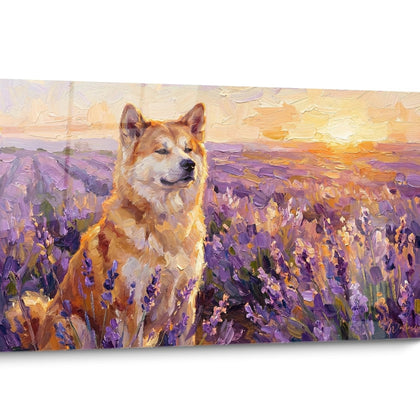
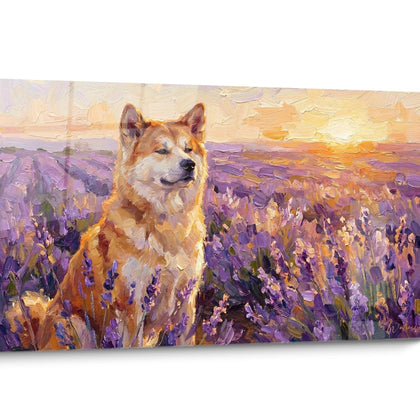
The Japanese Akita Inu dog wall art celebrates one of the most venerated canine breeds in the Japanese archipelago, a symbol of loyalty and courage for over four centuries. This artistic representation captures the essence of a living heritage, recognized as a natural monument of Japan since 1931, immortalizing the nobility of a legendary guardian of the Akita mountains. Each creation pays tribute to the fascinating history of this samurai companion, from deer and bear hunter in snowy forests to global cultural icon thanks to the moving story of Hachikō. Art lovers of Japanese culture and enthusiasts of this authentic breed seek large-format works capable of conveying the stoic dignity and majestic presence characteristic of the true Akita, while incorporating traditional Nippon aesthetic codes. These monumental wall representations transform your space into a genuine sanctuary dedicated to ancestral Japanese culture and the timeless beauty of this living national treasure.
The Soul of Ancestral Japan Through the Akita Inu
The Japanese Akita Inu dog wall art constitutes far more than a simple canine representation: it embodies a visual bridge between your contemporary interior and the feudal Japanese era when these noble guardians accompanied the warrior class. Originating from Akita Prefecture on the island of Honshū, this purebred represents one of the six original Japanese spitz breeds, classified as national treasures for their lineage preserved since the 17th century. Artistic creations dedicated to this majestic breed capture the distinctive features of the true Japanese Akita: broad forehead, triangular erect ears, tightly curled spiral tail, and noble expression marked by silent dignity.
How to recognize an authentic Akita Inu in an artistic representation?
The authenticity of a Japanese Akita Inu dog wall art is verified by several precise morphological characteristics that any connoisseur can identify. The moderately short muzzle with a pronounced stop, the small thick triangular ears angled slightly forward, and especially the thick tail carried proudly in a tight loop over the back constitute the distinctive visual markers. Quality works also respect the five traditional colors recognized by Japanese standards: red-fawn, sesame, brindle, pure white, and occasionally the very rare Akita pinto. A faithful creation will capture this unique facial expression called "kao" in Japanese, that profound and unshakeable gaze reflecting centuries of selection for bravery and unwavering loyalty.
The spiritual and symbolic dimension in Nippon iconography
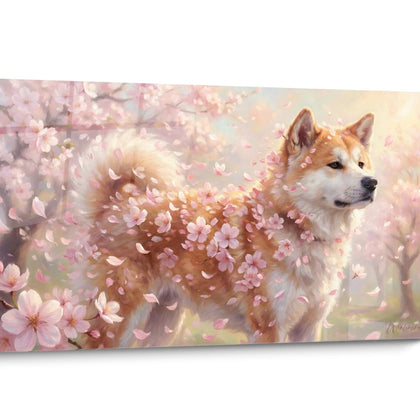
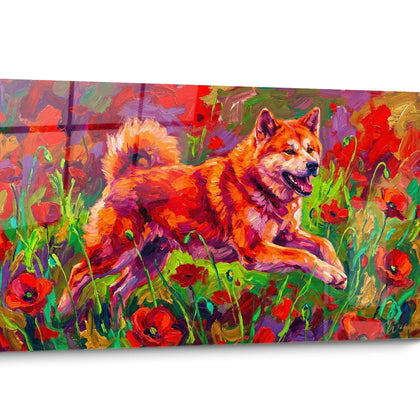
In Japanese tradition, the Akita Inu embodies fundamental values of bushidō: courage, loyalty, honor, and family protection. An Expressionist Japanese Akita Inu dog wall art explores these profound emotional dimensions through bold pictorial techniques that intensify the spiritual presence of the animal. Traditional representations often incorporate symbolic elements such as cherry blossoms (sakura) evoking the ephemeral beauty of life, or snow-capped mountains recalling the breed's geographic origins in the mountainous regions of the northeast. Collectors particularly seek compositions evoking the legendary story of Hachikō, that Akita who waited for his deceased master at Shibuya Station for nine years, becoming a universal symbol of absolute fidelity.
Traditional Japanese aesthetics applied to monumental formats
Japanese artistic principles of ma (negative space), wabi-sabi (beauty of imperfection), and yūgen (mysterious depth) find powerful expression in large-format representations of the Akita Inu. These monumental compositions exploit space with the same philosophy as traditional byōbu folding screens, creating visual breathing around the main subject. A Black and White Japanese Akita Inu dog wall art amplifies this minimalist approach by eliminating chromatic distraction to concentrate attention on the form, texture, and quasi-meditative presence of the animal, reminiscent of sumi-e ink techniques practiced since the 14th century.
Cultural Codes and Sacred Iconography of the Akita
The Japanese Akita Inu dog wall art functions as a vector of concepts deeply rooted in Nippon philosophy. Traditionally offered as a figurine at births to symbolize health, happiness, and longevity, the Akita possesses a quasi-spiritual protective dimension in Japanese culture. Shinto shrines in the Akita region have housed for centuries sculptured representations of these guardian dogs, positioned as komainu (protective lion-dogs) at the entrance of sacred spaces. This apotropaic function naturally transposed into contemporary decoration, where these wall works become symbolic guardians of the home, warding off negative energies according to traditional beliefs.
Why does the Akita Inu occupy a unique place in Japanese art?
Unlike other dog breeds, the Akita benefits in Japan from an almost mythological status dating back to the Edo period (1603-1868), when only aristocrats and samurai could own these prestigious dogs. Artists like Kuniyoshi immortalized these noble companions in their ukiyo-e prints, establishing a specific iconographic tradition. A contemporary Japanese Akita Inu dog wall art fits into this centuries-old artistic lineage, updating ancestral visual codes with modern techniques. Imposing formats allow restoring the impressive physical presence of these dogs that can reach 70 centimeters at the shoulder and emanate an aura of quiet power impossible to capture in small format.
Japanese seasons and seasonal representations of the Akita
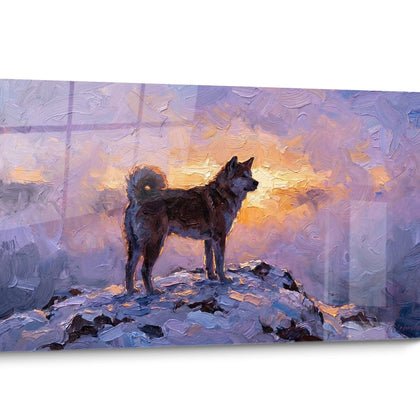
Japanese aesthetics attaches capital importance to the notion of season (kisetsukan), and Akita representations naturally follow this tradition. An Autumn Japanese Akita Inu dog wall art evokes the period of momiji (red maples) and harvests, associating the noble maturity of the animal with the copper tints characteristic of this contemplative season. These seasonal compositions allow you to visually renew your space according to natural cycles, a traditional Japanese practice aimed at maintaining harmony between domestic interior and cosmic rhythms. The Akita's dense coat, particularly majestic during cold months, also inspires winter representations evoking the snow-covered landscapes of its region of origin.
Sacred geometry and structured compositions
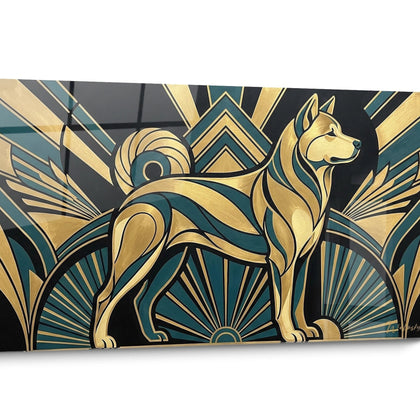
Traditional Japanese visual architecture is based on precise mathematical proportions and rigorous spatial organization inherited from Buddhist temples and zen gardens. A Geometric Japanese Akita Inu dog wall art reinterprets this formal discipline by decomposing the animal's silhouette according to polygonal patterns recalling kumiko (geometric wood assemblies) or tessellations of shōji (sliding panels). This contemporary approach creates a fascinating dialogue between ancestral tradition and modern aesthetics, particularly suited to minimalist interiors inspired by Japanese design. The refined lines and geometric structure visually reinforce the stability and solidity characteristic of this robust breed, whose balanced physical construction was selected for endurance in mountainous terrain.
Decorative Integration and Cultural Impact of the Akita
Installing a Japanese Akita Inu dog wall art radically transforms the atmosphere of a space by infusing it with refined cultural dimension and soothing presence. These monumental works function ideally in reception spaces, libraries, or living rooms where their visual impact can express itself fully without excessive decorative competition. Japanese philosophy of kanso (simplicity) recommends limiting the number of decorative elements to maximize the impact of each chosen piece, an approach particularly relevant with these imposing representations that deserve to constitute the exclusive focal point of a wall. Meditation spaces, personal offices, or bedrooms also benefit from the serene and symbolically protective presence associated with this venerated breed.
What atmosphere does an Akita Inu wall art create in a western interior?
The introduction of authentic Japanese iconography into a western environment generates productive aesthetic tension, creating a sophisticated transcultural space. The intense gaze and noble posture characteristic of the Akita bring an energy of benevolent vigilance and stoic dignity that contrasts with contemporary agitation. A Sunset Japanese Akita Inu dog wall art combines this majestic presence with the warm chromatic palette of sunsets, creating a contemplative atmosphere conducive to relaxation after active days. These compositions also capture the Japanese concept of yūgen, that profound and mysterious beauty that reveals itself progressively through prolonged observation, transforming the work into an evolving visual companion rather than a simple static decorative element.
Decorative associations respecting Japanese cultural codes
To honor the cultural authenticity of a Japanese Akita Inu dog wall art, complementary elements must be selected with discernment. Natural materials privileged by Japanese aesthetics – raw wood, bamboo, stone, artisanal ceramics – create sensory coherence with the represented subject. Integrating a Akita Inu wall art into a larger composition allows exploring different facets of this iconic breed while maintaining thematic unity. Plants associated with Japanese culture such as bonsais, dwarf bamboos, or ikebana arrangements strengthen cultural immersion without visually cluttering the space. Indirect lighting, favoring diffuse light sources rather than direct spotlights, better respects traditional Japanese sensitivity to subtle shadow (in'ei concept) and showcases the textural nuances of the work.
Patrimonial value and cultural transmission
Acquiring a Japanese Akita Inu dog wall art also constitutes a gesture of cultural preservation at a time when globalization threatens regional particularisms. These works function as educational supports for transmitting to future generations the richness of Japanese canine heritage and the historical importance of this breed that nearly disappeared during World War II, saved at the last moment by a few devoted breeders. Collectors thus invest in a tangible fragment of cultural heritage, particularly precious for descendants of expatriate Japanese families seeking to maintain a visual link with their cultural roots. The growing trend toward narrative decoration, where each element tells a significant story rather than simply filling empty space, positions these representations as durable decorative investments transcending ephemeral fashions.
Frequently asked questions about Japanese Akita Inu wall art
Is a Japanese Akita Inu dog wall art suitable for professional spaces?
Absolutely, these works project values of loyalty, reliability, and dignity particularly appropriate for professional offices, corporate reception spaces, or executive offices. The positive symbolism associated with the Akita in Japanese business culture – perseverance, honor, protection – makes it a strategic choice for commercial environments aiming to communicate seriousness and lasting commitment.
How to identify a wall art depicting a Japanese Akita Inu rather than American?
The authentic Japanese Akita Inu dog wall art presents an animal with a distinctly different physique from the American variety: head in a more massive blunted triangle shape, heavier bone structure, colors limited to the five traditional Japanese standards, and especially a typical Nippon facial expression evoking calmness and restraint. The American variety, developed separately after 1945, generally shows a longer muzzle, lighter build, and an expanded color palette including black with mask.
What symbolic meaning does a Japanese Akita Inu wall art carry when given as a gift?
In Japanese tradition, offering an Akita Inu representation transmits wishes for robust health, family happiness, protection against dangers, and lasting loyalty. It is a particularly meaningful gift to celebrate a birth, wedding, move, or any important transition requiring symbolic protection. The Japanese Akita Inu dog wall art thus functions as a decorative talisman bearing profound wishes rather than a simple aesthetic object.


 Red and Cream Akita Inu Canvas with Cherry Blossoms Background - Japanese Sakura - Akita Inu Edition233,90 €
 Seated Dog in Traditional Japanese Interior Wall Art - Nippon Serenity - Akita Inu Edition233,90 €
 Akita Inu Among Cherry Blossoms - Spring Poetry - Akita Inu Edition233,90 €
 Stylized Dog Wall Art with Japanese Calligraphy - Traditional Art - Akita Inu Edition213,90 €
 Green Watercolor Akita Inu in Bamboo Forest - Japanese Serenity - Akita Inu Edition213,90 €