


Sphynx Cat Black and White Wall Art
Our Cat Sphinx Painting Black and White collection celebrates the mysterious elegance of the hairless feline. These captivating works highlight the striking contrasts and unique beauty of the Sphynx through a modern cat wall decoration. Each creation reveals the intensity of the gaze, the graceful lines and the unique character of this exceptional breed. Perfect for lovers of minimalist contemporary feline art, these paintings bring sophistication and originality to your living space.
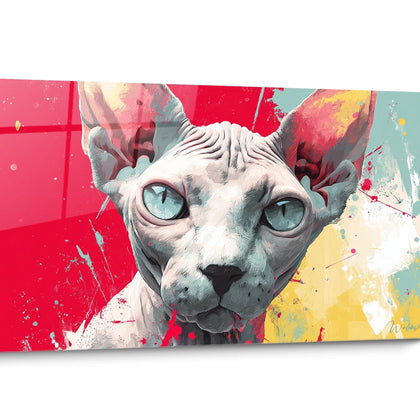
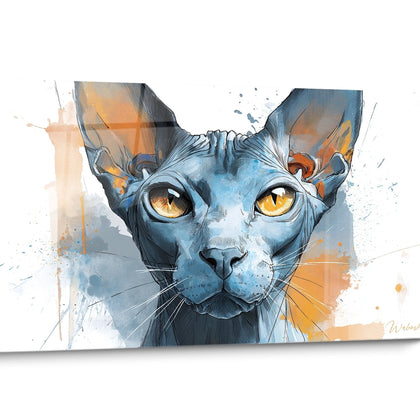
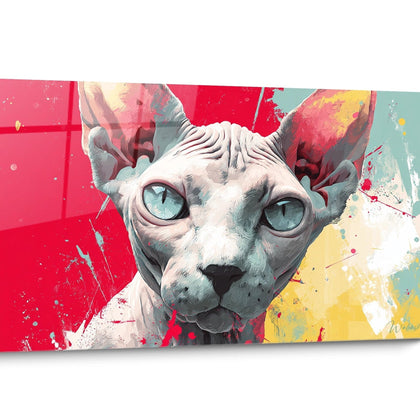
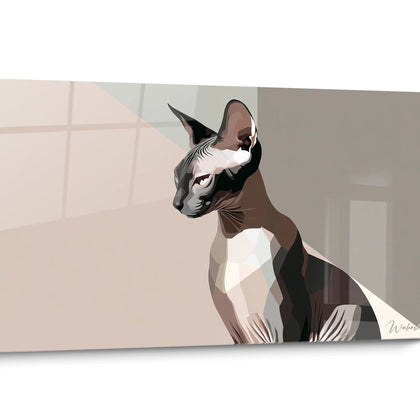
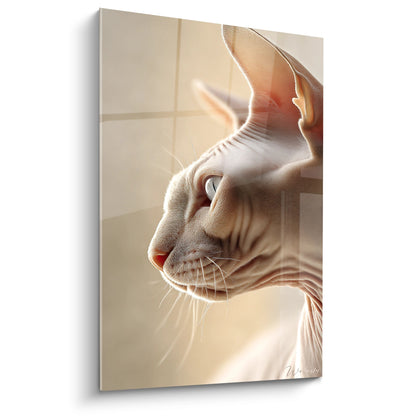
 Sphynx Cat Profile Wall Art - Contemplative Elegance - Sphynx Cat Edition233,90 €
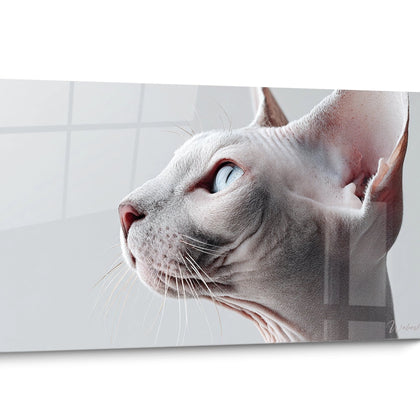
 Sphynx Cat Sketch Painting - Black and White Artistic Portrait - Sphynx Cat Edition233,90 €
 Sphynx Cat Profile Wall Art - Contemplative Gaze - Sphynx Cat Edition233,90 €
Explore further
In Sphynx Cat Black and White Wall Art
All about Sphynx Cat Black and White Wall Art
- Black and White Sphynx Cat Wall Art Presentation
- Monochrome Elegance
- Contrast Intensity
- Graphic Decoration
The black and white Sphynx cat wall art embodies the perfect alliance between graphic minimalism and visual power. This monochrome representation of the hairless feline captures the raw essence of this fascinating breed, eliminating all chromatic distraction to concentrate the gaze on the texture of wrinkled skin, the intensity of the piercing eyes, and the singular morphology of the Sphynx. Each shade of gray, each contrast between deep shadows and brilliant lights transforms this work into a true manifesto of contemporary sophistication, ideal for refined spaces seeking a bold centerpiece.
The Visual Power of Monochrome Feline Art
The black and white Sphynx cat wall art reveals a graphic dimension that only the absence of color can offer. This monochrome approach is not a simplification, but rather a dramatic amplification of every anatomical detail of the Sphynx. The characteristic wrinkles of the nude feline acquire a striking sculptural depth when rendered through a play of contrasted shadows and lights, creating a visual relief comparable to author fine art photography.
How does the black and white palette enhance the unique texture of the Sphynx?
The wrinkled skin of the Sphynx cat, often perceived as its most distinctive trait, reaches its aesthetic peak in a black and white representation. Gray gradations reveal every skin fold with surgical precision, transforming what might be considered a peculiarity into a true artistic signature. This monochrome approach is particularly suited to minimalist Scandinavian interiors, industrial lofts, or spaces with Japanese inspiration where chromatic restraint is a fundamental principle. For those who also appreciate other artistic interpretations, the black and white Sphynx cat watercolor collection offers a more fluid and colorful alternative.
The psychological impact of extreme contrast in wall decoration
Black and white compositions generate an immediate visual impact that multicolor palettes cannot match. Wall art depicting a Sphynx in this restricted chromatic range instantly captures attention and naturally becomes the focal point of the room. This characteristic proves particularly advantageous in large spaces requiring strong visual anchoring elements. Decoration professionals favor these monochrome works for their ability to structure space without creating chromatic cacophony, thus allowing great freedom in choosing surrounding furniture and accessories.
Stylistic variations in monochrome rendering
Black and white applied to the Sphynx offers an extensive stylistic palette: from ultra-detailed photographic realism capturing every skin nuance, to graphic abstraction reducing the feline to its essential forms. Some creations favor brutal contrast with dense blacks and brilliant whites, evoking the aesthetic of engraving or linocut. Others opt for an extended range of grays allowing soft transitions that enhance the tactile sensuality of nude skin. This diversity allows each enthusiast to find the interpretation corresponding precisely to their environment and aesthetic sensibility.
Decorative Architecture and Chromatic Balance
Integrating a black and white Sphynx cat wall art into contemporary interior design requires a thorough understanding of space chromatic dynamics. This monochrome work functions as a visual regulator, capable of harmonizing environments with disparate palettes or, conversely, creating creative tension in monochromatic decor. Its apparent neutrality conceals considerable decorative potential.
Why does black and white impose itself in modern architectures?
Contemporary architectural spaces, characterized by their clean lines, raw materials (polished concrete, brushed steel, glass), and generous volumes, find in black and white Sphynx art a perfect aesthetic complement. The absence of color in the work naturally dialogues with neutral surfaces omnipresent in these environments. Unlike colorful representations that can conflict with architectural material tones, monochrome composition integrates seamlessly while providing the organic warmth essential to these sometimes austere spaces. The animal presence of the Sphynx humanizes the mineral environment without compromising overall stylistic coherence.
The monochrome accent wall strategy
To maximize the impact of a Sphynx wall art in black and white, the accent wall technique proves particularly effective. Placing the work on a wall painted in a contrasting shade – pure white if the art presents a dark dominant, anthracite gray for a light-dominant composition – creates a theatrical presentation effect. This approach is particularly suitable for monumental formats deserving museum treatment. Adding specific directional lighting, such as adjustable spotlights or LED rails, further accentuates the sculptural dimension of the feline's skin reliefs. To explore other visual approaches to the Sphynx, the black and white Sphynx cat geometric collection offers differently structured compositions.
Association with other monochrome decorative elements
Building a gallery wall around black and white Sphynx art allows developing a coherent visual narrative. Association with monochrome architectural photographs, graphic abstractions, or stylized typography creates a sophisticated visual constellation. This approach requires rigorous formal discipline: maintain consistency in frame styles (or favor framelessness), respect harmony in proportions of different pieces, and provide sufficient breathing space between elements. The Sphynx must retain its status as central piece, with adjacent works acting as visual satellites reinforcing its impact without competing.
Symbolism and Expression in Monochrome Sphynx Representation
Beyond its decorative qualities, the black and white Sphynx cat wall art conveys particular symbolic charge. The choice of monochrome is never incidental: it evokes timelessness, pure essence stripped of the superfluous, concentration on the essential. Applied to the Sphynx, a feline already perceived as atypical and avant-garde, this visual treatment amplifies its iconic and almost mythological dimension.
The Sphynx as archetype of unconventional beauty
Black and white representation of the Sphynx cat functions as a celebration of alternative aesthetics. Unlike traditionally depicted felines valued for their luxurious fur, the Sphynx affirms a radically different beauty, founded on pure form, epidermal texture, and eye expressivity. Monochrome reinforces this contestatory dimension by refusing the picturesque and anecdotal to retain only fundamental structure. This work resonates particularly with creative personalities, artistic professions, and contemporary cultural spaces (galleries, design studios, creative agencies) where the assertion of distinctive visual identity constitutes a major stake.
What atmosphere does a black and white Sphynx wall art create in a living space?
The ambiance generated by this monochrome representation oscillates between dramatic intensity and contemplative serenity, depending on composition and contrast choices. A Sphynx captured in a statuesque pose, with lateral lighting creating deep shadows, infuses a theatrical and slightly mysterious atmosphere, ideal for reception areas and socializing spaces. Conversely, a softer interpretation, favoring halftones and a relaxed feline posture, generates a soothing ambiance conducive to bedrooms and rest spaces. The large dimensions of these works accentuate their capacity to define the overall atmosphere of the room, transforming the space into a setting for this magnified feline presence.
Complementarity with other artistic interpretations of the Sphynx
Collectors and Sphynx aesthetic enthusiasts can enrich their decorative approach by combining different artistic interpretations. Black and white monochrome establishes a neutral and timeless foundation that dialogues remarkably with bolder variations. Adding a work from the black and white Sphynx cat pop art collection in an adjacent space creates stimulating creative tension between monochrome restraint and chromatic exuberance. Similarly, association with a black and white Sphynx cat gold collection allows playing with contrasts between graphic sobriety and ostentatious luxury. For a more traditional approach to feline representation, the general Sphynx cat wall art collection offers a complete overview of artistic possibilities.
The perceptual evolution of the work according to lighting conditions
A fascinating characteristic of black and white Sphynx wall art lies in its visual transformation according to ambient lighting. Natural daylight, particularly morning and late afternoon light, reveals subtle nuances in gray zones that the eye perceives with difficulty under artificial lighting. Conversely, directional accent lighting at night dramatizes contrasts and confers an almost sculptural presence to the feline. This perceptual variability greatly enriches the daily experience of the work, preserving it from familiarity and maintaining renewed visual interest. Spaces benefiting from changing luminosity throughout the day particularly value this chameleon-like quality of monochrome.
FAQ - Frequently asked questions about black and white Sphynx cat wall art
Is black and white Sphynx cat wall art suitable for all interior styles?
This monochrome representation exhibits remarkable decorative versatility. It integrates naturally into minimalist contemporary interiors, industrial lofts, and Scandinavian spaces, but also functions as a sophisticated disruptive element in more classical or eclectic environments. The key lies in the specific stylistic treatment of the work: photographic realistic rendering will suit sober decor, while a more graphic or abstract interpretation will harmonize with creative atmospheres. To discover other aesthetic approaches, consult the black and white Sphynx cat portrait collection which offers more intimate compositions.
How does the monumental format of black and white Sphynx cat wall art influence its perception?
Large dimensions considerably amplify the visual and emotional impact of the work. An imposing format transforms the Sphynx into a true presence inhabiting the space, creating an almost interactive relationship with occupants. Anatomical details – skin wrinkles, eye intensity, skin texture – become perceptible at distance and invite prolonged contemplation. This monumentality is particularly suited to generous spaces (open-plan living areas, spacious entrance halls, executive offices) where the work can be appreciated with necessary perspective. In more restricted spaces, favor a medium format offering marked presence without visually saturating the room.
Does black and white treatment age less quickly than colored compositions?
One of the major advantages of monochrome indeed lies in its timelessness. Unlike color palettes that can be associated with specific stylistic periods or undergo evolution in chromatic trends, black and white remains fundamentally timeless. Black and white Sphynx wall art retains aesthetic relevance independently of successive decorative fashions, thus constituting a lasting visual investment. This permanence proves particularly valuable for large-format works representing significant financial and spatial commitment. Chromatic neutrality also facilitates future redecorating, the work adapting naturally to new decorative configurations without requiring repositioning.


