


Shetland Sheepdog Dog Portrait Wall Art
The Painting Shetland Sheepdog Portrait captures the beauty and intelligence of this iconic Scottish breed. Our collection dedicated to the Shetland Sheepdog in artistic portrait reveals the softness of the gaze and the elegance of the coat of this faithful companion. Each artwork celebrates the affectionate and lively character of this Sheltie dog in decorative painting. Perfect for dog lovers and animal art enthusiasts, this set transforms your interior into a true tribute to this exceptional breed.
 Woman and Dog Painting with Sepia Tones - Tender Complicity - Shetland Sheepdog Edition233,90 €
 Shetland Sheepdog Seasons Painting - Four Artistic Portraits - Shetland Sheepdog Edition233,90 €
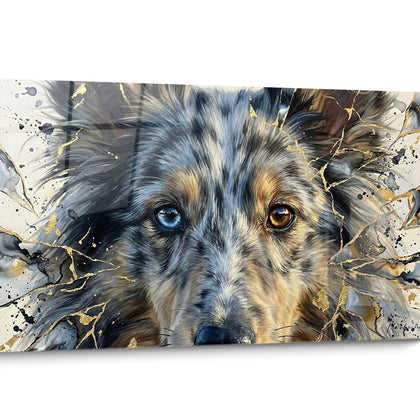
 Dog Portrait Painting with Mismatched Eyes on Golden Glints - Piercing Gaze - Shetland Sheepdog Edition233,90 €
 Shetland Sheepdog with Golden Lines Artwork - Geometric Artistic Portrait - Shetland Sheepdog Edition233,90 €
 Shetland Sheepdog Painting with Golden Gaze in Evening Light - Intimate Portrait - Shetland Sheepdog Edition213,90 €
 Tricolor Shetland Sheepdog Painting with Expressive Gaze - Artistic Portrait - Shetland Sheepdog Edition213,90 €
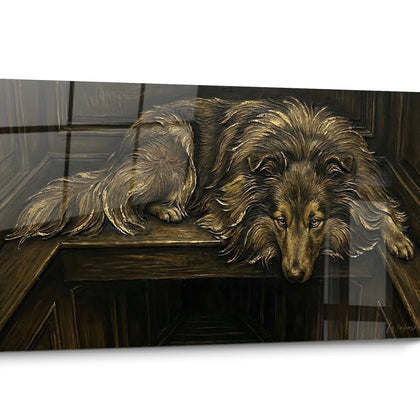
 Dog with Amber Eyes Lying Down - Tender Gaze - Shetland Shepherd Edition213,90 €
Explore further
In Shetland Sheepdog Dog Portrait Wall Art
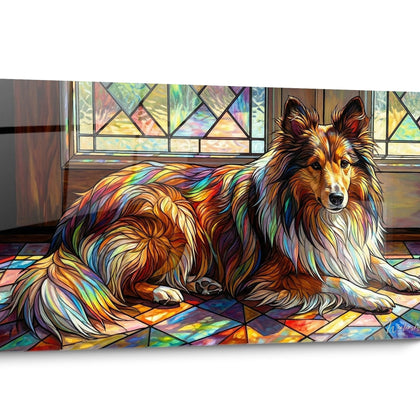
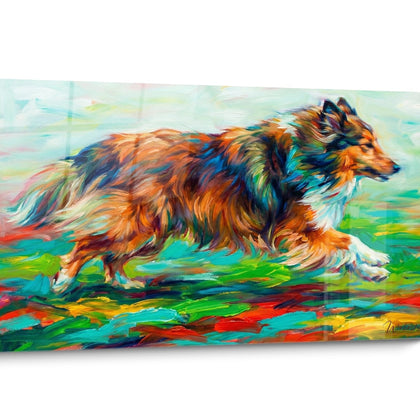
All about Shetland Sheepdog Dog Portrait Wall Art
- Shetland Sheepdog Portrait Presentation
- The Art of Canine Portraiture
- Capturing Expressiveness
- Decoration & Enhancement
The Shetland Sheepdog Portrait dog canvas captures the very essence of this elegant breed through an artistic representation centered on gaze and expressiveness. Unlike abstract or dynamic compositions, animal portraiture focuses on the intimacy of the bond between the Sheltie and its observer, immortalizing the depth of its intelligent gaze and distinctive physiognomy. This form of wall art privileges immediate emotional connection, transforming your space into a sanctuary dedicated to admiring this remarkable Scottish breed. Each portrait creation reveals the subtle nuances of the tricolor coat, the intensity of the alert gaze and the natural nobility that characterize the Shetland Sheepdog, offering an artistic presence that transcends mere decoration to become a permanent visual tribute to this exceptional breed.
Shetland Sheepdog Animal Portrait: Capturing the Soul of a Breed
The Shetland Sheepdog Portrait dog canvas distinguishes itself by its ability to grasp the profound identity of this miniature breed with Scottish origins. The portrait composition highlights the characteristic traits of the Sheltie: its expressively semi-erect ears, its aristocratic refined muzzle and especially its penetrating gaze that betrays keen intelligence. This artistic approach differs radically from dynamic representations or Shetland Sheepdog Abstract dog canvas that privilege dynamism or stylization, instead focusing on emotional authenticity and immediate breed recognition.
Why choose a portrait format for your Shetland Sheepdog?
Portrait orientation in large dimensions creates an imposing presence that magnifies the natural verticality of this medium-sized breed. The close framing typical of animal portraiture allows you to appreciate fine details: the chromatic variations of the sable, black and white coat, the light reflections in amber eyes, and the delicate textures of the characteristic full collar of Shelties. This visual proximity generates an empathic connection that only portraiture can offer, transforming the viewer into a privileged interlocutor of the represented dog.
Anatomical particularities magnified by portraiture
The Shetland Sheepdog possesses harmonious facial proportions that lend themselves admirably to portrait treatment. The slightly elongated cranial structure, moderate stop and gentle yet attentive expression create natural visual balance. Artists specialized in canine portraiture exploit these characteristics to compose works where the gaze becomes the absolute focal point. The Sheltie's abundant mane naturally frames the face, creating a halo effect that reinforces portrait centrality and guides the eye toward facial expression, unlike Shetland Sheepdog Multicolor dog canvas that disperse attention across the entire composition.
The importance of eye treatment in Sheltie portraiture
The almond-shaped eyes of the Shetland Sheepdog, slightly oblique and deep dark brown in color, constitute the true nerve center of the portrait. Their anatomical positioning and natural expressiveness allow artists to capture this almost human quality of the Sheltie's gaze: both gentle and scrutinizing, confident yet slightly reserved. Quality portraiture faithfully reproduces the pupillary light reflections, iris pigmentation nuances and the Shetland Sheepdog's unique ability to seem literally to communicate through its gaze, creating a work that appears to follow the observer in their movements.
Artistic Techniques to Enhance Shetland Sheepdog Portraiture
Creating a Shetland Sheepdog Portrait dog canvas requires specific technical mastery adapted to the aesthetic particularities of this breed. Contemporary artists employ various approaches to visually transcribe the complexity of the characteristic double coat of Shelties, with its dense undercoat and long, straight outer coat. Chromatic layering techniques allow the recreation of the textural depth of the coat, while contrast play accentuates the facial expressiveness that makes this miniature herding breed so singular.
How does background influence portrait perception?
In a Shetland Sheepdog portrait, background choice determines the overall emotional impact of the work. A neutral or slightly blurred background concentrates attention entirely on the canine subject, a technique favored for formal portraits intended for refined spaces. Conversely, the integration of contextual elements evoking the Scottish highlands of origin or pastoral references enriches the visual narrative without compromising Sheltie centrality. This approach differs radically from Shetland Sheepdog Gold dog canvas that use metallized backgrounds to create a luxurious atmosphere rather than narrative depth.
Managing contrasts to reveal personality
The Shetland Sheepdog naturally presents marked contrasts between its light coat areas (white collar, facial blaze) and dark (sable zibeline or black tricolor coat). Portraitists exploit these natural oppositions to visually sculpt the face and create relief, a technique particularly effective on monumental formats. Selective emphasis of light zones on the muzzle and around the eyes intensifies expressiveness, while soft shadows beneath the muzzle and within the collar confer volume and three-dimensional presence to the whole, as seen also in Shetland Sheepdog dog canvas that explore different stylistic approaches.
Preferred shooting angles for the Sheltie
The particular morphology of the Shetland Sheepdog directly influences the most flattering composition angles. The slightly elevated three-quarter view showcases simultaneously the elegance of the profile, frontal expressiveness of the gaze and the harmonious structure of the skull. This perspective also allows capturing the luxuriant collar that naturally frames the face like an organic frame. Direct frontal portraits create an intense, almost confrontational visual connection, particularly sought after for intimate spaces where the work becomes a daily visual companion. Pure lateral compositions, rarer, emphasize profile nobility and line elegance, recalling Victorian aristocratic canine medallions.
Integration and Enhancement of Shetland Sheepdog Portrait in Your Home
The Shetland Sheepdog Portrait dog canvas radically transforms a space's atmosphere through its intense emotional presence. Unlike generic decorative compositions, animal portraiture establishes a personalized visual relationship between the work and its observers, creating a conversational focal point that instantly humanizes the environment. Sheltie owners discover a permanent celebration of their companion, while enthusiasts of this Scottish breed can assert their passion through a sophisticated decorative element that transcends usual canine decoration codes.
Which spaces benefit most from a Sheltie portrait?
Primary living spaces constitute the ideal location for a large-scale Shetland Sheepdog portrait. In a living room, positioned above a sofa or on a clear wall facing the entrance, the portrait immediately becomes the visual center of gravity of the room, greeting visitors with the warm gaze characteristic of the Sheltie. Bookcases and home offices particularly benefit from this contemplative canine presence that brings a touch of humanity to potentially austere environments. Spacious corridors and entrance halls allow progressive appreciation at distance, where the portrait gradually reveals itself as one approaches, creating a renewed discovery experience, similar to the effect produced by Shetland Sheepdog Tricolor dog canvas that also play with chromatic richness.
Complementary decorative associations with the portrait
To enhance a Shetland Sheepdog portrait without visually competing with it, prioritize secondary decorative elements that create coherent narration. Accessories in natural tones – raw wood, linen textiles, artisanal ceramics – resonate harmoniously with the pastoral origin of the breed. Vegetative touches bring freshness and vitality without diverting attention from the main subject. Avoid accumulations of disparate objects on the same wall that would fragment the visual impact of the portrait. The objective is to create an enhancing environment where the portrayed Sheltie reigns as absolute master, benefiting from sober yet sophisticated staging that amplifies its presence rather than diluting it.
Optimal lighting to reveal portrait subtleties
A Shetland Sheepdog portrait deserves thoughtful lighting that reproduces the natural light conditions flattering to this breed. Soft lateral illumination creates subtle modeling that accentuates the relief of the muzzle and the depth of the gaze, while overly direct frontal lighting flattens volumes and nullifies the chromatic nuances of the coat. For large-scale works, an adjustable directional lighting system allows modulating intensity according to times of day, creating variable atmospheres that constantly renew the perception of the work. Indirect natural light remains nevertheless the most faithful for fully appreciating the technical subtleties of the portrait, revealing delicate chromatic transitions and fine details that only careful observation allows discovering, unlike Shetland Sheepdog Movement dog canvas that capture light differently.
Is a Shetland Sheepdog portrait suitable for all decorative styles?
The Shetland Sheepdog Portrait dog canvas adapts remarkably well to various interior aesthetic styles thanks to its stylistic versatility. In a refined contemporary environment, the portrait brings warmth and humanity, counterbalancing minimalist lines with its emotional charge. Rustic or country interiors benefit from the natural connection with the pastoral origins of the breed. Even classical or traditional décors harmoniously welcome these portraits that recall the centuries-old tradition of aristocratic animal painting. The essential element resides in chromatic coherence between the portrait and its immediate environment.
Which size should be prioritized to maximize the impact of a Shetland Sheepdog Portrait dog canvas?
For a Shetland Sheepdog portrait, monumental formats of 90 cm to 150 cm in height create a striking presence that truly transforms the space. These dimensions allow full appreciation of fine anatomical details – the individual texture of hairs, subtle iris nuances, micro facial expressions – that are lost in reduced formats. The proportionality between the actual size of an adult Sheltie and its artistic representation also influences perception: a portrait at near-real scale generates a sensation of authentic companionship particularly sought after by breed enthusiasts.
How does a portrait differ from other artistic representations of the Shetland Sheepdog?
The Shetland Sheepdog Portrait dog canvas fundamentally distinguishes itself through its intimate approach and focus on individual identity rather than general aesthetic characteristics of the breed. Unlike dynamic compositions that capture the Sheltie in action or stylized interpretations that deconstruct its form, portraiture aims for immediate recognition and direct emotional connection. This particularity makes it the privileged choice for honoring a specific companion or celebrating deep attachment to this emblematic Scottish breed, creating a permanent visual bond that transcends mere decorative function.


