


Normandy Sunset Wall Art
The Painting Normandy Sunset captures the magic of sunsets on the Norman coast. This collection celebrates the coastal landscapes of Normandy bathed in golden and orange lights, evoking the peaceful atmosphere of evenings facing the sea. Each creation pays homage to the sunsets over the English Channel, symbols of timeless natural beauty. Perfect for bringing warmth and serenity to your decoration, this collection transforms your walls into windows open onto the Norman shores.
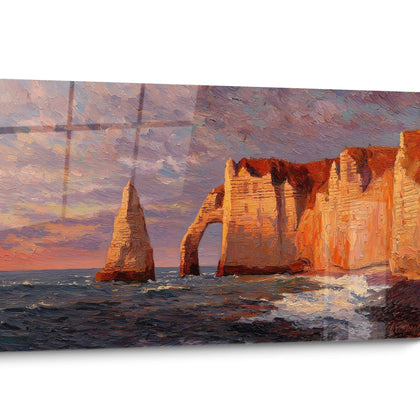
 Étretat Cliffs Painting - Sunset over the Norman Arches - Normandy Edition273,90 €
 Norman Beach Sunset Wall Art - Contemplative Silhouette - Normandy Edition273,90 €
 Norman Valley Landscape Painting - Golden Light - Normandy Edition273,90 €
 Farmer and Herd Painting - Norman Tradition at Sunset - Normandy Edition273,90 €
Explore further
In Normandy Sunset Wall Art



All about Normandy Sunset Wall Art
- Normandy Sunset Wall Art Presentation
- Luminous Norman Atmospheres
- Maritime Color Palette
- Norman Horizons at Twilight
A wall art piece depicting a Normandy sunset captures the very essence of this legendary coastal region, where the changing twilight light transforms maritime landscapes into veritable living paintings. These large-scale mural artworks celebrate the unique encounter between the Norman sky and the English Channel, offering a permanent window onto those golden moments that have inspired the greatest masters of painting. Acquiring such a decorative piece allows you to anchor the magic of Norman evenings into your interior, with their blazing skies reflecting on the cliffs of Étretat or the D-Day beaches.
The Magic of Twilight on the Norman Coast
Norman sunsets possess an incomparable light signature, forged by the unique encounter between the maritime atmosphere of the English Channel and the characteristic coastal reliefs of this region. A Normandy sunset wall art retranscribes this natural alchemy where the low clouds typical of oceanic climate adorned themselves with copper, orange and purple hues in the final hours of the day. This raking light reveals the texture of white chalk cliffs, creating dramatic contrasts between deep shadows and intensely illuminated areas found nowhere else on the French coastline.
Why do Norman skies offer such spectacular sunsets?
Normandy's geographic position, exposed to Atlantic winds and humid air masses, generates stratified cloud formations that diffract sunlight exceptionally at twilight. Sea spray laden with salt acts as natural prisms, intensifying warm hues and creating these spectacular gradients from incandescent red to deep violet. A wall art capturing these privileged moments becomes an emotional investment for anyone wishing to preserve the authenticity of Norman evenings, particularly in spacious living areas where these large formats allow for total immersion.
The Impressionist legacy in depicting twilight lights
The Norman pictorial tradition, inherited from Monet and Boudin observing light variations at Honfleur and Étretat, confers undeniable artistic legitimacy upon these representations. Contemporary works inspired by this cultural heritage integrate this subtle understanding of atmospheric nuances unique to Normandy. For collectors seeking continuity with this legacy, exploring approaches like Normandy watercolor wall art allows appreciation of different interpretations of this particular light. These mural representations become permanent visual testimonies to the richness of Norman color at twilight.
Integration in coastal and urban residential spaces
Installing a monumental artwork celebrating the Norman twilight radically transforms the spatial perception of a room, particularly in Norman secondary residences where it establishes visual continuity with the exterior landscape. In urban environments far from the coast, these large-scale wall art pieces function as dreamlike windows opening onto maritime serenity, creating a soothing contrast with urban bustle. Natural light evolving throughout the day interacts with the twilight hues represented, generating permanent dialogue between the artwork and its display environment.
Chromatic Harmonies of Norman Maritime Horizons
The palette of a Normandy sunset wall art distinguishes itself through exceptional chromatic complexity, oscillating between the flaming warm tones of the descending solar disk and the cool nuances of areas already plunged in early shadow. This characteristic thermal duality of Norman maritime twilights creates captivating visual tension, where golden yellow confronts deep Prussian blue of waves, while salmon-pink touches soften the transition. These specific chromatic compositions generate in domestic space an atmosphere both dynamic and contemplative, particularly sought-after in west-facing living areas.
How do Norman twilight hues influence interior ambiance?
The specific tonalities of a Norman sunset – notably these saturated oranges tinged with coral and characteristic cloudy violets – possess unique capacity to visually warm spaces with unfavorable northern exposures. This perceived thermal property compensates for the absence of direct light in certain architectural configurations, while avoiding the coldness of pure navy blues. The large dimensions of these artworks maximize this chromatic irradiation effect, transforming an entire wall into a source of emotional light that dialogues with nocturnal artificial lighting to create modifiable atmospheres throughout the hours.
Decorative correspondences with furniture and natural materials
Successful integration of artwork celebrating the Norman twilight requires reflection on surrounding materials capable of amplifying its visual resonance. Driftwood essences patinated by Norman tides, cream linen cultivated in interior lands, or even local limestone stones create material echoes with the represented imagery. This sensory coherence reinforces the authenticity of the overall decorative ensemble, particularly in properties seeking to celebrate Norman identity. Textiles in sand, pearl gray and off-white hues form neutral counterpoints valorizing the chromatic explosions of the depicted sky without creating visual competition.
Perceptual evolution according to seasons and natural lighting
A fascinating aspect of these representations resides in their visual metamorphosis according to ambient light conditions: under bright summer light, the warm hues of the painted sunset appear more vibrant, while diffuse winter light reveals the subtleties of shadowed areas and cool nuances. This perceptual variability guarantees constant renewal of visual experience, preventing weariness associated with static decorative elements. For collectors sensitive to this temporal dimension, these monumental Norman artworks offer contemplative depth comparable to direct observation of the natural phenomena they represent.
Maritime Horizons between Land and Sea
The unique geographic composition of Norman sunsets integrates terrestrial and maritime elements absent from other coastal regions: the recognizable silhouettes of Étretat cliffs, the historic structures of Atlantic Wall bunkers, or even rocky foreshores exposed at low tide. A Normandy sunset wall art capturing these identity markers offers far more than simple atmospheric representation – it constitutes a precise geographic anchor, a visual memorial of places laden with history and emotion. This narrative dimension considerably enriches the symbolic value of the artwork for anyone maintaining personal connection with Norman territory.
Which Norman architectural elements enhance twilight scenes?
The emblematic lighthouses dotting the Norman coastline – from Cap de la Hague to Honfleur – become powerful visual protagonists when silhouetted against the ablaze twilight skies. These vertical structures create compositional focal points that guide the eye and establish the monumental scale of the represented landscape. Traditional fishermen's houses with colorful facades in Barfleur or Ault, historic harbor remnants, or even characteristic breakwater spurs add narrative strata that authenticity enthusiasts seek in artworks intended to durably adorn their living spaces.
The memorial dimension of twilights over D-Day beaches
For many buyers, particularly of Anglo-Saxon origin, sunsets over Omaha, Utah or Gold Beach carry profound commemorative significance. These sandy expanses where the sky ignites each evening bear the collective memory of major historical events, conferring artistic representations with particular emotional gravity. Such artwork then becomes an object of intergenerational transmission, a visual support for evoking historical heritage while celebrating the resilient beauty of these now-peaceful places. This dual reading – aesthetic and memorial – explains sustained appeal for these representations among international collectors.
Capturing ephemeral instants and decorative permanence
The central paradox of artwork representing a sunset resides in the permanent fixation of an eminently transitory phenomenon – those fifteen magical minutes when the solar disk touches the Norman maritime horizon before disappearing. This temporal crystallization allows owners to indefinitely suspend the moment of luminous perfection that, in nature, inevitably vanishes. The monumental formats amplify this sensation of immersion in the captured moment, creating the illusion of a window permanently open onto this privileged temporal fragment. This capacity to defy time constitutes one of the most powerful acquisition arguments for these artworks intended for upscale residential spaces.
Is a Normandy sunset wall art suitable for minimalist contemporary interiors?
Absolutely. The intrinsic visual power of a Norman sunset integrates perfectly into refined aesthetics where it becomes the sole chromatic focal point, contrasting with neutral walls and sober furniture. This decorative approach fully valorizes the generous dimensions of the artwork while respecting minimalist principles of spatial breathing.
What optimal viewing distance for appreciating large-scale Normandy sunset wall art?
For monumental artworks, a distance equivalent to 1.5 to 2 times the diagonal of the piece allows embracing the entire composition while perceiving atmospheric details. This spatial configuration requires sufficiently vast rooms, typically living areas exceeding 30 square meters, where available perspective fully valorizes investment in an imposing format.
How to preserve vibrant hues of Normandy sunset wall art long-term?
Direct exposure to ultraviolet rays constitutes the primary factor of chromatic degradation. Favor a location receiving indirect light or install UV-filtering glazing if the chosen wall benefits from direct sunlight. This precaution guarantees the longevity of warm hues characteristic of Norman sunsets, thus preserving the aesthetic investment over several decades.


