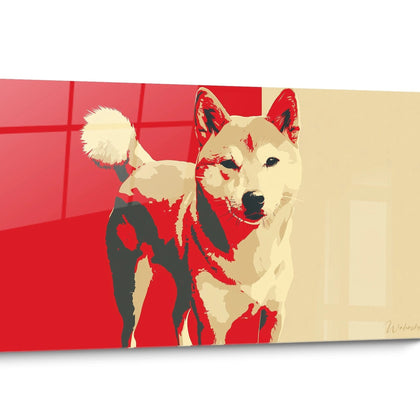
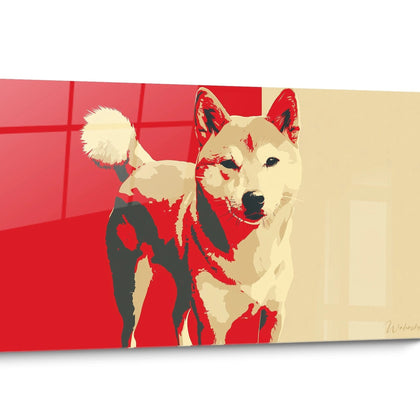
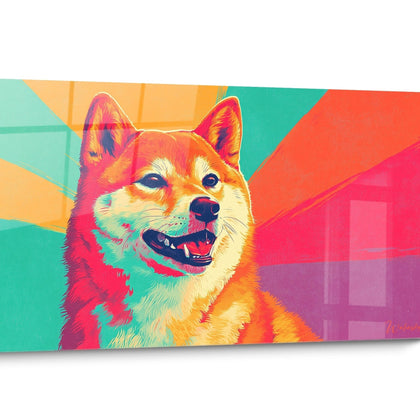
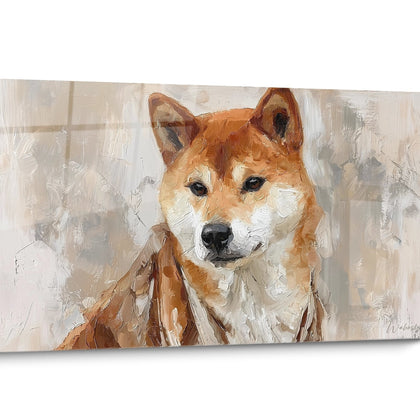
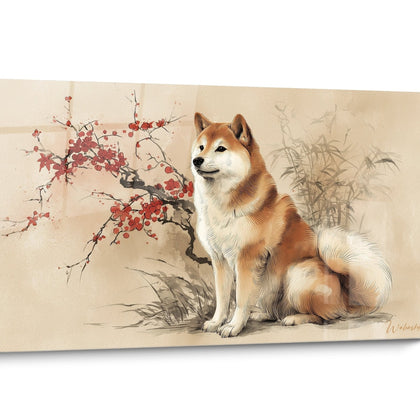
The modern Shiba Inu dog wall art embodies the meeting point between contemporary Japanese iconography and current interior design codes. This refined representation of the famous Japanese dog reflects a minimalist artistic approach, emphasizing geometric lines, color fields, and a bold graphic composition that breaks with traditional conventions of animal representation.
The Graphic Expression of Shiba Inu in Contemporary Wall Art
The modern Shiba Inu dog wall art distinguishes itself through its resolutely contemporary visual treatment that transcends mere animal representation. This artistic approach favors geometric stylization where the Shiba's characteristic coat is translated through architectural forms, creating dynamic tension between realism and abstraction. Artists exploit the distinctive morphology of this Japanese breed to generate angular compositions that dialogue with current interior architecture.
What color palette defines modern Shiba Inu wall art?
The chromatic range of these wall artworks moves away from natural tones to embrace saturated and contrasting palettes. Variations include Shiba representations in sophisticated monochrome nuances – slate gray, deep black, bright white – or in neon color explosions that amplify their visual presence. This chromatic freedom allows harmonization with minimalist Scandinavian interiors, industrial lofts, or contemporary Japanese-influenced spaces. Backgrounds are often treated with flat colors or subtle gradients that project the subject forward, creating spatial depth without resorting to classical perspectives.
How does modern composition redefine Shiba Inu iconography?
Contemporary wall creations exploit unconventional viewpoints: graphic profiles accentuating the characteristic triangular ears, tight framing on the Shiba's mischievous facial expression, or fragmented compositions distributing the animal across multiple visual planes. This formal deconstruction generates dynamic reading of wall space, particularly effective in generous-volume environments. Some artworks integrate Japanese typographic elements or geometric patterns that create dialogue between Japanese tradition and Western modernity, positioning the Shiba as a visual cultural bridge.
Pop art's influence in Shiba wall representation
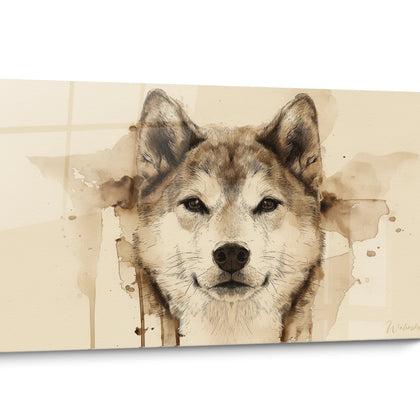
Pop art heritage significantly permeates these wall representations, where the Shiba Inu becomes repeated, colorized, or fragmented icon according to codes established by Warhol. This approach transforms the Japanese dog into a contemporary cultural symbol, transcending its status as household pet to become an identity marker of modern living spaces. The large dimensions of these wall compositions amplify this iconic effect, creating powerful focal points capable of structuring open space or revitalizing a primary wall. To explore other stylistic interpretations, the watercolor Shiba Inu dog wall art offers an alternative to refined graphic renderings.
Architectural Integration of Modern Shiba Inu Wall Art
What wall positioning showcases a large-format modern Shiba Inu wall art?
Installing modern Shiba Inu dog wall art in an imposing format requires specific spatial analysis. These artworks function optimally as visual punctuation elements in contemporary open spaces – above a modular banquette in a refined living room, facing the entrance to create immediate impact, or in a vertical stairwell where the composition can dialogue with ascending architecture. Professional environments also adopt these representations: creative agencies, architecture firms, coworking spaces seeking to assert distinctive visual identity blending Japanese cultural reference with Western contemporary aesthetics.
Synergy between design furniture and modern canine representation
These wall compositions establish formal correspondences with contemporary furniture. The refined lines of a Scandinavian sofa resonate with the Shiba's graphic stylization, while black metal structures of industrial furniture amplify the chromatic contrasts of monochrome versions. In Japanese-inspired interiors, association with light wood elements, geometric screens, and minimal vegetation creates cohesive visual ecosystem where the Shiba becomes ambassador of reinterpreted Japanism. Spaces with high ceilings particularly benefit from vertical formats representing the Shiba in seated or standing posture, creating upward dynamism that valorizes architectural volume.
How do these artworks transform residential ambiances?
Incorporating modern Shiba Inu wall art instantly generates distinctive atmosphere blending cultural sophistication and emotional accessibility. Unlike abstract works that can seem intimidating, canine presence instills paradoxical warmth in refined environments, humanizing potentially austere spaces. This duality – formal modernity and animal emotional connection – explains their growing popularity in contemporary urban apartments where inhabitants seek expressive decorative elements without compromising minimalist aesthetics. Panoramic formats particularly transform open living spaces, creating subtle visual separation between functional zones without physical partitions.
Lighting adaptation for valorizing these graphic representations
The specific visual characteristics of modern Shiba Inu dog wall art – marked contrasts, color fields, precise graphic details – respond favorably to targeted lighting strategies. Adjustable spotlights enhance chromatic contrast zones, while ambient indirect lighting prevents disturbing reflections on potentially satin surfaces. In environments with generous natural light, positioning perpendicular to windows prevents fading while allowing optimal color rendering. Spaces with limited light exposure benefit from receiving these artworks in light-toned versions that amplify ambient luminosity.
Identity Affirmation Through Modern Shiba Inu Wall Art
Why does Shiba Inu assert itself in contemporary wall iconography?
The popularity of modern Shiba Inu dog wall art reflects a broader cultural phenomenon where this Japanese breed has become internet symbol, viral meme, and generational marker. Millennials and Gen Z, familiar with digital visual codes, instantly recognize these representations as shared references, creating cultural complicity between artwork and observer. This recognition transforms acquisition into act of identity affiliation as much as decorative choice. Contemporary artists capitalize on this familiarity to propose sophisticated reinterpretations elevating the Shiba from meme status to legitimate artistic icon, bridging digital popular culture and wall art tradition.
Japanese minimalism codes reinterpreted
These wall compositions update Japanese aesthetic principles – ma (negative space), wabi-sabi (imperfect beauty) – merging them with Western graphic boldness. The Shiba, quintessentially Japanese native breed, becomes vector for this cultural hybridization. Generous negative spaces framing the subject create visual breathing characteristic of Japanese design, while saturated chromatic choices and emphatic contrasts evoke Western pop and street art. This aesthetic fusion perfectly addresses contemporary interiors seeking simultaneously formal restraint and visual impact, serenity and expressivity.
Perceptual evolution of these artworks in domestic environment
Unlike conventional decorative compositions, modern Shiba Inu dog wall art maintains visual interest over time through semantic richness. The Shiba's characteristic expression – blend of dignity and mischief often called


 Red Dog Painting Dark Suit Portrait - Elegant Wall Art - Shiba Inu Edition233,90 €
 Orange and Blue Dog Painting Geometric Style - Chromatic Duality - Shiba Inu Edition233,90 €
 Red Dog Portrait Painting Blue and Cream - Benevolent Gaze - Shiba Inu Edition213,90 €
 Orange and White Geometric Dog Painting Raised Muzzle - Contemplative Gaze - Shiba Inu Edition213,90 €
 Shiba Inu Pop Art Style Wall Art Red and Beige - Graphic Portrait - Shiba Inu Edition233,90 €
 Russet Shiba Inu in Turquoise Foliage and Red Berries Painting - Natural Harmony - Shiba Inu Edition233,90 €
 Stylized Dog Artwork with Vermillion and Dark Colors - Artistic Portrait - Shiba Inu Edition233,90 €
 Smiling Dog With Multicolor Rays Canvas - Joyful Expression - Shiba Inu Edition213,90 €
 Smiling Dog with Vibrant Colors Canvas - Radiant Geometric Art - Shiba Inu Edition233,90 €
 Red Dog in Motion Painting on Abstract Background - Canine Grace - Shiba Inu Edition233,90 €
 Seated Dog Wall Art in Modern Interior with Green Tones - Contemporary Serenity - Shiba Inu Edition233,90 €
 Shiba Inu Profile Luminous Painting Dark Background - Contemplative Portrait - Shiba Inu Edition233,90 €