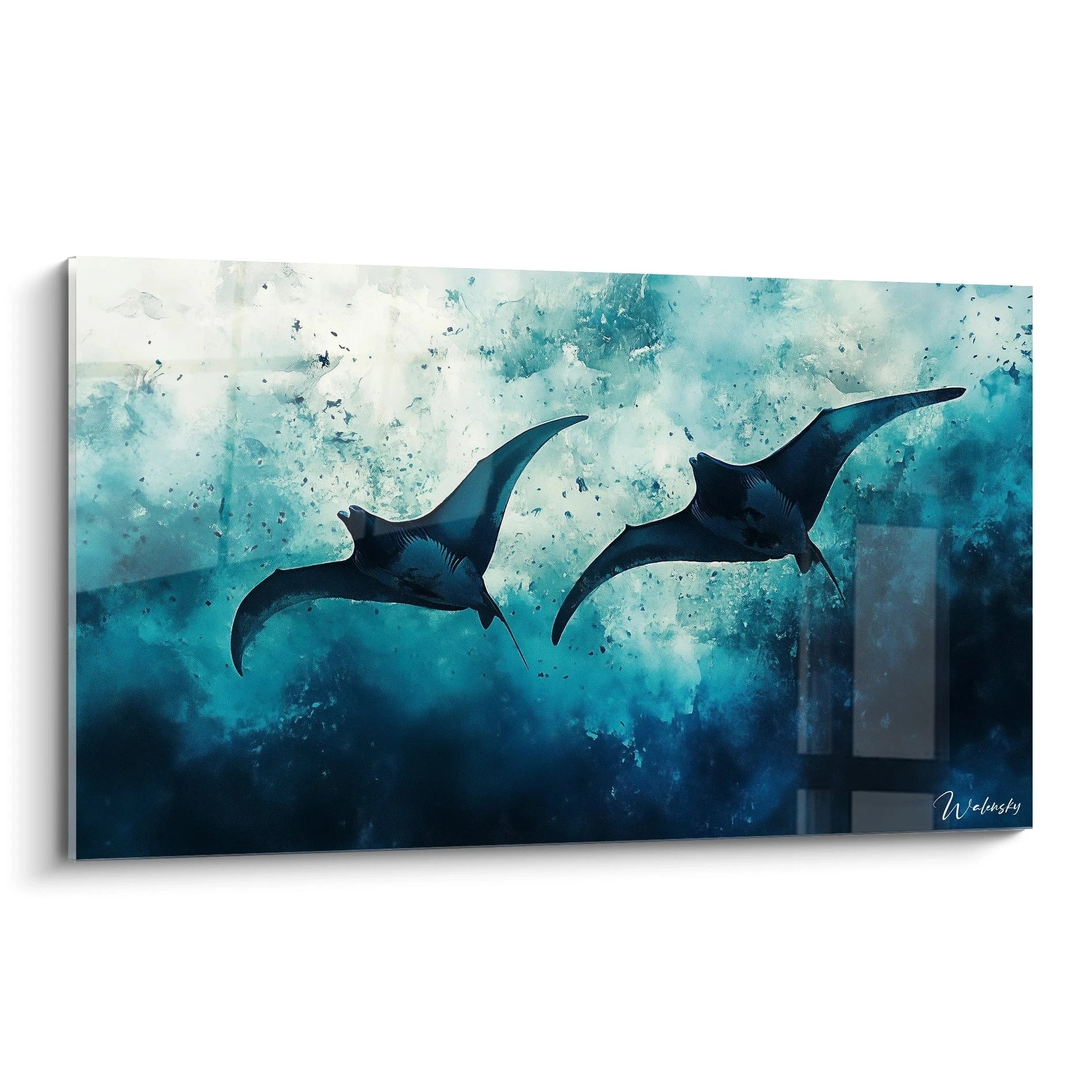
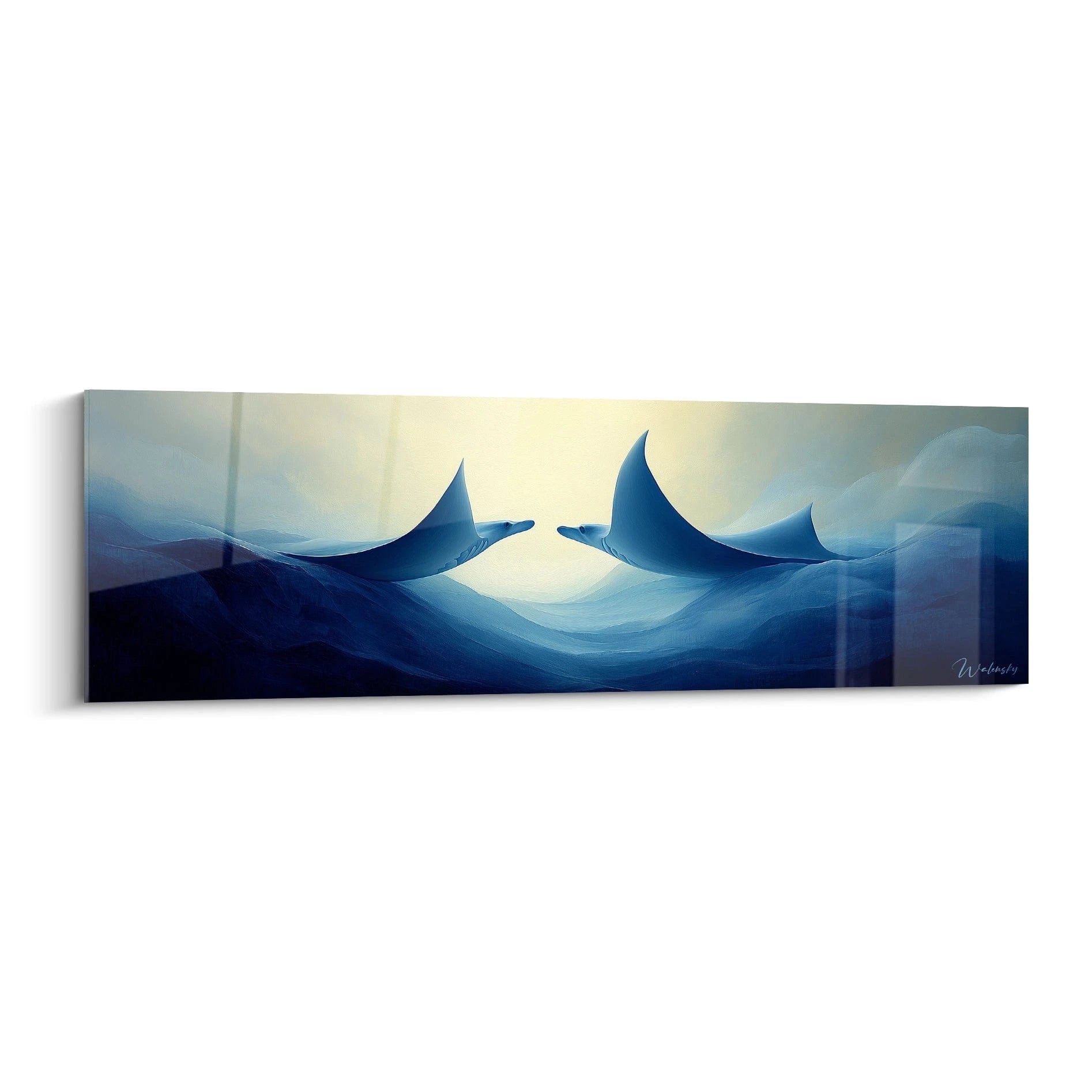
The manta ray wall art represents one of the most captivating marine artistic creations to transform your space into an oceanic sanctuary. This mural artwork captures the majestic essence of the most graceful of pelagic creatures, offering a visual immersion into the mysterious depths of the oceans. Our large-scale representations elevate the natural magnificence of these ocean giants, creating a striking focal point that instantly evokes the freedom of vast marine expanses and the serenity of abyssal depths.
The Majestic Decorative Impact of Manta Ray Wall Art in Large Spaces
The manta ray wall art radically transforms the atmosphere of your living spaces through its unique ability to evoke oceanic grandeur. This marine creature, with a wingspan reaching up to eight meters in nature, inspires large-scale artistic representations that instantly capture attention and create a sensation of marine immensity.
Why is the manta ray so fascinating in wall decoration?
The manta ray possesses unique visual characteristics that make it an exceptional decorative subject. Its extended pectoral fins evoke an aquatic flight of unparalleled elegance, while its streamlined silhouette perfectly embodies the harmony of natural forms. The chromatic nuances of this pelagic creature, oscillating between the dark tones of the back and the immaculate whiteness of the belly, offer a striking contrast that adapts to various decorative palettes.
The impressive wingspan of the manta ray naturally translates into panoramic-format artworks that fully exploit large wall surfaces. This particularity allows for spectacular mural compositions that literally transform the perception of space, bringing remarkable three-dimensional quality and visual depth.
Perfect adaptation to contemporary spaces
Manta ray mural representations integrate particularly well into modern architectures with high ceilings and extended wall surfaces. The natural geometry of this marine creature, with its curved lines and organic forms, creates a harmonious contrast with the right angles of contemporary interiors, bringing visual fluidity that softens architectural rigor.
The psychological impact of these marine mural works is particularly notable in spaces dedicated to relaxation and contemplation. The representation of the manta ray instantly evokes a sensation of profound calm and connection with natural elements, transforming your interior into a true soothing refuge.
- Creation of a majestic focal point that structures the decorative space
- Evocation of oceanic immensity within confined interiors
- Harmonization of volumes through the fluidity of natural forms
- Contribution of a unique spiritual and contemplative dimension
Technical specifics to maximize decorative effect
To optimize the visual impact of a large-scale manta ray wall art, wall placement is of crucial importance. These artworks require a clear surface allowing sufficient distance to appreciate the full composition. The ideal positioning height corresponds to eye level when standing, allowing optimal immersion in the depicted marine scene.
The lighting of these marine representations requires particular attention to reveal the chromatic subtleties and shadow nuances that characterize the aquatic flight of the manta ray. Indirect and adjustable lighting allows the deep blue tones to vibrate and highlights the silvery reflections characteristic of this deep-sea creature.
The Spiritual Symbolism and Oceanic Escape of Manta Ray Wall Art
The manta ray wall art transcends simple marine representation to become a true portal to spiritual escape and connection with the primordial forces of the ocean. This emblematic creature, revered in many ocean cultures, embodies universal values of grace, freedom and ancestral wisdom that resonate deeply with our contemporary quest for serenity.
The manta ray, an ancient symbol of oceanic wisdom
In Polynesian and Melanesian traditions, the manta ray is considered a spiritual guide of the oceans, a benevolent creature that accompanies souls in their journey toward inner peace. This symbolic dimension is naturally found in modern artistic representations, where the silent majesty of these pelagic giants evokes a form of active meditation and profound contemplation.
Observing an artwork depicting a manta ray generates a fascinating psychological phenomenon: the viewer instantly experiences a sensation of time slowing down and mental appeasement. This reaction is explained by the unconscious association between the creature's fluid movement and the natural rhythms of deep breathing, creating a beneficial synchronization effect for the nervous system.
How does mural representation influence our well-being?
Neuroscience has demonstrated that contemplating marine images, particularly those depicting graceful creatures like the manta ray, activates brain centers associated with relaxation and stress reduction. This phenomenon, called the "blue effect," explains why spaces adorned with these marine artworks naturally become decompression and rejuvenation zones.
The characteristic large wingspan of the manta ray, faithfully reproduced in panoramic-format works, amplifies this sensation of escape by creating an illusion of total immersion. The viewer's gaze naturally follows the curved lines of the fins, generating a soothing eye movement that promotes relaxation and concentration.
- Activation of natural relaxation mechanisms through marine contemplation
- Creation of a visual sanctuary conducive to daily meditation
- Evocation of soothing natural oceanic rhythms
- Symbolic connection with the ancestral wisdom of maritime cultures
The art of creating an oceanic serenity environment
The integration of a manta ray wall art into a living space transcends simple decorative endeavor to become part of a genuine philosophy of well-being. These artworks function as visual anchors that constantly remind us of the values of fluidity, adaptability and grace symbolized by this exceptional marine creature.
The presence of a manta ray representation subtly influences social interactions in the space it occupies. Visitors consistently report a sensation of calm and benevolence, as if the wisdom attributed to this marine creature naturally diffuses throughout the environment. This atmospheric transformation makes manta ray wall art a privileged choice for spaces dedicated to rejuvenation and contemplation.
What psychological benefits does daily contemplation provide?
Research in environmental psychology reveals that daily exposure to representations of marine nature, particularly those featuring majestic creatures like the manta ray, significantly contributes to anxiety reduction and improved sleep quality. This phenomenon is explained by the activation of sensory memories linked to positive oceanic experiences, even in people who have never practiced diving.
The cumulative effect of this regular contemplation translates into better management of daily stress and increased ability to maintain a serene mindset when facing contemporary challenges. Manta ray wall art thus becomes a discreet yet effective therapeutic tool, naturally integrated into the daily environment.
The Art of Capturing the Graceful Aquatic Movement of the Manta Ray
The manta ray wall art represents one of the most fascinating artistic challenges: translating onto a two-dimensional surface the extraordinary fluidity of the aquatic flight of this exceptional marine creature. The complexity of this movement, unique in the animal kingdom, requires particular technical mastery to restore the impression of grace and controlled power that characterizes the swimming of the manta ray.
The unique biomechanics of aquatic flight
The movement of the manta ray differs fundamentally from that of other marine creatures by its undulating character and hypnotic regularity. Unlike fish that use primarily their tail for propulsion, the manta ray exploits the entirety of its pectoral fins in a movement comparable to the flight of the most graceful birds, creating waves of undulation that propagate from front to back of its body.
This biomechanical particularity inspires artists to develop specific techniques to capture this dynamic. The most successful representations manage to freeze an instant of this aquatic ballet while preserving the sensation of perpetual movement, creating a striking visual paradox that captivates the gaze and stimulates imagination.
How do artists translate this grace into movement?
The artistic representation of manta ray movement relies on advanced kinetic suggestion techniques. The lines of flight created by the extended fins generate visual dynamics that guide the viewer's eye in a fluid path, mentally reproducing the creature's trajectory. This technical approach transforms the static artwork into an immersive experience.
Interplay of shadows and light plays a crucial role in this movement representation. Subtle chromatic variations on the creature's body surface, amplified by the effects of aquatic refraction, create three-dimensional depth that enhances the impression of displacement within the marine space.
- Use of directional lines to guide movement perception
- Exploitation of chromatic contrasts to accentuate dynamics
- Creation of depth effects through variations in light intensity
- Suggestion of fluidity through progressive tonal transitions
The psychological impact of represented movement
Contemplating a representation of a manta ray in movement generates a particular neurological phenomenon: the brain mentally reconstructs the complete sequence of aquatic displacement, creating a sensation of virtual movement that simultaneously soothes and fascinates. This mental reconstruction activates brain areas associated with relaxation and creativity.
The rhythm suggested by manta ray movement corresponds to brain frequencies favorable to meditation and concentration. This natural synchronization explains why spaces adorned with these representations instinctively become privileged places for reflection and intellectual rejuvenation.
Why does this movement fascinate the human eye so much?
The attraction exerted by manta ray movement is rooted in deep perceptual mechanisms. The regularity of its undulation recalls fundamental natural rhythms: heartbeats, breathing movements, tidal cycles. This resonance with our internal biological rhythms creates a sensation of soothing familiarity that explains the universal appeal of these representations.
The perfect geometry of manta ray movement, with its harmonious curves and balanced proportions, corresponds to universal aesthetic canons that our brain instinctively recognizes as beautiful and harmonious. This automatic recognition generates immediate visual satisfaction that persists well beyond initial observation.
Advanced techniques for representing aquatic movement
The most accomplished manta ray representations integrate environmental elements that reinforce the sensation of movement: air bubbles, suspended particles, wake effects. These contextual details create a complete visual ecosystem that amplifies the illusion of presence and movement.
The strategic use of negative space in the composition allows suggesting the volume of water displaced by the creature's passage, creating a sensation of immersion that transforms the viewer into a privileged witness to this exceptional aquatic ballet.
What is the difference between a manta ray wall art and other marine representations?
The manta ray distinguishes itself by its unique ability to simultaneously evoke power and grace, unlike other marine creatures that generally embody one or the other of these qualities.
How does manta ray wall art influence the ambiance of a room?
Its presence instantly transforms the atmosphere by creating a sensation of open space and oceanic serenity, particularly suited to relaxation areas.
Can manta ray wall art be combined with other marine decorative elements?
Absolutely, but its natural majesty makes it often the centerpiece that structures the entire marine decoration of a space.
What size should you choose to maximize the impact of manta ray wall art?
Large-scale panoramic formats respect the natural proportions of the creature and create the most striking visual impact, ideally suited to walls of more than 3 meters wide.