


Machinery and Gear Wall Art
Dive into the fascinating world of machinery and gear wall art, where art meets engineering. This collection celebrates the beauty of industrial mechanisms through contemporary artworks that elevate gears, pistons and metal structures. Perfect for modern spaces, lofts and offices, it brings a touch of sophisticated mechanical aesthetics. Each creation captures the precision and elegance of machinery, transforming your interior into a technical art gallery. Ideal for innovation enthusiasts and avant-garde design lovers.
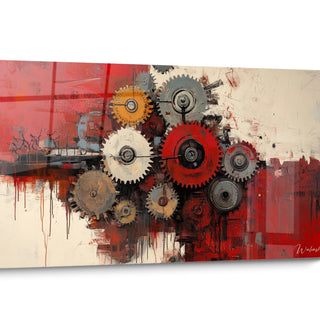
 Industrial Abstraction Wall Art - Mechanical Symphony - Machines & Gears Edition233,90 €
 Rusted Mechanical Gears Wall Art - Industrial Cogs - Machines & Gears Edition213,90 €
 Abstract industrial painting - Modern urban composition - machines and gears edition233,90 €
 Abstract colorful gears painting - Mechanical Explosion - machines and gears edition233,90 €
 Colorful Gears Wall Art - Artistic Explosion - Machines and Gears Edition233,90 €
 Industrial Gears Wall Art - Abstract Mechanism - Machines and Gears Edition233,90 €
 Industrial Gears Wall Art - Ancestral Mechanism - Machines and Gears Edition233,90 €
 Rusty Gears Wall Art - Industrial Mechanism - Machines and Gears Edition233,90 €
 Industrial gears clock wall art - Mechanism of time - machines and gears edition233,90 €
 Abstract mechanical gears wall art - Industrial fusion - machines and gears edition233,90 €
 Rusted Industrial Gears Wall Art - Temporal Mechanism - Machines and Gears Edition233,90 €
In the same family
Also explore the theme Science and Mathematics


All about Machinery and Gear Wall Art
- Machines and Gears Artwork Presentation
- Steampunk Universe and Mechanical Aesthetics
- Technical Decoration for Professional Spaces
- Watchmaking Architecture and the Art of Time
Machines and gears wall art transforms mechanical precision into a true artistic statement. These monumental representations of cogwheels, industrial mechanisms and technical architectures captivate through their visual complexity and powerful symbolism. Perfect for spaces requiring distinctive decoration, they embody innovation, precision and human ingenuity through imposing formats that dominate the space with character.
The Steampunk Universe and Victorian Mechanical Aesthetics in Large Format
Machines and gears artwork draws its essence from steampunk imagination, that universe where the industrial revolution meets fantastic innovation. These monumental representations of complex mechanisms transcend simple decoration to become visual portals to an era when every invention pushed the boundaries of possibility. The neo-Victorian aesthetics of these wall creations impose an immediate presence in any space, transforming an ordinary wall into a visual manifesto of mechanical ingenuity.
How do monumental cogwheels create exceptional visual depth?
The overlapping of perspective-based mechanisms generates a fascinating three-dimensional illusion in these large-scale wall representations. Each tooth, each rotation axis and each interconnected gear guides the eye through a complex visual journey. Monumental formats amplify this hypnotic effect: an entire wall becomes a window into the inner workings of a cosmic clock or imaginary steam engine. This scientific wall decoration captures attention through microscopic details visible even from a distance, creating an irresistible focal point in industrial lofts and contemporary apartments.
The symbolism of perpetual motion in modern decoration
Beyond their intrinsic beauty, these mechanism visualizations embody profound philosophical concepts. The perpetual motion suggested by interlocking cogwheels evokes continuity, constant progress and endless innovation. In a director's office or strategic reflection space, this symbolism resonates with entrepreneurial ambitions and the pursuit of operational excellence. Copper, silver or patinated metallic tones reinforce this connection with the industrial era while harmoniously integrating into contemporary palettes dominated by anthracite gray, mineral beige and metallic accents.
Why does steampunk aesthetics assert itself in modern interiors?
Growing attraction to the retro-futuristic universe responds to a need for authenticity and materiality in an increasingly dematerialized world. Artworks depicting complex machines and gear assemblies offer this sought-after visual tangibility. They evoke a time when every mechanism was visible, understandable and repairable - a striking contrast to current opaque technology. This productive nostalgia particularly appeals to tech professionals, engineers and creatives who appreciate the beauty of exposed mechanics. The imposing dimensions of these works reinforce their impact: they do more than decorate a wall, they define the entire identity of the space.
Integrating Victorian elements into minimalist spaces
The fascinating paradox of these mechanical representations lies in their ability to complement stripped-down interiors. A minimalist space with pure lines finds in a monumental gears artwork the perfect counterpoint: visual complexity concentrated at a single strategic point. This approach avoids decorative overload while injecting personality and narrative depth. Interior design professionals exploit this dynamic to create memorable spaces where architectural simplicity dialogues with industrial iconographic richness.
Magnified technical details - riveted bolts, engraved metal plates, transmission chains - become elements of meditative fascination. In a spacious living room or conference hall, these artworks invite prolonged observation, constantly revealing new details with each glance. Monumental scale allows appreciation of the minuteness of each component while grasping the majesty of the entire mechanical assembly.
Chromatic variations from bronze to oxidized metal
The palette of machines and gears artwork explores the full range of industrial metallic finishes. Warm tones of bronze and copper evoke the Victorian era and watchmaking craftsmanship, while brushed steel and anodized aluminum hues anchor these works in modernity. Patina and oxidation effects add a temporal dimension, suggesting the noble wear of century-old mechanisms. This metallic chromatic richness naturally harmonizes with raw materials prized in contemporary decoration: polished concrete, natural stone, aged wood and industrial metal.
Contrasts between bright zones and deep shadows visually sculpt gear reliefs, creating an impression of volume and frozen motion. Under different lighting, these artworks reveal unprecedented facets, subtly transforming the room's ambiance from morning to evening.
Technical Decoration for Professional Spaces and Engineering Offices
Technical professional environments deserve decoration reflecting their fundamental values: precision, innovation and operational excellence. Machines and gears artwork naturally asserts itself in these contexts where visualizing complex mechanical processes resonates with daily activities. These large-dimension wall representations function as visual manifestos of corporate culture, particularly in mechanical engineering, robotics, manufacturing and technology development sectors.
Why are engineers attracted to these mechanical representations?
Technical professionals' fascination with these gear visualizations transcends simple aesthetic appreciation. These images recall the fundamentals of their profession: the logic of motion transmission, the elegance of mechanical solutions and the inherent beauty of well-designed systems. In a design office or product development room, a monumental artwork representing complex mechanisms stimulates creative thinking and reminds that every technical problem possesses an elegant solution. Imposing dimensions allow observation of precise technical details - gear ratios, tooth types, bearing systems - which may even inspire concrete solutions to current engineering challenges.
The symbolism of precision in the corporate environment
Beyond decorative aspects, these mechanical assembly representations convey powerful strategic messages. The perfect interconnection of cogwheels symbolizes synchronized teamwork, where each component fulfills its function for collective success. Micrometric precision of gears evokes operational excellence and attention to detail. In client reception areas or company halls, these monumental artworks instantly communicate values of technical innovation and reliability. Visitors immediately understand they're entering an environment where mechanical performance and ingenuity are celebrated.
How do these works transform technical collaboration spaces?
Engineering meeting rooms and technical brainstorming spaces particularly benefit from these imposing wall installations. Visual complexity stimulates systems thinking and encourages participants to consider problems from multiple angles. Unlike generic decorations, these mechanism representations create a cognitively coherent environment aligned with the activities occurring there. A wall dominated by monumental gears artwork becomes a metaphorical reference point during discussions: "How do these elements articulate like cogwheels?" becomes a natural question when analyzing complex processes.
The monumental scale of these works also ensures they remain visible and impactful even in the large open spaces characteristic of modern tech companies. Where more modest works would disappear into architectural immensity, these machine representations assert themselves and visually structure the space.
Decorative associations in modern industrial environments
Integrating these artworks into technical professional spaces fits within coherent industrial aesthetics. They naturally dialogue with architectural elements typical of these environments: exposed metal beams, visible ventilation ducts, industrial resin floors and streamlined steel and glass furniture. This aesthetic continuity between architecture, furniture and wall decoration creates a unified spatial experience reinforcing the company's technical identity.
Relaxation zones and cafeteria spaces in engineering companies also adopt these mechanical visualizations to maintain thematic coherence while creating conversation points. An impassioned engineer can detail a mechanism's subtleties to a colleague, transforming decoration into a vehicle for professional socialization.
Psychological impact on technical productivity and creativity
Environmental psychology research suggests workspaces reflecting occupants' professional identity improve engagement and job satisfaction. For engineers and technicians, working in an environment visually celebrating mechanical principles reinforces professional belonging. Artworks depicting complex machines and gear assemblies function as constant reminders of their profession's nobility and the beauty of elegant technical solutions.
The imposing formats of these works also create memorable spatial landmarks in large open office spaces, facilitating orientation and identifying zones: "Meet us near the big gears artwork" becomes a natural instruction. This practical functionality adds to aesthetic and symbolic value.
Watchmaking Architecture and Monumental Representation of Time in Wall Art
Machines and gears artwork finds its most refined expression in monumental watchmaking representations. These visualizations of chronometric mechanisms transcend simple timekeeping to explore temporal philosophy through precision engineering's prism. Watchmaking represents micromechanics' apex, where every component must function in perfect harmony to accomplish the most fundamental task: capturing time's inexorable flow.
What is the fascination with large-format watch movements?
Enlarging a watch movement to wall dimensions reveals the hidden beauty of these miniature mechanisms. What the eye struggles to distinguish in a wristwatch becomes majestic mechanical architecture on monumental format. Oscillating balances, anchor escapements, transmission wheels and spirals become sculptural elements whose every curve and function can be appreciated. This scaling transforms watchmaking into accessible visual spectacle, allowing even non-initiates to intuitively understand how these mechanisms discipline time.
Watchmaking collectors and precision mechanics enthusiasts find in these wall representations a celebration of their passion. A living room or private office adorned with such artwork instantly becomes a sanctuary dedicated to chronometric excellence and watchmaking genius.
Temporal symbolism in strategic decision-making spaces
Beyond their technical beauty, these monumental watchmaking representations carry symbolic weight particularly relevant for corporate environments and strategic reflection spaces. Time represents business's most precious resource: non-renewable, inexorably linear and equitably distributed. A painting illustrating mechanisms measuring it subtly reminds of time management's importance, effort synchronization and precision in execution. In a boardroom or executive office, this visual metaphor powerfully resonates with decision-making responsibilities.
How does watchmaking aesthetics integrate into sophisticated interiors?
Chronometric mechanism representations bring technical sophistication to refined interiors. Unlike heavy industrial machines, watchmaking evokes fineness, extreme miniaturization and excellence craftsmanship. These qualities translate visually into balanced compositions where each element occupies exactly the necessary space - no more, no less. This economic use of means and pure functionality particularly appeal in high-end contemporary interiors where superfluity yields to essential perfection.
Luxury watchmaking's typical finishes - rhodium plating, rose gold, blued screws, bridge anglage - appear in these paintings' chromatic palettes. These sophisticated nuances naturally harmonize with neutral-tone interiors accented with precious metallic touches, creating aesthetic continuity between wall artwork and environment.
Variations between classic chronometry and watchmaking complications
The watchmaking world offers exceptional iconographic diversity for these wall representations. Simple three-hand movements present calming mechanical clarity, ideal for spaces requiring contemplative atmosphere. Conversely, grand complications - perpetual calendar, minute repeater, tourbillon - offer fascinating visual density captivating observers through ingenuity. A painting depicting monumental tourbillon movement allows observing this anti-gravity device in all its choreographic complexity, transforming a technical achievement into perpetual mechanical ballet.
Chronographs offer particular visual dynamism with overlapping counting mechanisms and command pushers. These sporty complications bring different energy, evoking measured performance and chronometric competition.
Master watchmakers' heritage in contemporary decoration
These artworks tribute watchmaking geniuses - from Breguet to Daniels, from Janvier to Journe - whose innovations pushed mechanical possibility's frontiers. Installing such a work inscribes oneself within this lineage appreciating technical excellence and persevering innovation. Monumental formats amplify this tribute: what was meant to be wrist-worn becomes a wall fresco celebrating human genius.
Watchmaking collectors unable to acquire all coveted rare pieces find in these wall representations satisfactory alternatives. Daily admiring an enlarged Lemania chronograph movement or coaxial escapement becomes a form of aesthetic possession capturing essence without requiring the physical object.
Why do masculine interiors privilege these mechanical themes?
Interior decoration statistics reveal particular affinity of masculine spaces for technical and mechanical themes. Private offices, personal libraries and bachelor lounges massively adopt these gears and mechanisms representations. This preference explains through cultural association between masculinity and technical competence, between virility and mechanical mastery. A monumental watchmaking artwork subtly communicates values of precision, control and appreciation for ingenuity - attributes traditionally valued in masculine identity.
Beyond gendered considerations, these works appeal to all appreciating functional transparency and logical systems' beauty. In a world where technology becomes increasingly opaque and incomprehensible, watch mechanisms offer satisfaction of visually understanding how complex systems function.
FAQ: Frequent Questions about Machines and Gears Artwork
In which spaces do machines and gears artworks create maximum visual impact?
These monumental wall representations excel in high-ceiling spaces with clear walls: industrial lofts, executive offices, technology company halls, personal libraries and contemporary living rooms. Their imposing scale requires sufficient visual distance to appreciate the whole while permitting approach for observing details. Neutral-tone environments - gray, beige, off-white - particularly enhance these works' metallic nuances.
How to choose between a watchmaking representation and mechanical industrial scene?
Watchmaking suits spaces privileging sophistication, fineness and reflection: director offices, private cabinets, refined living rooms. Industrial scenes with steam machines and heavy mechanisms assert themselves in environments celebrating power, disruptive innovation and manufacturing heritage: technology startup spaces, creative agencies, urban lofts. The decision also depends on desired atmosphere: contemplative and precise for watchmaking, dynamic and transformative for industrial.
What minimum size is recommended for these artworks in large spaces?
To maintain visual impact in generous spaces, these representations require substantial dimensions. In 40m² or larger living rooms, favor formats exceeding 120cm in smallest dimension. Professional offices and corporate spaces benefit from even more imposing formats - 150 to 200cm - asserting presence even in significant architectural volumes. Monumental scale keeps mechanical details legible from distance while offering visual complexity for close observation.
Do machines and gears artworks suit warm residential interiors?
Absolutely. Though these representations evoke technical and industrial universe, their integration into warm residential interiors creates sophisticated contrast. Pair them with natural materials - solid wood, patinated leather, thick textiles - to temper mechanical coldness. Copper and bronze-toned versions provide metallic warmth dialoguing harmoniously with cozy ambiances. This juxtaposition between mechanical rigor and domestic comfort generates enriching aesthetic tension personalizing space memorably.


