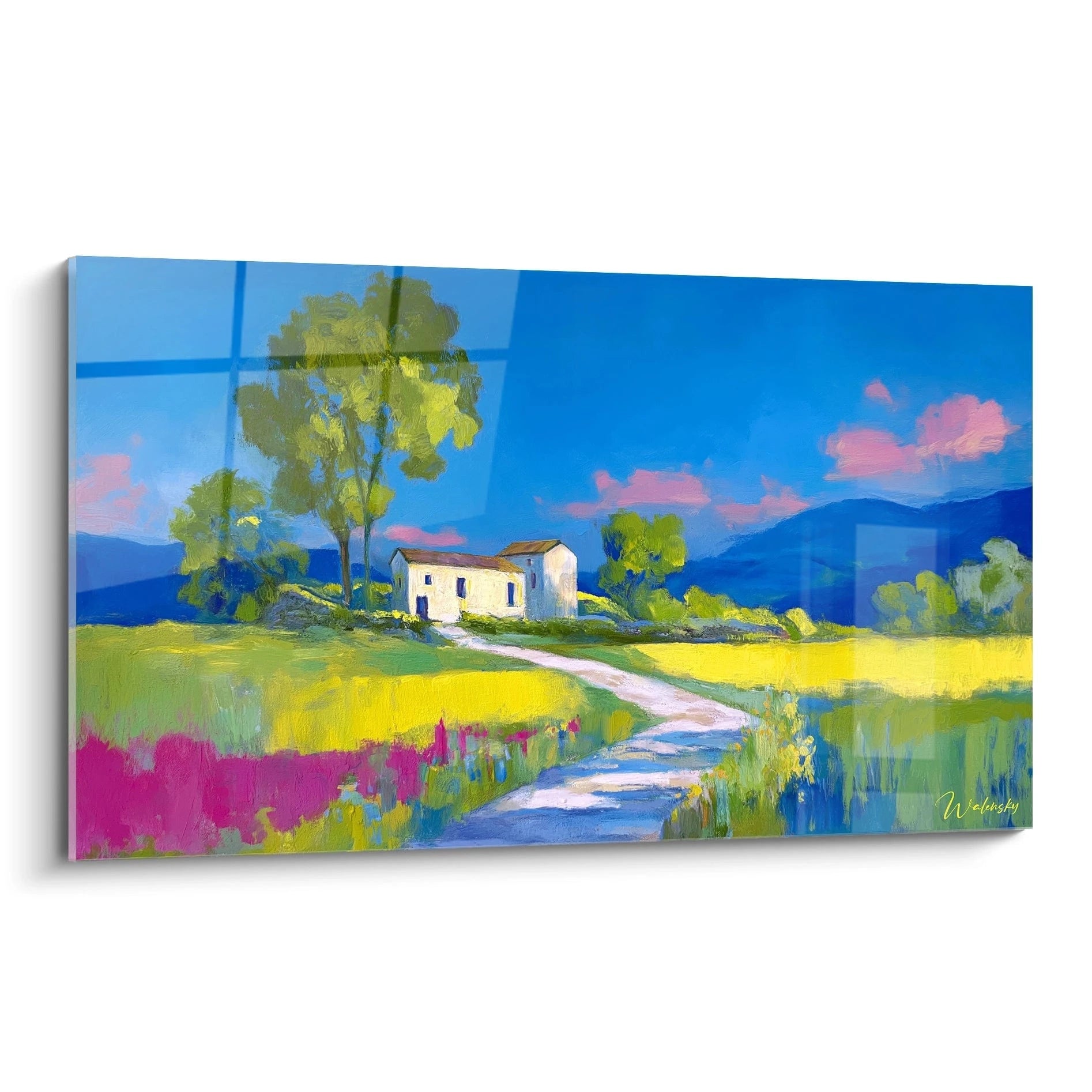
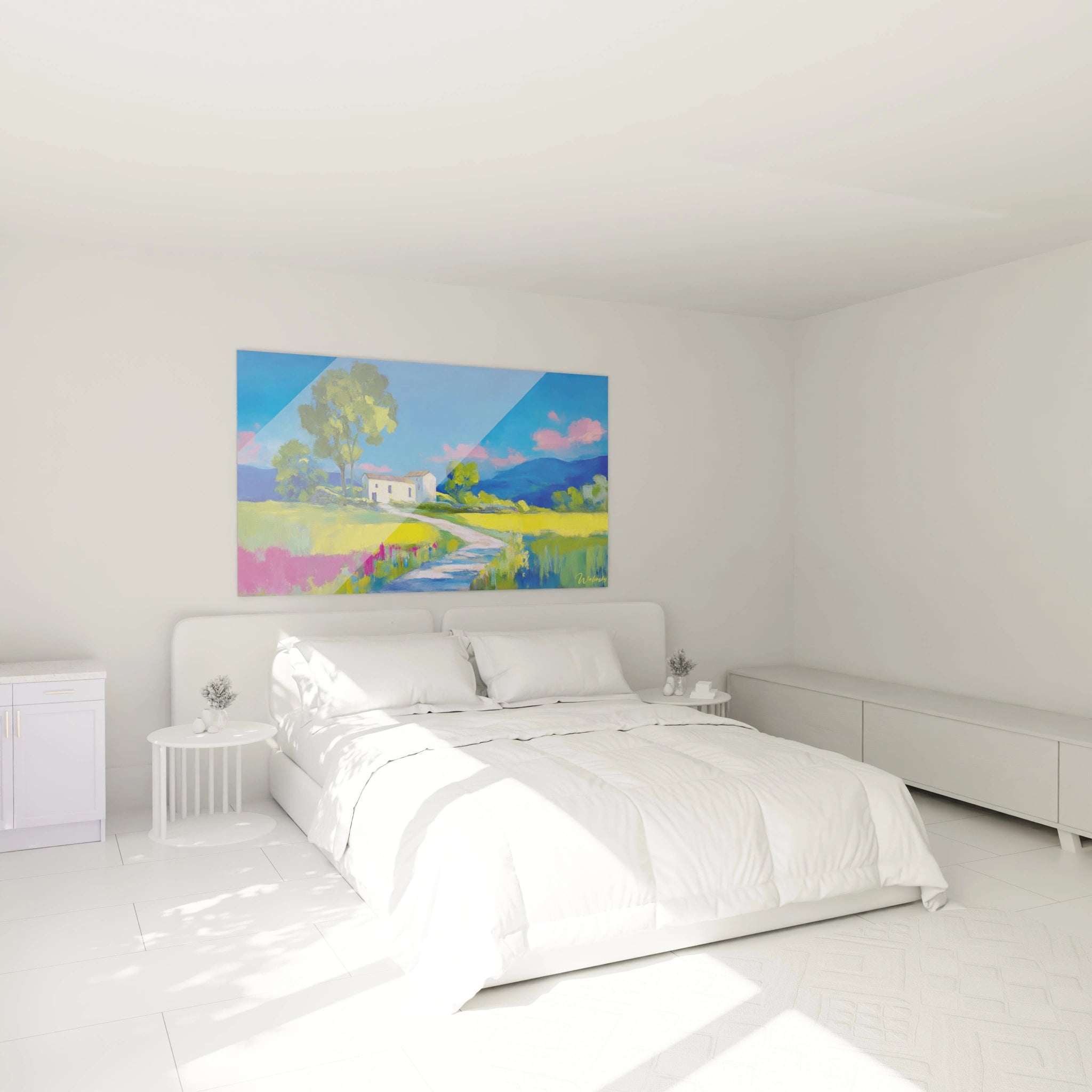
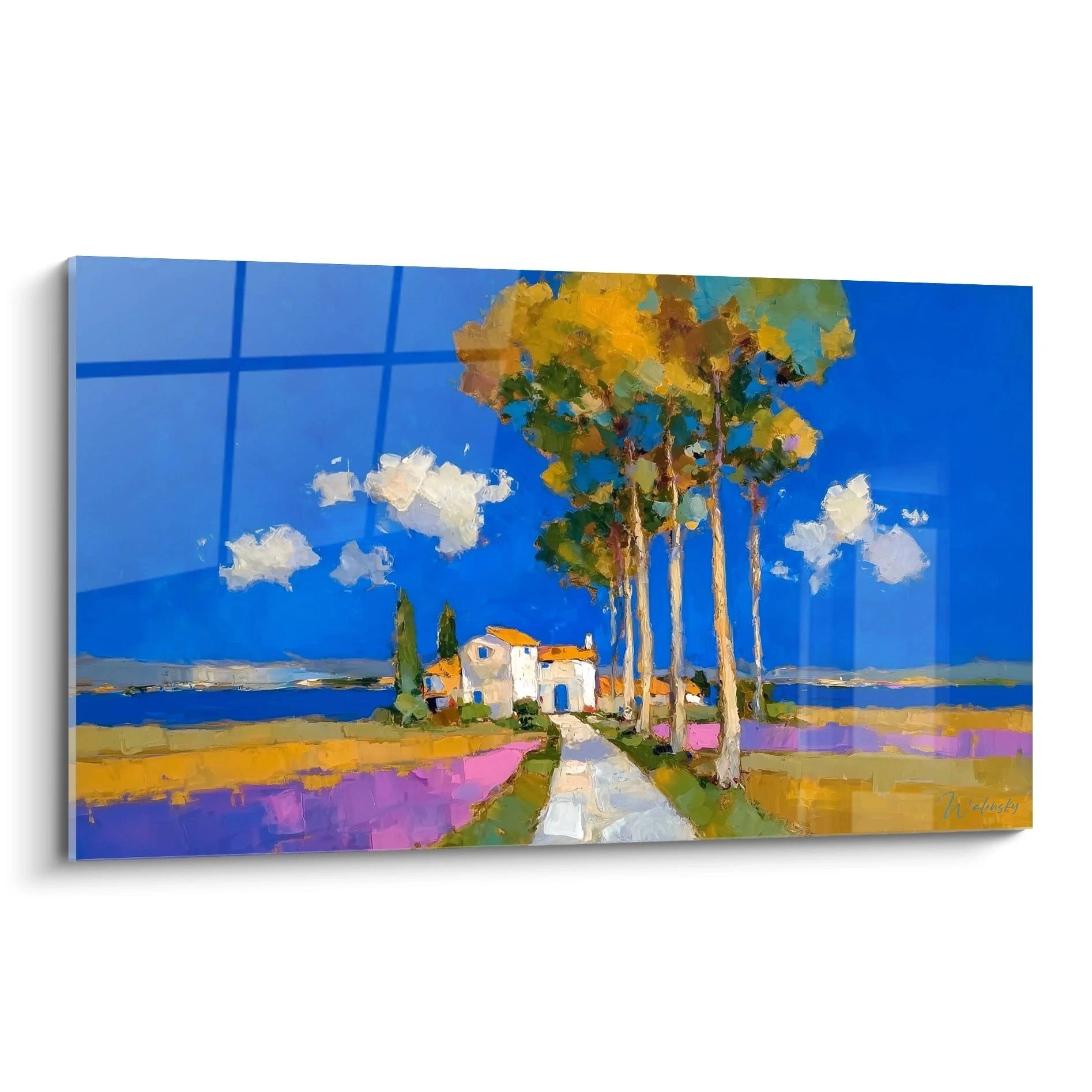
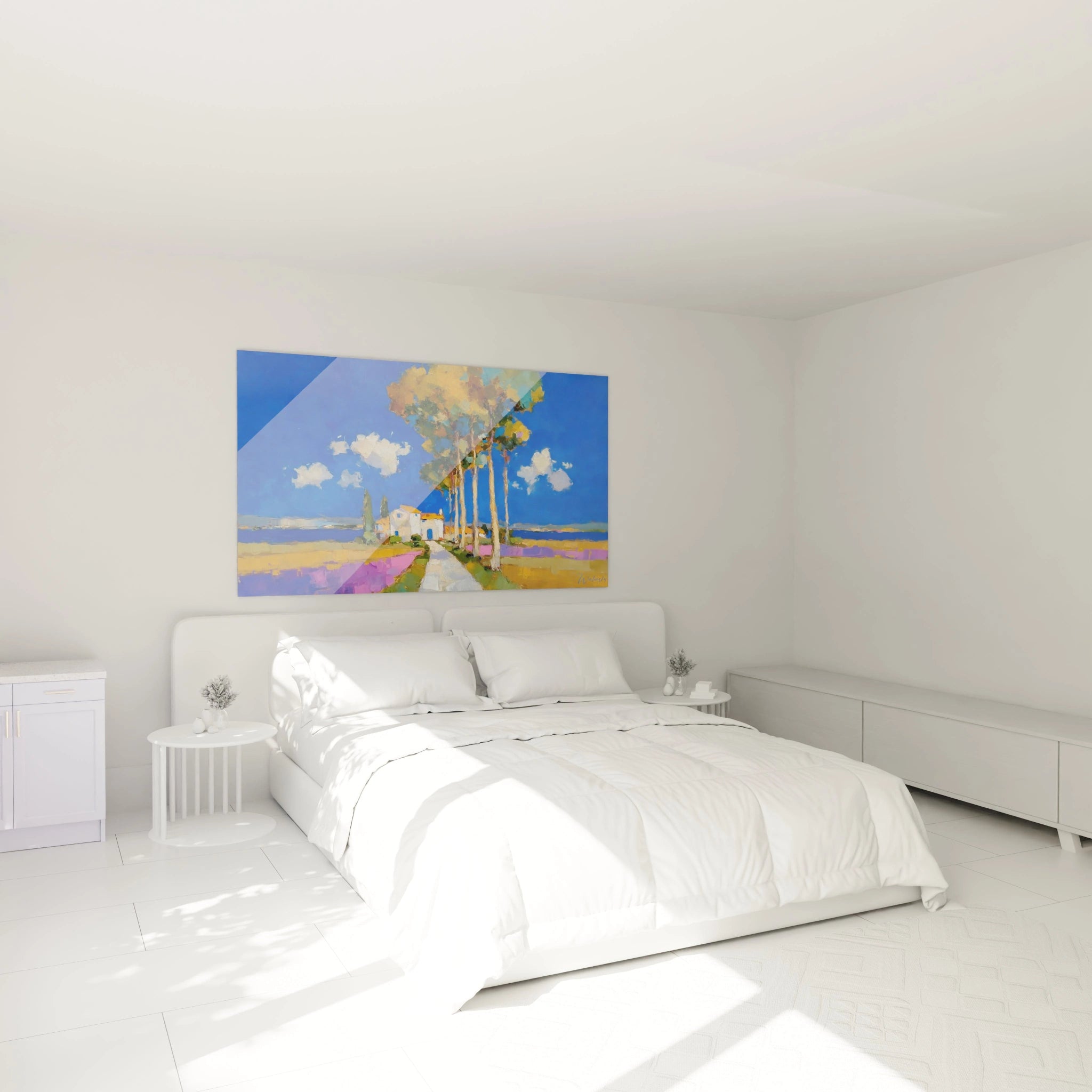
An impressionist landscape wall art radically transforms your environment by capturing the fleeting essence of nature through vibrant brushstrokes and a bold color palette. These monumental works celebrate the interplay of light on poppy fields, shimmering reflections across expanses of water, and morning mists enveloping gardens. Unlike rigid academic representations, landscape impressionism prioritizes immediate visual sensation, creating a contemplative experience that evolves with the ambient lighting in your space. These large-format creations embody the artistic revolution that transformed the perception of the French countryside, from the banks of the Seine to the Normandy coast, immortalizing ephemeral moments with revolutionary spontaneity.
Mastering Luminous Vibrations in Impressionist Landscape
Acquiring an impressionist landscape wall art responds to a specific quest: recreating within your interior that unique atmospheric quality where light becomes the main subject. Impressionist artists revolutionized landscape representation by fragmenting tones, allowing the eye to optically reconstruct chromatic nuances. This technique generates vibrant luminosity particularly remarkable in monumental formats, where pure color touches create a visual scintillation impossible to reproduce with other artistic movements.
How does an impressionist landscape wall art capture daily light variations?
Impressionist landscapes excel in transcribing daily luminous metamorphoses. A field under midday sun displays brilliant cadmium yellows and emerald greens, while the same subject at dusk reveals deep violets and flaming oranges. This capacity to immortalize a precise moment of the day confers upon these works a fascinating temporal dimension. Collectors particularly seek representations of dawn or late afternoon, periods when raking light radically transforms the perception of natural relief.
The impact of generous formats on atmospheric perception
The imposing dimensions of an impressionist landscape wall art considerably amplify the atmospheric immersion effect sought by this artistic movement. On an extended surface, the juxtaposition of color touches creates a visual texture that breathes and palpitates, simulating the movement of foliage in the breeze or the trembling of waves. This monumentality allows full appreciation of the technical virtuosity of rapid brushstrokes and chromatic superimpositions. A colorful impressionist wall art in large dimension literally transforms a wall into an open window onto 19th-century French countryside.
The emblematic landscape signatures of the movement
Each impressionist master developed a distinctive approach to natural landscape. Some favored aquatic scenes with their complex reflections, others luxuriant gardens where vegetation explodes in green and floral symphonies. Representations of haystacks, aligned poplars, or chalk cliffs constitute immediately recognizable iconic motifs. For an informed collector, identifying these visual signatures considerably enriches the acquisition experience, allowing contextualization of the work within the stylistic evolution of the impressionist landscape movement.
The Expression of Seasons and Climates in Impressionist Landscape
An impressionist landscape wall art particularly excels in restoring seasonal and meteorological ambiances. This specificity radically distinguishes these works from traditional academic landscapes that privileged idealized eternal spring. Impressionists embraced winter fogs, spring showers, and summer heat as legitimate subjects, capturing these climatic phenomena with revolutionary authenticity. This documentary approach to actual atmospheric conditions confers upon impressionist landscapes a sensory truth that resonates deeply with our contemporary experience of nature.
Why do impressionist winter scenes possess this particular depth?
Snowy landscapes treated according to impressionist aesthetics reveal unexpected chromatic complexity. Unlike conventional approaches using only white, impressionists decomposed snow into multiple nuances: icy blues in shadows, delicate pinks reflecting twilight sky, deep violets under bare trees. This tonal richness transforms winter scenes into genuine light studies. An impressionist winter landscape wall art brings a particular contemplative freshness especially sought for refined living spaces or professional environments requiring a soothing atmosphere.
The evocation of Mediterranean summer heat
Impressionist summer representations capture that vibration of overheated air, that atmospheric trembling visible above lavender fields or olive groves. Artists developed specific techniques to translate solar intensity: generous impasto, accentuated contrasts between luminous zones and deep shadows, palette dominated by burnt ochres and saturated cobalt blues. These works radiate Mediterranean energy that instantly enlivens an interior, particularly adapted to contemporary spaces with clean lines where they create a warm and invigorating counterpoint.
Autumn transitions and their luminous melancholy
Impressionist autumn deploys a spectacular chromatic range where vermillion reds, deep golds, and warm browns intertwine. This transitional season inspired landscape compositions of particular emotional intensity, capturing the ephemeral beauty of foliage before its fall. Generous formats allow full appreciation of these subtle tonal variations, from pale yellow of initial changes to deep purple of advanced autumn. An impressionist autumn landscape wall art constitutes a decorative investment that brings depth and sophistication, particularly valued in interiors with neutral tones where it introduces organic chromatic richness without visual aggression.
Spatial Structuring and Visual Dynamics of Impressionist Landscape
The composition of an impressionist landscape wall art obeys structural principles radically different from academic canons. Impressionists revolutionized conventions by adopting bold framings, unexpected perspectives, and asymmetrical viewpoints directly inspired by nascent photography and Japanese prints. This innovative approach creates visual dynamics that guide the eye along unconventional trajectories, generating renewed contemplative experience with each observation. These compositional strategies confer upon impressionist landscapes a timeless modernity that harmoniously integrates with contemporary architectures.
What elements structure depth in an impressionist landscape?
Unlike rigid linear perspectives of classical painting, impressionists construct spatial depth through superposition of chromatic planes and light intensity variations. A foreground may be treated with thick, contrasted touches, the middle ground in more blended tones, the background in muted atmospheric nuances. This stratification creates natural optical depth without resorting to systematic vanishing lines. Paths winding through fields, rows of trees rhythming space, or diagonal watercourses become compositional vectors that invite the eye to progressively explore the entire pictorial surface.
The importance of panoramic horizontal formats
Impressionist landscapes often favor elongated formats that naturally echo the expanse of natural horizons. This accentuated horizontality fosters soothing contemplation, slowing ocular movement and encouraging meditative observation. On contemporary walls, these panoramic compositions create visual breathing particularly appreciated in principal living spaces. An impressionist landscape wall art in extended format dialogues masterfully with modern architecture, its horizontal lines resonating with refined structures while introducing nature's organic complexity.
Bold framings and unexpected cuts
Photographic influence manifests in compositions where natural elements are partially cut by the frame: trees where only the lower trunk appears, riverbanks interrupting abruptly, fields extending beyond representation limits. These compositional choices create an impression of spontaneously captured fragment, reinforcing authenticity of the seized instant. This aesthetic of the fragmentary confers upon impressionist landscapes a modern vitality that particularly seduces contemporary collectors seeking works escaping conventional decorative conventions.
Is an impressionist landscape wall art suitable for contemporary professional spaces?
Absolutely. Impressionist landscapes bring cultural sophistication and particular visual serenity sought in high-end corporate environments. Their natural palette and balanced composition create an atmosphere conducive to concentration without excessive distraction, while testifying to refined aesthetic positioning.
How to identify museum-quality impressionist landscape wall art?
Examine the chromatic richness of shadow areas which should reveal multiple color nuances rather than simple darkening. Verify atmospheric coherence between all compositional elements and the virtuosity of visible touches that should appear spontaneous while building solid structure. Spatial depth should establish naturally without flat zones or visual confusion.
What is the best wall orientation to enhance an impressionist landscape wall art?
Favor a wall receiving indirect natural light that will reveal chromatic subtleties without creating reflections. Impressionist landscapes respond magnificently to daily light variations, metamorphosing according to the hour. Avoid direct sun exposure which could alter pigments, but seek a location where ambient light dialogues with the internal luminosity of the work.