


Corsican Village Wall Art
Our Corsican Painting Village collection celebrates the authenticity and beauty of the perched Corsican villages. Each creation captures the essence of the Mediterranean with its picturesque streets, stone houses and sea views. These traditional Corsican village paintings bring a touch of escape and island charm to your decor. Ideal for lovers of Corsican art and Mediterranean landscapes, these works transform your walls into real windows onto the Island of Beauty.
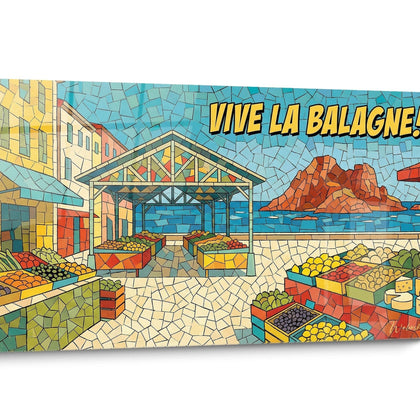
 Corsican Village Mosaic Painting - Radiant Sun on Medieval City - Corsican Edition233,90 €
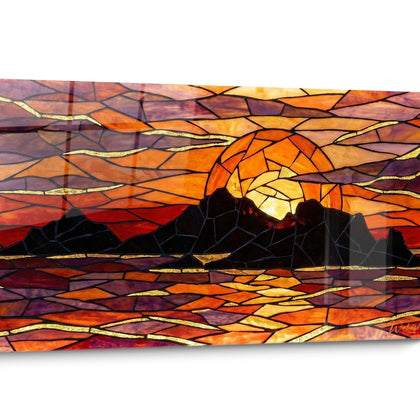
 Coastal Village at Sunset Painting - Manarola Corsica - Corsican Edition232,90 €
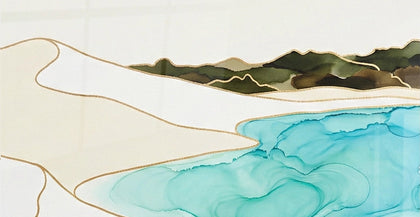
 Coastal Village Painting - Mediterranean Watercolor - Corsican Edition233,90 €
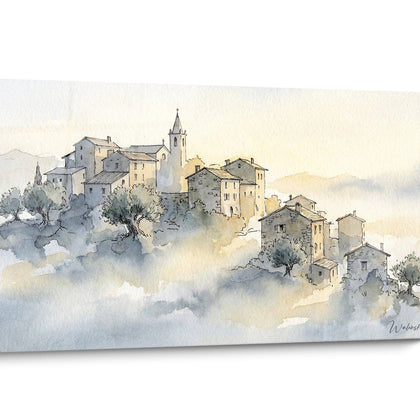
 Corsican Village in the Mist Painting - Mountain Watercolor - Corsican Edition233,90 €
Explore further
In Corsican Village Wall Art

All about Corsican Village Wall Art
- Corsican Village Painting Presentation
- Authentic Corsican Villages
- Mediterranean Decoration
- Traditional Architecture
Discover the authenticity of Corsican villages through our large-format painting collection. These representations capture the essence of the perched hamlets of the Island of Beauty, with their stone houses, cobbled streets and striking panoramas over the Mediterranean maquis. Each creation highlights the unique character of Corsican mountain villages, where traditional architecture blends harmoniously into a preserved natural environment.
The Soul of Corsica's Perched Villages in Your Interior
A Corsican village painting captures the magic of ancestral hamlets nestled in the mountains of the Island of Beauty. These large-format representations showcase iconic villages like Pigna, Sant'Antonino or Piana, with their granite houses with slate roofs, ochre facades weathered by time and vertiginous staircases. The very particular atmosphere of these Corsican villages, where time seems suspended, transforms every room into an invitation to travel to an authentic Mediterranean.
Why choose a Corsican village representation for your wall decoration?
Corsican villages offer unique architectural aesthetics that distinguish themselves from other Mediterranean villages. Their constructions in local stone, firmly anchored in rock, testify to ancestral craftsmanship adapted to mountainous terrain and marine winds. A painting representing these villages brings a strong narrative dimension: each alley, each vault, each bell tower tells the story of a preserved island community. This singularity is particularly suited to contemporary interiors seeking a touch of Mediterranean authenticity without falling into beach cliché.
The most representative Corsican villages for maximum visual impact
Certain Corsican villages present visual characteristics particularly adapted to large-format compositions. The villages of Balagne, such as Speloncato or Corbara, offer spectacular vertical perspectives with their tiered houses. The villages of the Piana Calanques offer striking contrast between red rocks and white dwellings. For a Corsican village painting intended for a spacious living room or majestic entrance, favour panoramic representations that integrate the village into its mountainous ecosystem. These compositions allow you to create visual depth that enlarges the space and naturally captures the gaze. For those who appreciate soft and luminous techniques, discover our collection of Corsican watercolour painting which enhances Mediterranean transparency.
Which spaces best enhance a large-format Corsican village painting?
The large wall surfaces of living spaces constitute the ideal location for these imposing creations. A living room wall facing the sofa allows immersive contemplation that evokes memories of Corsican vacations. In a dining room, a painting representing a perched village brings a convivial atmosphere reminiscent of village squares where community meals take place. Professional spaces such as medical offices or travel agencies also benefit from these representations which convey values of authenticity, heritage and Mediterranean well-being.
Creating an Authentic Mediterranean Ambiance with Corsican Villages
Integrating a Corsican village painting into your decoration requires understanding the chromatic palettes specific to the island. Corsican villages are characterized by earthy tones: ochres, sands, anthracite grey granite, and the deep greens of the surrounding maquis. These natural nuances harmonize perfectly with interiors in neutral tones, but also create elegant contrast in spaces with clean white walls. The grazing light of the Corsican sun, often captured in these representations, brings visual warmth that modifies the room's atmosphere throughout the day.
How to pair furniture with a Corsican village painting?
To fully enhance your painting representing a Corsican village, favour furniture that evokes Mediterranean simplicity without cluttering the space. Furniture in raw or patinated wood, such as traditional Corsican chestnut, creates natural stylistic coherence. Textiles in natural linen or woven cotton recall artisanal island materials. Avoid decorative accumulations that would compete visually with the architectural richness already present in the painting. A Corsican village captured in an imposing format constitutes in itself the focal point of the room and requires a streamlined environment to reveal all its evocative power.
What complementary pieces reinforce the Corsican ambiance?
Beyond the main painting, a few carefully selected decorative elements can deepen the island atmosphere without tipping into the thematic. Artisanal ceramics with simple geometric motifs, baskets in woven wicker, or dried myrtle branches discreetly evoke Corsican craftsmanship. For generous spaces, a second smaller painting representing an architectural detail (vault, bell tower, stone staircase) can create interesting visual dialogue. The goal remains to suggest the world of Corsican villages rather than reproduce it literally.
Can a Corsican village painting be integrated into contemporary interiors?
Contrary to popular belief, a Corsican village painting integrates remarkably into streamlined contemporary interiors. The contrast between the ancestral architecture represented and the modern lines of furniture creates stimulating aesthetic tension. Corsican villages, with their natural geometry formed by interlocking houses, present quasi-architectural abstraction that naturally dialogues with contemporary design. In a loft with raw concrete walls, a large format representing a granite village establishes unexpected material continuity. This adaptability explains why these representations appeal to both traditional decoration enthusiasts and modern minimalism advocates.
Architecture and Heritage of Corsican Villages in Wall Decoration
Corsican villages present unique vernacular architecture that reflects centuries of adaptation to Mediterranean climate and mountainous terrain. A Corsican village painting highlights these architectural specificities: the Genoese towers that punctuate the heights, fortified houses with thick walls, vaulted passages that protect from winds, and external staircases in dry stone. These architectural elements, captured in imposing formats, offer rich visual reading that renews itself with each contemplation. For history and heritage enthusiasts, these representations are far more than a decorative element: they testify to a preserved island culture.
Corsican architectural characteristics that make these paintings unique
The architecture of Corsican villages is distinguished by several visually striking particularities. Tower-houses, constructed in height for defensive reasons, create impressive vertical silhouettes. Slate roofs in schist, in silvery grey tones, contrast with ochre facades. Reduced openings and wooden shutters protect from summer heat while creating characteristic shadow play. These architectural details, when represented in a large format wall display, allow you to appreciate the complexity of these constructions and their harmonious integration into the landscape. Such a painting becomes an open window onto Mediterranean heritage and transforms your wall into an architectural narrative.
How does a Corsican village painting influence space perception?
Corsican villages, generally perched and tiered, present natural depth of field that positively influences spatial perception. A large-format Corsican village painting creates a perspective illusion that visually expands the room. Compositions including surrounding mountains add multiple successive planes that give an impression of openness, particularly appreciated in confined urban spaces. This ability to modify space perception explains why these representations are particularly sought after for apartments where lack of natural horizon is felt. The painting then becomes a virtual window towards Corsican heights.
What investment does a large-format Corsican village painting represent?
Acquiring a painting representing a Corsican village in generous dimensions constitutes a lasting decorative investment. These large-format creations, intended to cover significant wall surfaces, offer immediate visual impact that structures the entire decoration. Unlike accumulations of small decorative elements, a single imposing painting simplifies arrangement while creating a powerful focal point. The heritage value of Corsican villages, their growing cultural recognition and constant tourist appeal give these representations relevance that transcends fleeting decorative trends. For residential or professional space, it is a choice that combines timeless Mediterranean aesthetics and decorative practicality.
What size to choose for a Corsican village painting in a living room?
For a standard-sized living room, favour a format of at least 120 cm wide which allows you to appreciate the architectural details of the village and creates significant visual presence. In more generous spaces, formats up to 200 cm offer complete immersion in the Corsican village atmosphere.
Is a Corsican village painting suitable for all decoration styles?
Absolutely. Corsican villages present natural geometry and neutral tones that adapt equally well to traditional Mediterranean interiors as to streamlined contemporary spaces or even industrial ambiances. The key lies in chromatic balance between the painting and environment.
How to preserve the colour intensity of a Corsican village painting over time?
Avoid direct sun exposure which could alter the pigments representing the ochres and stone tones characteristic of the village. Indirect LED lighting enhances the subtle nuances of the Corsican village without degrading colours. Regular dusting with a microfibre cloth is sufficient for maintenance.


