


Corsican Mosaic Wall Art
Our Corsican Painting Mosaic collection celebrates the splendor of the Island of Beauty through a fragmented and colorful artistic composition. Each work captures the essence of Corsican landscapes in mosaic, blending turquoise seas, fragrant maquis, and perched villages in a unique visual symphony. These creations offer wall decoration inspired by Corsica that transforms your interior into a true Mediterranean gallery. Perfect for lovers of the island or collectors of contemporary art, these paintings bring character and authenticity to your living space.
 Balagne Market Wall Art - Long Live Balagne Mosaic - Corsican Edition273,90 €
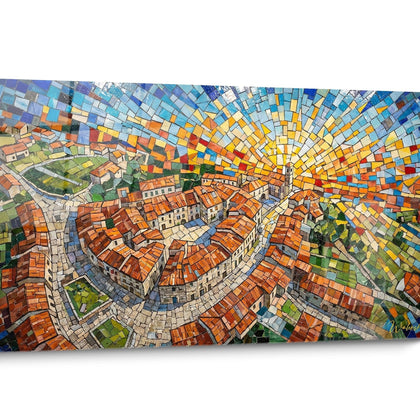
 Corsican Village Mosaic Painting - Radiant Sun on Medieval City - Corsican Edition273,90 €
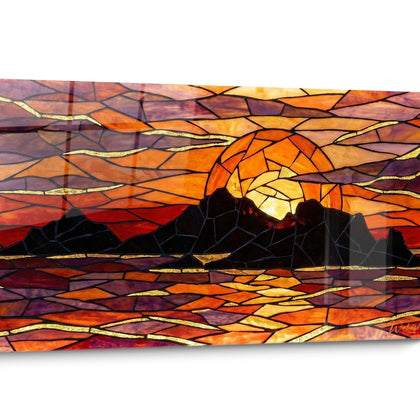
 Sunset Painting - Mosaic of Light - Corsican Edition273,90 €
Explore further
In Corsican Mosaic Wall Art

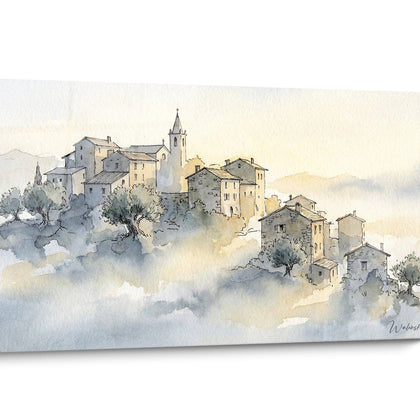
All about Corsican Mosaic Wall Art
- Corsican Mosaic Wall Art Presentation
- Mediterranean Decoration
- Ambiances & Rooms
- Characteristics & Questions
The Corsican mosaic wall art captures the fragmented and colorful essence of the Island of Beauty through an artistic composition that juxtaposes different perspectives of Corsica. This visual representation assembled like a traditional mosaic offers complete immersion in island landscapes, from the Piana coves to the perched villages of Balagne, passing through the beaches of Porto-Vecchio. Each segment of this mural work tells a different story of this Mediterranean land, creating a visual panorama that simultaneously evokes the geographical and cultural contrasts of Corsica. Ideal for lovers of island art and Mediterranean enthusiasts, this large-scale mural format transforms any space into a gallery dedicated to Corsican beauty, bringing this very particular atmosphere of Mediterranean islands directly into your home.
The Art of Corsican Mosaic in Contemporary Decoration
The Corsican mosaic wall art represents an innovative artistic approach that fragments island landscapes into multiple visual facets. This segmented composition technique allows simultaneous capture of the island's geographical diversity: the ochre cliffs of the south, the snow-capped mountains of the center, the turquoise coves of the coast, and the chestnut forests of the hinterland. Each panel of this mural representation functions as a piece of a geographical puzzle, offering a kaleidoscopic vision of Corsica that transcends simple panoramic photography.
Why choose a mosaic format to represent Corsica?
The fragmented structure of the Corsican mosaic wall art responds to precise aesthetic logic: it allows juxtaposition of Corsican scenes without direct geographical continuity but with harmonious visual coherence. This arrangement creates a visual narrative effect where each segment dialogues with the others, evoking the island's patrimonial richness. Mediterranean decoration enthusiasts particularly appreciate this composition that avoids the monotony of a single image and offers narrative depth comparable to ancient frescoes.
The chromatic palette of fragmented island landscapes
The tonalities of a Corsican mosaic wall art reflect the island's climatic and geological diversity: deep blues of the Mediterranean, intense greens of the maquis, ochres of stone villages, brilliant whites of fine sand beaches. This natural chromatic richness integrates perfectly into contemporary interiors that favor earthy and marine colors. Unlike more homogeneous artistic representations such as the Corsican watercolor wall art, the mosaic version offers enhanced visual intensity thanks to contrasts between its different segments.
The decorative impact of a large-scale fragmented mural work
With its generous dimensions, the Corsican mosaic wall art imposes itself as an architectural element in the living space. This masterpiece instantly creates a focal point that visually structures the room, particularly effective in large volumes where classical mural decoration would seem lost. The juxtaposed segments generate dynamic visual rhythm that naturally guides the eye through the different island scenes represented.
- Multi-panel composition illustrating several geographical facets of Corsica
- Chromatic contrasts between coastal and mountainous zones
- Depth effect through visual fragmentation
- Adaptation to large modern wall spaces
- Simultaneous evocation of Corsican natural and cultural heritage
Integration of Corsican Mosaic Wall Art in Living Spaces
What environment best showcases a Corsican mosaic composition?
The Corsican mosaic wall art finds its ideal place in reception spaces where its fragmented visual narrative can be contemplated from different angles. Spacious living rooms with clear walls constitute the privileged environment for this type of monumental work that requires sufficient visual distance. Owners of secondary residences in the Mediterranean frequently adopt this decoration that extends the island atmosphere indoors, creating continuity between exterior landscape and interior decor.
In professional spaces such as travel agencies specializing in Corsican destinations or Mediterranean restaurants, this segmented mural representation functions as a powerful visual argument that immediately evokes territorial identity. The mosaic structure also allows installation in unconventional wall configurations, adapting to architectural constraints such as broken wall sections or attic spaces.
Decorative associations with Mediterranean furniture
The Corsican mosaic wall art harmonizes naturally with Mediterranean-influenced furniture: light veined wood, natural linen textiles, artisanal ceramics with geometric patterns. This fragmented work particularly dialogues well with decorative elements sharing this aesthetic of composition such as Berber rugs or woven rattan lighting fixtures. Island art collectors often combine multiple formats of Corsican representations, alternating between styles to create a personal gallery dedicated to the island.
How does the mosaic format transform space perception?
The visual segmentation inherent to Corsican mosaic wall art generates an optical effect that perceptually enlarges the mural space. Unlike a continuous image that may visually "close" a wall, the fragmented structure creates visual breathing between panels that lightens the composition. This characteristic proves particularly valuable in urban spaces where visual density must be carefully balanced.
Interior architects strategically use these mosaic compositions in lofts and open spaces to visually delimit functional zones without resorting to physical partitions. The eye drawn by the succession of island scenes creates a psychological boundary that subtly structures the living space.
- Adaptation to complex and non-standard wall configurations
- Creation of distinct visual zones in open spaces
- Harmonization with natural textiles and Mediterranean furniture
- Space-enlarging effect through fragmentation
- Extension of island atmosphere in coastal residences
Technical and Artistic Specifications of Corsican Mosaic Wall Art
The narrative construction of a fragmented Corsican composition
The creative process behind Corsican mosaic wall art relies on rigorous selection of representative scenes that, assembled, form a complete portrait of island identity. This visual curation requires deep knowledge of Corsican geography to balance coastal and mountainous zones, built heritage and wild nature. Each segment must possess autonomous visual strength while participating in the overall harmony of the composition.
Creators of these mural works prioritize framings that reveal the microclimate diversity of Corsica, this geographical particularity where one can pass within a few kilometers from Mediterranean beaches to Alpine peaks. This condensed geographical juxtaposition finds its ideal visual expression in the mosaic format that precisely celebrates this contrasted richness.
What criteria determine the quality of Corsican mosaic wall art?
The excellence of a Corsican mosaic representation is measured by several technical parameters: chromatic coherence between different segments despite their thematic diversity, precision of details that allows close contemplation of each panel, and overall compositional balance that prevents one segment from visually dominating others. Large-scale formats require exceptional resolution to preserve visual sharpness even upon close observation.
Discerning buyers also verify geographical representativeness: a complete Corsican mosaic wall art should ideally include references to the different historical regions of the island (Balagne, Castagniccia, Alta Rocca, Far South) rather than exclusively concentrating on emblematic tourist sites. This geographical completeness confers additional documentary and patrimonial value to the work.
Conservation and enhancement over time
Large-scale mural compositions require particular attention regarding their exposure to natural light. For Corsican mosaic wall art, protection against direct ultraviolet rays preserves the intensity of blue and green pigments that characterize maritime landscapes and maquis. Collectors frequently install these works on walls perpendicular to main openings rather than facing windows, thus optimizing luminosity while minimizing direct exposure.
Regular maintenance consists primarily of gentle dusting that preserves chromatic vibrancy. In coastal environments where salt humidity may affect materials, periodic monitoring ensures the durability of this mural decoration that often constitutes a significant decorative investment for Mediterranean island art enthusiasts.
- Selection of scenes representative of different Corsican micro-regions
- Compositional balance between autonomous segments and global harmony
- Optimal resolution for close contemplation of details
- Protection against direct ultraviolet exposure
- Documentary value through geographical completeness
What minimum wall surface is required to install a large-scale Corsican mosaic wall art?
A monumental Corsican mosaic wall art ideally requires a clear wall surface of at least 3 meters wide to allow optimal perception of the fragmented composition. The surrounding space must offer a minimum visual distance of 2.5 to 3 meters to appreciate all mosaic segments simultaneously without excessive eye movement.
Is Corsican mosaic wall art suitable for minimalist contemporary interiors?
Absolutely, the geometric structure of the mosaic composition harmonizes perfectly with the refined aesthetic of minimalist interiors where it brings the necessary touch of color and visual complexity. The fragmented format avoids the visual overload of a large continuous image while offering narrative richness appreciated in spaces with reduced furniture.
How to choose between Corsican mosaic wall art and other representations of the island?
The choice depends primarily on your aesthetic preference: the mosaic format suits lovers of dynamic and narrative compositions who desire exhaustive representation of Corsican diversity, while other formats offer more contemplative approaches or focused on specific aspects of Mediterranean island identity.


