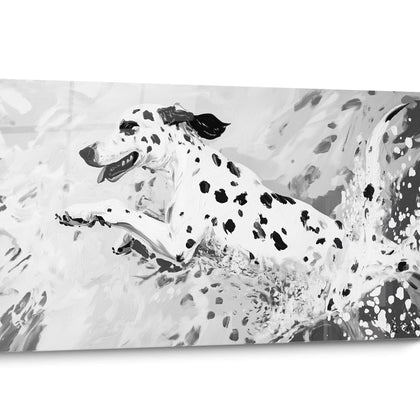
The black and white animal portrait wall art captures the very essence of animal presence through an intimate and frontal framing approach. This photographic style reveals the unique personality of each creature by focusing attention on its gaze, distinctive features, and natural expression. The portrait format emphasizes the majestic verticality of animal subjects while creating a direct and profoundly human connection with the viewer. These large-format creations transform each wall into a living art gallery where wildlife expresses itself without artifice or chromatic distraction.
The Intensity of Animal Gaze in Close-up Framing
The black and white animal portrait wall art harnesses the power of tight framing to reveal the psychological depth of wild creatures. This frontal approach captures micro-expressions, ocular details, and the organic texture of coats with documentary precision that rivals classical human portraits.
How does portrait format reveal animal personality?
The vertical orientation of the black and white animal portrait wall art creates a natural visual hierarchy that guides the eye from the top of the skull to the subject's shoulders. This structure promotes spontaneous anthropomorphic reading where observers unconsciously project human emotions onto animal features. Large formats amplify this impression of tangible physical presence.
Animal bust photography directly borrows from classical portrait painting codes, creating compositions where every detail matters: the subtle head tilt, gaze direction, ear position. These compositional elements transform a simple animal representation into genuine character study comparable to nineteenth-century psychological portraits.
Staging strategies for impactful monochrome portraits
Creators of black and white animal wall art prioritize purified backgrounds that completely isolate the subject, eliminating any distracting environmental context. This visual extraction reinforces message universality and enables decorative integration into contemporary interiors without geographic or temporal reference.
Sculptural side lighting models facial volumes by creating dramatic contrasts between luminous zones and deep shadows. This technique inherited from black and white realistic animal wall art accentuates subject three-dimensionality and reveals textural details invisible under uniform frontal lighting.
Visual dialogue between viewer and represented subject
Direct eye contact constitutes the central element of animal portraiture, creating immediate emotional confrontation that challenges and captivates. This camera-gaze interaction breaks the observer-observed distance typical of traditional wildlife photography to establish an almost unsettling relationship of equality.
Portrait-format wall installations generate a vertical presence effect that mimics human stature, encouraging prolonged contemplative interactions. Visitors spontaneously adopt face-to-face positioning with the artwork, comparable to authentic interpersonal encounter rather than simple passive decorative consultation.
Psychological Dimension of Monochrome Animal Portraits
The black and white animal portrait wall art transcends simple naturalistic representation to achieve emotional depth rarely accessible in conventional wildlife photography. The absence of color eliminates sensory distractions and forces exclusively emotional and structural image reading.
Why does black and white intensify emotional charge of portraits?
Monochrome range concentrates attention on fundamental expressive elements: eye wrinkles, eyebrow position, facial muscle tension. These physiological micro-details become primary vectors of emotional communication, creating visual intimacy impossible to obtain with chromatic complexity.
Gray gradations function as abstract emotional language where subtle nuances translate complex psychological states. Dramatic chiaroscuro lighting can suggest melancholy, while uniform tones evoke contemplative serenity. This restricted palette becomes paradoxically more expressive than complete color spectrum.
Animal archetypes and human emotional projection
Certain animal subjects function as universal psychological mirrors: the lion evokes sovereign dignity, the wolf embodies fierce loyalty, the owl symbolizes introspective wisdom. The black and white animal portrait wall art amplifies these archetypal associations by eliminating distracting contextual markers.
This symbolic dimension allows buyers to select creatures representing their personal values or psychological aspirations. An entrepreneur might install a royal eagle portrait in their office as visual manifestation of strategic vision and ambition, while a therapeutic space would favor the tranquility of a majestic deer.
Suspended temporality and timeless presence
Portrait framing freezes a fleeting moment of animal expression while conferring eternal quality. This temporal suspension recalls techniques of black and white minimalist animal wall art where formal refinement transcends the anecdotal to achieve the universal.
Large formats accentuate this impression of continuous presence: the animal seems to exist in perpetual present, silently observing daily space evolution. This constant visual cohabitation creates progressive affective relationship between resident and artwork, comparable to bonds developed with actual pets.
Visual Architecture of Portrait Format in Wall Decoration
The vertical composition of black and white animal portrait wall art responds to specific spatial logics that determine its decorative effectiveness. This structural orientation radically influences volumetric perception of interior spaces and occupant visual circulation.
Which spaces particularly benefit from portrait-format animal art?
Narrow and tall architectural zones constitute the ideal environment for these vertical compositions: between openings, along stairways, in circulation corridors. Portrait format effectively exploits these surfaces difficult to enhance with traditional horizontal works, transforming dead zones into captivating focal points.
Spaces with cathedral ceilings or double-height volumes find visual balance through the pronounced verticality of these monumental animal portraits. The imposing subject dimension responds proportionally to architectural scale without creating crushing effect, unlike horizontal formats that might accentuate visual vertical disproportion.
Multiplication strategies and thematic series
Installation in vertical triptych of multiple black and white animal portraits creates sophisticated visual narratives: age progression (young, adult, elder), expression variations (vigilance, rest, intensity), or specific diversity (predators, herbivores, omnivores). This serial approach borrows from black and white animal wall art techniques to develop elaborate thematic concepts.
Gallery configurations in vertical arrangement exploit total wall height from baseboard to ceiling, creating rhythmic visual columns that structure space like graphic pillars. This vertical organization amplifies ceiling height perception while maintaining stylistic coherence through monochrome color uniformity.
Interaction with existing architectural lighting
Monochrome animal portraits respond dramatically to daylight variations, internal image shadow zones densifying or brightening according to ambient intensity. This photometric sensitivity transforms the artwork into dynamic element that rhythmically evolves with solar cycles, comparable to effects observed in black and white modern animal wall art.
Directed museum-style spot lighting creates sculptural effects on large-format portraits, sometimes projecting subtle cast shadow that visually doubles subject presence. This illumination strategy isolates the artwork from immediate environment, reinforcing its status as privileged contemplative object within global decorative ecosystem.
Stylistic complementarities with other monochrome expressions
Frontal animal portraiture harmoniously associates with more dynamic representations to create contrasting visual dialogues. An adjacent black and white movement animal wall art generates narrative tension between static contemplation and kinetic energy, enriching overall wall installation reading.
Aquatic environments offer fascinating thematic contrast: the association of a majestic terrestrial portrait with black and white aquatic animal wall art creates elemental earth-water duality evoking natural cycles and planetary biotope diversity.
Is black and white animal portrait wall art suitable for professional spaces?
Absolutely, these works bring sophisticated psychological dimension to executive offices, consulting firms and corporate reception areas. Animal portraiture projects organizational values (leadership, vision, determination) without the impersonal character of geometric abstractions or banality of generic landscapes.
How does portrait format influence vertical spatial perception?
Vertical composition naturally accentuates perceived wall height by creating ascending force lines that guide gaze upward. This visual dynamic is particularly beneficial in standard ceiling spaces where increased volume impression is desired without structural architectural modifications.
What relationship should be established between multiple black and white animal portraits in the same room?
Prioritize either specific uniformity (multiple felines, exclusively raptors) to create coherent thematic collection, or marked contrast (herbivore/predator, diurnal/nocturnal) to generate dynamic narrative tension. Avoid intermediate associations that create visual confusion without clear directional concept.


 Silent Strength Wall Art - Black & White Edition233,90 €
 Polar bear painting - Wild gaze - Black and white animals edition233,90 €
 White Horse Painting - Majestic Portrait - Black and White Animals Edition233,90 €
 White Horse Painting Portrait - Equestrian Grace - Black and White Animals Edition233,90 €
 Giraffe Painting - Majestic Portrait - Black and White Animals Edition233,90 €
 Majestic Deer Painting - Noble Portrait - Black and White Animals Edition233,90 €
 Giraffe Portrait Wall Art - Captivating Gaze - Black and White Animals Edition213,90 €
 Zebra Portrait Profile Artwork - Intense Gaze - Black and White Animals Edition233,90 €
 Lion Cub Artwork N°2 - Animal Edition233,90 €
 Dalmatian Wall Art N°6 - Animals Edition233,90 €
 Bull Terrier Wall Art No. 1 - Animals Edition233,90 €
 Chimpanzee Painting N°1 - Animals Edition233,90 €
 Wild Pride Artwork - Black & White Edition233,90 €