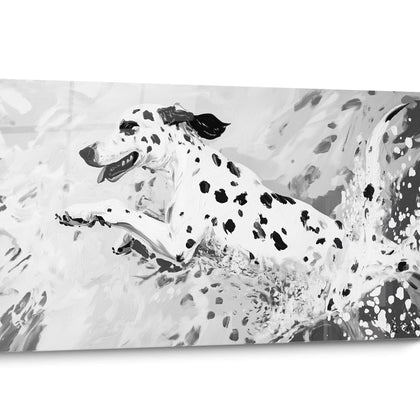
Minimalist black and white aesthetics transform animal representation into a radical visual statement. This stripped-down approach magnifies the very essence of wildlife through refined compositions where each silhouette, each contour, each contrast carries amplified significance. A minimalist black and white animal wall art piece eliminates the superfluous to reveal the intrinsic architecture of wild nature, offering a contemplative experience that dialogues with the most demanding contemporary spaces.
Animal Essence Revealed Through Chromatic Purity
The minimalist black and white animal wall art transcends mere zoological representation to achieve an almost conceptual dimension. By removing all superfluous chromatic information, this approach concentrates attention on primordial forms, characteristic silhouettes and anatomical proportions that define each species. Large-format creations amplify this philosophy by transforming a deer, elephant or bear into a monumental graphic icon, where formal reduction paradoxically intensifies emotional presence.
Why does the black-white duality intensify animal symbolism?
The binary opposition of tones activates profound symbolic reading. Each depicted creature acquires an archetypal dimension: the wolf embodies brute strength without detour, the owl evokes contemplative wisdom, the lion manifests uncontested authority. This chromatic abstraction fosters immediate psychological identification, particularly sought by contemporary animal art collectors who prioritize direct emotional impact over naturalistic description. Large-format works exploit this symbolic power by occupying visual space with authority comparable to monumental black and white animal portrait wall art.
Pure lines and organic geometry
The minimalist language applied to fauna reveals unsuspected correspondences between biology and geometry. A deer's antlers become natural fractals, zebra stripes generate optical rhythms, raptor feathers compose sophisticated linear textures. This formal translation particularly appeals to interior architects and designers seeking visual compositions capable of dialoguing with Scandinavian furniture, refined metal structures or polished mineral surfaces. The absence of color palette enables harmonious integration into monochrome environments where adding color would destabilize the established balance.
Formal reduction and emotional amplification
Paradoxically, graphic simplification increases emotional intensity. A bear profile reduced to its essential silhouette communicates power with remarkable economy of means. This expressive concentration explains the enthusiasm for large-format minimalist black and white animal wall art in industrial lofts, conceptual commercial spaces and contemporary residences with generous volumes. Chromatic sobriety compensates for imposing physical dimensions, creating majestic presence without visual saturation, unlike multicolor compositions that can overwhelm the space.
Spatial Dialogue Between Minimalist Animal Art and Modern Architecture
Integrating a minimalist black and white animal wall art piece into a contemporary architectural environment obeys rigorous compositional principles. These works function as organic counterpoints in universes dominated by straight lines, smooth surfaces and inert materials. An eagle with outstretched wings in refined monochrome treatment creates dynamic tension facing a modular white bookcase, while a stylized elephant dialogues with a brushed steel suspended fireplace.
How to position minimalist animal art in an open space?
Open volumes require visual focal points capable of structuring space without compartmentalizing it. A panoramic format depicting reindeer migration in minimalist graphic treatment establishes a directional axis that guides the gaze and implicitly organizes functional zones. Positioned facing the main entrance, it constitutes the determining first impression. Black and white animal movement wall art in refined version generates comparable spatial dynamics, particularly effective in extended horizontal configurations.
Light reverberation and architectural contrast
White surfaces of minimalist compositions interact differently depending on ambient lighting. In a loft with full south-facing windows, bright areas reflect natural light and amplify the sensation of space, while black masses strategically absorb light energy to create visual depths. This bipolar light management proves crucial in Nordic spaces where light quality varies dramatically between seasons. A polar bear treated in graphic negation – white silhouette on black background – magnificently exploits this physical property.
Material and textural complementarity
Minimalist animal aesthetics are particularly enriched through contact with raw materials: polished concrete, driftwood, limestone, oxidized metal. A stylized fox in refined monochrome suspended above a chocolate-tanned leather sofa establishes a temperature-warmth contrast that humanizes graphic austerity. Discerning collectors frequently associate these works with black and white realistic animal wall art in other spaces to create a contrasted visual journey between detailed hyperrealism and refined abstraction, thereby enriching the overall decorative experience.
Visual Construction and Perceptual Hierarchy of Bicolor Compositions
Mastering a minimalist black and white animal wall art piece rests on sophisticated compositional decisions that determine its visual efficacy. The distribution of dark and light masses generates specific visual rhythms: a concentration of black in the lower portion anchors the work and communicates stability, while a predominance of white in the upper zone suggests lightness and elevation. These tonal balances unconsciously influence the spatial perception of the entire room.
Which animals lend themselves best to minimalist monochrome treatment?
Certain species offer intrinsically graphic silhouettes: the angular wolf profile, the majestic vertical of the giraffe, the elegant curvature of the swan, the perfect geometry of the butterfly. These instantly recognizable forms retain their identity even when reduced to their simplest linear expression. Creatures like black and white aquatic animal wall art such as the manta ray or orca also possess this natural graphic quality, their fluid anatomy translating magnificently into refined curves that evoke aquatic movement without literally depicting it.
Information density and readability at distance
A monumental minimalist format must function at multiple viewing distances. At five meters, a moose must be identifiable by its characteristic antlers and general proportions. At two meters, subtle details – texture suggested by tonal variation, muscular tension evoked by line inflection – enrich the experience. This perceptual stratification distinguishes sophisticated compositions from crude simplifications. Modern black and white animal wall art pieces often integrate this complexity by superimposing multiple levels of graphic reading.
Psychological impact of asymmetrical compositions
Off-center placement of an animal figure generates productive visual tension. A tiger oriented rightward positioned in the left third of the composition creates anticipatory space, a narrative expectation that the spectator mentally completes. This dynamic approach suits circulation spaces particularly well – corridors, entry halls, stairwell landings – where the spectator's physical movement resonates with the work's directionality. Vertical formats exploiting ceiling height amplify this sensation of upward momentum, particularly with subjects in extension like leaping felines or airborne birds. The black and white animal wall art collection offers diverse compositional approaches adapted to these specific spatial configurations.
Should white or black backgrounds be prioritized for optimal minimalist effect?
The background choice determines overall atmosphere. A white background generates luminosity, openness, sensation of breathing space – ideal for modest-sized rooms or limited natural lighting. A black background produces depth, sophistication, theatrical intimacy – perfect for spacious living areas, cozy bedrooms or high-end commercial spaces. This decision must also consider the dominant color tone of surrounding walls: a black subject on white background resonates magnificently against an anthracite gray wall, creating an invisible frame effect through tonal continuity.
What dimension should be prioritized to maximize impact of minimalist black and white animal wall art?
Monumental formats – exceeding 120 cm in width – transform the minimalist work into complete visual architecture. This generous scale compensates for chromatic and formal sobriety, creating physical presence comparable to sculpture while preserving the lightness of wall mounting. A stylized elephant of 150x100 cm becomes spatial event rather than mere decoration.
Are minimalist animal compositions suitable for professional spaces?
Absolutely. Law offices, creative agencies, conceptual boutiques and contemporary medical spaces increasingly adopt this aesthetic for its balance between visual authority and chromatic neutrality. An eagle in refined treatment communicates strategic vision without decorative aggression, while a minimalist horse evokes controlled power and professional elegance.
How to maintain graphic legibility of minimalist work over time?
Formal simplicity paradoxically requires heightened vigilance: any dust, unwanted reflection or lighting modification immediately affects reading purity. Prioritize positioning avoiding direct sun exposure that could alter contrasts, and maintain constant indirect lighting – adjustable LED spotlights neutral temperature 4000K – to preserve the subtle tonal balance between bright and dark areas.


 Betta Fish Painting - Elegant Aquatic Dance - Black and White Animals Edition233,90 €
 Betta Fish Painting - Aquatic Dance - Black and White Animals Edition233,90 €
 Translucent Jellyfish Painting - Aquatic Grace - Black and White Animals Edition233,90 €
 Polar Bear Painting - Arctic Majesty - Black and White Animals Edition233,90 €
 Betta Fish Artwork - Aquatic Dance - Black and White Animals Edition233,90 €
 Humpback Whale Wall Art - Oceanic Majesty - Black and White Animals Edition233,90 €
 Fighting Fish Wall Art - Aquatic Dance - Black and White Animals Edition213,90 €
 Translucent Jellyfish Artwork - Aquatic Grace - Black and White Animals Edition213,90 €
 Untamed Savage Power Grey Canvas - Black and White Animals Edition233,90 €
 Eternal Loyalty White Canvas - Black and White Animals Edition233,90 €
 Fragile Beauty Eternal Canvas - Black and White Animal Edition233,90 €
 Giant Dotted White Canvas - Black and White Animals Edition233,90 €
 Meerkat Painting No. 1 - Animals Edition233,90 €